

Dishwasher Lifespan Calculator
How Long Will Your Dishwasher Last?
Enter your dishwasher's characteristics to get a personalized lifespan estimate based on real-world data.
Estimated Lifespan
Most people buy a dishwasher once every 10 years-or so they hope. But if yours is starting to leak, rattle, or leave dishes grimy after a cycle, you might be wondering: is this normal? Or did I just get a lemon? The truth is, there’s no magic number for how long a dishwasher should last, but there are clear patterns based on brand, usage, and care. For an affordable dishwasher, you can expect 7 to 10 years. For a mid-range or high-end model, 10 to 15 years is realistic. Anything beyond 15 is uncommon unless it’s been treated like a luxury appliance.
Why Dishwashers Don’t Last Forever
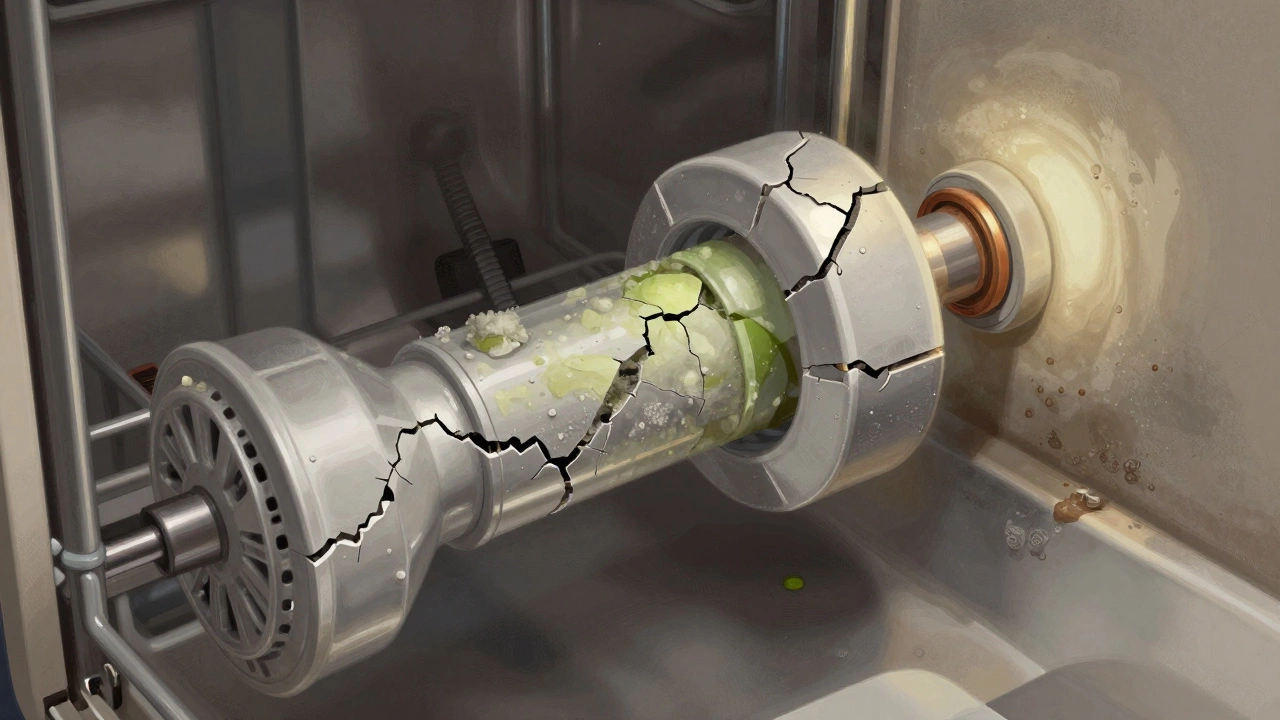
Dishwashers aren’t like refrigerators or washing machines. They’re constantly exposed to water, heat, detergent, and food debris. Every cycle is a mini battle against corrosion, mineral buildup, and mechanical wear. The pump, spray arms, heating element, and door seals all degrade over time. Even the plastic tub can warp or crack after years of steam and pressure.Take the spray arms. They’re usually made of cheap plastic in budget models. After 5-6 years, the tiny holes get clogged with lime scale or food particles. The water pressure drops, and suddenly your glasses come out cloudy. In pricier dishwashers, stainless steel spray arms last longer and resist clogging. But even those eventually wear out.
Heating elements are another weak point. They’re designed to last, but if you use rinse aid inconsistently or hard water without a filter, the element works harder-and burns out faster. A 2023 study by Consumer Reports found that dishwashers in areas with hard water (like parts of Alberta or Saskatchewan) failed 2-3 years earlier than those in soft-water regions.
What Affects Lifespan the Most?
It’s not just about the price tag. Three things control how long your dishwasher survives:- Water quality - Hard water leaves mineral deposits that clog filters, damage pumps, and coat heating elements. If you’re in a city like Vancouver with moderately hard water, you’re not immune.
- Usage frequency - A family of four running the dishwasher daily wears it out faster than a couple using it every other day. The average dishwasher handles 215 cycles per year. If yours hits 300+, expect wear sooner.
- Maintenance habits - Cleaning the filter monthly, running a vinegar cycle every 3 months, and scraping food off plates instead of rinsing them under the tap? That adds years.
Here’s a real example: A customer in Burnaby bought a $500 Whirlpool dishwasher in 2019. She scraped plates, cleaned the filter every 2 weeks, and used a water softener. In 2025, it still works perfectly. Another person in Surrey bought a similar model, rinsed dishes under the tap, never cleaned the filter, and ran it twice a day. It died in 2023.
Signs Your Dishwasher Is Reaching End-of-Life
You don’t need to wait for it to flood the kitchen to know it’s time. Watch for these red flags:- Dishes come out dirty, especially on the top rack - usually means clogged spray arms or failing pump.
- Water pooling at the bottom after a cycle - could be a clogged drain, faulty pump, or worn seal.
- Loud grinding or buzzing noises - often the motor or pump is failing.
- Door doesn’t latch properly or leaks - seals degrade over time and are expensive to replace.
- Excessive rust inside the tub or on the rack - signs of poor build quality or long-term water exposure.
- It takes two cycles to clean one load - efficiency has dropped, and energy use has spiked.
If you’re seeing two or more of these after 8 years, replacement is smarter than repair. Most repair costs for dishwashers over 8 years old range from $150 to $400. A new mid-range model costs $600-$900. When you factor in energy savings and reliability, the math usually favors replacement.
How to Make Your Dishwasher Last Longer
You don’t need to be a technician to extend its life. Just follow these simple steps:- Clean the filter every 2 weeks. Most filters are at the bottom of the tub. Remove it, rinse under warm water, and scrub off food bits with an old toothbrush.
- Run a vinegar cycle monthly. Put a cup of white vinegar in a dishwasher-safe bowl on the top rack and run a hot cycle without dishes. It dissolves lime scale and kills odors.
- Use rinse aid. It helps water sheet off dishes, reducing spots and preventing mineral buildup. Even a little goes a long way.
- Don’t overload the racks. Crowded dishes block water flow. Leave space between plates and glasses.
- Scrape, don’t rinse. Modern dishwashers are designed to handle food scraps. Rinsing under the tap wastes water and doesn’t help cleaning-it just clogs the filter faster.
- Check the spray arms yearly. Remove them and poke out clogged holes with a toothpick. If they’re cracked or warped, replace them ($20-$40).
These habits won’t turn a $400 dishwasher into a 20-year machine. But they’ll easily add 2-4 years to its life-saving you hundreds over time.
What to Look for in a New Dishwasher
If you’re shopping for a replacement, here’s what actually matters:- Stainless steel tub - More durable than plastic. Resists stains, odors, and heat damage.
- Adjustable racks - Lets you fit pots, pans, and tall items without blocking spray arms.
- Soil sensors - Automatically adjusts cycle length and water use. Saves energy and reduces wear.
- Quiet operation - Look for models under 45 dB. Quieter models often have better insulation and better motors.
- Energy Star certification - Uses 12% less energy and 30% less water than standard models. Pays for itself in 3-5 years.
For an affordable dishwasher, stick to brands like Bosch, GE, or Frigidaire. Avoid no-name brands from discount stores. They often cut corners on pumps, seals, and insulation. A $550 Bosch 300 Series might seem expensive, but it’s built to last 12+ years. A $350 model from a random brand? You’re gambling.
When to Repair vs. Replace
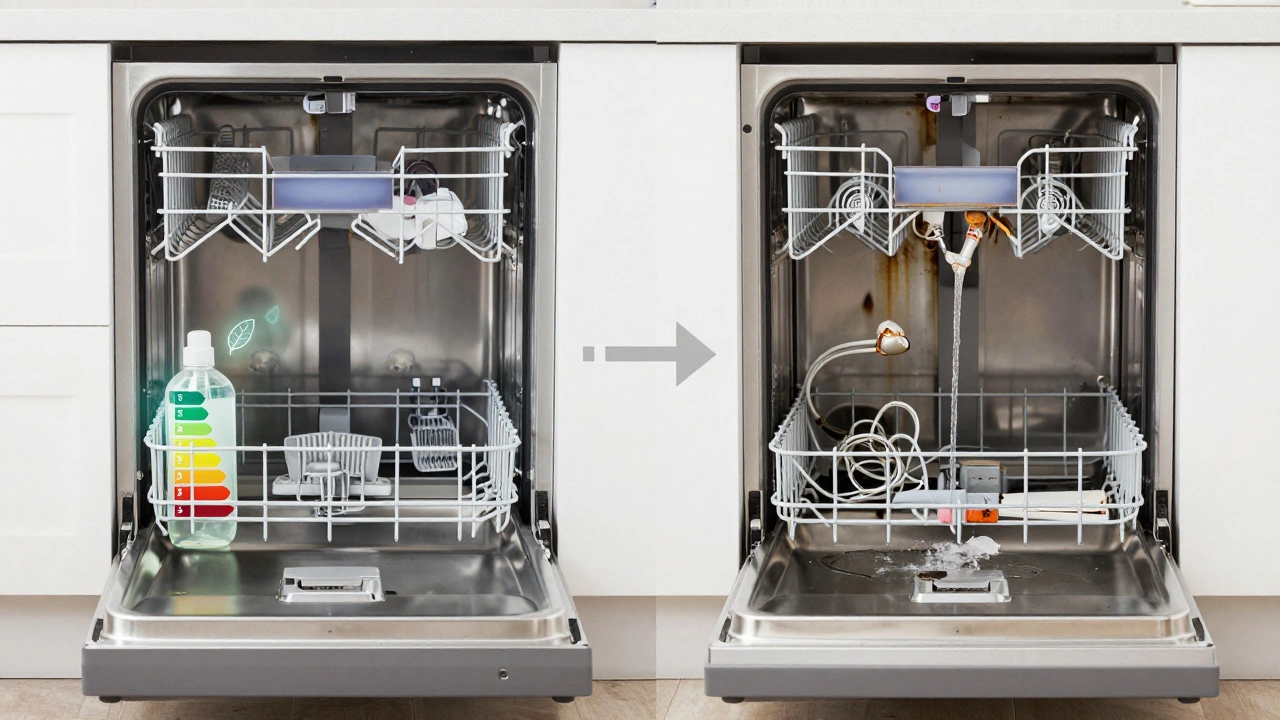
Here’s a quick rule of thumb:- Under 5 years old? Repair if it’s under warranty or the fix costs less than $150.
- 5-8 years old? Only repair if it’s a simple part like a spray arm or door seal ($50-$100).
- Over 8 years old? Replace unless the repair is under $100 and the model is a known durable brand.
Don’t fall for the myth that “it’s still working.” If your dishwasher is 10+ years old, it’s using 30-50% more water and electricity than a new Energy Star model. That adds up to $100+ a year in extra bills.
Final Thought: It’s Not Just About the Machine
Your dishwasher isn’t just a box that cleans dishes. It’s part of your home’s efficiency, water use, and even your daily routine. A good lifespan isn’t just about how long it lasts-it’s about how well it performs while it’s running. If you treat it right, even an affordable dishwasher can serve you faithfully for a decade. If you ignore it, even the most expensive model will quit early.So check your filter. Run that vinegar cycle. And when the time comes, don’t buy the cheapest one. Buy the one built to last.
How long should a dishwasher last on average?
On average, a dishwasher lasts 7 to 10 years for budget models and 10 to 15 years for mid-range to high-end units. Lifespan depends heavily on water quality, how often you use it, and whether you maintain it regularly.
Can I make my dishwasher last longer?
Yes. Clean the filter every 2 weeks, run a vinegar cycle monthly, use rinse aid, scrape food off dishes instead of rinsing them, and avoid overloading the racks. These habits can add 2 to 4 years to your dishwasher’s life.
Is it worth repairing a 10-year-old dishwasher?
Usually not. Repairs for dishwashers over 8 years old often cost $150-$400, and the unit is likely using 30-50% more energy than a new model. A new Energy Star dishwasher pays for itself in water and electricity savings within 3-5 years.
What’s the best brand for a long-lasting dishwasher?
Bosch, GE, and Whirlpool consistently rank highest for reliability and durability in independent testing. Bosch’s 300 Series is especially known for lasting 12+ years with proper care. Avoid unknown brands sold at deep discounts-they often use cheaper parts that fail faster.
Does hard water shorten dishwasher life?
Yes. Hard water causes mineral buildup that clogs spray arms, coats heating elements, and damages pumps. In areas with hard water, dishwashers can fail 2-3 years earlier than in soft-water regions. Using a water softener or dishwasher-specific filter helps significantly.