
Air Purifier or Dehumidifier Selector
Which device do you need?
Answer these questions to get personalized recommendations based on your home conditions and symptoms.
If you’ve ever woken up to a stuffy room, sticky surfaces, or a lingering musty smell, you’ve probably wondered: should I get an air purifier or a dehumidifier? It’s not a trick question-these devices do totally different jobs. And picking the wrong one won’t just waste your money-it could leave your home feeling worse than before.
What an air purifier actually does
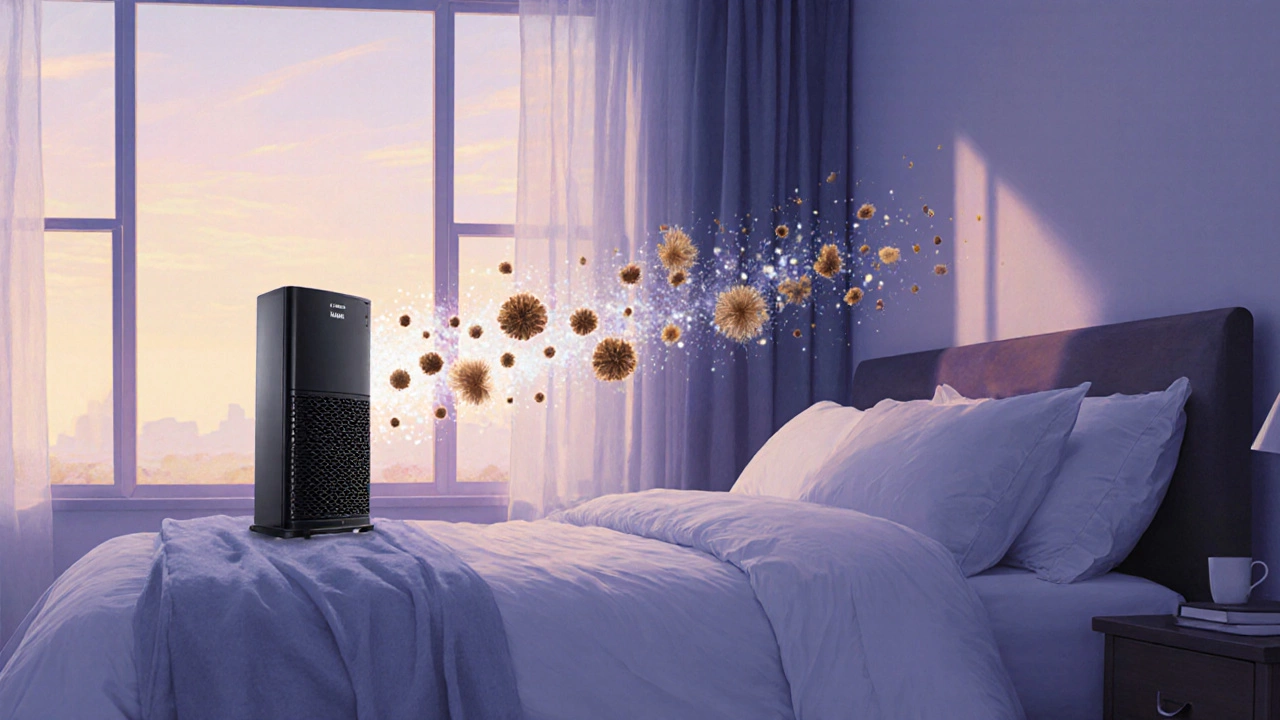
An air purifier pulls air through filters to trap particles like dust, pollen, pet dander, and mold spores. Some high-end models even capture smoke, VOCs, and bacteria. If you suffer from allergies, asthma, or live near busy roads, an air purifier makes a real difference. In Vancouver, where wildfire season turns the sky orange and the air tastes like ash, many households rely on them during late summer and early fall.
Look for a unit with a true HEPA filter-it captures 99.97% of particles as small as 0.3 microns. That’s the gold standard. Avoid anything labeled "HEPA-type" or "HEPA-like." Those are marketing terms, not real performance. Also, check the CADR rating. For a typical bedroom, aim for at least 200. If your room is 300 square feet or larger, go higher.
Here’s the catch: air purifiers don’t touch moisture. They won’t stop your windows from fogging up in winter. They won’t reduce the dampness in your basement. And they won’t stop mold from growing on your shower tiles. If your problem is wetness, an air purifier won’t help.
What a dehumidifier actually does
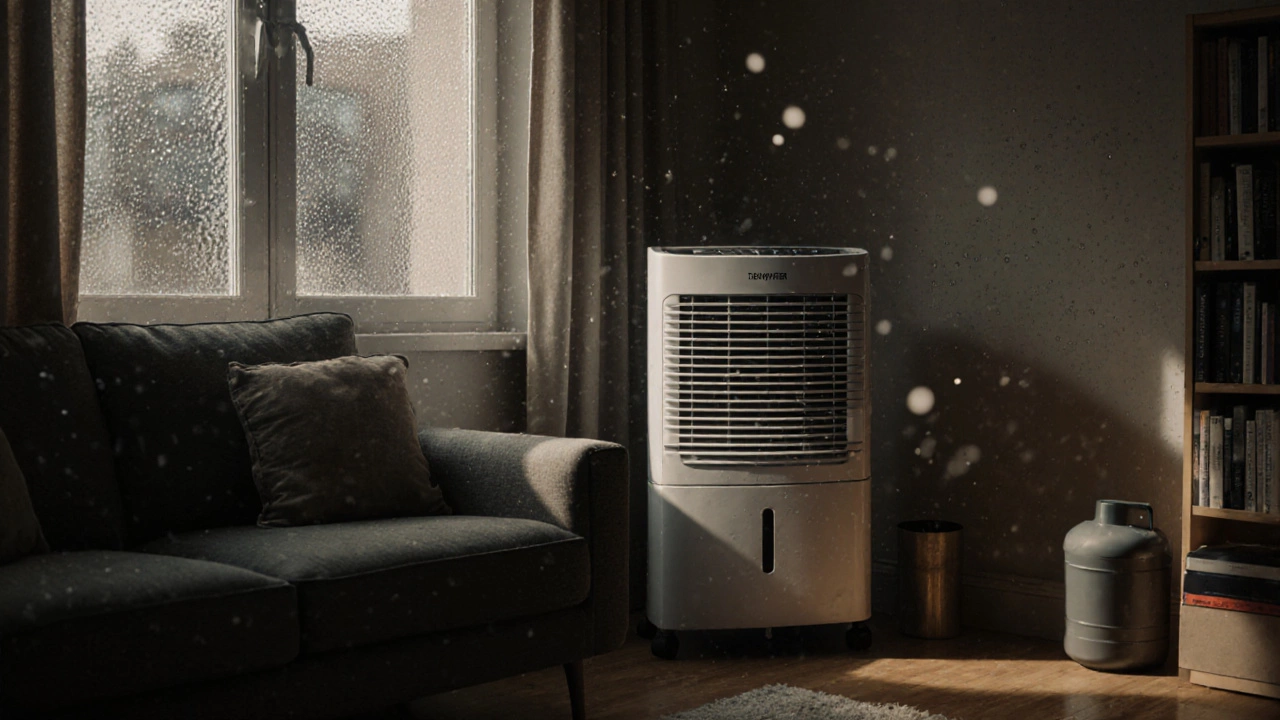
A dehumidifier pulls water out of the air. It cools air to condense moisture, then collects it in a tank or drains it directly. You’ll notice the difference fast-clothes dry faster, walls stop sweating, and that damp, earthy smell fades. In places like Vancouver, where rain is frequent and indoor humidity often hits 70% or higher in winter, dehumidifiers are a quiet lifesaver.
High humidity isn’t just uncomfortable. It’s a breeding ground for mold, dust mites, and mildew. These are common triggers for respiratory issues. The EPA recommends keeping indoor humidity between 30% and 50%. If your hygrometer reads above 60%, you’re in danger zone.
Not all dehumidifiers are built the same. For basements or large rooms, go for a 70-pint model. For bedrooms or small spaces, 30-40 pints is enough. Look for one with a built-in humidistat-it turns off automatically when your target humidity is reached. No need to empty buckets every morning.
The big difference: particles vs. moisture
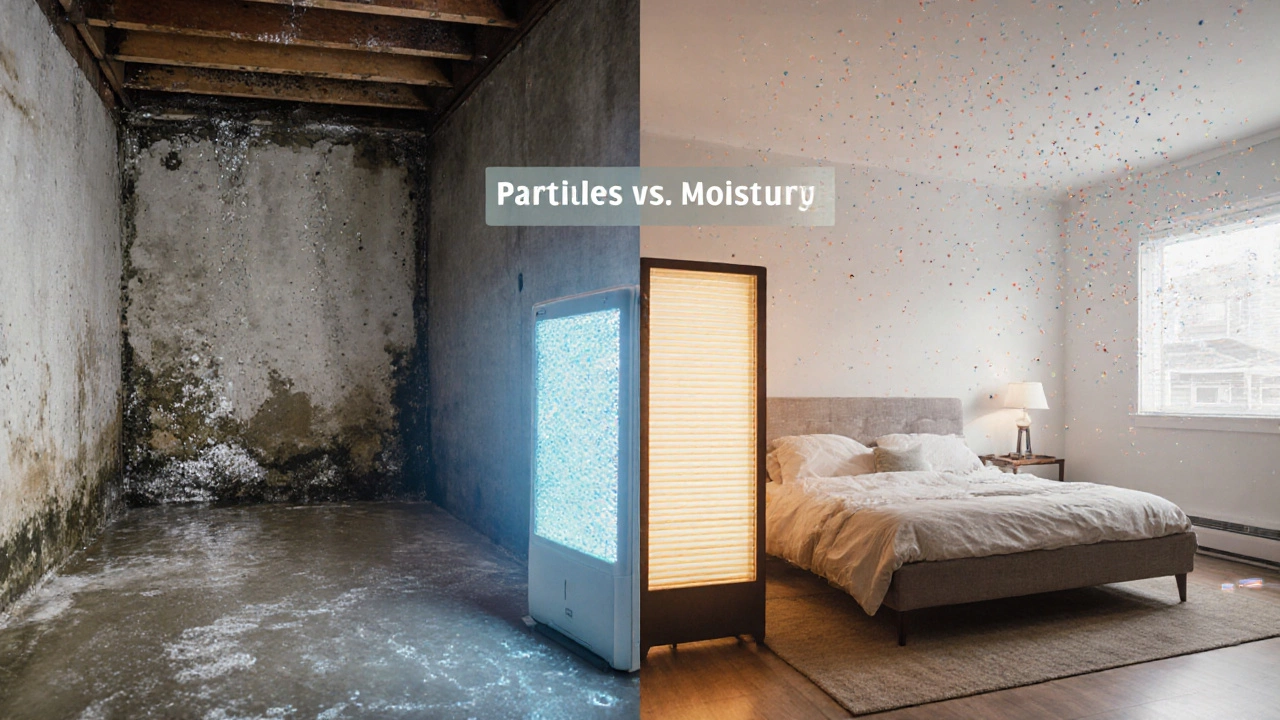
Think of it this way: an air purifier cleans the air. A dehumidifier dries the air. They’re not interchangeable. You can’t use one to fix the other’s problem.
Let’s say you have mold growing in your bathroom. An air purifier will suck up mold spores floating in the air-but it won’t stop new ones from forming because the walls are still wet. A dehumidifier lowers the moisture in the air, which slows mold growth. But if you have dust allergies and your bedroom is dry, a dehumidifier won’t help you breathe easier. You need an air purifier.
Some people think: "I’ll just get a combo unit." There are devices on the market that claim to do both. But most of them compromise. The dehumidifier part is underpowered. The air filter is weak. You end up paying more and getting less. Stick with separate units if you need both functions.
When to choose an air purifier
- You sneeze when the windows are open in spring
- Your pet sheds everywhere, and the couch looks like a fur ball
- You live near a highway or industrial area
- You’ve had wildfire smoke in your home this year
- Your doctor told you to reduce airborne allergens
For these cases, an air purifier is your best-and often only-solution. Brands like Coway, Blueair, and Levoit have proven models that work well in real homes. Don’t overspend on smart features. Focus on filter quality and room coverage.
When to choose a dehumidifier
- Your floors feel damp even when it hasn’t rained
- You see condensation on windows in the morning
- Your clothes smell musty after drying indoors
- You’ve spotted black spots on grout or wallpaper
- Your hygrometer reads above 60% for days
If any of these sound familiar, you need to reduce moisture. A dehumidifier from brands like Frigidaire, hOmeLabs, or Danby will handle it. Run it in the room where the problem is worst-usually the basement, bathroom, or laundry room.
What if you have both problems?
It’s not rare. In Vancouver, many homes have high humidity and airborne allergens. Winter brings damp air from rain and indoor drying. Summer brings pollen and wildfire smoke. You might need both.
Here’s how to handle it: install a dehumidifier in your basement or main living area to keep humidity under 50%. Then, place an air purifier in your bedroom or home office. That way, you’re tackling the root cause (moisture) and the symptom (allergens) at the same time.
Don’t run both in the same room unless you’re in a very small space. The dehumidifier’s fan and condensation process can interfere with the air purifier’s airflow. Keep them in separate rooms or at least 6 feet apart.
What not to do
Don’t buy a dehumidifier thinking it’ll clean your air. It doesn’t filter particles. Don’t buy an air purifier thinking it’ll dry your walls. It doesn’t remove moisture.
Don’t ignore your hygrometer. A $15 digital one from Amazon tells you more than guessing. If you don’t know your humidity level, you’re flying blind.
Don’t assume bigger is better. A 100-pint dehumidifier in a 100-square-foot room will over-dry the air and make it feel like a desert. That’s uncomfortable and can damage wood floors and furniture.
Don’t skip filter changes. A clogged HEPA filter in an air purifier becomes a dust trap. A dirty dehumidifier tank breeds mold. Clean both regularly.
Real-world example: A Vancouver home
Last winter, a neighbor in East Vancouver had constant headaches and a wet basement. She bought a dehumidifier first. Within a week, the smell vanished. Her windows stopped fogging. But she still sneezed every morning. She added a small HEPA air purifier in her bedroom. Her allergies dropped by 80%. She didn’t need a fancy smart device. Just two simple machines, used correctly.
That’s the pattern. Fix the moisture. Then fix the particles. One after the other. Not at the same time. Not in the same box.
Bottom line
There’s no universal answer. It depends on your problem. If your air feels heavy and your walls are damp-go dehumidifier. If your nose runs when you walk outside or your cat leaves fur on everything-go air purifier. If you have both? Get both. But don’t expect one to do the job of the other.
The best choice isn’t the most expensive one. It’s the one that solves your actual problem. Test your humidity. Track your symptoms. Then pick the tool that matches the cause-not the symptom.