

Dishwasher Savings Calculator
Calculate Your Dishwasher Savings
Find out how much you can save by running your dishwasher during off-peak electricity hours.
Enter Your Details
Your Results
Enter your details to see your potential savings.
How It Works
The calculator uses the following formula:
- Weekly cost (peak) = Loads per week × kWh per load × Peak rate
- Weekly cost (off-peak) = Loads per week × kWh per load × Off-peak rate
- Weekly savings = Weekly cost (peak) - Weekly cost (off-peak)
- Annual savings = Weekly savings × Weeks per year
- CO₂ reduction = Loads per week × kWh per load × (Peak CO₂ rate - Off-peak CO₂ rate)
Ever wondered if running your Dishwasher a kitchen appliance that cleans dishes using water, detergent and heat after the lights go out actually makes a difference? The answer is a resounding yes - especially when you pair it with off‑peak electricity rates, smart timing, and a few practical tricks. Below we break down why night‑time cycles can shave dollars off your bill, lower your carbon footprint, and even keep the house quieter.
Understanding Time‑of‑Use (TOU) Rates
Most Canadian utilities, including BC Hydro, offer Off‑peak electricity electricity billed at a lower price during low‑demand hours, usually overnight. The pricing model is called a Time‑of‑use rate a tariff that varies the cost per kilowatt‑hour (kWh) based on the time of day. In Vancouver, off‑peak rates can be 30-40% cheaper than peak rates.
- Peak (7 am‑7 pm): $0.154/kWh
- Off‑peak (7 pm‑7 am): $0.092/kWh
Energy savings that add up
Let’s run the numbers for a typical family that does three dishwasher loads a week. Using the rates above:
- Three loads × 1.2 kWh = 3.6 kWh/week
- Peak cost: 3.6 kWh × $0.154 = $0.55/week
- Off‑peak cost: 3.6 kWh × $0.092 = $0.33/week
- Annual savings: ($0.55‑$0.33) × 52 ≈ $11.44
That’s a modest amount, but remember the savings scale as you add more loads, larger machines, or higher electricity rates. Over a five‑year appliance lifespan, the payoff can reach $60‑$80, essentially paying for an extra cycle of detergent.
Environmental upside: lower carbon intensity at night
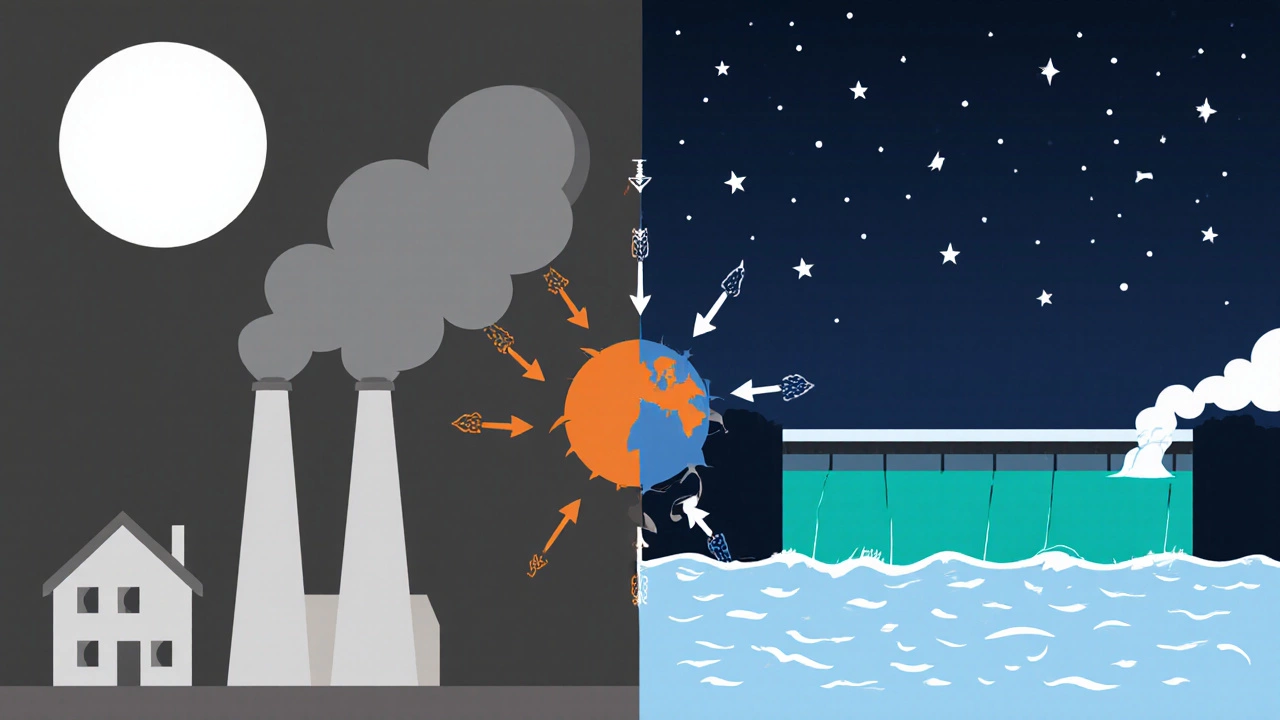
The electricity grid’s Carbon intensity the amount of CO₂ emitted per kWh generated drops after sunset because many coal‑fired plants reduce output while hydro‑rich regions like British Columbia increase supply. BC Hydro’s average night‑time carbon intensity is roughly 30 g CO₂/kWh versus 45 g CO₂/kWh during the day.
Running a 1.2 kWh cycle at night therefore avoids about 0.018 kg of CO₂ per load. Multiply that by 150 loads over three years and you’re preventing almost 3 kg of emissions - the weight of a bag of sugar.
Practical ways to automate night runs
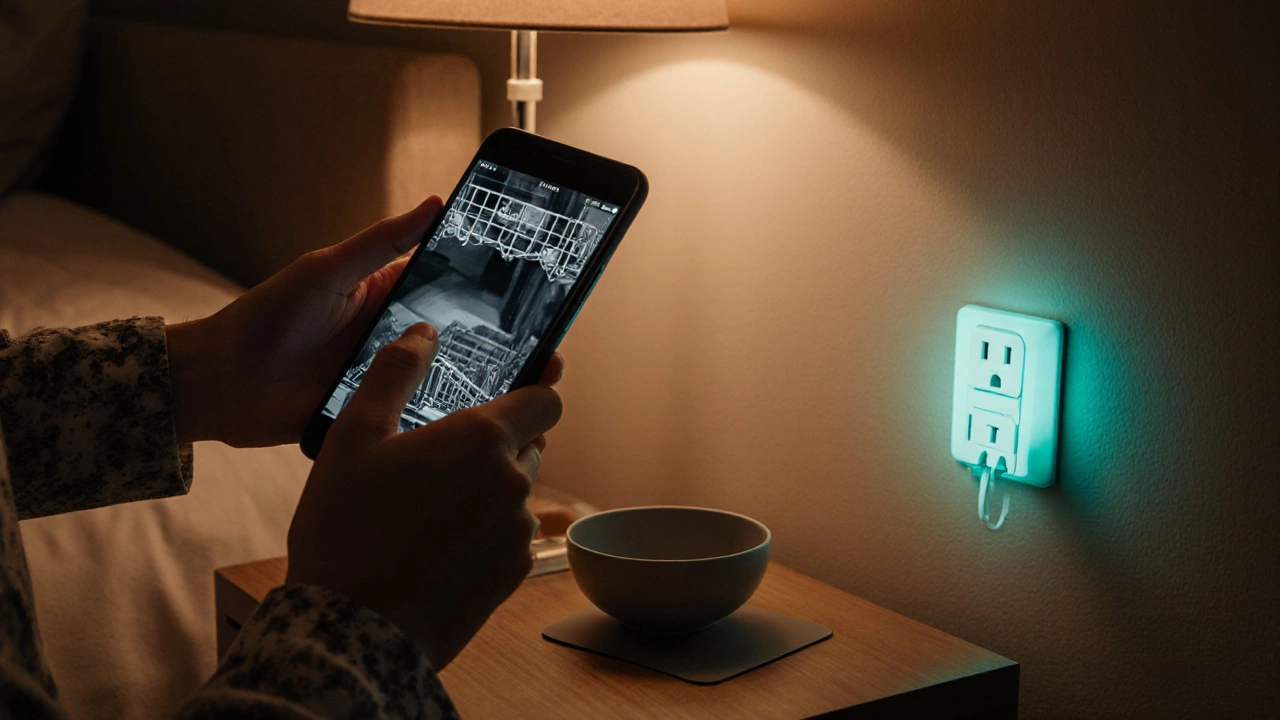
Most modern dishwashers include a built‑in Smart timer a delay‑start feature that lets you set the wash to begin hours later. If yours lacks one, a Smart home plug a Wi‑Fi enabled outlet that can be scheduled from an app does the trick.
- Load the dishwasher after dinner.
- Set the delay timer for 8‑10 hours (or schedule the plug for 2 am).
- Make sure the Load sensor a built‑in system that detects how full the dishwasher is and adjusts water usage is enabled to avoid waste.
For the best results, select the Eco or Energy‑Star program if your machine is Energy Star a certification indicating high energy efficiency rated.
Potential downsides and how to mitigate them
Running the dishwasher at night can raise two common concerns:
- Noise: A dishwasher can be loud for light sleepers. Choose a cycle with a “quiet” or “low‑sound” label, or place a rubber mat under the unit to dampen vibrations.
- Water heating: If your water heater also runs on a time‑of‑use plan, you might end up heating water during the same cheap window, which is fine. However, if the heater is on a separate tariff, consider setting it to pre‑heat the water earlier in the evening.
Finally, make sure you’re not unintentionally delaying dirty dishes for more than 24 hours, as food residue can harden and demand extra scrubbing.
Quick comparison: Night vs. Day cycles
| Metric | Night (Off‑peak) | Day (Peak) |
|---|---|---|
| Electricity cost per load | $0.11 | $0.18 |
| CO₂ per load (g) | 36 | 54 |
| Typical noise level (dB) | 45 dB (quiet cycle) | 45 dB (quiet cycle) |
Takeaway checklist
- Confirm your utility offers TOU or off‑peak rates.
- Set the dishwasher’s delay timer for 8‑12 hours after loading.
- Choose Eco or Energy‑Star cycles for maximum efficiency.
- Use a quiet cycle or add vibration‑dampening pads if noise is a concern.
- Track your monthly bill to see the real‑world savings.
Do I need a special electricity plan to run the dishwasher at night?
Not necessarily, but a time‑of‑use (TOU) or off‑peak plan is what makes night runs cheaper. Check with your utility; many offer a simple “night‑rate” option.
Will an overnight cycle delay my meals?
If you load dishes after dinner and set a delay of 8‑10 hours, the cycle finishes before breakfast, leaving clean dishes ready for the morning.
Is it safe to leave the dishwasher running while I’m asleep?
Yes. Modern dishwashers have leak‑detect sensors and automatic shut‑off if water overflows. Just make sure the machine is well‑maintained.
Can I combine night runs with a smart plug?
Absolutely. Plug the dishwasher into a Wi‑Fi smart plug, set a schedule, and you’ll have the same effect as a built‑in timer, even on older models.
What if my water heater also uses off‑peak rates?
That’s a win. Heating water during cheap hours further reduces overall household costs. Just ensure the heater’s schedule doesn’t clash with other high‑draw appliances.