
Air Purifier CADR Calculator
CADR stands for Clean Air Delivery Rate. For effective dust removal, your air purifier's CADR should be at least 200 for rooms up to 200 sq ft, and 300+ for larger spaces.
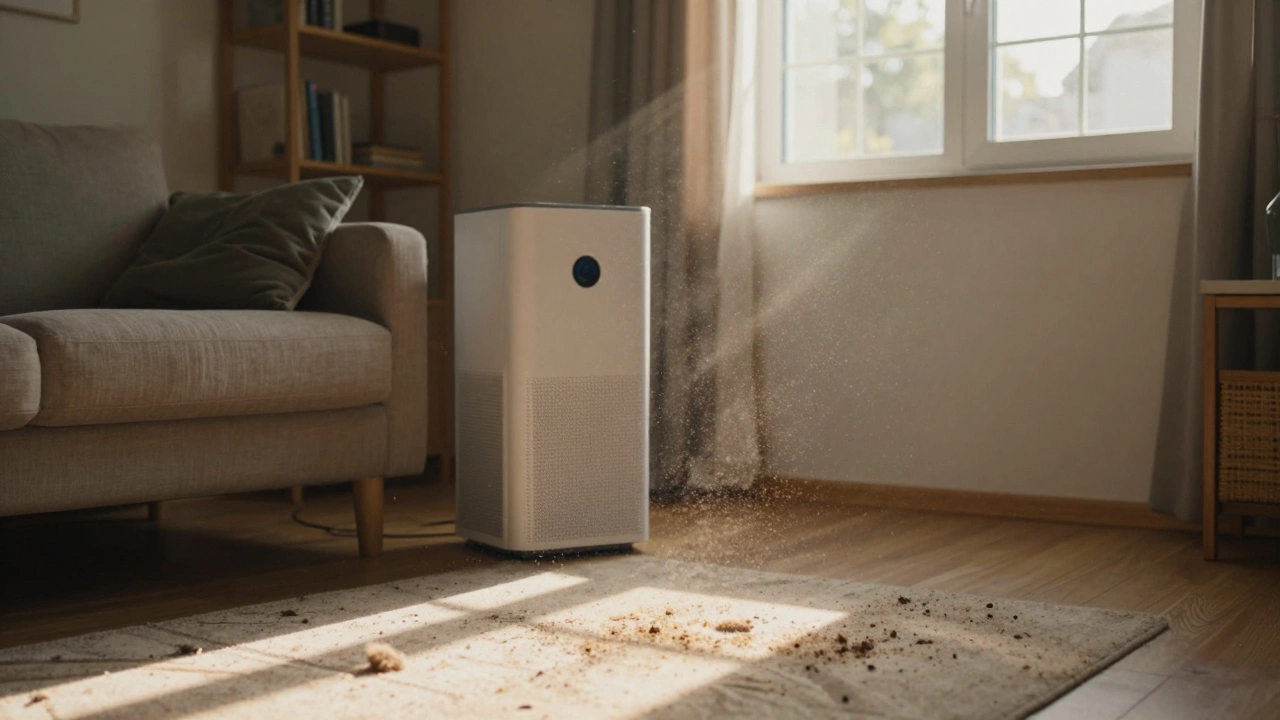
If you bought an air purifier hoping to breathe cleaner air and stop dust from covering your shelves, but your house still looks like it’s been through a sandstorm, you’re not alone. Many people assume an air purifier is a magic button for dust-but it’s not. Dust doesn’t just vanish because you turned on a machine. There are real, physical reasons why your house stays dusty even with a purifier running full time.
Dust isn’t just floating in the air
Most people think dust comes from outside, drifting in through windows. But up to 60% of household dust is generated inside. Skin cells, pet dander, fabric fibers from clothes and carpets, and even food crumbs break down over time and become airborne. An air purifier only catches what’s already floating. It doesn’t stop your dog from shedding, your sheets from shedding fibers, or your shoes from tracking in dirt. If you’re not cleaning surfaces, vacuuming regularly, or managing sources, the purifier is fighting a losing battle.Your air purifier might be too weak
Not all air purifiers are built the same. Many budget models have tiny filters and weak fans. If your purifier is rated for a 200-square-foot room but you’re using it in a 500-square-foot living area, it’s not going to keep up. Check the CADR (Clean Air Delivery Rate) rating on the box. For dust, you want a CADR of at least 200 for medium rooms and 300+ for larger spaces. A unit with a low CADR spins air slowly, letting dust settle before it gets caught. You’re running a bicycle pump trying to fill a swimming pool.The filter is clogged or old
Air purifiers don’t last forever. Most HEPA filters need replacing every 6 to 12 months. If you’ve had yours for two years and never changed it, it’s probably packed with dust-so much that air can’t even flow through properly. A clogged filter doesn’t just stop working; it can actually start blowing trapped dust back into the room. Some units have filter replacement alerts, but most don’t. If you can’t remember the last time you swapped the filter, it’s time to do it. A dirty filter is worse than no filter at all.Placement matters more than you think
You can’t just stick your air purifier in the corner behind the couch and expect results. Dust needs to reach the intake. If the unit is blocked by furniture, curtains, or walls, airflow is cut in half. The best spot is central, elevated (on a shelf or table), and at least 12 inches away from walls. Open doors to other rooms so air can circulate. Running it in a closed bedroom while dust builds up in the living room? That’s like locking the front door but leaving the back window wide open.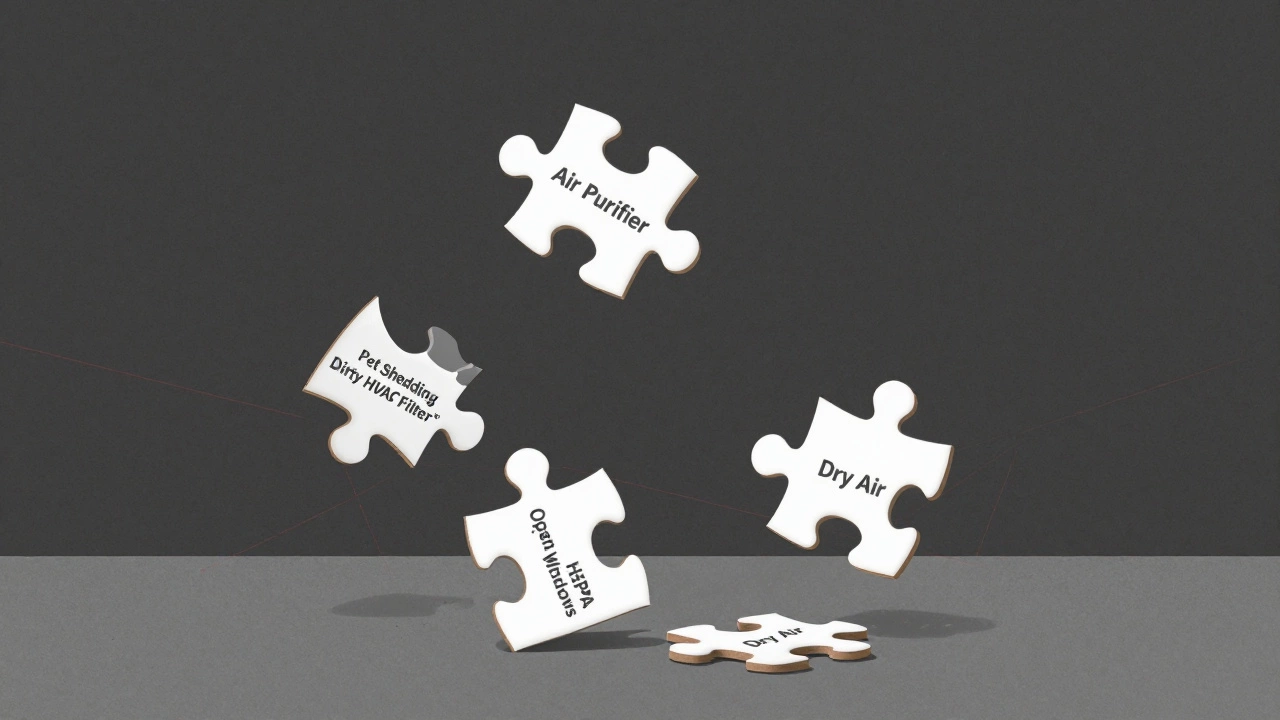
You’re not cleaning the right way
Dusting with a dry cloth? You’re just moving dust around. Using a vacuum without a HEPA filter? You’re blowing fine particles back into the air. Studies show that using a vacuum with a true HEPA filter reduces airborne dust by up to 70% in two weeks. Same with mopping-wet mopping traps dust instead of letting it fly. If you’re wiping surfaces with a feather duster or microfiber cloth without washing it after, you’re re-spraying dust every time. Wash your cleaning cloths weekly. Change your vacuum filter every 3 months. These aren’t optional-they’re part of the system.Windows, doors, and ventilation are leaking dust
Even the best air purifier can’t stop dust from coming in. Open windows on a windy day? You’re letting in pollen, soil, and road grime. HVAC systems without proper filters pull in outdoor air-and if your furnace filter is MERV 6 or lower, it’s doing almost nothing. Upgrade to a MERV 13 filter in your central system. Seal gaps around windows and doors with weatherstripping. Install door mats at every entrance. These aren’t luxuries-they’re necessary steps. An air purifier cleans the air you already have. It doesn’t block new dust from entering.Pets and textiles are your hidden dust factories
If you have pets, you’re producing more dust than you realize. One medium-sized dog can shed up to 100 million skin cells a day. Cats shed even more relative to their size. That’s not just fur-it’s dander, saliva, and dead skin. Wash pet bedding weekly. Brush your pets outside. Use a lint roller on couches and beds daily. Carpets, curtains, and upholstered furniture trap dust like a sponge. Hard floors and washable blinds cut dust buildup by half. If you’re keeping thick rugs or heavy drapes, you’re making the job harder for your purifier.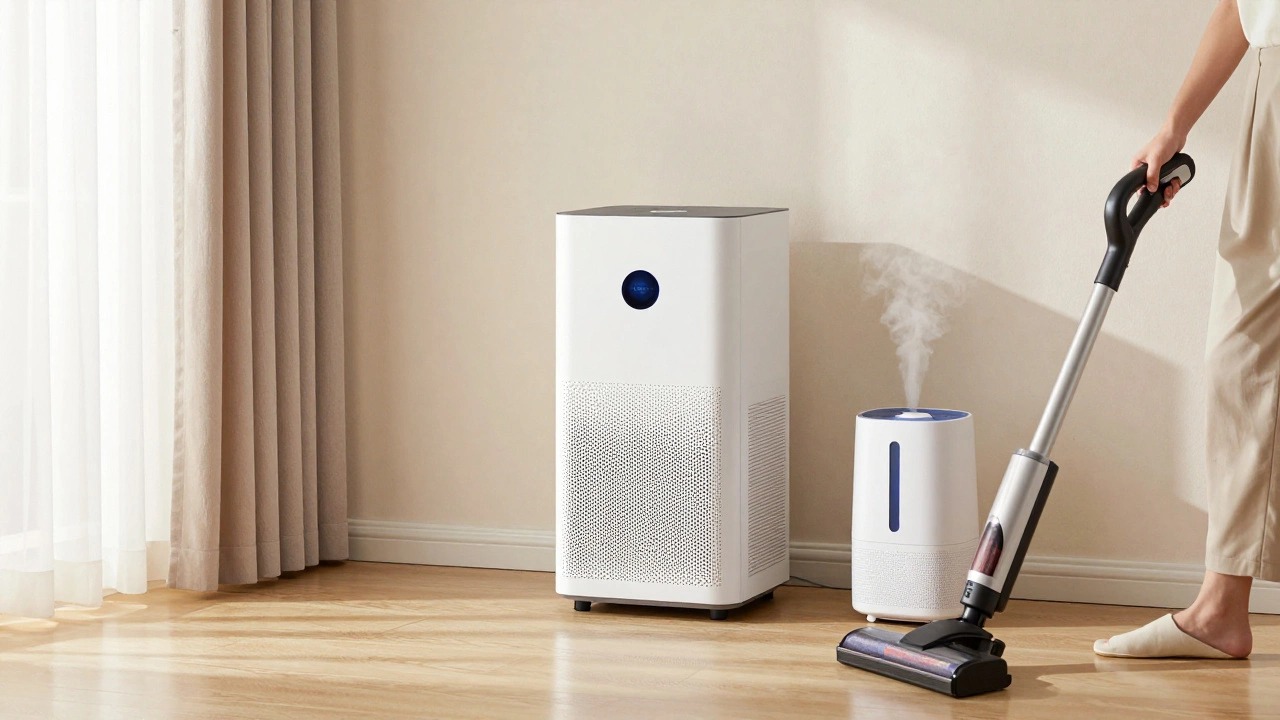
Humidity levels are wrong
Dry air makes dust worse. When humidity drops below 30%, skin cells and fabric fibers become lighter and stay airborne longer. In winter, heating systems dry out the air, making dust hang around for hours. A humidifier set to 40-50% helps dust particles clump together and fall faster. That means your purifier catches them more easily. But too much humidity (over 60%) encourages mold and dust mites-another kind of allergen. Keep a hygrometer in the living room. Adjust humidity, and you’ll see dust settle faster.You’re relying on the purifier alone
An air purifier is one tool in a dust-control system. It’s not a replacement for cleaning. Think of it like a coffee maker-you still need coffee beans, water, and a cup. The purifier is the machine. You’re the supplier of the beans. If you stop putting beans in, the machine runs for nothing. Clean your home. Vacuum with HEPA. Wash bedding. Control humidity. Seal drafts. Replace filters. Only then will your purifier start making a real difference.What to do next
Start with these five steps:- Check your purifier’s CADR rating. If it’s under 200 for your room size, consider upgrading.
- Replace the filter if it’s older than 6 months-or if it looks gray and stiff.
- Move the unit to a central, unobstructed spot, at least 12 inches from walls.
- Switch to a MERV 13 filter in your HVAC system and clean or replace it every 90 days.
- Start vacuuming with a HEPA vacuum twice a week and mop with a damp cloth.
Within two weeks, you should notice less dust settling on surfaces. It won’t disappear overnight-but it will drop noticeably. Dust control isn’t about buying the most expensive purifier. It’s about fixing the whole system.
Why does dust keep coming back even after I clean?
Dust doesn’t just come from the air-it’s created inside your home every day from skin cells, pet dander, fabric fibers, and tracked-in dirt. Cleaning surfaces removes dust, but if you’re not addressing the sources (like shedding pets, dirty carpets, or open windows), it just rebuilds quickly. A vacuum with a HEPA filter and reducing clutter helps break the cycle.
Can an air purifier remove dust completely?
No air purifier can remove 100% of dust. HEPA filters capture 99.97% of particles 0.3 microns and larger, which includes most dust. But dust is constantly being generated. The purifier only cleans the air that passes through it. To truly reduce dust, you need to combine it with regular cleaning, source control, and good ventilation.
Should I run my air purifier all day?
Yes, especially if you’re dealing with dust. Dust particles are always in motion. Running the purifier 24/7 on low or medium keeps air circulating and catches dust before it settles. Most modern units use very little power on low settings-less than a light bulb. Turning it off lets dust build up again.
Does opening windows make dust worse?
Yes, especially on windy days, during pollen season, or near busy roads. Outdoor air carries dirt, pollen, and pollutants that add to indoor dust. If you open windows, do it briefly and only when air quality outside is good. Use your air purifier on high for an hour after closing them to clear the influx.
Is a more expensive air purifier always better?
Not necessarily. What matters is the CADR rating, filter type (true HEPA), and room size match. A $200 unit with a high CADR and real HEPA filter often outperforms a $500 model with a weak fan or a “HEPA-type” filter. Look for AHAM Verified certification. Price doesn’t guarantee performance-specs do.