
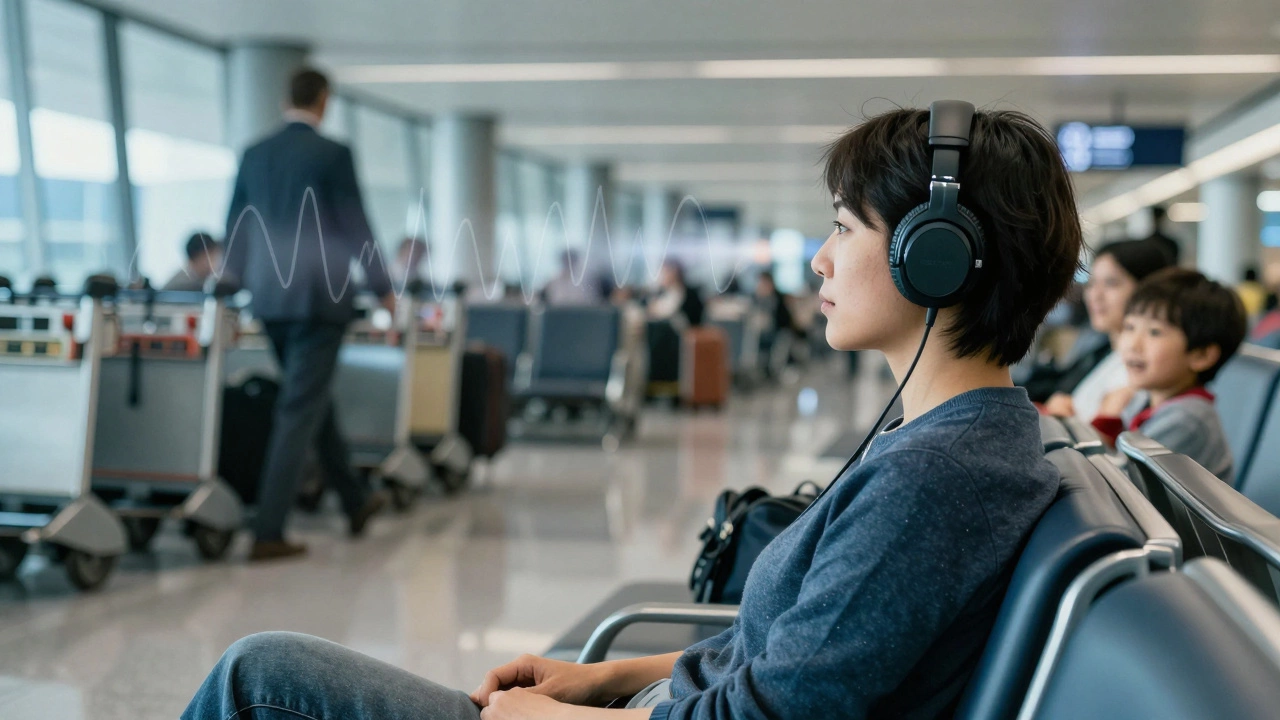
Noise Cancellation Effectiveness Calculator
Ever put on your noise cancelling headphones, expecting total silence, only to hear a dog barking outside, a coworker talking, or your own breathing? You’re not broken. Your headphones aren’t defective. And you’re not imagining things. This happens to everyone - even people who’ve used noise cancelling headphones for years.
How noise cancelling headphones actually work
Noise cancelling headphones don’t erase sound like a magic spell. They fight background noise using tiny microphones and speakers working together. This is called active noise cancellation (ANC). The headphones pick up low-frequency sounds - like airplane engines, HVAC systems, or traffic rumble - then create an opposite sound wave to cancel them out. Think of it like two waves meeting: one up, one down. They cancel each other, leaving quiet.
But here’s the catch: ANC works best on steady, low-pitched sounds. It’s great for the hum of a plane, the drone of a refrigerator, or the rumble of a subway. It’s not built to cancel sudden, sharp, or high-pitched noises - like a baby crying, a door slamming, or someone yelling your name.
Why your voice still sounds loud
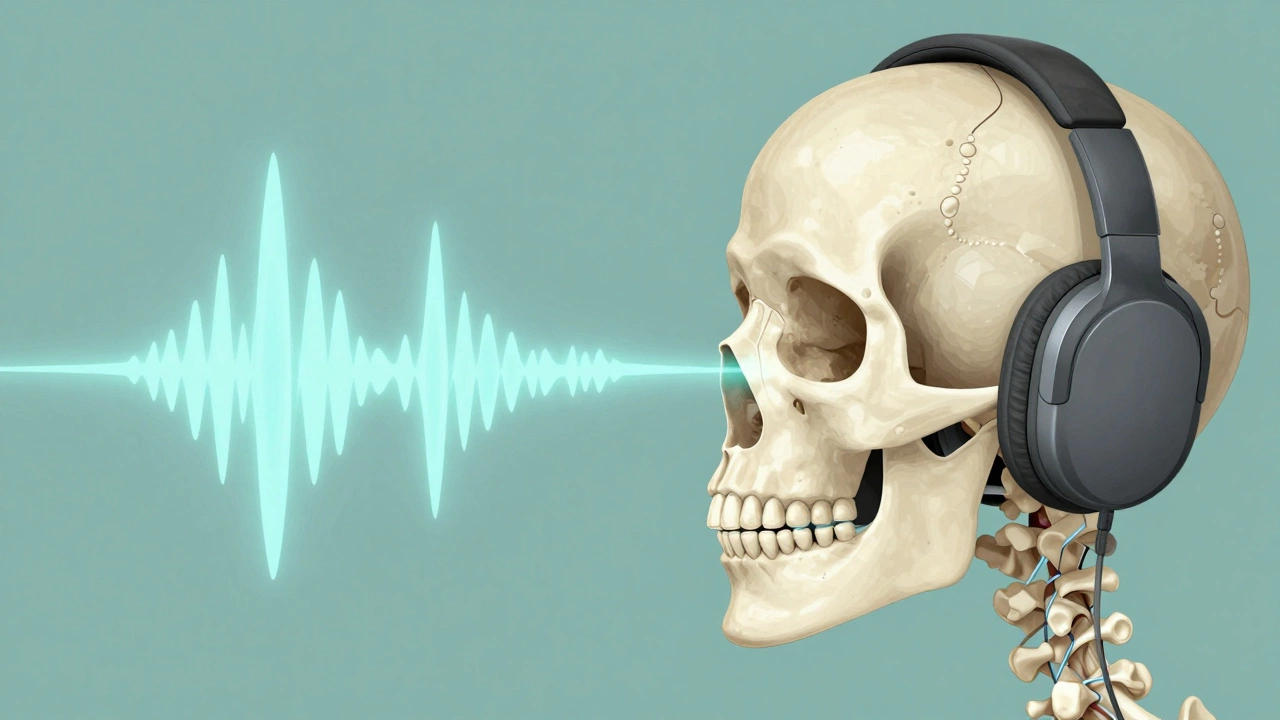
Have you ever noticed that when you talk while wearing noise cancelling headphones, your voice sounds louder than usual? That’s not the headphones amplifying your voice. It’s because your skull transmits sound directly to your inner ear. This is called bone conduction. When you speak, vibrations from your vocal cords travel through your jaw and skull bones straight to your cochlea. Noise cancelling headphones can’t block that path. So your voice stays clear - sometimes even louder than before.
This is why people using ANC headphones often feel like they’re talking in a tunnel. It’s not just your ears - it’s your whole head picking up your own sound.
Transparency mode isn’t a bug - it’s a feature
Most modern noise cancelling headphones come with a setting called transparency mode or ambient sound mode. This isn’t a malfunction. It’s designed on purpose. When you flip it on, the headphones use their microphones to let outside sounds in - so you can hear announcements, talk to someone, or stay aware of traffic.
Some people think transparency mode is just for safety. But it’s also about comfort. Constant silence can feel unnatural. Your brain expects to hear some background noise. When it’s gone, you start noticing your own heartbeat, breathing, or even the sound of your eyes moving. That’s when transparency mode helps - it gives your brain a little reality check.
Why high-pitched sounds slip through
ANC systems struggle with frequencies above 1,000 Hz. That’s why:
- A bird chirping? Still loud.
- A keyboard clacking? Still audible.
- A person speaking? Still clear.
These sounds are too fast and too sharp for the headphones to predict and cancel in real time. ANC needs a few milliseconds to analyze and respond. A sudden scream or a ringing phone? By the time the system reacts, the sound’s already passed.
Even the best ANC headphones - like the Sony WH-1000XM5 or Bose QuietComfort Ultra - can’t cancel human speech effectively. That’s why you can still understand someone talking to you while wearing them. It’s not a flaw. It’s intentional design.
Your ears are still listening
Noise cancelling headphones reduce ambient noise - but they don’t turn off your hearing. Your ears still pick up everything. The headphones just lower the volume of the background. So if something important happens - like your phone ringing, a fire alarm, or a child calling - you still hear it. That’s safety.
Some people assume total silence means better focus. But studies show that complete isolation can make you more distracted. Your brain starts scanning for missing sounds. That’s why many users prefer partial noise reduction over total silence. It’s more natural.
What you can’t cancel - and why
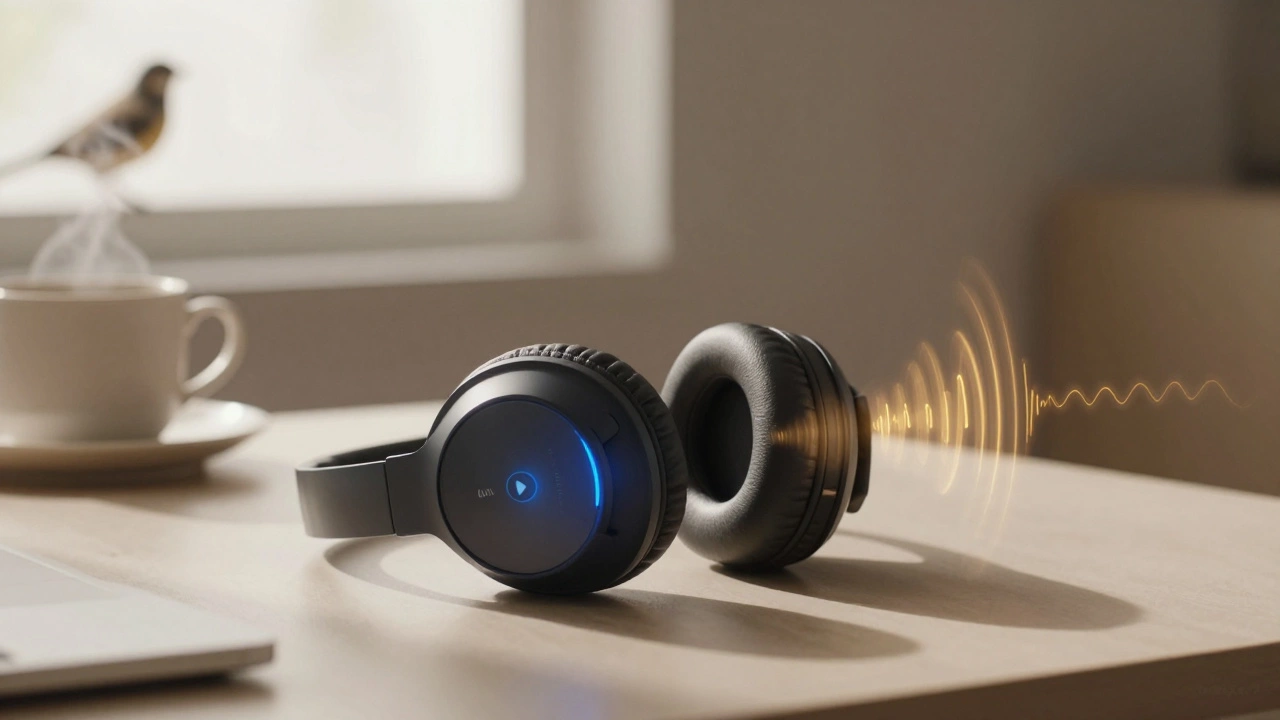
There are some sounds ANC simply can’t touch:
- Human speech - too complex and variable.
- High-frequency sounds - like squeaks, beeps, or whistles.
- Sound from bone conduction - like your own voice or chewing.
- Sudden noises - like a door slamming or a car horn.
Even if your headphones claim 40 dB of noise reduction, that doesn’t mean everything disappears. It means loud sounds get quieter - not gone. A jet engine at 90 dB becomes 50 dB. Still audible. Still noticeable. Just less overwhelming.
What to expect - and what not to
If you bought noise cancelling headphones hoping for perfect silence, you’ll be disappointed. But if you bought them to reduce distraction, reduce fatigue, and make long flights or noisy offices bearable - you’ve picked the right tool.
They’re not soundproof. They’re sound management tools. Think of them like sunglasses for your ears. They don’t block all light - just the harsh glare. Same here: they don’t block all sound - just the annoying, constant background noise.
And if you’re still hearing things? Good. That means your headphones are working as designed - keeping you aware, safe, and connected.
Can noise cancelling headphones block out human speech completely?
No. Human speech is too complex and variable for active noise cancellation to cancel effectively. ANC works best on steady, low-frequency sounds like engine hums or air conditioners. Voices, especially when spoken nearby, are too fast and too high-pitched for the system to predict and cancel in real time. That’s why you can still understand someone talking to you - and why many headphones include transparency mode to let speech in on purpose.
Why do I hear my own breathing with noise cancelling headphones?
When background noise is reduced, your brain starts noticing sounds you normally ignore - like your breathing, heartbeat, or even the sound of your eyes moving. This is called auditory adaptation. It’s not the headphones making you louder - it’s your brain turning up the volume on internal sounds because external noise is gone. Some people find this unsettling. Others find it calming. Transparency mode can help by letting in a little ambient sound to balance it out.
Do noise cancelling headphones work better on some types of noise than others?
Yes. They’re most effective against low-frequency, continuous sounds like airplane engines, train rumble, HVAC systems, or refrigerator hum. These are predictable and steady, which lets the headphones generate an opposing sound wave accurately. They’re much less effective against sudden, sharp, or high-pitched noises - like barking dogs, clattering dishes, or children yelling - because those sounds are too unpredictable to cancel in real time.
Is it normal to still hear my voice when wearing noise cancelling headphones?
Yes. Your voice reaches your ears through bone conduction - vibrations from your jaw and skull that travel directly to your inner ear. Noise cancelling headphones can’t block this path. That’s why your voice sounds louder and clearer than usual. It’s not a defect - it’s physics. Many people use this to their advantage, especially when taking calls or talking to coworkers without removing their headphones.
Should I turn off noise cancellation if I want to hear my surroundings?
If you need to hear announcements, traffic, or people talking, don’t turn off the headphones - use transparency mode instead. Most modern noise cancelling headphones have this feature built in. It lets in outside sound naturally while still blocking constant background noise. Turning off ANC entirely removes all sound control, which can make loud environments more overwhelming. Transparency mode gives you control without losing comfort.