
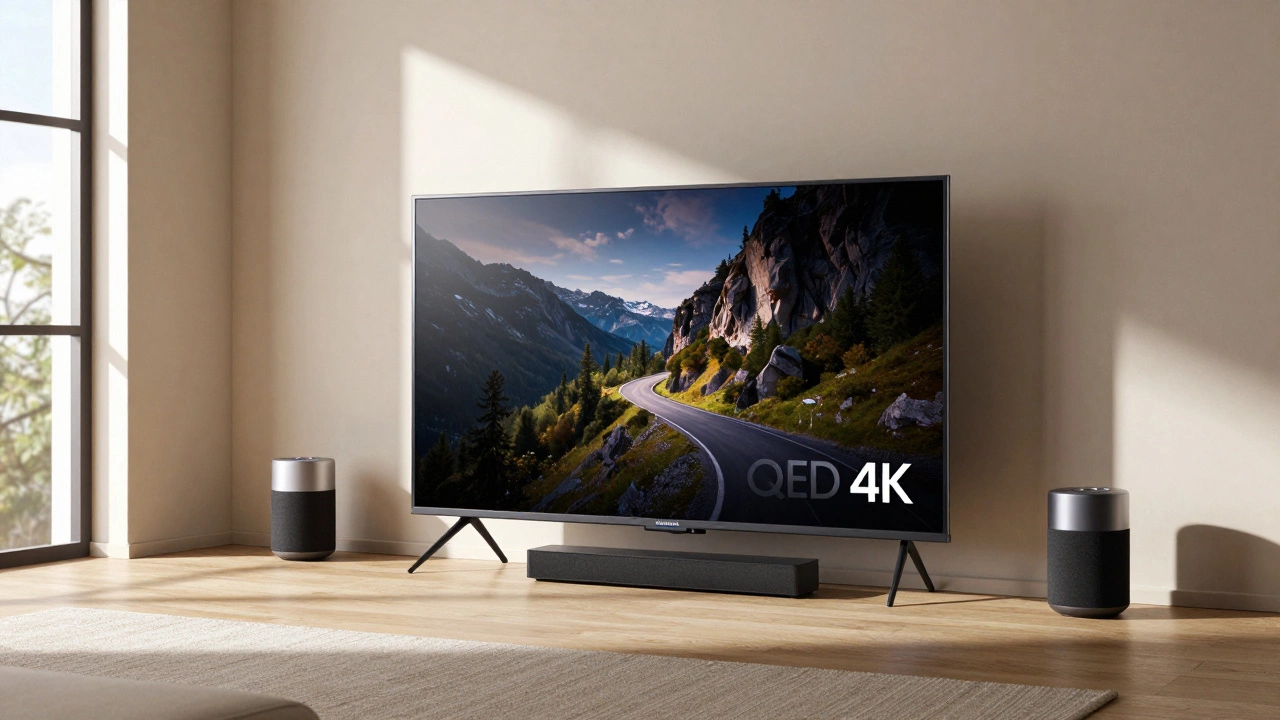
When you walk into any electronics store or scroll through online shops, you’ll see dozens of TV brands shouting they’re the best. But which one actually holds the number one spot in 2026? It’s not about who has the flashiest ads or the most celebrity endorsements. It’s about real performance, real features, and real user experiences over time.
The truth? Samsung is still the top TV brand in 2026 - not because it’s the oldest, but because it keeps winning where it matters most: picture quality, software reliability, and smart features that actually work.
Why Samsung Leads the Pack
Samsung’s QLED and OLED lines dominate global sales for the seventh year in a row. In 2025, they shipped over 32 million units worldwide, according to DisplaySearch data. That’s more than LG, Sony, and TCL combined. But numbers alone don’t tell the whole story.
What makes Samsung stand out? It’s the balance between innovation and consistency. Their latest Neo QLED 8K models use mini-LED backlighting with 4,096 local dimming zones. That means deeper blacks, brighter highlights, and fewer halos around bright objects on dark backgrounds. Compare that to last year’s models, and the difference is noticeable even to casual viewers.
Then there’s the Tizen OS. It’s fast. It doesn’t bloat with ads. It loads apps in under two seconds. You can cast from your phone, control everything with your voice through Bixby or Alexa, and even mirror your laptop screen without third-party apps. Most competing brands still struggle with laggy interfaces or confusing menus.
LG’s OLED Challenge
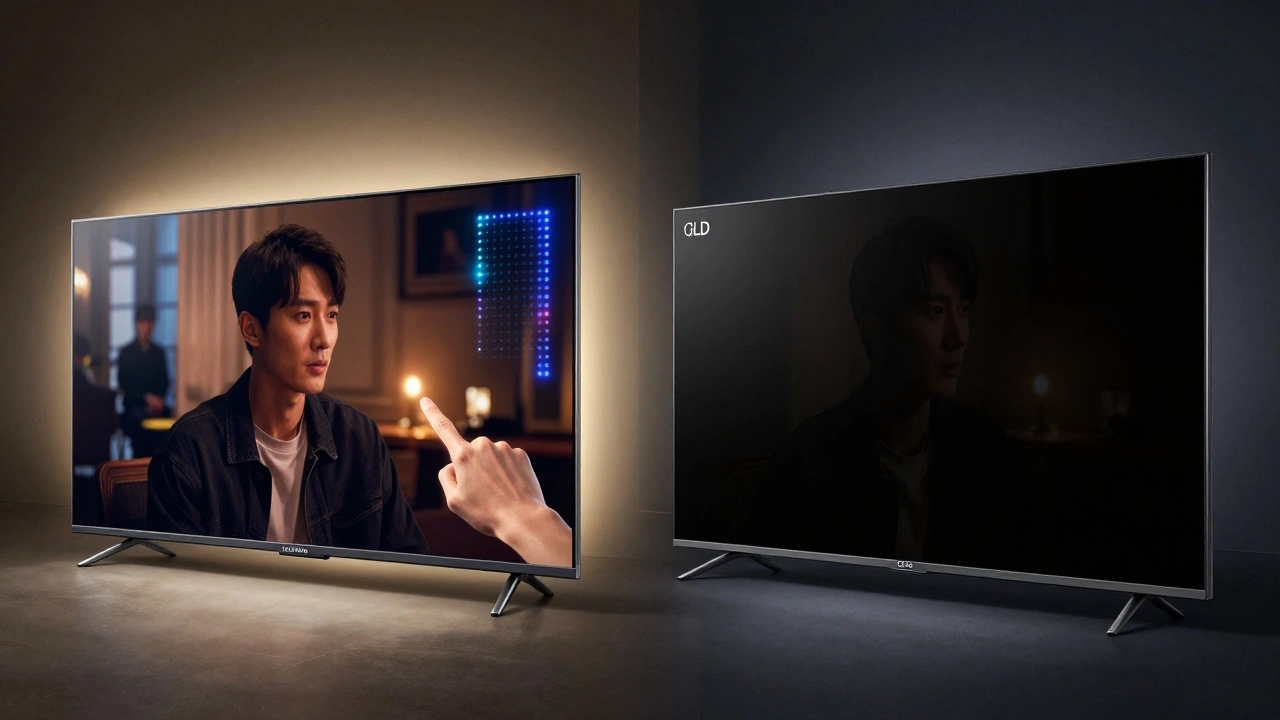
LG isn’t far behind - especially if picture quality is your top priority. LG’s OLED TVs have been the gold standard for contrast since 2017. Each pixel turns off completely, delivering true black. That’s why professional reviewers still give LG’s C and G series near-perfect scores.
But here’s the catch: OLEDs still have burn-in risks. If you leave your news channel or game HUD on screen for hours every day, you might see ghost images after 18-24 months. Samsung’s QLEDs don’t have that issue. They’re also brighter, which matters if your living room gets a lot of sunlight.
LG’s webOS is smooth, but it’s not as customizable as Tizen. And while LG leads in gaming features like HDMI 2.1 and 144Hz support, Samsung closed that gap in 2025 with its Game Mode Pro and variable refresh rate tuning.
Sony’s Quiet Strength
Sony doesn’t sell many TVs, but the ones it does sell are often the most expensive - and the most praised. Their Bravia XR series uses the same processor as their high-end cinema monitors. The image processing is unmatched for motion clarity and color accuracy.
If you’re a movie buff who watches in a dark room and cares about director intent, Sony is still king. But for most people? It’s overkill. The price premium is 30-50% higher than Samsung’s equivalent model. And Sony’s Android TV interface is slower than Tizen. You get better picture quality, but you pay for it in convenience.
The Value Contenders: TCL and Hisense
For budget shoppers, TCL and Hisense have become serious players. TCL’s 6-Series with Mini-LED and Dolby Vision support now matches mid-range Samsung models in brightness and color. The 2026 65-inch model costs under $700 and has a 120Hz panel with full-array local dimming.
Hisense’s U7K series surprised even industry insiders. It uses a new quantum dot film that rivals Samsung’s QLED in color volume, and it comes with Google TV - which is more flexible than Tizen or webOS for app lovers.
But here’s the trade-off: both brands still lag in software updates. TCL hasn’t released a major OS upgrade in over 18 months. Hisense’s remote is clunky. And neither offers the same level of customer support as Samsung.
What Really Matters in 2026
So who’s number one? It depends on what you need.
- If you want the best overall experience - picture, sound, smart features, and reliability - go with Samsung.
- If you care most about perfect blacks and watch movies in a dark room, pick LG OLED.
- If you’re willing to pay extra for cinema-grade color and don’t mind slower menus, choose Sony.
- If you’re on a tight budget and still want great picture quality, TCL or Hisense will get you 90% of the way there.
Here’s the thing: TV tech has plateaued. The big leaps happened between 2018 and 2022. Today’s models are refinements, not revolutions. That’s why brand reputation matters more than ever. Samsung doesn’t just make good TVs - it makes TVs that keep working well for five, six, even seven years.
And that’s the real measure of number one: not sales numbers, but how long you’re happy with your purchase.
What to Look for Before You Buy
Don’t just pick the brand with the biggest logo. Ask yourself these three questions:
- Do you watch in a bright room? Then go for a QLED or mini-LED TV. OLEDs get washed out in daylight.
- Do you game? Check for HDMI 2.1, 120Hz support, and low input lag. Samsung and LG lead here.
- Do you use streaming apps every day? Avoid brands with outdated software. Tizen and Google TV are the most reliable.
Also, skip the 8K hype. Unless you’re sitting 3 feet from a 75-inch screen, you won’t see any difference over 4K. That extra cost goes to marketing, not performance.
Final Verdict
In 2026, Samsung is still the number one TV brand - not because it’s perfect, but because it’s the most consistently excellent. It delivers strong picture quality, a smooth smart system, and reliable hardware across price points. LG is the best for movie purists. Sony is the luxury choice. TCL and Hisense are the smart budget picks.
There’s no single "best" TV. But if you want one brand that gets it right year after year, Samsung is still the one.
Is Samsung really the best TV brand in 2026?
Yes, Samsung holds the top spot in 2026 based on global sales, customer satisfaction, and long-term reliability. Its Neo QLED and OLED models offer the best mix of picture quality, smart features, and software updates. While LG and Sony lead in specific areas like contrast and color accuracy, Samsung delivers the most balanced experience across different users and use cases.
Are OLED TVs better than QLED TVs?
It depends on your setup. OLEDs have perfect blacks and infinite contrast because each pixel turns off independently. That’s ideal for dark rooms and movie watching. QLEDs, like Samsung’s, are brighter and don’t risk burn-in, making them better for sunny rooms or long gaming sessions. If you watch a lot of sports or play video games, QLED is the safer bet.
Should I buy an 8K TV?
No, not unless you have a very specific reason. There’s almost no 8K content available, and the human eye can’t tell the difference from 4K unless you’re sitting extremely close to a very large screen. You’re paying extra for future-proofing that won’t matter for years, if ever. Stick with 4K - it’s the sweet spot for price and performance.
Which brand has the best smart TV system?
Samsung’s Tizen OS is the fastest and most reliable, with quick app loading, clean menus, and deep voice assistant integration. Google TV (used by Hisense and Sony) is more customizable and has better app discovery. LG’s webOS is smooth but less flexible. Avoid brands using outdated or cluttered interfaces - they’ll slow you down over time.
How long should a smart TV last?
Most modern TVs last 7-10 years with regular use. But the software often becomes outdated after 4-5 years. That’s why brands like Samsung, which push regular OS updates, give you more usable life. If your TV stops getting updates, your app selection and security will suffer - even if the screen still works fine.