
Noise-Cancelling Headphone Safety Checker
How safe are you with noise-cancelling headphones?
This tool helps you assess whether using noise-cancelling headphones is safe in your current situation. Answer the questions below to determine your risk level.
Noise-cancelling headphones are great for blocking out chatter on the subway, the hum of an office AC, or kids yelling in the next room. But they’re not a one-size-fits-all solution. There are real, everyday situations where wearing them can put you at risk-or just make things worse.
You’re walking or biking in traffic
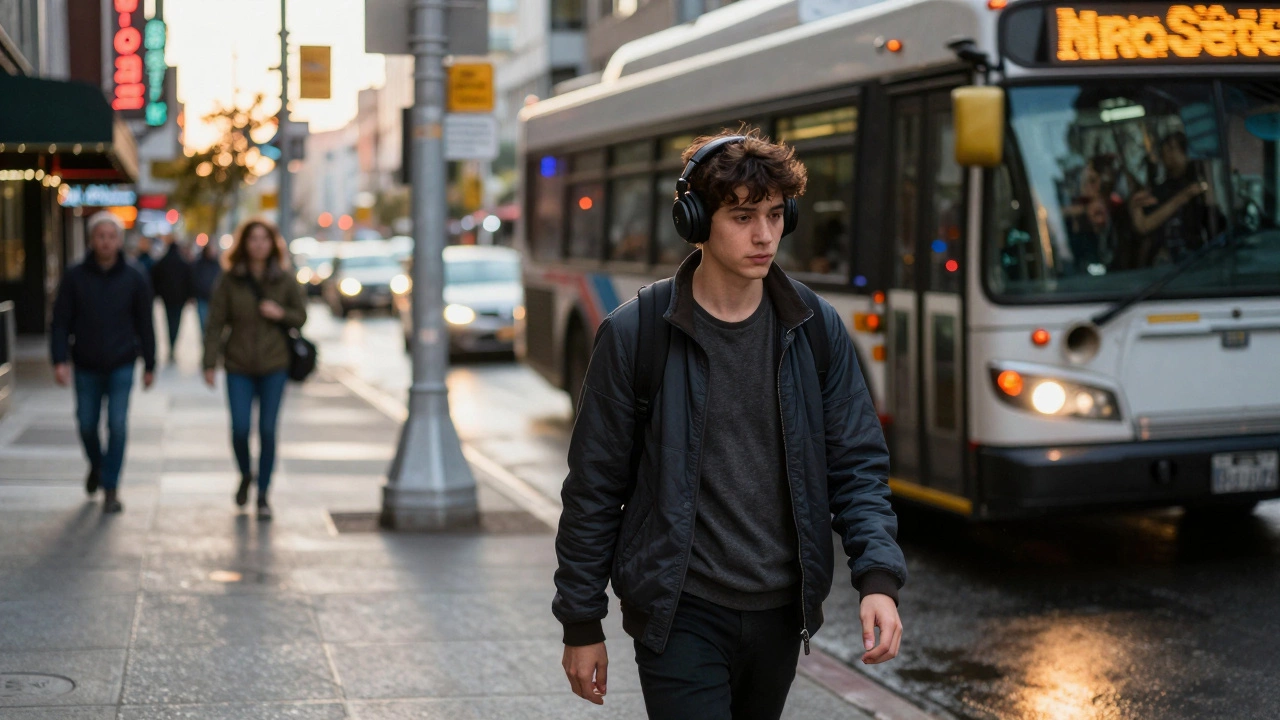
If you’re crossing a street, riding a bike, or walking near moving vehicles, noise-cancelling headphones can be dangerous. You might not hear a car horn, a siren, or a cyclist calling out to pass. In Vancouver, where bike lanes and busy downtown sidewalks overlap, I’ve seen people step into traffic because they didn’t hear a bus approaching. Active noise cancellation doesn’t just mute background noise-it removes the environmental cues your brain relies on to stay safe. Even if you’re using ambient mode, the delay in sound processing can still leave you blind to sudden threats.
You’re in a workplace that requires situational awareness
Construction sites, warehouses, kitchens, and even some retail stores require you to hear alarms, calls for help, or equipment malfunctions. In a busy kitchen, for example, a chef needs to hear the timer, someone shouting "hot!" as they pass with a tray, or the hiss of a steam wand going rogue. Noise-cancelling headphones mute those signals. Some workplaces ban them outright for this reason. If your job depends on listening-not just to music or podcasts-but to people and machines around you, don’t reach for noise-cancelling headphones.
You’re in an emergency or public safety situation
During a fire alarm, earthquake alert, or active shooter warning, your ears are your first line of defense. Emergency systems are designed to be loud and unmistakable. If you’re wearing noise-cancelling headphones, even on low volume or ambient mode, you might miss the announcement. There’s no guarantee the system will override your headphones. And if you’re focused on a podcast or playlist, your brain may not register the alert until it’s too late. In 2023, a study by the National Fire Protection Association found that 17% of people who didn’t respond to emergency alerts in public spaces were wearing noise-cancelling headphones at the time.
You’re having a face-to-face conversation
There’s a difference between tuning out background noise and tuning out the person in front of you. Wearing noise-cancelling headphones during a meeting, a job interview, or even a casual chat with a friend sends a message: you’re not fully present. Even if you’re not playing audio, the physical presence of the headphones creates a barrier. People interpret them as a sign of disengagement. In professional settings, this can damage trust. In personal ones, it can hurt relationships. If you’re trying to connect, take them off.

You’re around children or people who need to communicate with you
Parents, caregivers, teachers, and anyone working with young kids know this well. A child might call out for help, drop something, or need reassurance. If you’re wearing noise-cancelling headphones, you might not hear them. Even if you think you’re being careful, your attention is divided. And kids don’t always speak loudly or clearly. A quiet whimper or a muffled cry can disappear under active noise cancellation. Same goes for elderly relatives or people with speech impairments-they often speak softly and rely on your attention to be understood.
You’re in a quiet space where silence matters
Libraries, hospitals, places of worship, and meditation rooms aren’t just quiet-they’re sacred spaces where silence is part of the experience. Wearing noise-cancelling headphones in these places can seem odd, even rude. You’re not just blocking noise; you’re creating a bubble that separates you from the shared environment. If you need focus, use passive isolation like earplugs or regular over-ear headphones without active cancellation. That way, you still hear the librarian asking for quiet or the prayer leader’s voice.
You’re driving
It’s not just about distraction-it’s about legality and safety. In Canada, and in most U.S. states, it’s illegal to wear headphones while driving. The law doesn’t always specify noise-cancelling models, but the intent is clear: you must be able to hear sirens, horns, and other vehicles. Even if you’re using one earbud, you’re reducing your ability to locate sound direction. A study by the University of Toronto in 2024 found that drivers using noise-cancelling headphones took 22% longer to react to emergency sounds compared to those with no headphones. If you need audio while driving, use your car’s built-in system or a single earbud designed for drivers.
You’re exercising outdoors
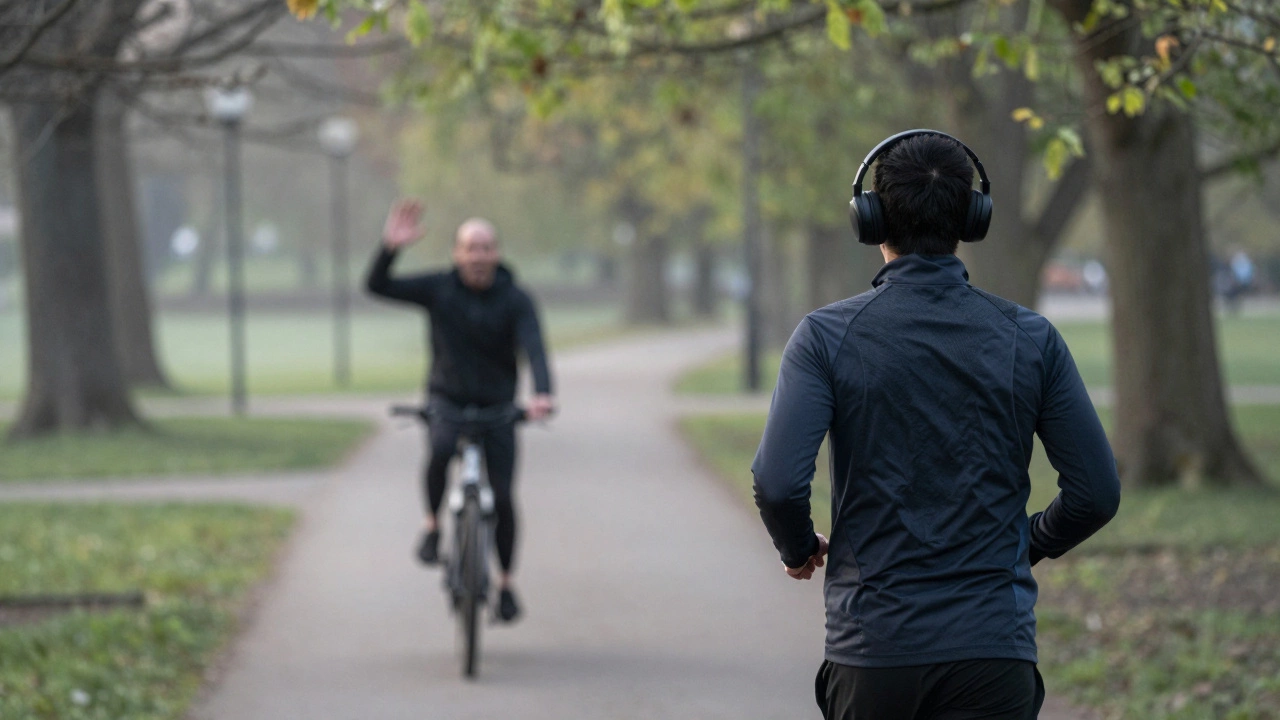
Running on trails, cycling through parks, or walking your dog in a busy neighborhood means staying alert. You need to hear footsteps behind you, a dog barking, a car turning onto a path, or someone yelling "on your left!" Noise-cancelling headphones make you an easy target. Many runners in Vancouver’s Stanley Park have reported near-misses with cyclists who didn’t hear them approaching. Even with transparency mode, the delay in processing ambient sound can be enough to cause an accident. If you need music while outdoors, use open-ear headphones or keep one ear uncovered.
You’re using them as a substitute for addressing the real problem
Some people reach for noise-cancelling headphones to avoid dealing with a noisy environment instead of fixing it. Maybe your neighbor’s dog barks all day. Maybe your office layout is terrible. Maybe your apartment has bad insulation. Headphones are a band-aid. They don’t solve the root issue. And over time, relying on them can make you more sensitive to noise, not less. If you’re constantly using them to escape your surroundings, ask yourself: is there a way to reduce the noise at the source? Soundproofing, talking to neighbors, or rearranging your workspace might be better long-term solutions.
You’re trying to sleep with them
Noise-cancelling headphones aren’t designed for sleep. They’re bulky, uncomfortable, and can press against your ears or neck. Some people try to use them to block out snoring or street noise, but the pressure can cause ear pain or even temporary hearing damage from prolonged contact. Plus, if the battery dies in the middle of the night, you’re left with a hard plastic object pressing into your ear. Better options exist: white noise machines, earplugs made for sleep, or soundproof curtains. Save your headphones for waking hours.
You’re in a situation where you need to hear subtle sounds
Some jobs and hobbies depend on hearing fine details: musicians tuning instruments, audiophiles listening to vinyl, therapists picking up on tone shifts, or even birdwatchers identifying calls. Noise-cancelling headphones are built to remove variation, not enhance it. They flatten the audio landscape. You lose the nuance-the slight echo in a room, the breath between notes, the rustle of leaves that signals a bird nearby. If your goal is to hear more, not less, noise-cancelling tech works against you.
Can noise-cancelling headphones damage your hearing?
No, the noise-cancellation feature itself doesn’t damage hearing. But if you turn up the volume to drown out remaining noise, you’re risking hearing loss. The problem isn’t the cancellation-it’s compensating by playing music too loud. Always keep volume below 60% of max, especially in noisy environments.
Are there noise-cancelling headphones that are safe for driving?
No. Even models with transparency mode aren’t legal or safe for driving in most places. The law requires unobstructed hearing. Use your car’s audio system instead. If you need to take a call, use a Bluetooth speaker or single-ear Bluetooth headset designed for drivers.
Is it okay to wear noise-cancelling headphones at work?
It depends on your job. If you’re in an office with no safety risks and no need to respond to sudden sounds, yes. But if you’re in a warehouse, kitchen, hospital, or anywhere with alarms, machinery, or team communication, it’s a bad idea. Check your workplace policy. Many companies explicitly forbid them in operational areas.
Do noise-cancelling headphones make you more isolated socially?
Yes, if you use them constantly. They create a physical and psychological barrier. People interpret them as a signal that you’re not open to interaction. Use them intentionally-like during a long commute or focused work block-not as a default setting for every outing.
What’s a better alternative for blocking noise without cancelling it?
Passive noise isolation-like well-fitting foam earplugs or over-ear headphones without active cancellation-can block a lot of sound without cutting off environmental awareness. They’re safer for walking, driving, and working. They also don’t drain batteries or create audio delays.
If you use noise-cancelling headphones, treat them like a tool-not a crutch. They’re powerful, but they come with responsibilities. Know when to wear them-and when to leave them in your bag.