
Microwave Buyer's Guide Calculator
Your Needs
Key Features
Your Ideal Microwave
Capacity
Wattage
Key Features
Recommended Models
Buying a microwave isn’t just about picking the shiniest one on the shelf. It’s about matching the right tool to your kitchen habits. If you reheat coffee every morning, steam veggies for dinner, or defrost chicken last-minute before a busy night, your microwave needs to keep up. Not all microwaves are built the same, and skipping the right checks can leave you stuck with a noisy, underpowered, or hard-to-clean appliance that doesn’t fit your life.
Capacity Matters More Than You Think
Most people pick a microwave based on price or looks, not size. But if your plate doesn’t fit, or you can’t fit a casserole dish inside, you’re wasting money. Standard countertop microwaves range from 0.5 to 2.2 cubic feet. For a single person or small apartment, 0.7 to 1.0 cubic feet is enough. You can reheat soup, a slice of pizza, or a frozen meal without issue.
If you cook for two or more, or often use baking dishes, go for 1.2 to 1.6 cubic feet. That’s the sweet spot for most families. You’ll fit a 9x13-inch dish, a large bowl of pasta, or even a whole chicken. Anything over 2.0 cubic feet is usually for big kitchens or people who bake in the microwave - yes, that’s a thing now.
Measure your space first. Microwaves stick out on the counter, and if your cabinet clearance is tight, you’ll end up with a microwave that won’t open fully. Leave at least 2 inches of space on the sides and top for ventilation.
Power Output Is the Real Performance Metric
Wattage isn’t a marketing buzzword - it’s how fast your food heats. Low-end microwaves run at 600 to 800 watts. They take forever to reheat leftovers and often leave food cold in the middle. You’ll notice this when your soup is hot on the edges but icy in the center.
Look for 900 to 1,100 watts. That’s the standard for reliable performance. At this level, a frozen dinner heats evenly in 3 to 4 minutes. A mug of milk warms in 90 seconds. You’ll also get better results with defrosting - no more half-frozen chicken with edges starting to cook.
Higher wattage (1,200+ watts) is great if you use the microwave like a mini-oven - baking potatoes, cooking rice, or making mug cakes. But it’s overkill if you only use it to warm up coffee. Check the label: it should say "Cooking Power" or "Output Power," not just "Input Power." Input power includes energy lost as heat - what matters is what actually cooks your food.
Turntable vs. Flatbed: Which One Should You Choose?
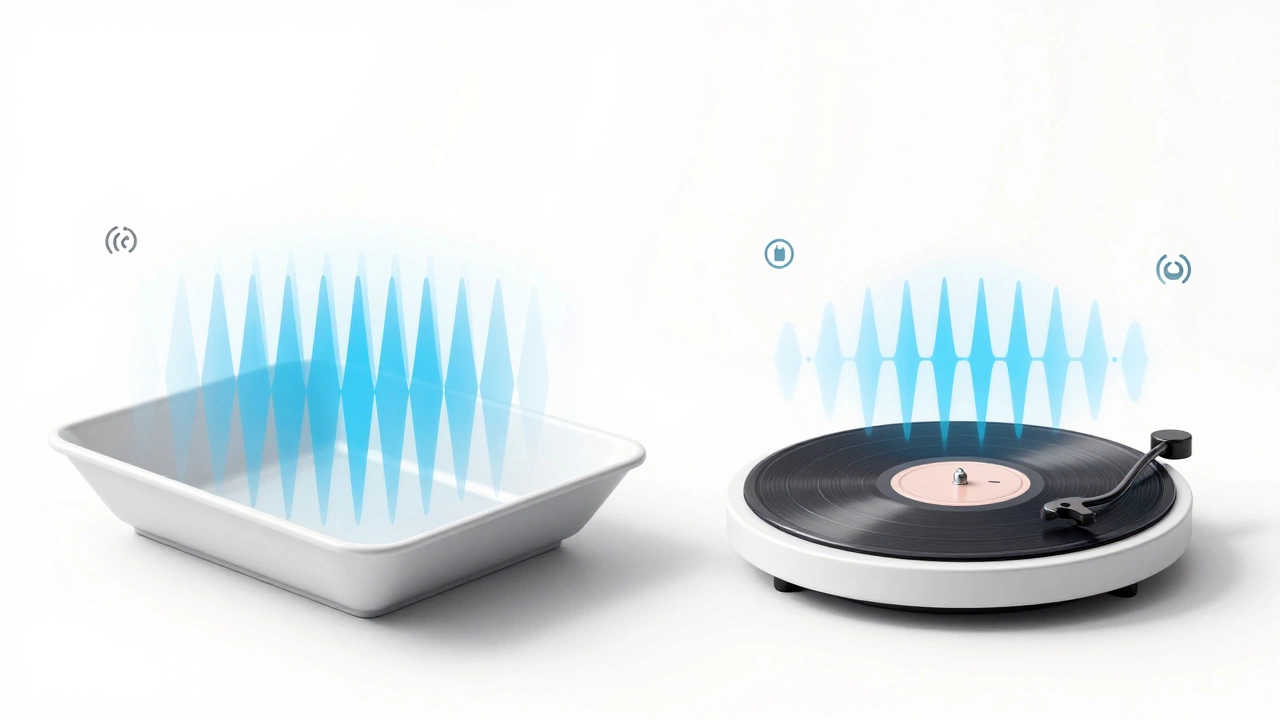
Most microwaves have a rotating turntable. It helps food cook evenly by spinning it through the microwave’s energy field. But if you’ve ever tried to fit a large platter inside, you know the turntable can be a pain. It limits the size of dishes you can use.
Flatbed microwaves, like those from Panasonic and LG, use a different technology called Inverter or stirrer systems. They don’t spin the food - they move the energy around. That means you can fit larger, rectangular, or irregularly shaped dishes without worrying about clearance. They also tend to heat more evenly because there’s no mechanical rotation to slow down or jam.
Flatbed models are usually more expensive, but if you cook with large plates or bowls often, they’re worth the upgrade. Turntables are fine for basic use, but flatbeds are the future - and they’re becoming more common even in mid-range models.
Pre-Programmed Settings: Useful or Just Fluff?
Look at the control panel. Do you see buttons for "Popcorn," "Pizza," "Beverage," or "Defrost"? These are pre-programmed settings. They’re convenient - press one button and the microwave figures out the time and power.
But here’s the catch: they’re not magic. Most of them just run a default cycle. A "Pizza" setting might be 2 minutes at 70% power - which might work for one brand of frozen pizza but not another. If you don’t like adjusting settings manually, these buttons help. But if you’re comfortable using the timer and power level dial, you don’t need them.
More useful are settings like "Sensor Cook" or "Auto Cook." These use humidity or steam sensors to detect when food is done. For example, if you put in a frozen meal, the microwave senses moisture levels and stops automatically. No guessing. No overcooked chicken. This feature is rare in budget models but common in mid-to-high-end units.
Interior Coating: Easy to Clean or a Nightmare?
Spills happen. Grease splatters. Sauce bubbles over. The interior coating of your microwave determines how easy it is to wipe clean. Cheap microwaves use basic enamel coatings that stain and hold odors. After a few months, your microwave starts smelling like last week’s fish.
Look for stainless steel interiors or ceramic enamel. These are more durable and resist stains. Some brands, like Toshiba and Sharp, use a non-stick ceramic coating that wipes clean with a damp cloth. Avoid microwaves with textured interiors - they trap food particles and are impossible to clean properly.
Also check the door seal. If it’s made of rubber that cracks or gets sticky, it’ll trap grease and become a breeding ground for bacteria. A smooth, easy-to-wipe seal is a sign of better design.
Child Lock and Safety Features
If you have kids, or even just messy roommates, a child lock is non-negotiable. It prevents accidental starts - no more running the microwave for 10 minutes because a toddler pressed a button. Look for a dedicated "Lock" button or a sequence like holding "Stop" for 3 seconds.
Other safety features include automatic shut-off when the door opens, cool-touch exteriors, and overheating protection. These aren’t flashy, but they matter. A microwave that gets too hot on the outside can damage your counter or burn someone reaching for a mug.
Smart Features: Do You Need Them?
Some microwaves now connect to Wi-Fi. You can start them from your phone, get recipe suggestions, or even check if your food is done remotely. Sounds cool - until you realize most people never use these features.
Smart microwaves cost $200 or more. They’re great if you’re building a full smart kitchen and already use voice assistants like Alexa or Google Home. But if you’re just heating up leftovers, they’re overkill. You’ll spend more on the appliance than you’ll save on energy or time.
Stick to basic models unless you’re already deep into smart home tech. The extra cost doesn’t improve cooking - it just adds complexity.
What to Avoid
Don’t buy a microwave based on color alone. White might match your kitchen today, but it shows stains and fingerprints fast. Stainless steel hides smudges better and looks more professional.
Avoid microwaves with no warranty, or only a 30-day return policy. Reputable brands like Panasonic, LG, and Samsung offer at least a one-year warranty. If a brand doesn’t list warranty info, walk away.
And skip the "combo" microwaves that claim to be oven, grill, and microwave all in one. They rarely cook well as any of them. A standalone microwave does one thing well. If you want to bake or broil, get a toaster oven.
Top Picks for 2026
For most people, the best microwave is a 1.2 to 1.6 cu. ft. model with 900-1,100 watts, a flatbed interior, sensor cook, and a stainless steel finish. Brands like Panasonic NN-SN966S and LG MS2043DB are reliable, widely available, and cost under $200.
If you’re on a budget, the Amazon Basics 0.9 cu. ft. model (900 watts, turntable) gets solid reviews for basic use. It’s not fancy, but it heats food evenly and lasts.
For those who cook often, the Toshiba EM131A5C-BS is a standout. It has a ceramic interior, 1,200 watts, sensor cooking, and quiet operation. It’s priced around $220 - worth every penny if you use it daily.
Final Checklist Before You Buy
- Size: Does it fit your space? Can you fit your largest dish inside?
- Wattage: Is it 900+ watts? Avoid anything below 800.
- Interior: Is it flatbed or easy-to-clean ceramic? Avoid textured surfaces.
- Settings: Do you need sensor cook? Or are manual controls fine?
- Lock: Is there a child lock? Essential if kids or pets are around.
- Warranty: At least one year? No warranty = red flag.
- Price: $100-$150 covers 80% of needs. Pay more only for flatbed or sensor tech.
Don’t rush. A microwave lasts 7 to 10 years. Spend a little more now to avoid regret later.
Is a higher wattage microwave always better?
Not always. Higher wattage (1,200+ watts) heats faster and works better for baking or defrosting large items, but if you only reheat coffee or leftovers, a 900-watt model is more than enough. Higher wattage means higher energy use and often a higher price - only pay for it if you need the speed.
Can I put metal in a microwave?
No - unless it’s specifically designed for microwave use, like the small metal racks in some combo models. Regular foil, utensils, or containers with metal trim can cause sparks, damage the magnetron, or start a fire. Always check packaging labels. If it says "microwave safe," it’s okay. If it’s aluminum foil or a takeout container with a metal handle, leave it out.
How long should a microwave last?
Most microwaves last 7 to 10 years with normal use. Signs it’s time to replace it include uneven heating, strange noises, sparks inside, or a door that doesn’t seal properly. If the turntable stops spinning or the keypad stops responding, repairs usually cost more than a new unit.
Should I buy a built-in or countertop microwave?
Countertop microwaves are better for most people. They’re cheaper, easier to replace, and don’t require professional installation. Built-in models are only worth it if you’re remodeling your kitchen and want a seamless look. They cost $500+, require venting, and are harder to service. Unless you’re designing a high-end kitchen, stick with countertop.
Do inverter microwaves really make a difference?
Yes - if you cook often. Traditional microwaves cycle power on and off, which can overcook edges while leaving centers cold. Inverter technology delivers steady, lower power levels, so food heats more evenly. It’s especially helpful for defrosting meat, melting chocolate, or cooking delicate foods. Brands like Panasonic and LG use it in most of their mid-range and premium models.