
Microwave Suitability Calculator
Choose Your Food & Goal
Result
Select food and options to see suitability results
People use microwaves every day - reheating coffee, defrosting meat, popping popcorn. But there’s a lot of confusion about what they actually can and can’t do. You’ve probably heard claims like ‘microwaves make food radioactive’ or ‘they destroy all the nutrients.’ None of that’s true. But that doesn’t mean microwaves are magic boxes. They have real, physical limits. Here’s what microwave ovens don’t do - and why it matters for your cooking, safety, and wallet.
They don’t cook food evenly from the inside out
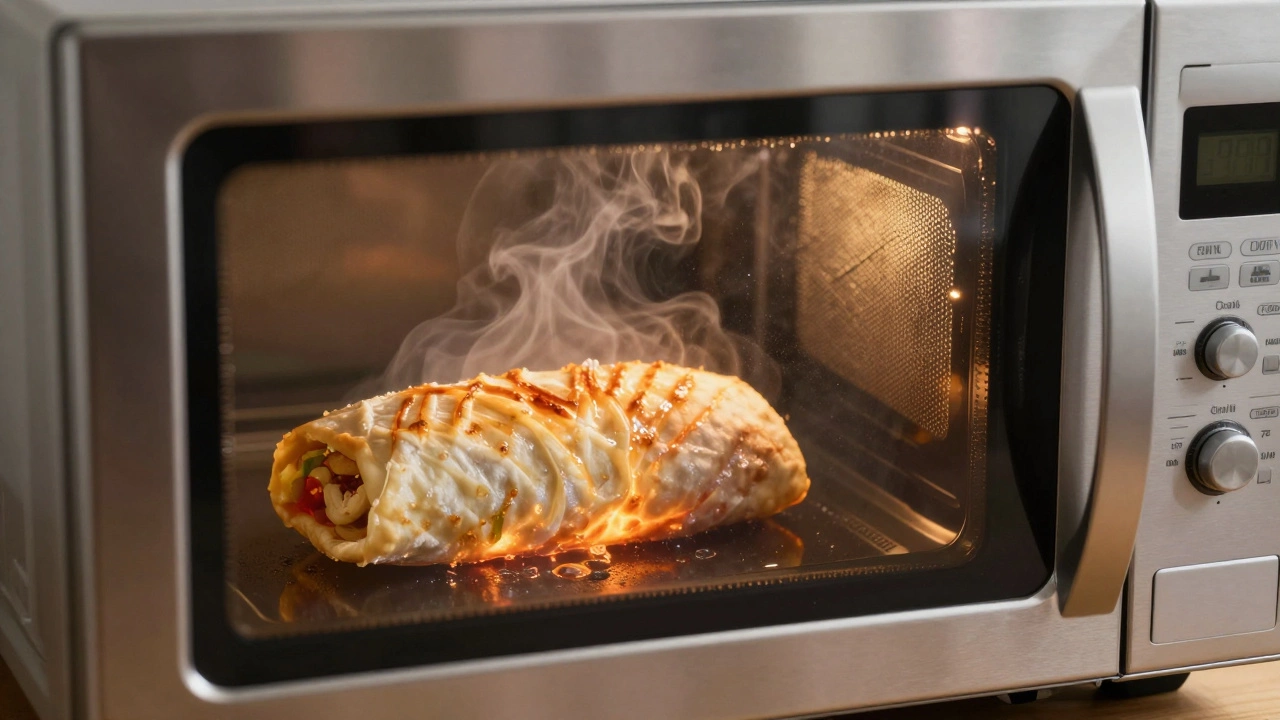
One of the biggest myths is that microwaves heat food from the inside. They don’t. Microwaves penetrate food about 1 to 1.5 inches deep, depending on density and water content. Everything beyond that gets heated by conduction - just like how a pan heats food from the bottom up. That’s why your frozen burrito might be scalding hot on the outside but still icy in the center. Stirring, rotating, or letting food sit for a minute after heating helps distribute the heat. If you’re cooking something thick, like a whole chicken breast, you’re better off using a conventional oven or stovetop. Microwaves are great for speed, not deep, even cooking.They don’t brown or crisp food
If you’ve ever microwaved pizza and ended up with a soggy, rubbery mess, you know this one. Microwaves heat water molecules. They don’t get hot enough to trigger the Maillard reaction - the chemical process that creates golden-brown crusts, roasted flavors, and crispy textures. That’s why your microwave-reheated fries taste like wet cardboard. Even high-end microwaves with convection or grill settings still can’t match the surface browning of a toaster oven or skillet. If crispiness matters, skip the microwave for the final step. Pop your food under a broiler or into a toaster oven for 2-3 minutes. You’ll taste the difference.They don’t kill all bacteria
Microwaves heat food, but they don’t sterilize it. Temperature matters more than the method. If your microwave doesn’t bring food to at least 165°F (74°C) throughout, harmful bacteria like Salmonella or E. coli can survive. That’s why it’s dangerous to reheat leftovers in a shallow layer or skip stirring. Cold spots are breeding grounds. The CDC recommends reheating leftovers to 165°F and checking with a food thermometer. Microwaves are convenient, but they’re not a substitute for proper food safety practices. Don’t assume ‘hot’ means ‘safe’ - always verify.They don’t work well with metal
You’ve probably seen the sparks from a fork in the microwave. That’s not magic - it’s physics. Microwaves excite electrons in metal, creating electric currents. Thin metals like foil or twist ties reflect waves and cause arcing. Thick metal, like the walls of the oven, is designed to reflect microwaves safely. But anything with sharp edges, points, or uneven surfaces - spoons, aluminum trays, gold-trimmed dishes - can spark, melt, or even start a fire. Some microwaves have metal racks designed for specific models, but those are engineered exceptions. If you’re unsure, stick to glass, ceramic, or microwave-safe plastic. When in doubt, leave the metal out.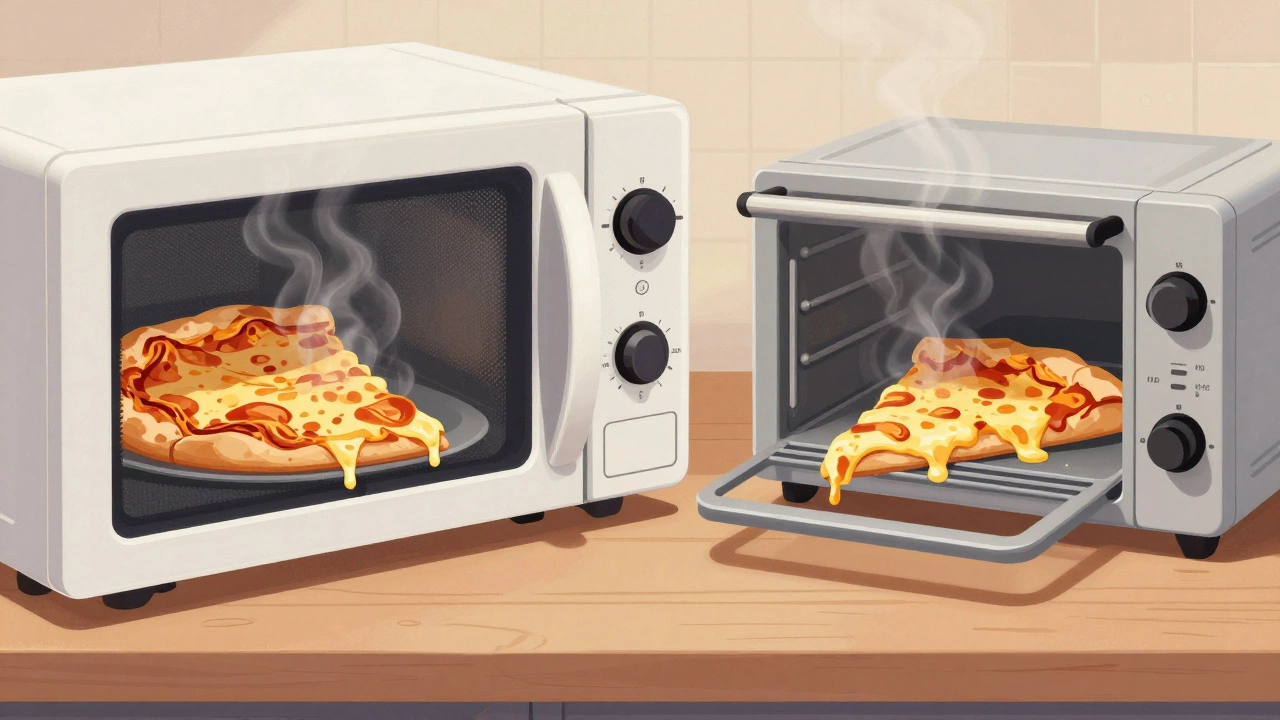
They don’t preserve texture like other methods
Microwaves turn moist foods into sponges and dry foods into rubber. That’s because they heat water rapidly, turning it to steam inside the food. Bread turns chewy. Pastries lose their flakiness. Fried chicken goes limp. This isn’t a flaw - it’s how microwaves work. If you want to keep the crunch in your fried chicken or the fluff in your rice, don’t microwave it. Reheat rice on the stovetop with a splash of water. Warm bread in a toaster or oven. Microwaves are for speed, not texture preservation. Accept that some foods just don’t reheat well in them - and plan accordingly.They don’t replace a thermometer
You can’t eyeball whether food is safe in a microwave. Just because it’s steaming doesn’t mean it’s cooked through. A 2021 study by the USDA found that 38% of people who reheated meals in microwaves didn’t check internal temperatures - and nearly half of those meals were below safe levels. That’s not a microwaving problem - it’s a measurement problem. Always use a food thermometer. Insert it into the thickest part, away from bones or edges. Wait a few seconds for the reading. Don’t rely on the turntable, the time setting, or how hot it feels. Microwaves are fast, but they’re not smart. You still have to do the work.They don’t heat liquids uniformly - and that’s dangerous
Ever microwaved a cup of water and then watched it suddenly boil over when you added tea or sugar? That’s superheating. Microwaves can heat water past its boiling point without visible bubbles. When you disturb it - by stirring or adding something - the water can erupt violently. This isn’t rare. Emergency rooms see dozens of cases every year from scalding hot water explosions. To prevent it, never microwave water for longer than needed. Use a wooden stir stick in the cup while heating. Let it sit for 30 seconds before handling. Or better yet, heat water in a kettle. Microwaves are convenient, but boiling water in them requires extra caution.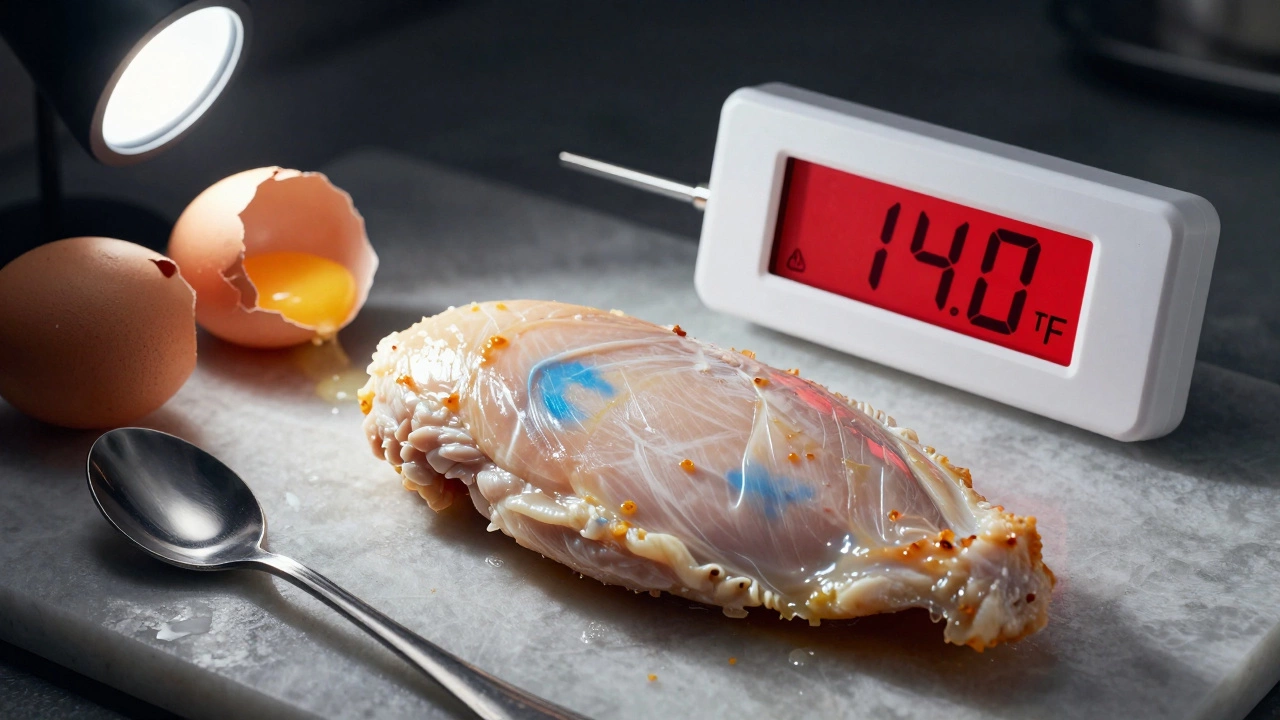
They don’t cook large or dense items well
Trying to cook a whole turkey or a 3-pound roast in the microwave? Don’t. The waves can’t reach the center before the outside overcooks. Even with defrost settings, large items cook unevenly and risk bacterial growth in the middle. Microwaves are designed for small portions, quick reheating, or thawing. For roasts, whole chickens, or casseroles, use an oven or slow cooker. Microwaves can help speed up prep - like par-cooking potatoes before roasting - but they’re not a full replacement for traditional cooking methods.They don’t make food taste better
This one’s simple: microwaves don’t add flavor. They just heat it. If your food was bland before, it’ll still be bland after. Microwaving doesn’t caramelize, sear, or infuse herbs like a stove or grill can. It can’t replicate the smoky depth of a charred vegetable or the richness of slow-simmered sauce. Use it to reheat, not to improve. If you want better-tasting leftovers, reheat them with a little moisture, a pinch of salt, or a splash of broth - then finish them under a broiler. The microwave is a tool, not a chef.They don’t work without a functioning magnetron
The magnetron is the part that generates microwaves. If it fails, the oven won’t heat - even if the light turns on and the turntable spins. Many people think a broken microwave is just a ‘power issue.’ But if your food stays cold after 2 minutes, the magnetron is likely dead. Repairing it costs more than replacing the unit. Most microwaves last 7-10 years. If yours is older and suddenly stops heating, it’s time for a new one. Don’t waste money on repairs - just buy a new model with a warranty.Can microwaves make food radioactive?
No. Microwaves use non-ionizing radiation - the same kind as Wi-Fi or cell phones. They don’t have enough energy to change atoms or make food radioactive. The radiation stops when the oven turns off. Food cooked in a microwave is no more dangerous than food cooked on a stove.
Is it safe to microwave plastic containers?
Only if they’re labeled microwave-safe. Some plastics can melt or leach chemicals like BPA into food when heated. Look for the microwave-safe symbol (usually wavy lines or a microwave icon). Glass or ceramic containers are always safer. Never microwave takeout containers, yogurt cups, or plastic wrap that isn’t rated for high heat.
Why does my microwave heat some things faster than others?
Microwaves target water, fat, and sugar molecules. Foods with high water content - like vegetables or soups - heat quickly. Dry foods like bread or nuts heat slower. Dense items like meat take longer because the waves can’t penetrate deeply. That’s why a bowl of soup heats in 1 minute, but a potato takes 5.
Can you use a microwave to sterilize baby bottles?
Not reliably. Microwaves don’t heat evenly, so parts of the bottle may stay cold while others get too hot. This creates unsafe zones where bacteria survive. Use a dedicated bottle sterilizer or boil bottles in a pot on the stove. If you must microwave, fill bottles with water and heat for 1-2 minutes, then let them sit for 5 minutes to allow heat to distribute. But even then, it’s not recommended by pediatricians.
Do microwaves destroy nutrients in food?
Actually, microwaving often preserves more nutrients than boiling or frying. Because cooking time is shorter and less water is used, vitamins like C and B are retained better. A 2019 study in the Journal of Food Science found microwaved broccoli retained 90% of its antioxidants, compared to 66% in boiled broccoli. The key is using minimal water and cooking for the shortest time possible.