
JURA Bean Compatibility Checker
Check Your Beans
If you own a JURA coffee machine, you know it’s built to deliver consistent, high-quality espresso and specialty drinks with minimal effort. But even the best machines can struggle when fed the wrong beans. Using the wrong type of coffee can lead to clogs, poor flavor, and expensive repairs. So what beans should you avoid? Let’s cut through the myths and get straight to what actually breaks these machines.
Don’t Use Oily Beans
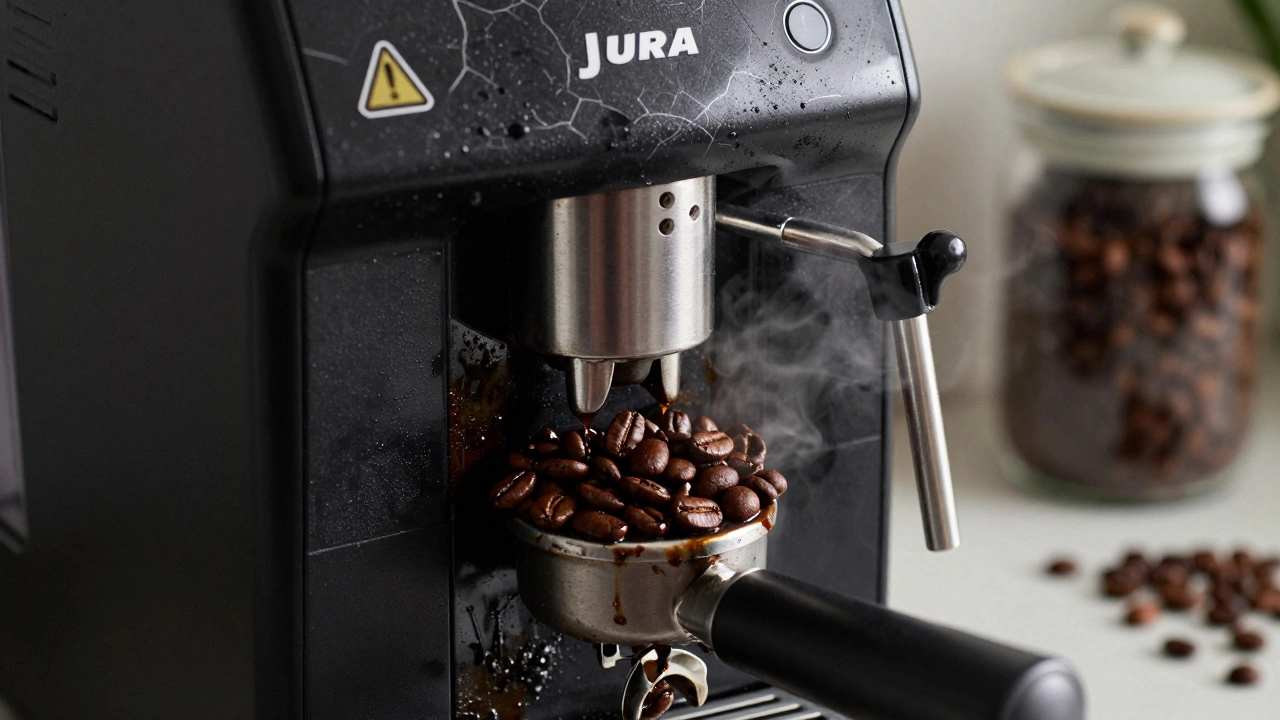
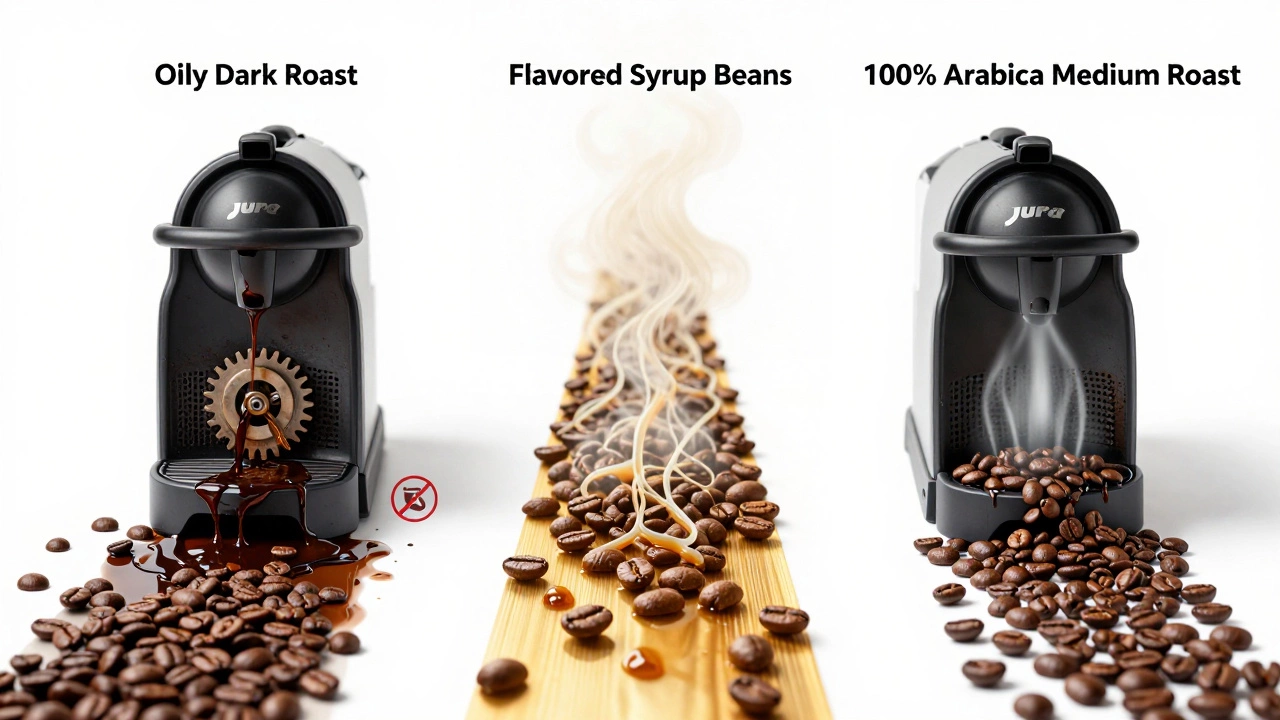
Dark roasts with visible oil on the surface are the number one culprit behind JURA machine failures. Brands like French roast, Italian dark, or espresso blends labeled "high-oil" might smell amazing, but they’re a nightmare for your machine. JURA’s internal components-especially the grinder and brew group-are precision-engineered with tight tolerances. Oily beans leave behind a sticky residue that builds up over time. This gunk doesn’t just affect taste-it gums up the grinder blades, clogs the dosing chute, and eventually blocks the water flow paths.
Real users report issues after just 3-4 months of using oily beans. One Vancouver homeowner replaced his JURA E8 after the grinder seized up. He’d been using a popular dark roast from a local roaster that advertised "perfect for espresso machines." The machine never had a problem with medium roasts, but within weeks of switching, the display started showing "clean grinder" warnings. By the time he took it in for service, the repair cost was nearly half the price of a new machine.
Avoid Flavored or Infused Beans
Vanilla, caramel, hazelnut, or chocolate-flavored beans sound like a treat, but they’re not meant for automatic espresso machines. These beans are coated with synthetic flavor oils or syrups that don’t evaporate during roasting. Instead, they stick to every surface they touch: the hopper, the grinder, the brewing unit, even the milk frother.
Unlike natural oils from roasting, these artificial additives don’t break down easily. They create a gummy, sticky residue that’s hard to clean with standard descaling solutions. Over time, this buildup alters the flavor of every shot you make-even after you switch back to plain beans. One JURA owner in Calgary tried a holiday-themed spiced coffee and ended up with a bitter, chemical aftertaste in all his drinks for months. The only fix? A full professional disassembly and cleaning.
Steer Clear of Very Fine or Over-Processed Grounds
Some people buy pre-ground coffee thinking it’s more convenient. But JURA machines are designed to grind beans fresh. If you put pre-ground coffee into the hopper-especially if it’s ground for French press or Turkish coffee-you’re asking for trouble.
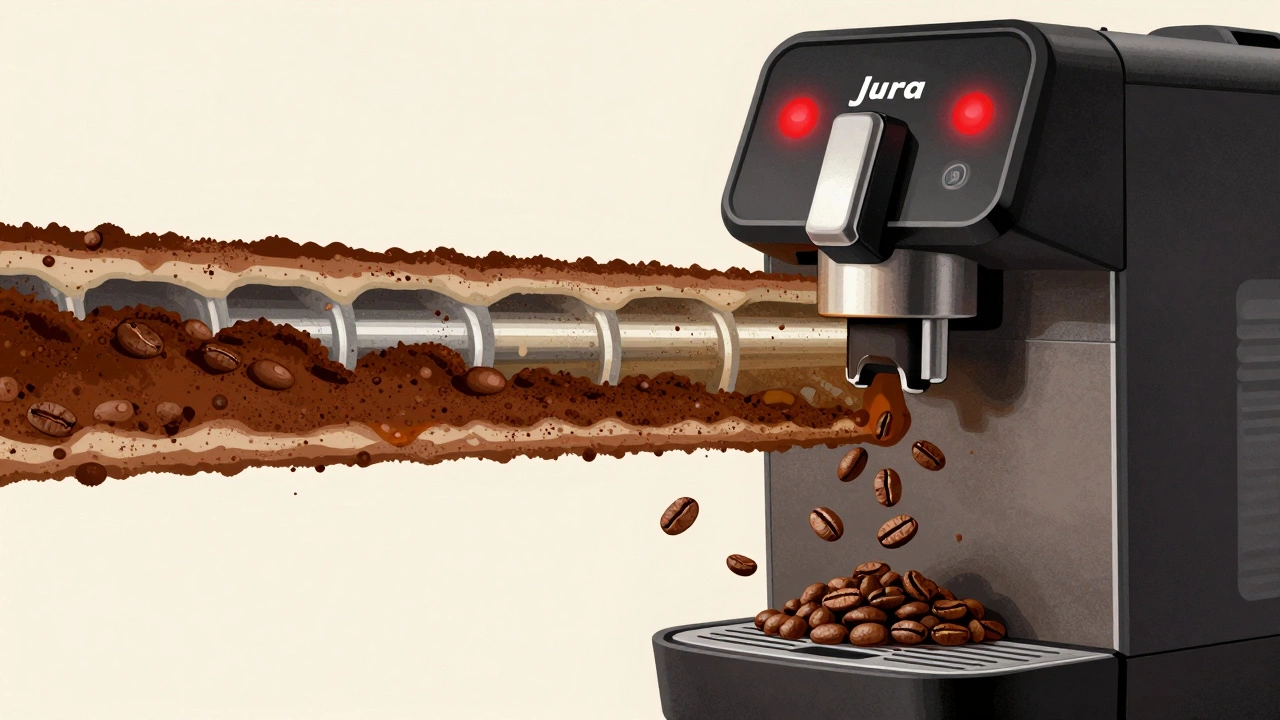
Extremely fine grounds act like powder, not coffee. They clump, stick to the grinder housing, and get sucked into the water pathways. This causes uneven extraction, weak shots, and frequent blockages. Even if the machine doesn’t break right away, the internal sensors will start giving false readings. You’ll see error codes like "grinder blocked" or "flow rate too low" even when there’s no visible obstruction.
One user in Edmonton kept trying to save time by pouring in pre-ground coffee from a bag labeled "espresso grind." Within six weeks, his JURA S6 stopped dispensing water. A technician found the brew group completely clogged with fine particles that had migrated into the pump. He was told the damage wasn’t covered under warranty because the machine was misused.
Watch Out for Low-Quality or Stale Beans
Not all beans are created equal. Cheap, mass-produced coffee often contains a mix of defective beans-those that are under-roasted, over-roasted, or even moldy. These beans don’t grind evenly. Some stay whole, others turn to dust. This inconsistency strains the grinder motor and leads to uneven tamping, which affects pressure and extraction.
Stale beans are just as bad. Coffee that’s been sitting in a warehouse for months loses its oils unevenly. The surface becomes brittle, while the inside turns dry and crumbly. When ground, this produces a chalky texture that doesn’t extract properly. The result? Watery espresso with sour or flat flavors, and more grounds escaping into the brew group.
There’s no magic expiration date, but if the beans smell like cardboard or dust instead of rich, fruity, or nutty aromas, they’re past their prime. JURA machines are sensitive to grind quality. If your beans don’t smell fresh, they’ll hurt your machine.
What About Espresso Blend Beans?
Espresso blends aren’t inherently bad-but not all of them are safe. Many commercial espresso blends are roasted to a very dark level and sometimes contain a high percentage of Robusta beans. Robusta has higher oil content and more grit than Arabica. It’s cheaper, but it’s harder on machines.
Look for blends labeled "100% Arabica" and "medium roast." These are designed for automatic machines and produce less oil and fewer fines. Brands like Lavazza Super Crema, Blue Bottle’s Daily Grind, and Caribou Coffee’s Espresso Blend are widely recommended by JURA users and service centers. They’re roasted to preserve natural oils without coating the beans in excess grease.
How to Tell If Your Beans Are Safe
Here’s a quick rule of thumb:
- Look: Beans should be dry to the touch. No visible shine or greasy film.
- Smell: Fresh, aromatic, and complex-not chemical or burnt.
- Grind: If you grind a small batch, it should look like coarse sand, not powder or clumps.
- Source: Buy from roasters who list roast dates and bean origin. Avoid mystery blends with no details.
Keep a small bag of beans in the freezer if you use them slowly. But never store them in the fridge-it introduces moisture. A cool, dark cupboard is best.
What Happens If You Use the Wrong Beans?
Ignoring these warnings doesn’t always mean instant failure. But it does mean your machine will wear out faster. Here’s what typically goes wrong:
- Grinder jam: Oily or fine grounds cause the blades to stick. You’ll hear grinding noises stop mid-cycle.
- Water flow blockage: Oil and residue build up in the brew group. Your machine may stop dispensing water or produce weak shots.
- Erratic pressure: Clogged pathways cause inconsistent pressure, leading to under-extracted or bitter coffee.
- Unusual odors: Stale or flavored beans leave behind chemical smells that linger even after cleaning.
- Warranty void: JURA explicitly states in their manuals that damage from oily, flavored, or pre-ground beans isn’t covered.
Regular cleaning helps-but it won’t undo damage from long-term misuse. Descaling every 3 months won’t fix a grinder that’s been coated in caramel syrup for six months.
What Should You Use Instead?
Stick to:
- 100% Arabica beans
- Medium roast (light to medium-dark)
- Whole beans, freshly ground
- Beans roasted within the last 30 days
- Unflavored, uncoated, no additives
Many JURA owners swear by beans from local roasters who specialize in single-origin or small-batch espresso. They often provide grind recommendations based on your machine model. If you’re unsure, ask for a sample roast labeled "for automatic espresso machines."
Final Tip: Clean Regularly, But Don’t Rely on Cleaning Alone
JURA machines come with automatic cleaning cycles. Use them. But don’t think they’ll save you from bad beans. The cleaning cycle removes surface residue-it doesn’t dissolve hardened oil or flush out fine particles lodged deep in the grinder. Prevention is always cheaper than repair.
If you’ve already used problematic beans, run a full cleaning cycle with JURA’s official cleaning tablets. Then, switch to safe beans immediately. Monitor the machine for a few weeks. If you still get error codes or strange flavors, it might be time for a professional service.
Your JURA is an investment. It’s not a coffee dispenser-it’s a precision instrument. Feed it the right beans, and it’ll serve you for years. Use the wrong ones, and you’ll be paying for someone else’s convenience.
Can I use decaf beans in my JURA machine?
Yes, as long as the decaf beans are 100% Arabica, medium roast, and whole. Decaf processing doesn’t change the oil content or grind quality, so they’re safe if they meet the same standards as regular beans. Avoid flavored decaf blends-they often contain the same artificial additives as regular flavored beans.
Is it okay to use beans from a supermarket brand?
Some supermarket brands are fine, but many aren’t. Check the label: if it says "dark roast," "espresso blend," or "oily beans," skip it. Look for "medium roast," "100% Arabica," and a roast date. Brands like Folgers or Maxwell House are usually too stale or too dark. Look for store brands that specify origin and roast date-those are more likely to be safe.
Can I grind my own beans if I don’t have a grinder?
You can, but only if you use a burr grinder set to espresso grind (fine, but not powder). Blade grinders create uneven particles and generate heat, which damages flavor and can clog your machine. If you don’t have a burr grinder, it’s better to buy pre-ground espresso beans from a trusted roaster than to use a blade grinder.
Do JURA machines work with organic or fair-trade beans?
Absolutely. Organic and fair-trade certifications don’t affect oil content or grind quality. As long as the beans are roasted properly and aren’t oily or flavored, they’re perfectly safe. Many JURA users prefer these beans because they’re often roasted with more care and transparency.
What if my JURA machine already has a clog from bad beans?
Stop using the beans immediately. Run a full cleaning cycle with JURA’s official cleaning tablets. If the problem persists, don’t try to disassemble it yourself. Take it to a certified service center. DIY repairs on JURA machines often cause more damage. The cost of professional cleaning is usually less than replacing a damaged grinder or brew group.