
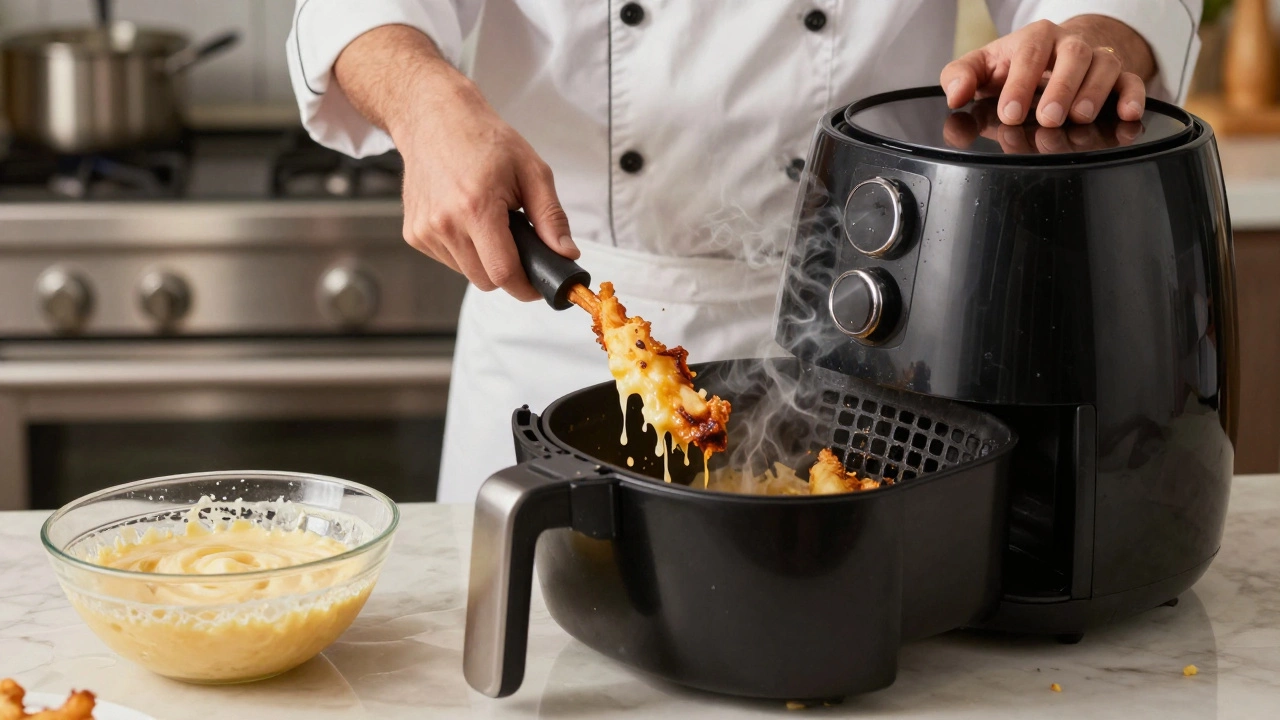
Everyone loves their air fryer. It crisps up frozen fries in minutes, makes chicken wings that taste like they came from a restaurant, and even bakes cookies without turning on the oven. But here’s the thing - not everything belongs in there. If you’ve ever tossed in a bowl of soup, a whole roast chicken, or a stack of wet batter-coated veggies and ended up with a mess or a failed meal, you’re not alone. The air fryer isn’t magic. It’s a powerful convection oven with a fan and a basket. And like any tool, it has limits.
Wet batters and liquid coatings don’t work
Think of tempura, corn dogs, or beer-battered fish. Those crispy, crunchy coatings rely on deep frying - the oil surrounds the food, seals in moisture, and hardens the batter instantly. An air fryer blows hot air. It doesn’t submerge. So when you put wet batter in there, it just drips off, lands on the bottom, burns, and creates smoke. You end up with a soggy, unevenly cooked piece of food and a greasy, sticky basket to scrub. Even pancake batter poured into a silicone mold turns into a rubbery, uneven cake. If you want crispy batter, dip the food in flour first, then egg, then breadcrumbs. That dry coating holds up. Wet batter? Skip it.
Liquid-based foods are a no-go
Stews, soups, broths, sauces - anything with more than a tablespoon of liquid? Don’t even try. Air fryers aren’t designed to hold liquids. The fan whips air around at high speed, and that liquid? It splashes, boils over, and gets sprayed onto the heating element. You’ll get a burnt smell, a sticky mess inside the machine, and maybe even a tripped circuit breaker. I tried making a quick tomato soup in my air fryer once. Within five minutes, the lid was covered in red splatter, and the bottom of the basket was a charred paste. It took three scrubbing sessions to clean. If you want soup, use a pot. If you want roasted veggies, toss them in oil, not broth.
Large, whole roasts and turkeys won’t fit or cook evenly
Yes, you can cook a chicken breast or a small pork tenderloin. But a 10-pound turkey? A 4-pound beef roast? Forget it. Most air fryers have a capacity between 3 and 6 quarts. That’s enough for a family of four if you’re doing portions - not for a whole holiday bird. Even if you find a giant 10-quart model, the heat won’t circulate properly around a large, dense item. The outside will burn before the inside reaches 165°F. And you can’t flip a 5-pound roast in a basket without risking injury or a kitchen disaster. Use your oven for big roasts. Save the air fryer for smaller cuts, wings, or pre-cut pieces.
Leafy greens and delicate herbs burn too fast
Spinach, kale, arugula - they’re fine roasted in the oven at 375°F with a little oil. But in an air fryer? They’ll turn to black dust in under 5 minutes. The fan moves air so fast, it dries out thin, lightweight greens before they have time to soften. Same goes for fresh herbs like basil or cilantro. You’ll lose flavor and end up with a pile of crispy, bitter scraps. If you want to roast veggies, stick to denser ones: broccoli florets, Brussels sprouts, zucchini slices, or sweet potatoes. They hold up. Delicate greens? Sauté them on the stove.

Cheese-heavy dishes melt into a mess
Mac and cheese, stuffed peppers with gooey cheese tops, or loaded nachos? Sounds delicious - until the cheese melts, drips through the basket, and sticks to the heating element. Once it hardens, it’s nearly impossible to remove without scraping and chemical cleaners. I once made cheesy garlic bread in my air fryer. The cheese oozed out, pooled at the bottom, and burned into a plastic-like layer. It took me 45 minutes of soaking and scrubbing to get it out. If you want cheese on your food, use it sparingly, or add it in the last 2 minutes of cooking. Better yet, bake cheesy dishes in the oven where the heat is gentler and contained.
Popcorn is risky and unpredictable
You’ve seen videos of people making popcorn in air fryers. It looks easy. But here’s what they don’t show: the kernels pop unevenly, fly out of the basket, and land on your counter, floor, or even your stove. The hot air blows them around like confetti. Plus, many air fryer baskets have gaps. Kernels slip through, get stuck in the heating coil, and burn - releasing smoke and a burnt butter smell. Even if you use a perforated silicone liner, you’re still gambling. A dedicated air popper or stovetop pot with a lid is safer, cheaper, and gives you better control. Skip the air fryer for popcorn unless you’re okay with cleaning up a popcorn explosion.
Things that need constant stirring or flipping
Stir-fries, risotto, or dishes that need frequent attention? Air fryers aren’t designed for that. You can’t stand there and stir. You open the basket, lose heat, and extend cooking time. The food on the bottom cooks faster than the top. Rice turns out uneven. Stir-fry veggies get charred on one side and raw on the other. If your recipe says “stir every 2 minutes,” this isn’t the right tool. Use a skillet. The air fryer is for hands-off cooking - set it, forget it, and let the hot air do the work.
Food that needs steam to cook right
Steamed dumplings, bao buns, or tamales? They need moist heat. Air fryers are dry heat machines. They remove moisture, not add it. If you try to steam food in there, you’ll get tough, rubbery textures instead of soft, fluffy ones. I tried steaming frozen dumplings once. They came out dry, with cracked skins and undercooked filling. The air fryer can crisp the outside of a dumpling if you’ve already steamed it, but it can’t replace steaming. Use a bamboo steamer or a pot with a rack. Save the air fryer for the final crisp, not the main cook.

Plastic, paper, or non-safe containers
Some people try to use plastic containers, wax paper, or aluminum foil liners in their air fryers. That’s dangerous. Plastic can melt at 350°F or higher. Wax paper can catch fire. Even parchment paper can curl up and touch the heating element, causing smoke or sparks. If you need to line the basket, use silicone mats designed for air fryers - and only if your manual says it’s safe. Never use containers that aren’t oven-safe. Your air fryer gets hotter than your oven’s bake setting. Always check the manufacturer’s guidelines. When in doubt, use the basket as-is.
Why these limits matter
Understanding what you can’t cook in an air fryer isn’t about limiting it - it’s about using it right. You’re not replacing your oven, stovetop, or steamer. You’re adding a fast, efficient tool for crisping, roasting, and reheating. It excels at small batches of food that benefit from dry, fast heat. When you respect its limits, you get better results, fewer messes, and a longer-lasting appliance. The best air fryer users aren’t the ones who try to cook everything in it. They’re the ones who know exactly when to walk away and use another tool.
What to do instead
Instead of forcing the wrong foods into your air fryer, think of it as a sidekick. Use it to crisp up roasted veggies after they’ve been baked. Reheat pizza without making it soggy. Cook chicken nuggets or fish sticks faster than the oven. Make crispy tofu or roasted chickpeas. It’s perfect for snacks, sides, and quick proteins. For the rest - soups, big roasts, steamed dishes, batters - stick to your traditional methods. You’ll save time, avoid cleanup nightmares, and actually enjoy your meals more.
Can you cook frozen food in an air fryer?
Yes, frozen food works great in an air fryer - as long as it’s designed for dry heat. Frozen fries, chicken nuggets, fish fillets, and veggie burgers all crisp up nicely. Just follow the package instructions for air frying, or adjust time and temperature slightly. Avoid frozen items with wet batters or heavy sauces - those will still cause messes.
Can you bake in an air fryer?
You can bake small items like muffins, cookies, or single-serving cakes - but only if they’re in oven-safe, non-plastic containers. The air fryer heats faster than an oven, so reduce the temperature by 25°F and check early. Large cakes or breads won’t rise evenly. For anything bigger than a ramekin, stick to your regular oven.
Is it safe to use aluminum foil in an air fryer?
It depends. Some manufacturers allow small pieces of foil to line the basket for easy cleanup - as long as it doesn’t block airflow or touch the heating element. Never cover the entire basket. Use it only to catch drips from fatty foods. Always check your manual. If you’re unsure, skip it. Silicone mats are safer and reusable.
Why does my air fryer smoke when I cook bacon?
Bacon releases a lot of fat, and when that fat drips onto the heating element, it burns and smokes. To reduce smoke, line the bottom of the basket with parchment paper (if allowed by your model) or use a drip tray. You can also cook bacon at 350°F instead of 400°F, and flip it halfway. Cleaning the basket right after cooking helps too.
Can you reheat pizza in an air fryer?
Absolutely. Air fryers are one of the best ways to reheat pizza. Set it to 350°F for 3-5 minutes, and you’ll get a crispy crust and melted cheese without the sogginess you get in the microwave. Place the slice directly in the basket - no need for foil. It’s faster and better than your oven.
Final tip: Know your appliance
Every air fryer is different. Some have more powerful fans. Others heat unevenly. Some baskets are deeper. Read your manual. Learn how yours behaves. If you notice smoke, burning smells, or uneven cooking, it’s not always the food - it’s the machine. Clean it regularly. Don’t overload it. And most importantly - don’t force it to do things it wasn’t built for. The best air fryer meals come from knowing its strengths, not trying to turn it into something it’s not.