
Washer Type Calculator
Find Your Perfect Washer
Answer these questions to see which washer type best matches your lifestyle, budget, and laundry needs.
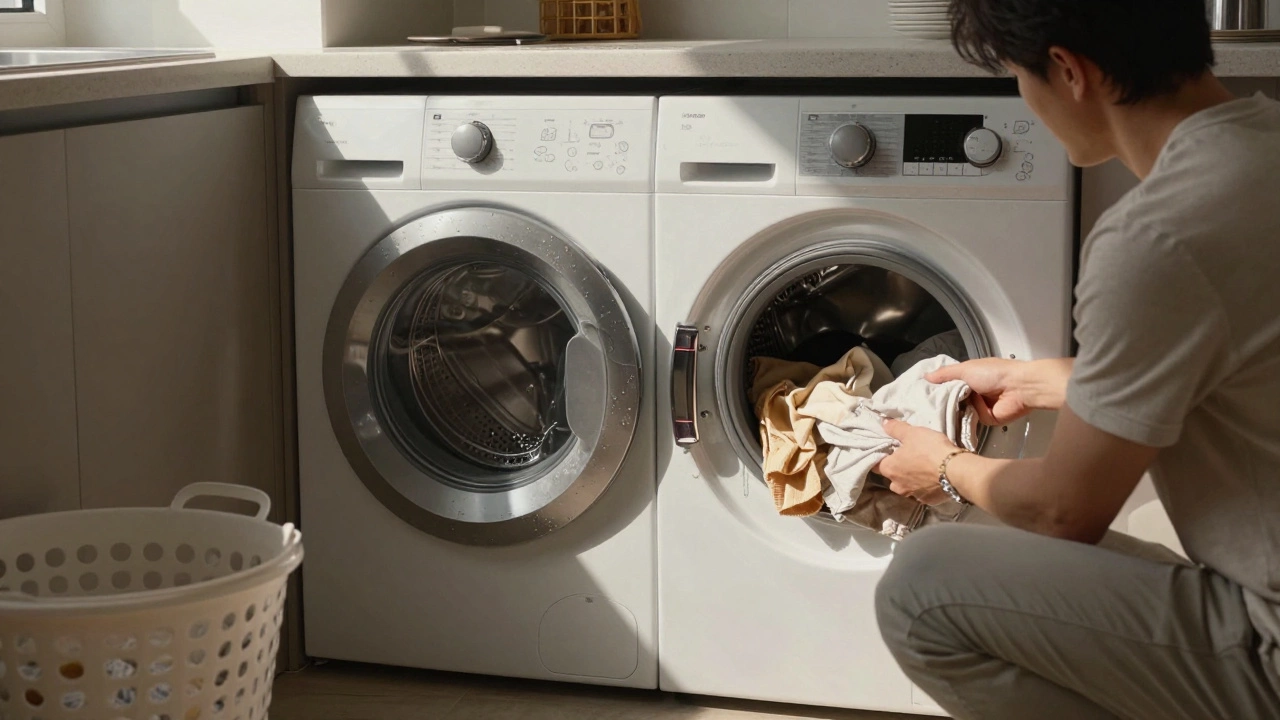
When you’re standing in the appliance aisle, staring at two types of washing machines-top load and front load-it’s not just about price. It’s about your life. Do you bend over easily? Do you do laundry every week? Do you care about water bills or how long your clothes last? The right washer isn’t the one with the fanciest features. It’s the one that fits your routine.
How They Work: Simple Differences, Big Effects
A top load washer fills with water and uses an agitator or impeller to move clothes around. Think of it like stirring a pot. Most older models use a central agitator-a post in the middle that twists back and forth. Newer high-efficiency top loads skip the agitator and use a low-profile impeller at the bottom to swirl clothes through water.
A front load washer rolls clothes around in a horizontal drum. It uses gravity and tumbling, not soaking. You load from the front, and it uses less water because the drum doesn’t need to fill completely. Instead, it splashes clothes in a small amount of water while spinning them hard to clean and rinse.
That small difference in motion changes everything: how clean your clothes get, how much water you use, and even how long your washer lasts.
Water and Energy Use: The Real Cost
Front load washers win hands down on efficiency. On average, they use 30 to 50% less water than top load models. A typical front load uses 10 to 15 gallons per load. A standard top load? 25 to 40 gallons. That adds up. If you do four loads a week, you’re saving over 3,000 gallons a year with a front loader.
Energy savings follow. Less water means less need to heat it. Front load washers also spin faster-up to 1,200 RPM-pulling more water out of clothes. That means shorter dryer times, which cuts electricity use even more. The U.S. Department of Energy says front loaders use about 25% less energy per load than traditional top loaders.
High-efficiency top loaders are better than old ones, but they still can’t match front load efficiency. If your goal is lower utility bills, front load is the clear choice.
Cleaning Power: Are Your Clothes Actually Clean?
Front load washers clean better on stains and heavy soils. The tumbling action is more aggressive and consistent. It’s why hotels and laundromats use front loaders-they handle dirt, mud, and sweat better. If you have kids, pets, or work outdoors, this matters.
Top load washers with agitators can be rough on clothes. The twisting motion pulls fabric apart, leading to more pilling, stretching, and wear. You’ll notice your favorite shirts thin out faster. High-efficiency top loaders without agitators are gentler, but still don’t match the cleaning power of front loaders.
One exception: top load washers handle bulky items better. Comforters, sleeping bags, and large towels fit easier in a top load tub. Front load drums are narrower, so you might need to fold or roll big items to fit them.
Convenience: Loading, Unloading, and Daily Use
Top load washers win on convenience for many people. You don’t need to bend over. You just open the lid and toss clothes in. If you have back problems, are short, or just hate bending, this is a big deal.
Front load washers require you to bend or kneel to load and unload. That’s fine if you’re young and healthy. But if you’re older, or have mobility issues, it becomes a chore. Some people install risers or buy stackable units to make it easier, but that adds cost.
Another practical issue: front load washers can’t be used as a stool. You can’t sit on a top load lid while folding laundry. You can’t stack a dryer on top of a front loader unless you buy a matching kit. And if you’re in a small apartment, the front load’s door swing might block a hallway.
Maintenance and Mold: The Hidden Problem
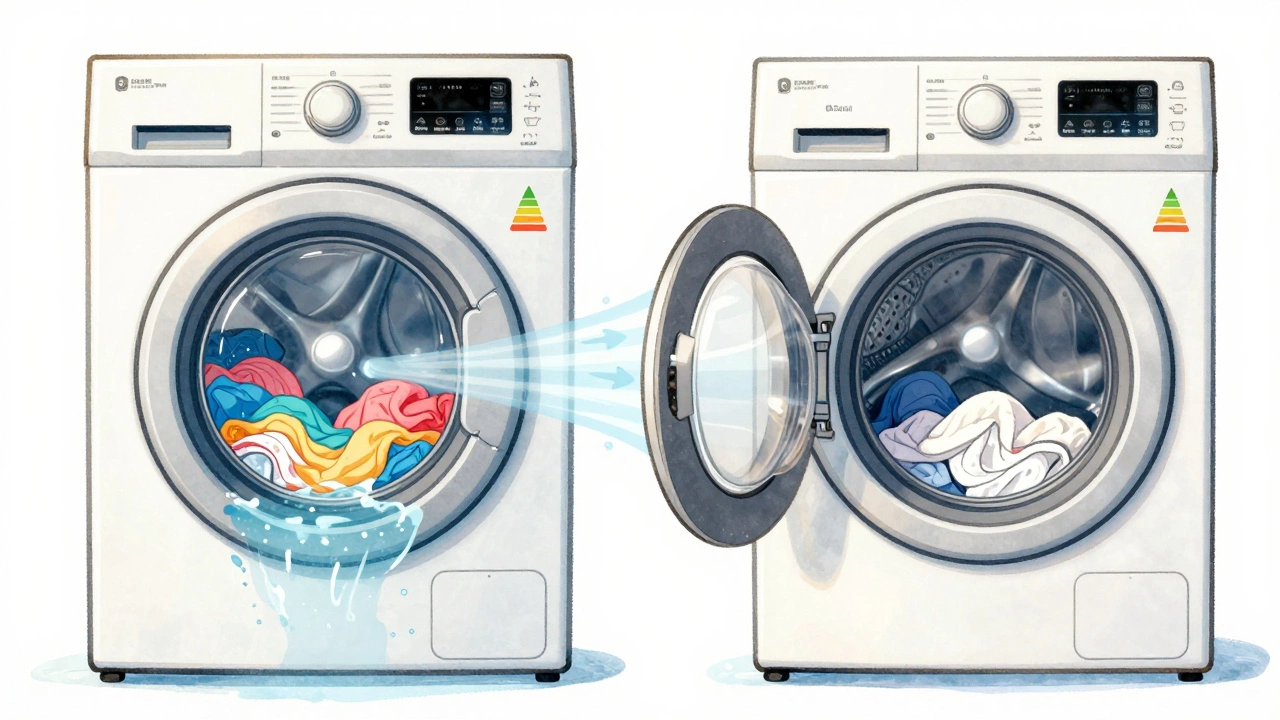
Front load washers have a reputation for mold and mildew. Why? The rubber door seal traps moisture. If you leave the door shut after washing, dampness builds up. Over time, that leads to a musty smell and black gunk around the seal.
It’s not inevitable. You can prevent it. Always leave the door open after a cycle. Wipe the seal dry. Use HE detergent-regular detergent creates too many suds and leaves residue. Run a monthly cleaning cycle with vinegar or a washer cleaner. Most modern front loaders have self-cleaning features now, but you still need to do basic upkeep.
Top load washers don’t have this issue. No rubber seal means no mold trap. They’re simpler to clean. Just wipe the drum and leave the lid open. Less hassle, fewer smells.
Price and Long-Term Value
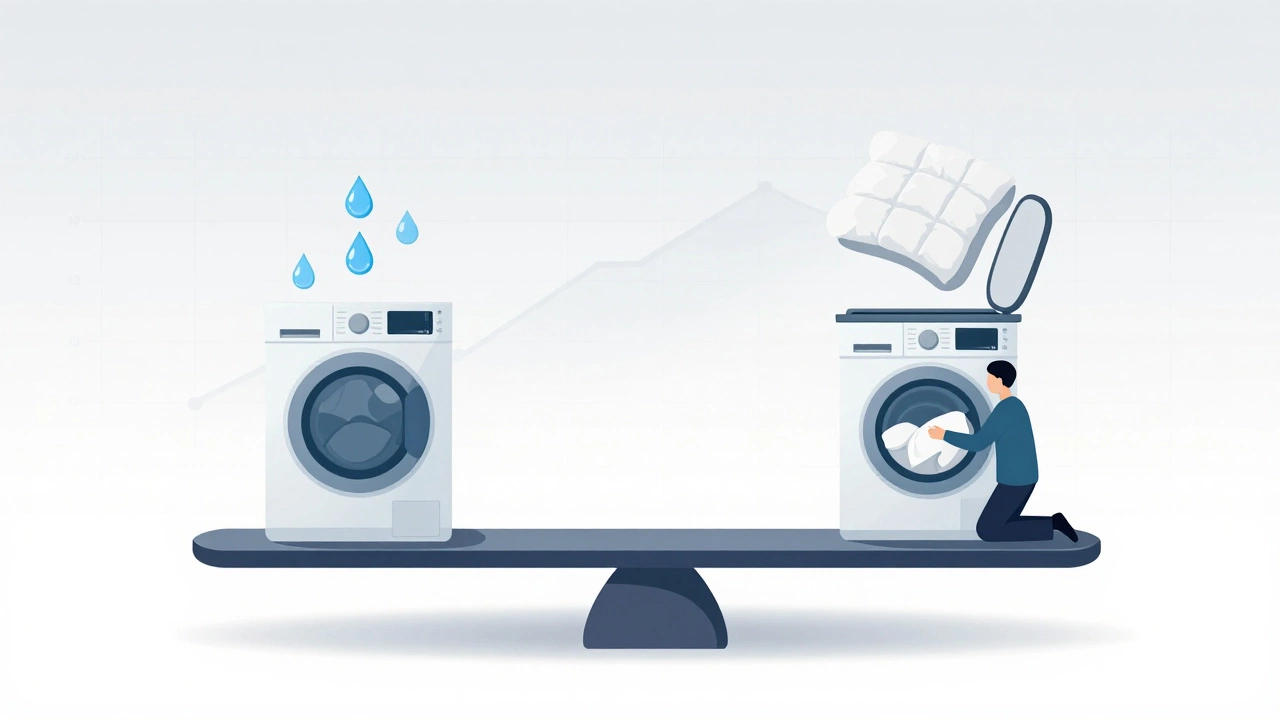
Front load washers cost more upfront. You’ll pay $800 to $1,500 for a good model. Top load washers range from $500 to $1,200. Basic models are cheaper, but you’re paying for the technology.
But here’s the real math: front loaders last longer. The average lifespan is 10 to 12 years. Top load washers? 8 to 10 years. They also use less detergent, water, and energy. Over five years, a front load washer can save you $300 to $600 in utilities. That starts to close the price gap.
Repair costs are higher for front loaders-especially if the drum bearing fails. But that’s rare if you maintain it. Top load agitators can break too, and replacing them isn’t cheap.
Who Should Choose What?
If you’re a busy parent with messy kids, a front load washer gives you better cleaning with less water. You’ll save on bills and your clothes will last longer. But if you have bad knees or live in a tight space, a top load might be the only practical option.
If you do large loads-king-size comforters, multiple towels, or work uniforms-a top load gives you more room. If you care about energy ratings and environmental impact, front load wins.
For renters: top load washers are easier to move and install. You don’t need to level the floor as precisely. Front load washers need a solid, flat surface. If your laundry room is on an upper floor, check the weight limits. Front loaders are heavier.
Final Decision: What Fits Your Life?
There’s no single best washer. The right one depends on your body, your budget, your laundry habits, and your home.
Choose a front load washer if:
- You want the lowest water and energy bills
- You wash heavily soiled clothes often
- You’re willing to do simple maintenance to avoid mold
- You don’t mind bending to load and unload
Choose a top load washer if:
- You have back or knee issues
- You need to wash bulky items regularly
- You want the simplest maintenance
- You’re on a tighter budget
And if you’re still unsure? Try this: think about your last three loads. Did you struggle to fit them in? Did you have to rewash anything? Did you notice a smell? Those clues tell you more than any spec sheet.
Are front load washers really more reliable than top load?
Front load washers tend to last longer-10 to 12 years on average-compared to 8 to 10 years for top loaders. But they’re more complex, so when they break, repairs can be costlier. The key is maintenance: keeping the door seal dry and using the right detergent. If you do that, front loaders are more reliable over time.
Can I stack a dryer on top of a front load washer?
Yes, but only if you buy a matching stackable kit from the same brand. Most front load washers are designed to be stacked, but the weight and vibration require a proper bracket. Never stack without the manufacturer’s kit-it can damage the washer or cause safety issues.
Do front load washers use more detergent?
No, they use less. Front load washers require high-efficiency (HE) detergent, which produces fewer suds. Using regular detergent can flood the drum, leave residue, and cause odors. Always check the label-it’s the only detergent that works properly in these machines.
Is a top load washer with an impeller better than one with an agitator?
Yes. Impeller models are gentler on clothes and use less water than agitator models. They clean almost as well as front loaders, without the bending. If you want a top load but care about fabric care, go for an impeller version. Avoid the old agitator types unless you’re on a very tight budget.
How often should I clean my washing machine?
Run a cleaning cycle once a month. Use vinegar or a washer cleaner, and wipe the rubber seal on front loaders after each use. Leave the door open between loads. For top loaders, just wipe the drum and leave the lid open. It takes two minutes and prevents most odor and mold problems.