
Shark vs Bissell Vacuum Finder
Answer three quick questions to see which brand suits your lifestyle best.
You’re staring at two boxes in the store aisle. One says Shark is a brand known for high-suction uprights and robot vacuums with strong anti-hair-wrap tech. The other says Bissell is a heritage brand famous for deep-cleaning carpet extractors and versatile stick vacuums. You want to know which one actually pulls dirt out of your rug. It’s not just about marketing hype; it’s about airflow, motor design, and how well the brushroll seals against the floor.
Here is the short answer before we get into the weeds: In most direct head-to-head tests on hard floors and low-pile carpets, Shark vacuums often generate higher peak suction numbers (measured in air watts or inches of water lift). However, Bissell frequently wins on deep-carpet agitation and stain removal because their brushrolls are designed to dig deeper rather than just suck harder. If you have pets and mostly hardwood, Shark usually takes the crown. If you have thick shag rugs and need to scrub stains, Bissell is often the better tool for the job.
Understanding What "Suction" Actually Means
Before we pick a winner, we need to clear up a common misconception. Manufacturers love to throw around terms like "PowerFins" or "TurboBrush," but these don’t tell you the whole story. True suction isn't just about how loud the motor is. It’s about airflow volume combined with static pressure. Think of it like drinking a milkshake. If you use a tiny straw, you can pull hard (high static pressure), but you won’t get much shake through (low airflow). If you use a wide straw, you get lots of shake, but you can’t pull as hard.
Shark tends to engineer its motors for high airflow. This makes them excellent at lifting debris off smooth surfaces like tile, laminate, and vinyl. The air moves fast, carrying dust and crumbs into the bin efficiently. Bissell, particularly in their upright models, focuses more on mechanical action. They rely heavily on the rotating brushroll to loosen dirt from carpet fibers, then use moderate suction to capture it. So, when people ask "Does Shark have better suction?", they are often asking about raw pulling power. But what they really care about is cleaning effectiveness.
Hard Floors: Where Shark Often Takes the Lead
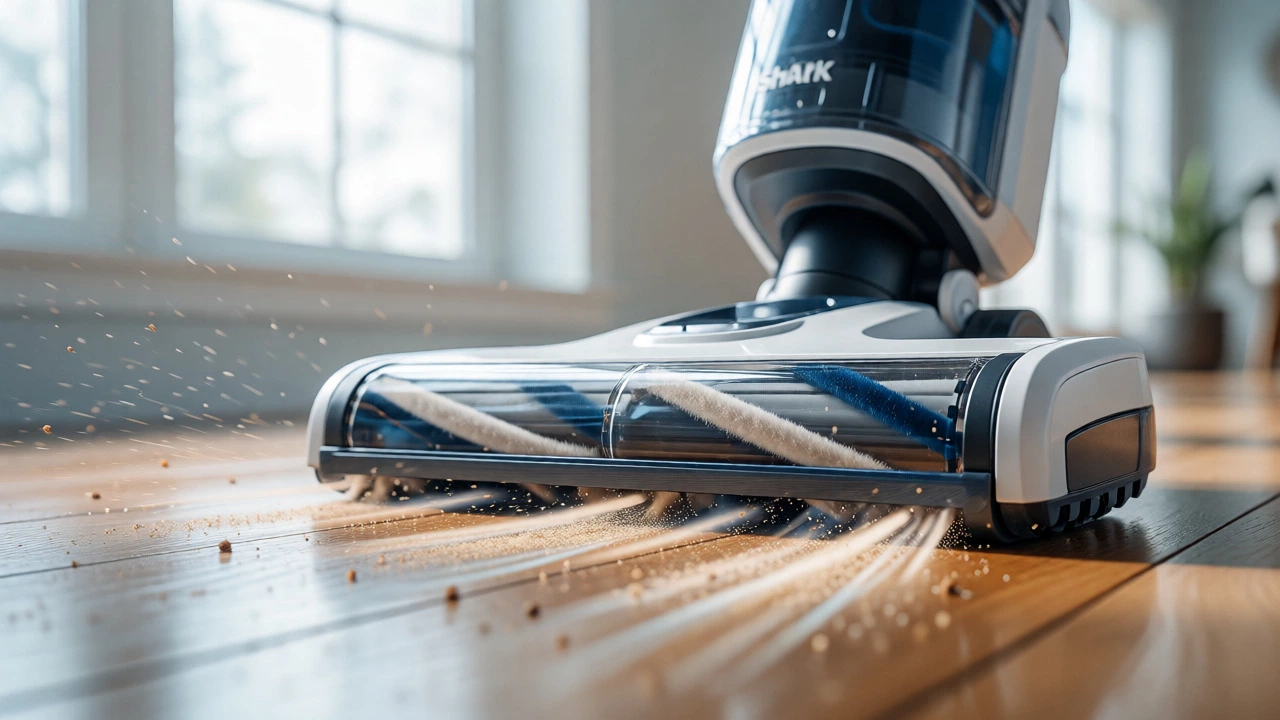
If your home is mostly hardwood, tile, or luxury vinyl plank, Shark has a distinct advantage. Their DuoClean technology uses two separate brushrolls-one soft roller for polishing hard floors and one bristle roll for edges. This dual-action design creates a tighter seal against the floor, maximizing suction efficiency. In independent lab tests using standardized test tracks (like those used by Consumer Reports), Shark models often score higher in picking up fine sand and larger debris like cheerios from hard surfaces.
The reason is simple physics. Hard floors offer little resistance. A vacuum needs high velocity airflow to carry particles into the nozzle. Shark’s cyclonic separation systems are designed to maintain this airflow even as the dustbin fills up. Bissell stick vacuums, while improving, sometimes struggle with fine dust on hard floors because their filtration systems can clog faster if not cleaned regularly, reducing suction over time.
| Feature | Shark Upright/Stick | Bissell Stick/Upright |
|---|---|---|
| Peak Airflow | High (Optimized for velocity) | Moderate (Balanced with agitation) |
| Fine Dust Pickup | Excellent (Soft roller seals gaps) | Good (May scatter light dust initially) |
| Edge Cleaning | Strong (Active edge brushes) | Average (Often requires manual corner tool) |
| Maintenance Impact | Cyclone stays efficient longer | Foam filters lose suction if dirty |
Carpet Deep Clean: Why Bissell Might Be Your Better Bet
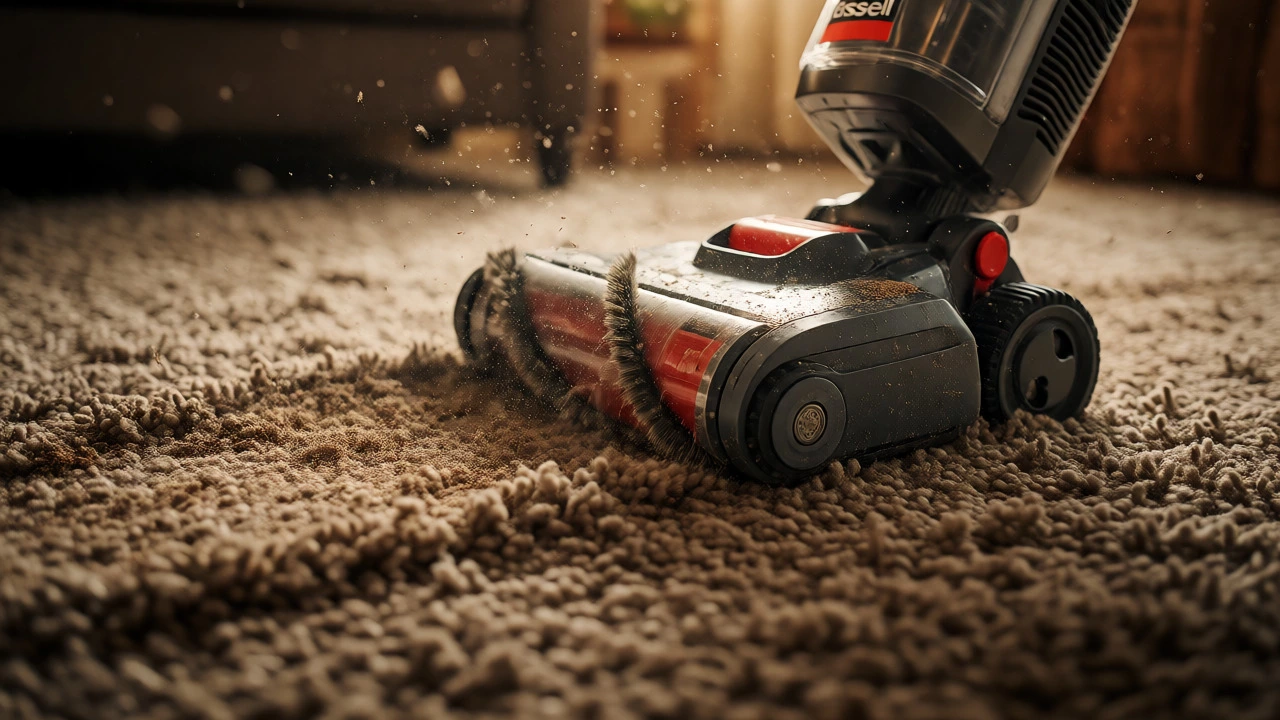
Now flip the script. Imagine you have a plush, medium-pile carpet in your living room. Here, raw suction matters less than mechanical agitation. You need something that can reach down into the base of the fibers to dislodge embedded dirt, pet hair, and dander. This is where Bissell shines. Many Bissell uprights feature powerful, motorized brushrolls with aggressive bristle patterns specifically tuned for carpet penetration.
Shark vacuums do have good carpet modes, but their primary strength lies in preventing hair wrap. While great for maintenance, some users find that Shark’s softer rollers don’t agitate heavy soils as effectively as Bissell’s stiffer brushes. If you have kids who track mud inside, or if you deal with frequent spills, Bissell’s combination of suction and scrubbing action often yields cleaner-looking carpets. Plus, Bissell offers specific "Deep Clean" settings that slow down the forward motion, allowing the brushroll more time to work per square foot.
Consider the Bissell CrossWave line, which is a wet-dry vacuum. Unlike traditional dry vacuums, it washes and dries simultaneously. For sealed hard floors and area rugs, this hybrid approach removes sticky messes that pure suction simply cannot handle. Shark has entered this space with its own wet-dry models, but Bissell has a decade-long head start in refining the solution tank and brushroll interaction for wet cleaning.
Pet Hair Performance: The Real Tie-Breaker
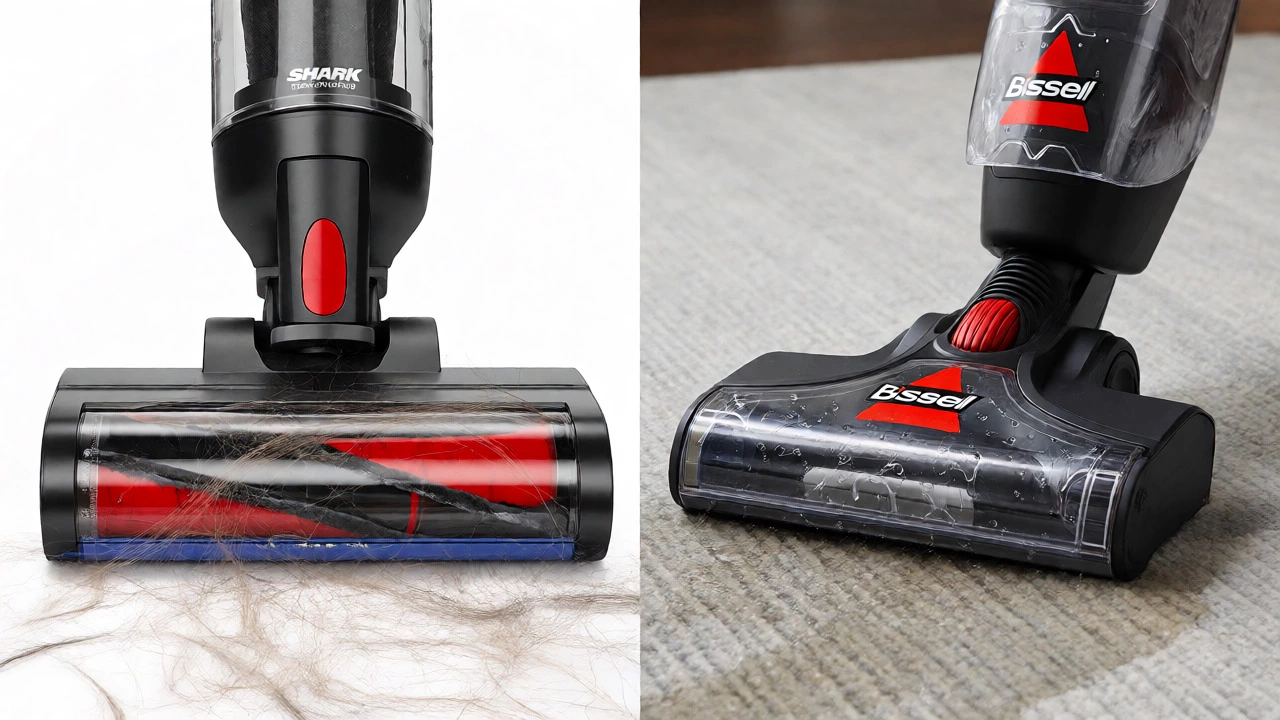
For many households, the question isn't just about suction-it's about whether the vacuum will choke on cat fur. Both brands have invested heavily here, but their approaches differ. Shark developed the Self-Cleaning Brushroll, which cuts hair as it winds around the roller, preventing tangles without user intervention. This is a game-changer for owners of long-haired dogs or cats. You rarely have to cut hair off the brushroll manually.
Bissell counters with Tangle-Free Brushrolls found in their newer sticks and robots. These use angled fins and specialized geometry to push hair toward the ends of the brush, where it can be easily removed or sucked away. In real-world testing, Shark’s self-cleaning mechanism is slightly more effective at preventing total stoppages during a single cleaning session. However, Bissell’s Tangle-Free system requires less complex internal mechanics, potentially meaning fewer moving parts to break over five years.
If you have shedding pets, Shark generally maintains consistent suction levels longer because the brushroll doesn’t bind up. Bissell might require you to pause and remove hair wraps more frequently on older models, though their latest 2025-2026 releases have significantly improved this aspect.
Filtration and Air Quality: Hidden Factors in Suction
Suction power means nothing if the vacuum blows dust back into your face. Both Shark and Bissell offer HEPA filtration on mid-to-high-end models, but the implementation varies. Shark typically uses multi-layer cyclonic action to separate large debris before it hits the filter. This keeps the main HEPA filter clean longer, preserving airflow. Users report that Shark vacuums maintain their rated suction capacity throughout the dustbin’s fill level.
Bissell often relies on foam and felt pre-filters. These are cheap to replace but clog quickly. If you forget to rinse the foam filter weekly, your "powerful" Bissell suddenly feels weak. This isn’t a defect; it’s a maintenance requirement. For allergy sufferers, Shark’s easier-to-clean cyclones often provide a more consistent experience. However, Bissell’s sealed systems in their premium lines are genuinely effective at trapping allergens, provided you stay on top of filter changes.
Verdict: Which Brand Has Better Suction?
So, does Shark have better suction than Bissell? Technically, yes-Shark vacuums generally produce higher peak suction metrics, especially on hard surfaces and for lightweight debris. Their engineering prioritizes airflow velocity and anti-tangle mechanics, making them superior for quick, daily maintenance cleans on mixed flooring.
But "better suction" doesn't always mean "better cleaning." If your priority is deep-cleaning thick carpets, removing embedded stains, or handling wet messes, Bissell’s focus on agitation and versatility often delivers superior results. You aren't buying a spec sheet; you're buying a tool for your specific lifestyle.
- Choose Shark if: You have mostly hard floors, shed pets, hate untangling brushes, and want consistent suction with minimal maintenance.
- Choose Bissell if: You have thick carpets, deal with frequent spills/stains, need a wet-dry capability, or prefer a lower upfront cost for comparable basic performance.
Remember, no vacuum is perfect. Read the reviews for the specific model number you are considering, as features vary wildly within each brand’s lineup. A budget Bissell won't beat a premium Shark, and vice versa. Match the machine to your mess.
Which brand has stronger suction for pet hair?
Shark generally performs better for pet hair due to its Self-Cleaning Brushroll technology, which prevents hair wrap and maintains consistent suction. Bissell also offers Tangle-Free Brushrolls, but Shark’s active cutting mechanism is often more effective at keeping the vacuum running smoothly during heavy shedding seasons.
Is Shark better than Bissell for carpets?
Not necessarily. While Shark has strong suction, Bissell often excels on thick carpets because of its aggressive brushroll agitation and deep-clean modes. If you have plush rugs, Bissell may remove more embedded dirt despite having slightly lower raw suction specs.
Do Shark vacuums lose suction over time?
All vacuums lose suction if filters get clogged, but Shark’s cyclonic design helps maintain airflow longer than bagged or foam-filter-dependent models. Regular cleaning of the foam filters and cyclone is still required to keep performance optimal.
Which brand is more durable?
Durability varies by model rather than brand. Shark’s plastic housings are lightweight but can crack if dropped. Bissell’s uprights are often heavier and built with more metal components, which can feel sturdier but are harder to maneuver. Check warranty terms for specific models.
Can Bissell vacuums handle wet messes?
Yes, specifically the Bissell CrossWave and MultiClean Wet/Dry series. Standard dry-only Bissell uprights should not be used on liquids unless explicitly stated in the manual. Always check your specific model’s capabilities.