
Coffee Cost Calculator
Calculate Your Savings
Your Results
Annual Coffee Shop Cost: $0
Annual Home Brewing Cost: $0
Annual Savings: $0
Machine Payback Period: N/A
Tip: A $60 machine pays for itself in 20 days if you buy 1 cup daily at $5.
Every morning, millions of people hand over $5 or more for a cup of coffee. That’s $150 a month. $1,800 a year. And that’s if you only buy one a day. But what if you could make the same cup at home for less than $1? Is making coffee at home worth it? The answer isn’t just about money-it’s about time, quality, and control.
How Much Are You Really Spending on Coffee?
Let’s break it down. A typical coffee shop drink-say, a medium latte-costs between $4 and $6. Add in a pastry or extra shot, and you’re pushing $8. If you do this five days a week, you’re spending $20 to $30 a week. That’s $80 to $120 a month. Over a year, that’s $960 to $1,440. And that’s not even counting the occasional weekend treat.
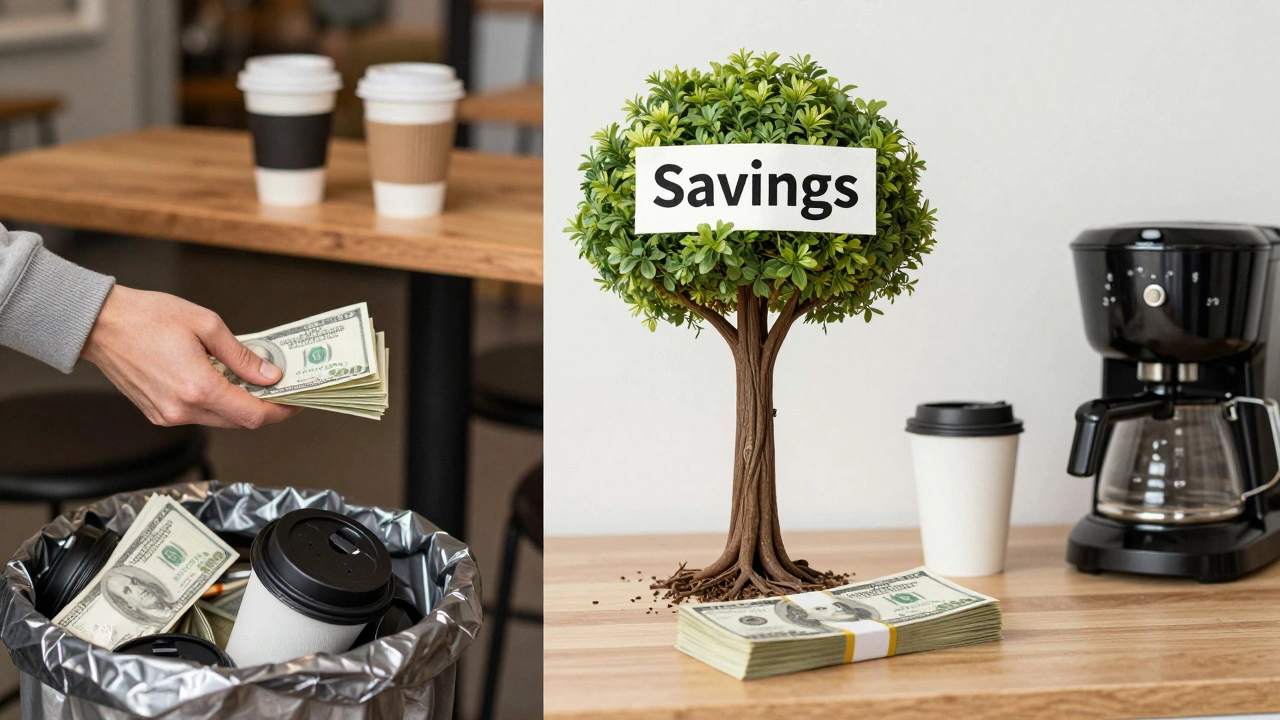
Now, compare that to making coffee at home. A bag of whole bean coffee costs around $15 and gives you 15 to 20 strong brews. That’s $0.75 to $1 per cup. Add in electricity and water? Less than $0.10. Even if you use pre-ground coffee or pods, you’re still under $0.50 per cup. You’re saving $3 to $5 per drink. That’s $1,000+ a year just by switching.
The Upfront Cost: Is the Machine a Burden?
You’re probably thinking: "But I need a machine." And you’re right. But here’s the thing-coffee machines aren’t luxury items anymore. You don’t need a $1,200 espresso system to make great coffee at home.
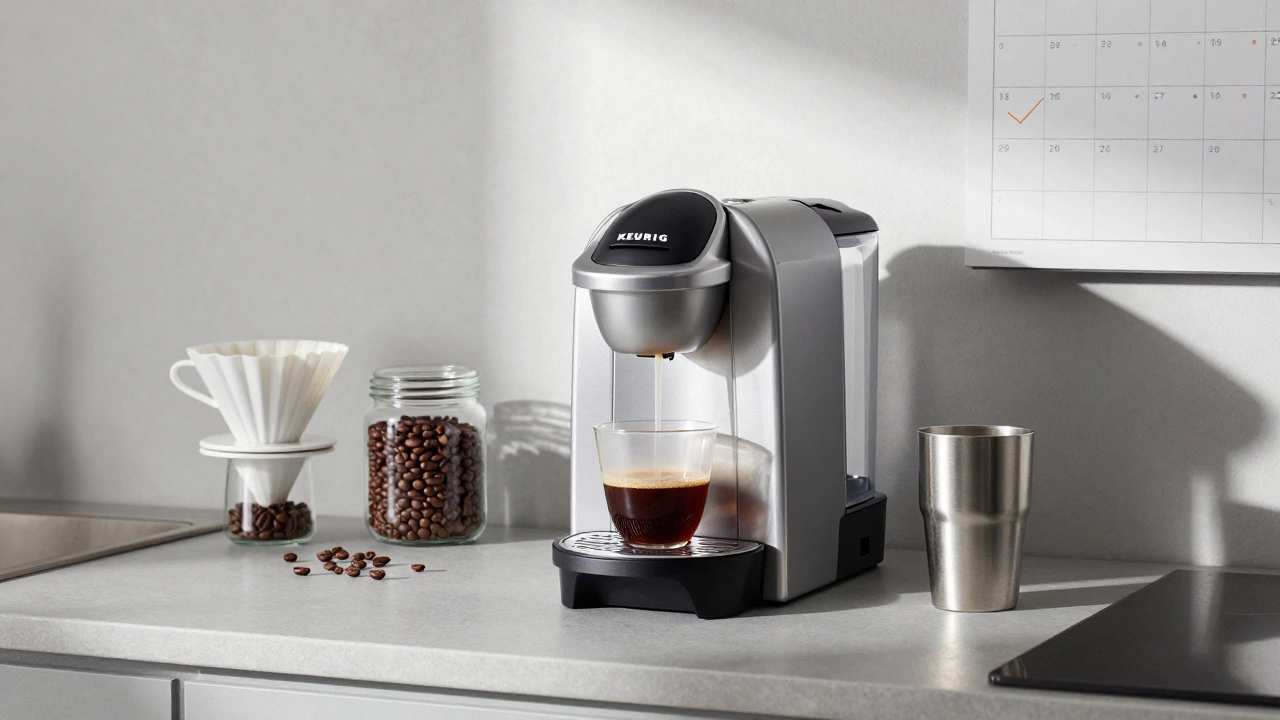
A decent drip coffee maker costs $40 to $80. A basic French press? $25. A manual pour-over setup with a gooseneck kettle? $60 total. Even a decent single-serve pod machine like a Keurig K-Classic runs $80 on sale. These aren’t one-time splurges-they’re investments that pay for themselves in weeks, not years.
Take the Keurig K-Classic. It’s currently on sale for $79 at major retailers. At $5 per coffee at the shop, you’d break even in under 16 days. After that, every cup is pure savings. And you’re not stuck with cheap, watery coffee-you can use your favorite beans, adjust strength, and skip the plastic cups.
Quality: You’re Not Sacrificing Taste
Some people say, "I can’t make coffee that good at home." That’s outdated. Modern home coffee makers do more than just drip water through grounds. Machines like the Bonavita BV1900TS brew at the ideal 200°F temperature, with even saturation and the right contact time. It’s the same standard used by specialty cafés.
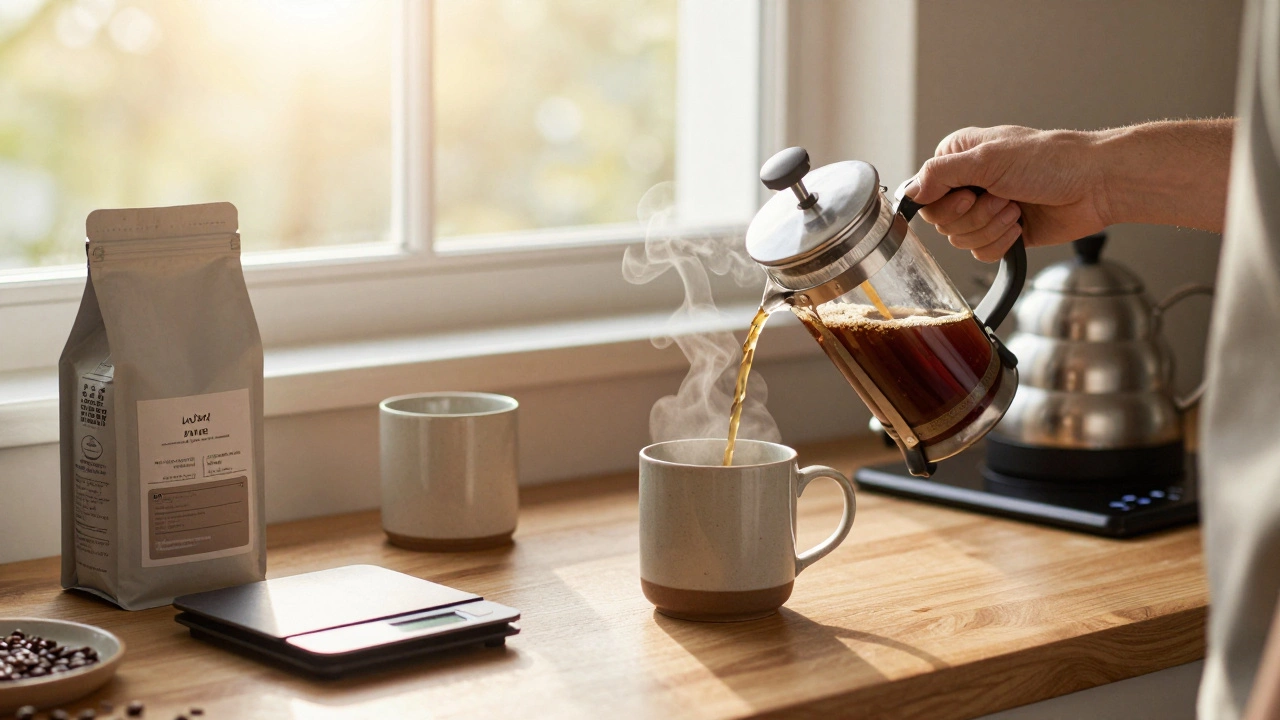
Even a $30 French press gives you richer, fuller-bodied coffee than most drive-thru lattes. You control the grind, the water, the steep time. No more chalky, over-extracted brews from machines that sit on a hot plate for hours.
And if you want espresso? A $150 semi-automatic machine like the De’Longhi EC155 gives you real crema, not that foamy, artificial stuff from pods. You can make cappuccinos, lattes, macchiatos-all at home, with zero markup.
Time and Convenience: Is It Really Faster?
"I don’t have time in the morning," is the most common excuse. But how much time does it really take?
With a drip coffee maker, you fill the reservoir, add grounds, hit the button, and walk away. It brews while you brush your teeth. That’s two minutes of effort. A French press? Add grounds, pour hot water, wait four minutes, press. Still under five minutes.
Compare that to driving to the café, waiting in line, ordering, paying, and sitting down. That’s 15 to 25 minutes-and you still have to drink it cold because you’re late for work.
And let’s not forget the convenience of leftovers. Brew a full pot in the morning? You’ve got coffee for the afternoon. No need to buy another. No need to carry a cup. No need to worry about spilling it in your car.
What About Waste?
Every coffee shop cup comes with a lid, a sleeve, a stir stick, and often a plastic spoon. That’s four disposable items per drink. Multiply that by 250 days a year? That’s 1,000+ pieces of trash. And most coffee cups aren’t recyclable-they’re lined with plastic.
At home, you use a reusable mug and a metal filter (or a compostable paper filter). You reduce waste, save money, and look a little more responsible. It’s a small change, but it adds up.
Real-Life Scenarios: Who Benefits the Most?
Not everyone saves the same amount. Here’s how it breaks down:
- One coffee a day, $5 each: Saves $1,000+ per year. Machine pays for itself in 2-3 months.
- Two coffees a day, $6 each: Saves $2,000+ per year. Machine pays for itself in under 2 months.
- Three coffees a week, $4 each: Saves $400+ per year. Machine pays for itself in 6 months.
- Only coffee on weekends: Saves $150-$200 per year. Still worth it if you care about taste and waste.
If you’re someone who drinks coffee daily, the math is undeniable. Even if you only drink coffee on weekdays, you’re saving hundreds a year. And if you’re someone who likes to experiment with different beans, roasts, or brewing methods? You’re not just saving money-you’re building a ritual.
What If You Don’t Want to Buy a Machine?
You don’t need to spend a dime. A French press costs less than a week’s worth of coffee. A pour-over cone and paper filters? Under $20. Boil water in your kettle. Pour. Wait. Drink. No electricity. No plugs. No maintenance.
Some people swear by the AeroPress-it’s cheap, portable, and makes coffee that rivals espresso. It’s used by travelers, campers, and office workers who bring it to work. And it costs $30.
You don’t need a fancy machine to make good coffee. You just need a way to get hot water and grounds together for a few minutes. Everything else is marketing.
The Hidden Benefits: Control, Routine, and Joy
Money isn’t the only thing you gain. When you make coffee at home, you control everything: the roast, the grind, the water temperature, the brewing time. You can try Ethiopian beans one week, Colombian the next. You can make it stronger, lighter, or with a splash of oat milk.
You also build a quiet morning ritual. No rush. No noise. Just you, the smell of coffee, and the first sip. That’s not just convenience-it’s mental space.
And let’s be honest: coffee made at home tastes better. Why? Because you’re not drinking yesterday’s batch. You’re not drinking something that sat under a heat lamp for three hours. You’re drinking it fresh. Right when it’s perfect.
Final Verdict: Yes, It’s Worth It
Is making coffee at home worth it? Yes. For almost everyone.
You save hundreds, maybe thousands, of dollars a year. You reduce waste. You get better-tasting coffee. You gain control over your routine. And you don’t need to spend a fortune to do it.
Start small. Buy a French press for $25. Use a bag of coffee you already like. Brew one cup tomorrow morning. See how it feels. Then do it again the next day. In a week, you’ll wonder why you ever paid $5 for something you can make yourself for less than a dollar.
That $1,000 you’re saving? Put it toward a better machine next year. Or a vacation. Or your emergency fund. But don’t keep handing it over to a coffee shop that doesn’t even know your name.
How much does it cost to make coffee at home per cup?
Making coffee at home costs between $0.10 and $1 per cup, depending on your setup. Whole bean coffee averages $0.75 per cup, while pre-ground or pods may cost $0.30-$0.50. Electricity and water add less than $0.10. This is far less than the $4-$6 you’d pay at a coffee shop.
What’s the cheapest way to make coffee at home?
The cheapest way is a French press or pour-over setup. A French press costs $20-$30 and lasts years. You only need ground coffee and hot water. No electricity needed. Total cost per cup: under $0.30. You can make a full pot for less than $1.50.
Do coffee machines save money in the long run?
Yes. A $60 coffee maker pays for itself in under two months if you buy one coffee a day at $5. After that, every cup is pure savings. Over five years, you’ll save $4,000-$6,000 compared to buying coffee out. Even cheaper machines like drip brewers or AeroPresses pay for themselves in weeks.
Is pod coffee cheaper than coffee shop coffee?
Yes. A Keurig K-Cup costs about $0.60-$0.80 per pod, depending on the brand. Even premium pods rarely exceed $1. Compare that to $5-$6 at a café. You’re still saving 80% per cup. Plus, you can buy in bulk or use reusable filters to cut costs further.
What’s the best coffee machine for beginners?
For beginners, a drip coffee maker like the Cuisinart DCC-3200 or a basic Keurig K-Classic is easiest. Both are under $80 on sale, simple to use, and brew consistent coffee. If you want more control, try a pour-over setup with a gooseneck kettle-it’s affordable and teaches you how to make better coffee.
Can I make espresso at home without spending $1,000?
Yes. Machines like the De’Longhi EC155 or Breville BES870XL cost $150-$250 and make real espresso with crema. You don’t need a $1,200 machine to get started. A good espresso machine pays for itself in 3-4 months if you regularly buy lattes or cappuccinos.