
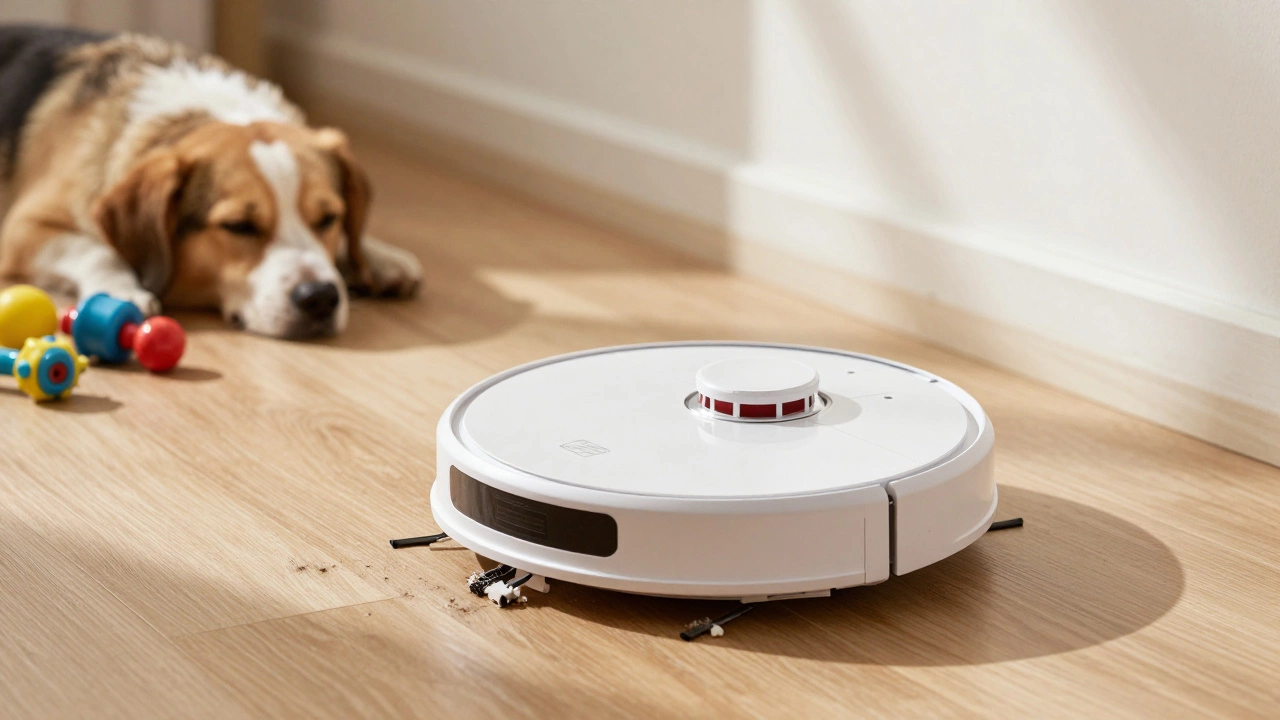
If you’ve ever spent an hour vacuuming your floors only to find dog hair, crumbs, and dust back in full force two days later, you’ve probably wondered: is a robot vacuum cleaner actually worth the money? It’s not just a gadget-it’s a daily chore taker. But do they deliver? Or are they just expensive toys that get stuck under the couch?
What a robot vacuum actually does (and doesn’t do)
A robot vacuum cleaner is designed to handle routine floor cleaning between your big cleanups. It doesn’t replace your upright vacuum-it complements it. Most models today use sensors to map your home, avoid stairs, and navigate around furniture. They suck up dust, pet hair, crumbs, and small debris. Some even mop. But they won’t clean your baseboards, lift deep carpet stains, or vacuum under heavy furniture without a lift.
Here’s the truth: if you have hard floors, light to moderate dirt, and pets that shed, a robot vacuum can cut your cleaning time in half. If you have thick shag carpet, lots of cords, or a home full of clutter, you’ll still need to do some manual work.
The real cost: upfront price vs long-term savings
You can buy a basic robot vacuum for under $200. But the ones that actually work well? They start at $400 and go up to $900. That’s a lot for a machine that just rolls around. But here’s what you’re really paying for: time.
Let’s say you spend 30 minutes vacuuming twice a week. That’s 104 hours a year. If you value your free time at $20 an hour, you’re spending over $2,000 a year just on cleaning labor. A $500 robot vacuum pays for itself in under a year if you use it daily. And it doesn’t get tired. It doesn’t skip spots because you’re distracted by your phone.
Plus, many models now have self-emptying bases. That means you don’t have to empty the bin for weeks-even months. No more dusty hands or sneezing fits from stirred-up allergens.
What works better? Hard floors vs carpet
Robot vacuums shine on tile, wood, and laminate. They glide smoothly, pick up fine dust efficiently, and rarely get stuck. On low-pile rugs, they do fine too. But anything thicker than 1 inch? That’s where problems start.
Many models struggle with transitions-like going from hardwood to a thick rug. Some get stuck. Others just give up and leave a strip of dirt behind. High-end models with stronger motors and better sensors handle this better. But even then, you’ll notice gaps in coverage on deep-pile carpets. If you’ve got a living room full of plush rugs, you’ll still need your upright.
Pets, kids, and messy homes
If you have pets, this is where robot vacuums become indispensable. Dog hair, cat dander, and litter tracked across the floor? A robot vacuum runs daily and keeps it under control. I’ve seen owners of two German Shepherds say their robot vacuum cuts shedding-related cleaning from three times a week to once.
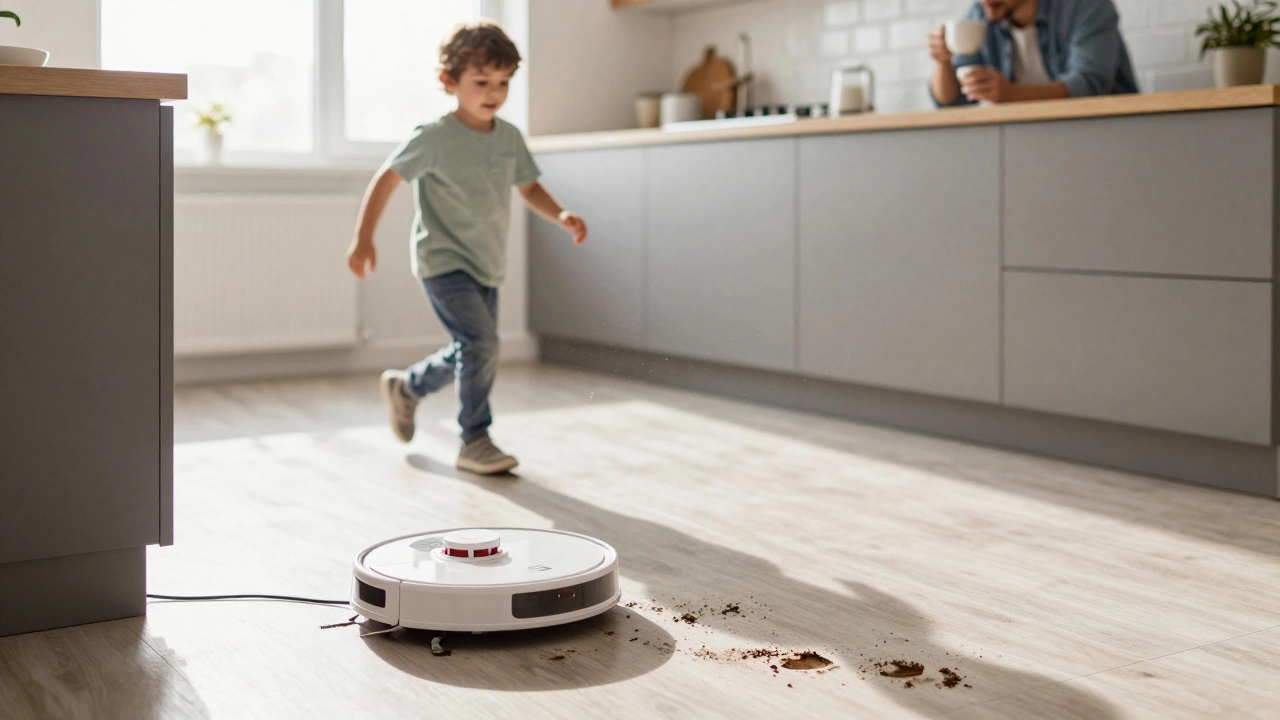
Kids? Same thing. Spilled cereal, dropped snacks, muddy footprints-it all gets picked up before it becomes a problem. One mom in Vancouver told me her robot vacuum runs every morning at 7 a.m. before the kids even get up. By the time she’s had coffee, the floor’s already clean.
But here’s the catch: if your home is cluttered with toys, shoes, or charging cables, the robot will get stuck. You’ll spend more time freeing it than you save. Keep high-traffic areas clear. Use virtual walls or no-go zones in the app. Don’t expect perfection.
Smart features that actually matter
Not all smart features are useful. Voice control? Nice, but not essential. App integration? Helpful, but you don’t need to adjust suction from your couch. What really makes a difference:
- Mapping and memory - The robot remembers your floor plan. So if you move a chair, it adjusts. If you add a room, it learns it. This means consistent coverage.
- Self-emptying base - This is a game-changer. You empty the bin maybe once a month. Without it, you’re back to manual work.
- Multi-level mapping - If you have stairs, some robots can map multiple floors. They’ll clean upstairs, then return to the charging station downstairs. No manual carrying.
- App scheduling - Set it to clean while you’re at work, asleep, or out running errands. That’s the whole point.
Skip the gimmicks: color screens, LED lights, or fancy app games. Focus on cleaning power, battery life, and how well it handles your home layout.
What to expect after 6 months
Most robot vacuums last 3-5 years with proper care. The brushes wear out. The filters get clogged. The battery loses capacity. That’s normal.
After six months, you’ll likely need to:
- Replace the side brush (every 3-6 months)
- Replace the main brush (every 6-12 months)
- Replace the HEPA filter (every 2-4 months if you have pets)
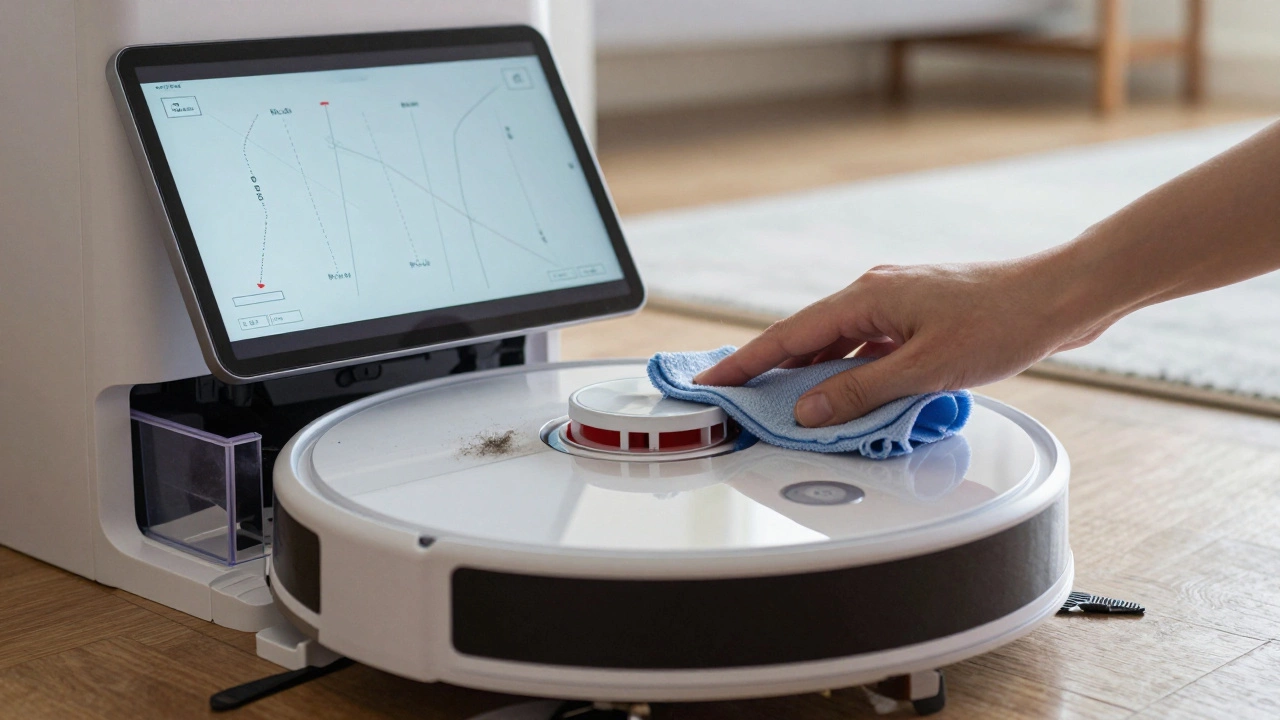
- Clean the sensors with a dry cloth (once a week)
Some brands make replacement parts cheap and easy to find. Others? You’re stuck buying a whole new unit. Check the brand’s support site before you buy. If replacement parts cost half the price of a new unit, walk away.
Who should buy one? Who should skip it?
Buy a robot vacuum if:
- You have hard floors or low-pile rugs
- You own pets or have kids
- You hate vacuuming
- You’re willing to do light maintenance
- You want to reduce allergens without changing your routine
Skip it if:
- Your home is full of clutter, cords, and deep-pile carpets
- You’re on a tight budget and can’t afford replacement parts
- You expect it to do deep cleaning or handle spills
- You don’t mind vacuuming once a week
The best time to buy? During Black Friday or Amazon Prime Day. Prices drop 30-50%. You can get a $700 model for $400. That’s the sweet spot.
Final verdict
Is it worth buying a robot vacuum cleaner? For most people in modern homes-yes. Not because it’s perfect. But because it makes cleaning invisible. You don’t have to think about it. It just works. And that’s worth more than the price tag.
It won’t make your house spotless. But it will stop dirt from building up. And that’s the real win.