
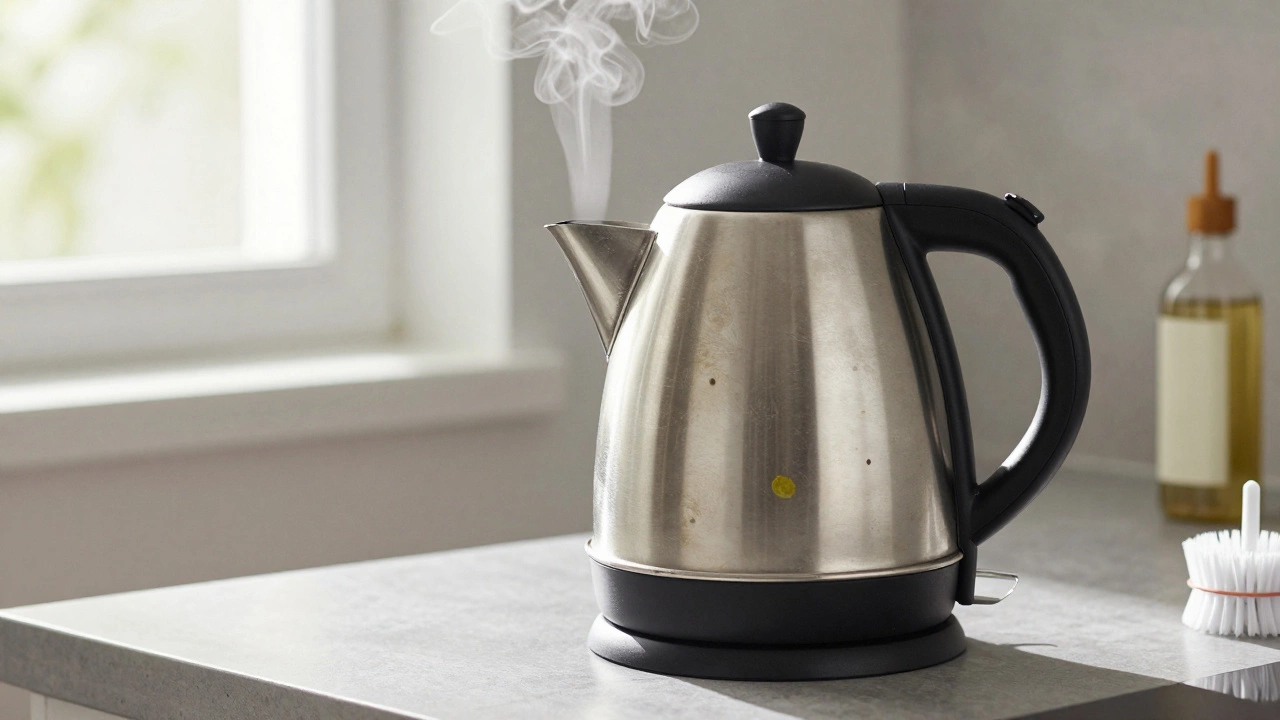
Kettle Safety Checker
Is Your Kettle Safe? Answer a Few Questions
This tool helps determine if your electric kettle is safe to use based on materials, condition, and maintenance practices.
Safety Tips
- ✓ Use 304/316 stainless steel for best safety
- ✓ Clean regularly (every 2-4 weeks in hard water areas)
- ✓ Look for BPA-free certification on plastic parts
- ! Replace if you see rust, corrosion, or significant limescale
- ! Don't use plastic kettles with internal water contact
Safety Assessment
Every morning, millions of people boil water in electric kettles without a second thought. But if you’ve ever wondered whether that steaming cup is truly safe to drink, you’re not alone. With headlines about plastic leaching, rust, and heavy metals floating around, it’s easy to get worried. The truth? Most modern electric kettles are perfectly safe-if you know what to look for and how to use them properly.
What Makes Water from an Electric Kettle Potentially Unsafe?
The main concerns aren’t about the boiling process itself. Boiling water kills bacteria, viruses, and parasites. That part is actually a health benefit. The real risks come from the kettle’s materials and how it’s maintained.
Older kettles, especially those made before 2015, often had plastic components that came into direct contact with boiling water. Some of these plastics contained BPA or other chemicals that could leach into the water over time, especially when heated repeatedly. While most manufacturers stopped using BPA in food-contact plastics by 2018, cheap knockoffs still pop up online.
Another issue is limescale buildup. In hard water areas like Vancouver, minerals like calcium and magnesium accumulate inside the kettle over months. That white powder you see? It’s not toxic, but it can harbor bacteria if left uncleaned. And if your kettle has a metal heating element exposed to water, rust or corrosion can form-especially in low-quality stainless steel or aluminum models.
Then there’s the concern about heavy metals. Some budget kettles use low-grade stainless steel (like 201 or 430 grade) that may contain higher levels of manganese or nickel. While these metals aren’t dangerous in tiny amounts, long-term exposure from daily use could add up, especially for people with sensitivities.
How to Tell If Your Kettle Is Safe
Not all kettles are created equal. Here’s how to check yours:
- Look for food-grade materials: The interior should be made of 304 or 316 stainless steel (also called 18/8 or 18/10). These grades are corrosion-resistant and safe for boiling water. Avoid aluminum or uncoated copper interiors.
- Check the lid and spout: Plastic parts near the water line should be labeled BPA-free. If you can’t find this info, assume it’s not safe.
- Look for certifications: Reputable brands display certifications like FDA, LFGB, or CE. These mean the materials have been tested for food safety.
- Inspect for rust or discoloration: If you see reddish-brown spots inside the kettle or on the heating element, it’s time to replace it. Rust isn’t just ugly-it can flake into your water.
A 2023 study by the Canadian Food Inspection Agency tested 45 electric kettles sold in Canada. Only 3 models showed detectable levels of nickel above recommended limits-all were imported from unknown brands sold on discount sites. The rest met international safety standards.
What Happens When You Don’t Clean Your Kettle?
Let’s say you’ve had the same kettle for five years and haven’t cleaned it since you bought it. That white scale? It’s not harmless. Limescale can trap bacteria like Pseudomonas and Legionella, which thrive in warm, moist environments. These aren’t common in tap water, but they can grow inside a dirty kettle.
One case from a Vancouver household in 2024 involved a family of four who developed recurring stomach issues. After testing, the culprit wasn’t their water supply-it was a kettle coated in thick limescale that hadn’t been descaled in over three years. Once they cleaned it weekly with vinegar and replaced the filter, symptoms disappeared.
Here’s a simple cleaning routine:
- Fill the kettle halfway with equal parts white vinegar and water.
- Bring it to a boil, then let it sit for 20 minutes.
- Pour it out and rinse thoroughly with clean water.
- Boil a full kettle of plain water, then discard it to remove any vinegar taste.
- Repeat every 2-4 weeks, depending on your water hardness.
Don’t use lemon juice instead of vinegar. It’s less effective at breaking down scale and can leave a sticky residue.
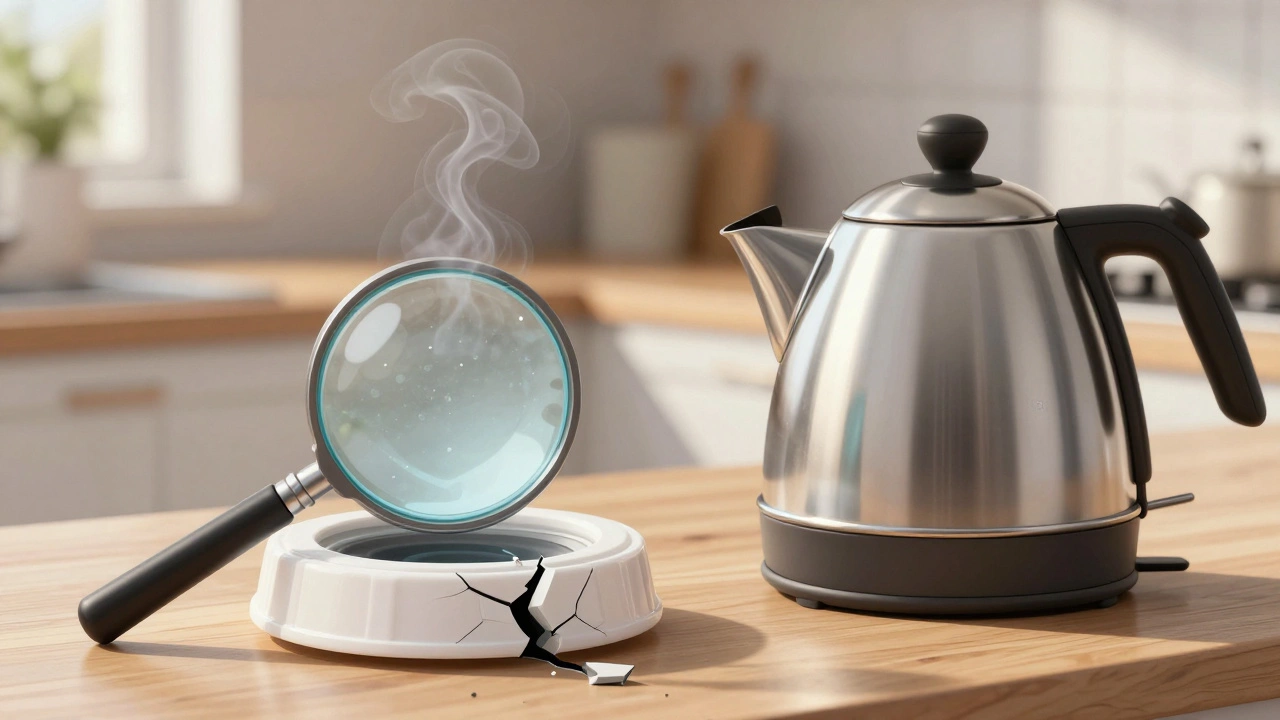
Are Kettles with Plastic Bases Safe?
Many modern kettles have plastic bases that don’t touch the water. These are generally safe because the plastic is only exposed to heat from below, not boiling water. But if the base cracks or gets hot enough to warp, it could release chemicals into the air or contaminate the countertop.
Look for kettles with a detachable base made of heat-resistant ABS plastic or polycarbonate. Avoid models where the cord connects directly to the plastic housing without a metal or ceramic barrier.
Also, make sure the kettle sits securely on its base. A loose connection can cause overheating, which increases the risk of plastic degradation over time.
What About Glass or Ceramic Kettles?
Glass and ceramic kettles are growing in popularity-and for good reason. They don’t leach metals, don’t rust, and you can see exactly what’s inside. But they’re not perfect.
Some glass kettles use tempered glass that can shatter if exposed to sudden temperature changes. Always let the kettle cool slightly before refilling. Ceramic kettles are fragile and can chip, exposing the underlying material. If the glaze is cracked or peeling, stop using it immediately.
Also, ceramic kettles often have hidden metal heating elements. Make sure the element is fully enclosed and doesn’t touch the water. If you can see wires or metal coils inside the water chamber, it’s not safe.
What’s the Best Type of Kettle for Safe Drinking Water?
Based on testing, safety ratings, and user feedback from 2024-2025, here’s what works best:
| Type | Pros | Cons | Safety Rating |
|---|---|---|---|
| 304 Stainless Steel | Durable, non-reactive, easy to clean, no plastic contact | Can show water spots; may need occasional descaling | ⭐⭐⭐⭐⭐ |
| 316 Stainless Steel | Even more corrosion-resistant; ideal for hard water | More expensive | ⭐⭐⭐⭐⭐ |
| Tempered Glass | No metal leaching, visible water level, aesthetically pleasing | Can crack if dropped or overheated | ⭐⭐⭐⭐ |
| Ceramic (fully glazed) | Non-reactive, retains heat well | Chips easily; hidden metal elements can be risky | ⭐⭐⭐ |
| Plastic (internal contact) | Lightweight, affordable | Risk of chemical leaching; avoid unless BPA-free and certified | ⭐ |
For most people, a 304 stainless steel kettle with a BPA-free lid and automatic shut-off is the sweet spot. Brands like Cuisinart, Hamilton Beach, and Russell Hobbs (with Canadian certification) consistently score high in safety tests.
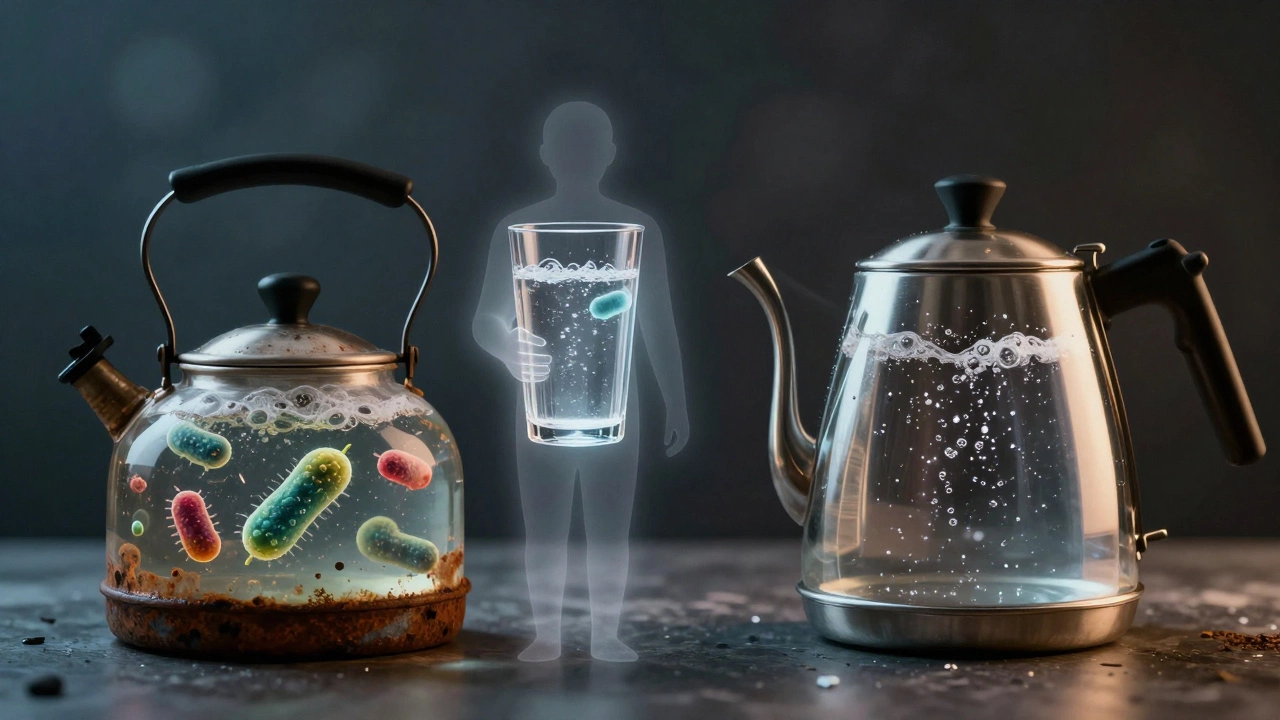
Myths About Electric Kettles and Water Safety
Let’s clear up some common myths:
- Myth: Boiling water in a kettle concentrates toxins. Truth: Boiling doesn’t concentrate minerals or chemicals-it just removes volatile compounds like chlorine. The rest stays in the water, whether boiled or not.
- Myth: Kettles create "dead water" that’s unhealthy. Truth: There’s no scientific basis for "dead water." Water doesn’t lose oxygen in a way that affects health. Your body gets oxygen from your lungs, not your drink.
- Myth: Electric kettles emit harmful radiation. Truth: They use standard electrical resistance heating. No ionizing radiation is involved. The electromagnetic field is weaker than your phone’s.
When to Replace Your Kettle
You don’t need to replace your kettle every year. But here are five signs it’s time:
- Visible rust or corrosion inside the water chamber
- Plastic parts are cracked, discolored, or smell like plastic when hot
- Water tastes metallic, even after cleaning
- The kettle takes longer to boil or doesn’t shut off automatically
- You bought it before 2015 and it’s not a known safety-certified brand
Most electric kettles last 5-7 years with proper care. If yours is older than that and you’re unsure about its materials, it’s cheaper and safer to replace it than risk long-term exposure.
Final Advice: Keep It Simple
Drinking water from an electric kettle is safe if you choose the right model and keep it clean. You don’t need to buy the most expensive one-just make sure it’s made of food-grade stainless steel, has no plastic touching the water, and you clean it regularly.
Boiling water is one of the oldest and most effective ways to make water safe. Your kettle isn’t the enemy. Neglect and poor-quality materials are. Stay informed, stay clean, and your morning cup will be as safe as it is comforting.
Can I get sick from drinking water boiled in a rusty kettle?
Yes, potentially. Rust itself isn’t toxic in small amounts, but it can harbor bacteria and indicate that the kettle’s protective coating has broken down. If you see rust inside the water chamber or on the heating element, stop using it. Replace the kettle immediately.
Is it safe to boil water in a plastic electric kettle?
Only if the plastic is BPA-free, food-grade, and doesn’t come into direct contact with boiling water. Many kettles have plastic lids or handles that are safe, but if the water touches plastic inside the reservoir, avoid it. Look for models labeled "100% stainless steel interior."
Does boiling water remove lead from tap water?
No. Boiling does not remove lead, arsenic, or other heavy metals. In fact, it can concentrate them slightly because water evaporates. If you’re concerned about lead in your tap water, use a certified filter or get your water tested. Vancouver’s municipal water has very low lead levels, but older homes with lead pipes may still have issues.
How often should I clean my electric kettle?
Every 2-4 weeks if you live in a hard water area like Vancouver. If you use filtered water or live in a soft water region, once a month is enough. Always descale if you see white buildup or if the kettle starts taking longer to boil.
Are glass kettles safer than stainless steel ones?
Glass kettles don’t leach metals, which makes them a good choice for people sensitive to nickel or manganese. But they’re more fragile and can crack under thermal stress. Stainless steel is more durable and just as safe if it’s 304 or 316 grade. Both are excellent options-choose based on durability needs, not safety alone.
Should I boil water twice?
There’s no health risk in boiling water twice. It won’t make the water more dangerous. But it wastes energy and can increase limescale buildup over time. If you’re reboiling because the water cooled down, it’s fine-just don’t make it a habit just to save time.
If you’re unsure about your kettle’s safety, the easiest step is to replace it with a certified 304 stainless steel model. They cost less than $50 and last for years. Your health doesn’t need complicated solutions-just clean, reliable equipment.