
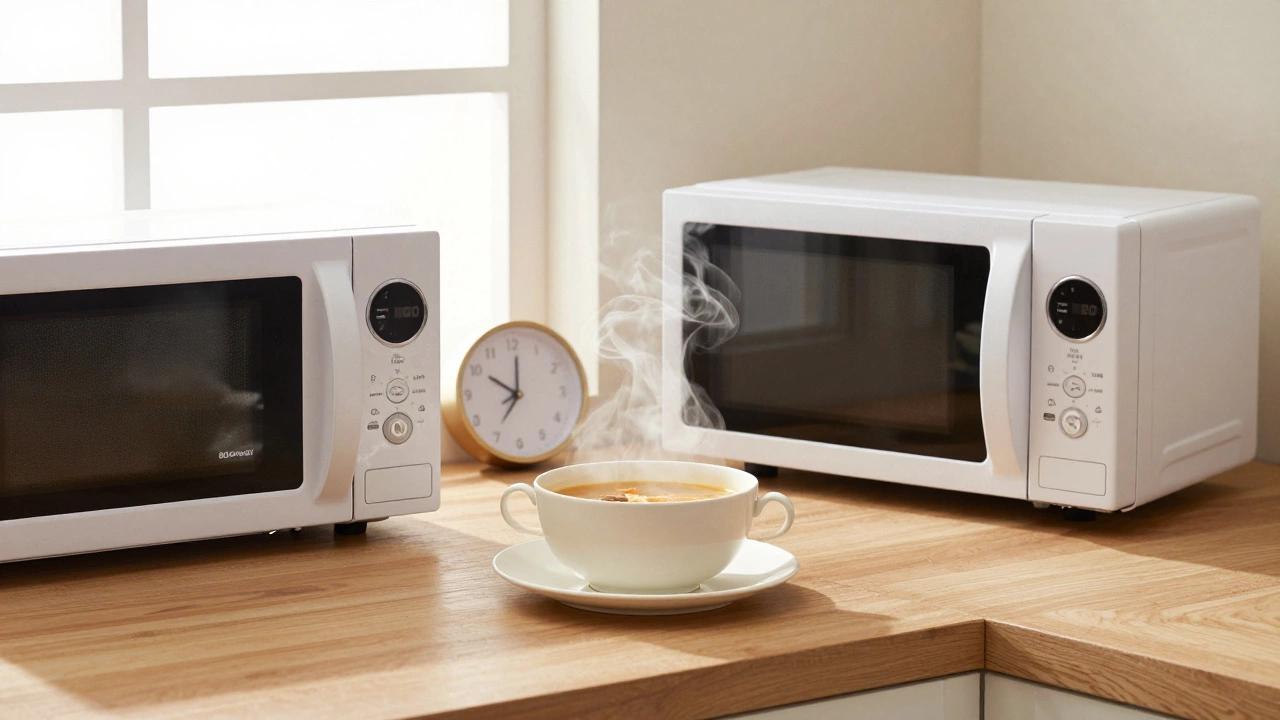
Microwave Cooking Time Calculator
Adjust cooking times for your microwave
When you’re shopping for a new microwave, you’ll see numbers like 700 watts, 800 watts, 900 watts, and up to 1200 watts. That number matters more than you think. If you’re staring at an 800-watt model wondering if it’s strong enough, the answer isn’t yes or no-it’s it depends. For most households, an 800-watt microwave works fine. But if you cook often, reheat large portions, or hate waiting, you might regret skipping a higher-wattage unit.
What does wattage actually mean in a microwave?
Wattage measures how fast the microwave generates heat. Higher watts = faster cooking. Think of it like a stove burner: a 1500-watt burner boils water quicker than a 1000-watt one. Same logic applies to microwaves. An 800-watt microwave heats food at about 70% of the speed of a 1200-watt model. That means if your recipe says 3 minutes in a 1200-watt microwave, you’ll need closer to 4.5 minutes in an 800-watt one.
Most microwaves sold today range from 600 to 1200 watts. Budget models often sit at 700-800 watts. Mid-range and premium units start at 900 watts and go up. If you’re buying a countertop microwave under $100, it’s almost certainly 800 watts or less. That’s not a flaw-it’s a trade-off for price and size.
What can you realistically cook in an 800-watt microwave?
Let’s get practical. Here’s what an 800-watt microwave handles well:
- Reheating leftovers (soup, pasta, rice)
- Defrosting small portions of meat or frozen veggies
- Melting butter or chocolate
- Cooking microwave meals labeled for 700-900 watts
- Steaming vegetables in a covered bowl
- Heating up coffee or tea
It’s fine for single people, couples, or families who mostly use the microwave for quick tasks. But if you’re reheating a full casserole dish, cooking frozen pizza, or trying to roast a chicken breast in 5 minutes, you’ll be waiting-and probably still getting cold spots.
How much longer does an 800-watt microwave take?
Time adjustments aren’t guesswork. You can calculate it easily. Just divide your recipe’s suggested time by 0.8. For example:
- Recipe says 2 minutes in a 1000-watt microwave? → 2 ÷ 0.8 = 2.5 minutes in an 800-watt model
- Recipe says 5 minutes in a 1200-watt microwave? → 5 ÷ 0.8 = 6.25 minutes (so 6:15)
Always start with less time. Microwaves vary, and food heats unevenly. Stir halfway through. Let food sit for a minute after cooking-heat keeps spreading during that time. This is called carryover cooking, and it’s even more important in lower-wattage units.
Who should avoid an 800-watt microwave?
Some people will struggle with 800 watts:
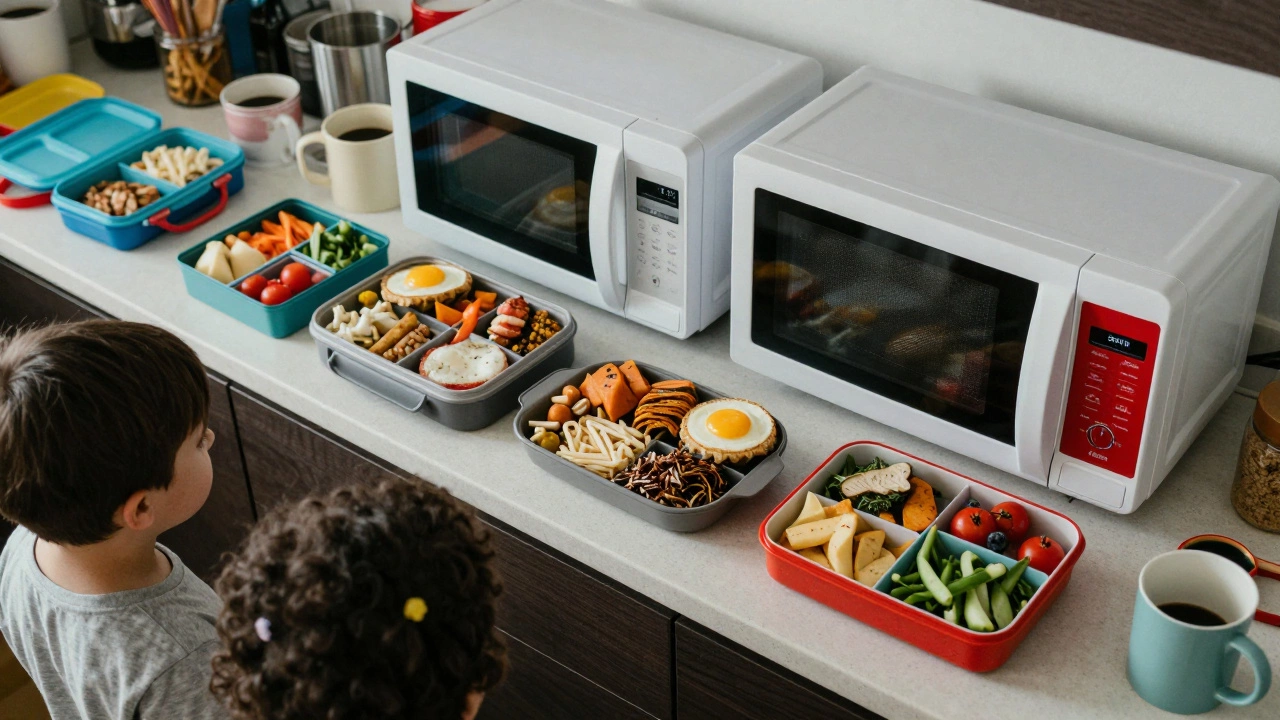
- Busy parents reheating multiple kids’ meals at once
- People who cook frozen meals daily (like meal-preppers or shift workers)
- Those who use the microwave for more than reheating-like baking potatoes, making oatmeal, or cooking eggs
- Anyone who hates waiting
If your microwave is your main cooking tool and you’re cooking anything bigger than a single serving, you’ll notice the delay. It’s not broken-it’s just slow. And slow microwaves can be frustrating when you’re in a rush.
What’s the real difference between 800W and 1000W?
Here’s a side-by-side comparison:
| Task | 800W Time | 1000W Time | Time Difference |
|---|---|---|---|
| Reheat a bowl of soup | 2:30 | 2:00 | 30 seconds |
| Defrost 1 lb of chicken | 8:00 | 6:30 | 90 seconds |
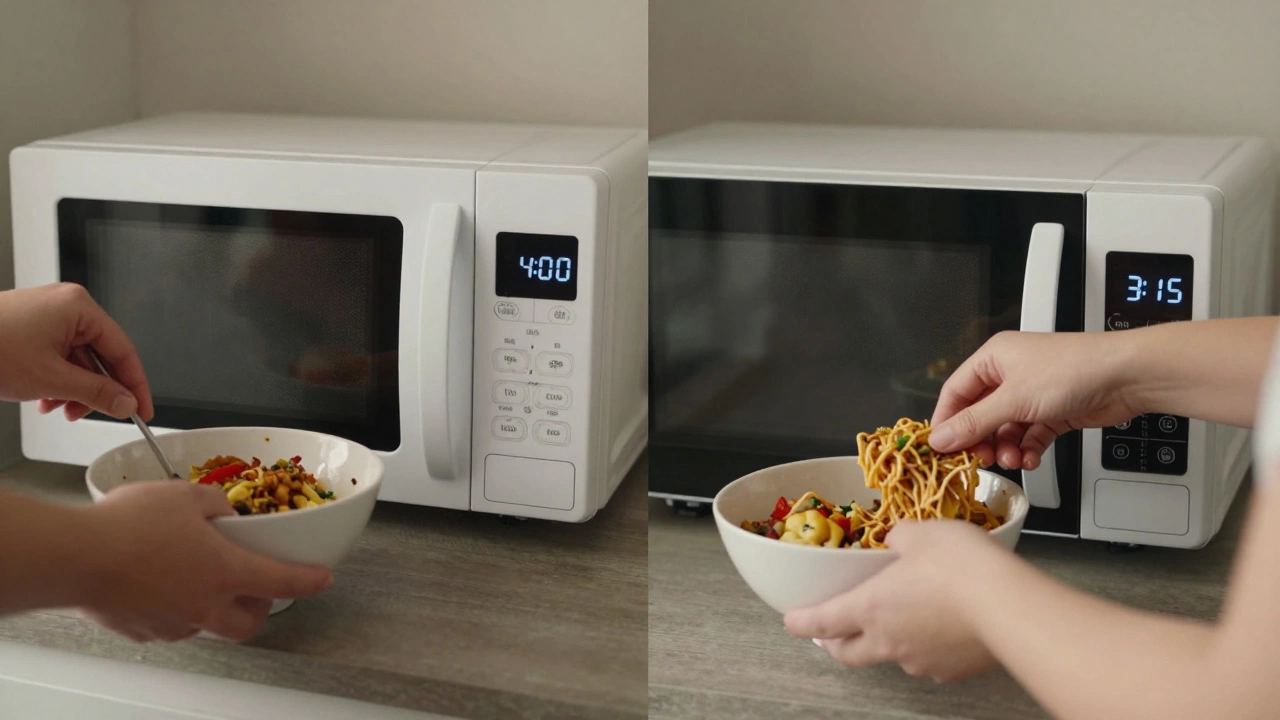
| Cook a frozen microwave meal | 4:00 | 3:15 | 45 seconds |
| Steam 2 cups of broccoli | 5:00 | 4:00 | 60 seconds |
| Bake a medium potato | 10:00 | 8:00 | 2 minutes |
That 2-minute difference on a potato adds up. If you cook three meals a day, you’re saving 6 minutes daily with a 1000-watt microwave. That’s over 30 hours a year. Time matters more than you realize.
Is an 800-watt microwave worth buying?
Yes-if your needs are simple. If you live alone, don’t cook often, and just need to warm up coffee or leftovers, an 800-watt microwave is perfectly fine. Many people use them for years without issue. They’re quieter, smaller, and cheaper. You’ll find them in dorm rooms, RVs, and small apartments where space and budget matter.
But if you’re upgrading from an old microwave or buying your first one for a family kitchen, consider spending $20-$40 more for a 900-1000-watt model. The difference in speed is noticeable. You’ll get better results, less frustration, and more flexibility.
What to look for beyond wattage
Wattage isn’t everything. A poorly designed microwave can still underperform even at 1000 watts. Here’s what else matters:
- Turntable size - A 12-inch turntable lets you fit larger plates. Smaller ones (under 10 inches) limit what you can cook.
- Interior material - Stainless steel interiors heat better and last longer than plastic-lined ones.
- Power levels - More settings (like 10 levels) give you control. You can defrost gently or simmer without boiling over.
- Auto-cook presets - Buttons for popcorn, pizza, or potatoes help compensate for lower wattage by adjusting time automatically.
If you’re stuck with 800 watts, look for models with presets. They’ll help you avoid guesswork. Brands like Panasonic, Toshiba, and Sharp often include better presets even in lower-wattage units.
Final verdict
An 800-watt microwave is powerful enough if you’re using it for light tasks. It’s not broken. It’s just slower. If you’re happy waiting a minute or two longer for your food, and you don’t mind stirring things halfway through, go for it. But if speed and convenience matter, don’t settle. A 900- or 1000-watt microwave costs only a little more and makes your daily routine smoother.
Think of it like buying a car. You don’t need a sports car to run errands. But if you drive every day, you’ll notice the difference in acceleration. Same with microwaves. Power isn’t just a number-it’s time saved, stress reduced, and meals done right.
Is 800 watts too low for a microwave?
No, 800 watts isn’t too low-it’s common in budget and compact models. It’s perfectly functional for reheating, defrosting, and simple cooking. But it’s slower than higher-wattage models, so you’ll need to adjust cooking times and be patient.
Can I cook frozen meals in an 800-watt microwave?
Yes, but check the label. Many frozen meals list cooking times for 1000-1200 watts. If yours says 3 minutes at 1100 watts, add about 30-45 seconds for an 800-watt unit. Stir halfway through and let it sit for a minute after cooking to finish heating evenly.
Does a lower wattage microwave use less electricity?
Yes, but not by much. An 800-watt microwave uses less power per minute than a 1200-watt one. But because it takes longer to cook, the total energy used for the same task is often very similar. The real savings come from convenience, not electricity bills.
Why do some microwaves say 800W but cook faster?
Some brands list “input wattage” (power drawn from the outlet), not “output wattage” (actual cooking power). A microwave labeled 800W input might only output 600-700W. Always look for “cooking power” or “output wattage” on the spec sheet. Reputable brands like Panasonic and LG clearly state output wattage.
Should I upgrade from an 800-watt microwave?
If you’re tired of waiting, reheating unevenly, or struggling with frozen meals, yes. Upgrading to a 900-1000W model costs under $100 and makes daily cooking faster and more reliable. The difference is noticeable in real use, not just on paper.
What to do next
If you’re happy with your 800-watt microwave, keep using it. No need to replace it. But if you’re shopping for a new one, don’t just grab the cheapest. Look for a 900-watt or higher model with a turntable, presets, and a stainless steel interior. Spend $20 more, and you’ll save time every day for years.
Remember: wattage isn’t marketing. It’s physics. And in the kitchen, time is the one thing you can’t get back.