
Bedroom AC BTU Calculator
Room Dimensions
Environmental Factors
Check all that apply to your bedroom:
Cooling Recommendation
It’s July in Vancouver. The sun is beating down on your west-facing bedroom window, and that sleek new portable air conditioner you bought last week feels like it’s doing nothing but blowing lukewarm air. You check the spec sheet: 8,000 BTU. The box said "cools up to 350 square feet." So why does your room still feel like an oven?
You aren’t imagining things. There is a massive disconnect between marketing numbers and real-world physics when it comes to cooling. If you’ve ever wondered if 8,000 BTU is enough for a bedroom, the short answer is: maybe. But usually, no-not if you want actual comfort.
The Great BTU Confusion: ASHRAE vs. SACC Ratings
To understand why your unit might be underperforming, we have to talk about how these machines are rated. This is where most buyers get tricked. For decades, manufacturers used the ASHRAE rating system (American Society of Heating, Refrigerating and Air-Conditioning Engineers). Under this old standard, a unit might claim 12,000 BTUs of cooling power.
Then came the SACC (Seer and Energy Efficiency Rating Program, formerly the Cool Capacity Rating). In 2017, the U.S. Department of Energy mandated that all window and portable ACs display their true cooling capacity after accounting for heat generated by the compressor and fan motors inside the conditioned space. Portable ACs lose significant energy because they sit *inside* the room, not outside like central systems.
Here is the kicker: An 8,000 BTU SACC-rated portable AC often has an older ASHRAE rating closer to 10,500 or even 12,000 BTU. Manufacturers love listing the higher ASHRAE number in small print because it sounds more powerful. But the 8,000 BTU figure is what actually matters for your comfort. It is the net cooling output you get.
How Big Is Your Bedroom, Really?
Let’s look at the math. A general rule of thumb for portable ACs is that you need roughly 20 BTUs per square foot of floor space for a standard ceiling height (8 feet) in moderate climates.
- Small Bedroom (10x10 ft / 100 sq ft): An 8,000 BTU unit is likely sufficient here, provided there is only one window and minimal direct sunlight.
- Medium Bedroom (12x14 ft / 168 sq ft): You are pushing the limits. The unit will run constantly, struggle to reach lower temperatures, and consume more electricity due to inefficient cycling.
- Large Bedroom/Master Suite (15x20 ft / 300 sq ft): An 8,000 BTU unit is woefully inadequate. It will cool a small corner near the vent while the rest of the room remains stagnant and warm.
If your bedroom is over 150 square feet, an 8,000 BTU portable AC is probably not the right tool for the job unless you are using it solely for slight temperature reduction rather than deep cooling.
Factors That Drain Your Cooling Power
Square footage isn’t the only variable. Several environmental factors can double the cooling load required for your space. Ignoring these is why many people think their AC is broken when it’s actually just undersized.
1. Sun Exposure and Window Orientation
A north-facing bedroom with shaded windows requires significantly less cooling than a south- or west-facing room with large glass panes. Glass acts as a thermal bridge, letting radiant heat pour into your space. If your bedroom gets direct afternoon sun, add 10% to your required BTU calculation. For an 8,000 BTU unit, this effectively reduces its usable capacity to around 7,200 BTUs.
2. Ceiling Height
Standard calculations assume 8-foot ceilings. Many modern homes, especially in Vancouver’s newer developments, feature 9- or 10-foot ceilings. Higher ceilings mean more air volume to cool. For every foot above 8 feet, increase your BTU requirement by approximately 10%. A 100-square-foot room with 10-foot ceilings needs the same cooling power as a 120-square-foot room with 8-foot ceilings.
3. Heat-Generating Electronics
Your bedroom isn’t just empty air. Computers, gaming consoles, LED TVs, and chargers generate waste heat. A high-end desktop PC can emit 300+ watts of heat-equivalent to running a light bulb continuously. If you work from home in your bedroom, consider adding 400 BTUs for each major heat source.
4. Insulation and Air Leaks
Older homes often have poor insulation and leaky windows. If you can feel drafts or see daylight around window frames, your AC is fighting a losing battle against incoming hot air. Portable ACs are single-hose units, meaning they pull cool air from the room, expel it outside, and replace it with hot outdoor air sucked through leaks. This negative pressure makes them inherently less efficient than dual-hose models or window units.
| Factor | Adjustment | Impact on 8,000 BTU Unit |
|---|---|---|
| South/West Facing Windows | +10% BTU needed | Effective capacity drops to ~7,200 BTU |
| Ceiling > 8 Feet | +10% per extra foot | 10ft ceiling = needs ~8,800 BTU for same area |
| Kitchen or High Traffic Area Nearby | +10% BTU needed | Heat transfer through walls increases load |
| Poor Insulation/Old Windows | +15-20% BTU needed | Unit runs continuously without reaching set temp |
Portable AC vs. Window AC: Why Placement Matters
If you are considering an 8,000 BTU unit, you must also consider the type of AC. Portable air conditioners are convenient because they don’t require permanent installation, but they come with a significant efficiency penalty.
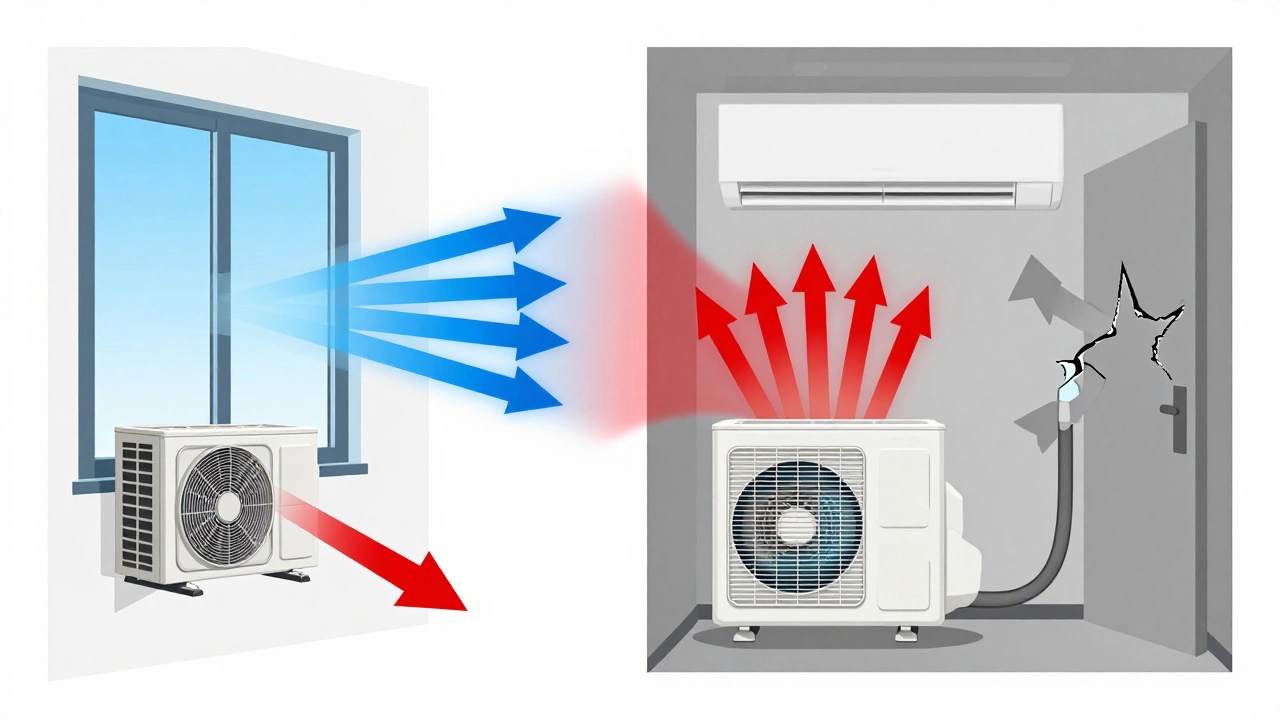
A window AC unit sits partially outside, so its compressor heat is expelled directly outdoors. A portable AC sits entirely inside your room. Even though it vents hot air out via a hose, the machine itself generates heat that stays in the room. Additionally, single-hose portable ACs create negative pressure, pulling hot outdoor air through cracks in doors and windows to equalize pressure. This means you are actively sucking in the very heat you are trying to remove.
For a bedroom, a window-mounted unit of the same BTU rating will typically cool the space faster, quieter, and more efficiently. If you cannot install a window unit, a dual-hose portable AC is a better choice than a single-hose model, as it draws intake air from outside rather than from your room.
Signs Your 8,000 BTU Unit Is Too Small
How do you know if you’ve already made the wrong choice? Look for these red flags:
- Constant Running: The unit never cycles off, even when the thermostat is set to a reasonable 72°F (22°C).
- Warm Exhaust Hose: If the exhaust hose feels hot to the touch but the room air doesn’t feel cold, the unit is struggling to reject heat.
- Temperature Gradient: The air coming out of the vent is cool, but the far side of the room remains warm. This indicates insufficient airflow volume for the space.
- High Electricity Bills: The unit runs inefficiently for long periods, drawing more power than necessary to achieve marginal cooling.
What Should You Do Instead?
If your bedroom is larger than 150 square feet, or if it has significant sun exposure, skip the 8,000 BTU portable AC. Opt for a unit with at least 12,000 to 14,000 BTUs (SACC rated). Yes, it will be louder and more expensive upfront, but it will actually cool your room, allowing you to sleep comfortably during those rare but intense Vancouver heatwaves.
Alternatively, consider a mini-split ductless system. While the installation cost is higher, mini-splits are vastly more efficient, quieter, and capable of heating as well as cooling. They are becoming increasingly popular in urban apartments where window units are prohibited or impractical.
Making the Most of an 8,000 BTU Unit
If you are stuck with an 8,000 BTU portable AC, you can maximize its effectiveness with some strategic tweaks:
- Block the Sun: Use blackout curtains or reflective window film to reduce solar gain. This can cut your cooling load by up to 30%.
- Improve Airflow: Place a box fan in the window facing outward to help exhaust hot air and reduce negative pressure effects.
- Seal the Room: Use weatherstripping around doors and windows to prevent hot air infiltration.
- Lower the Thermostat Gradually: Set the unit to 75°F (24°C) initially, then lower it by 1 degree every hour until comfortable. Avoid setting it to 65°F immediately, which forces the compressor to run at maximum capacity without achieving results.
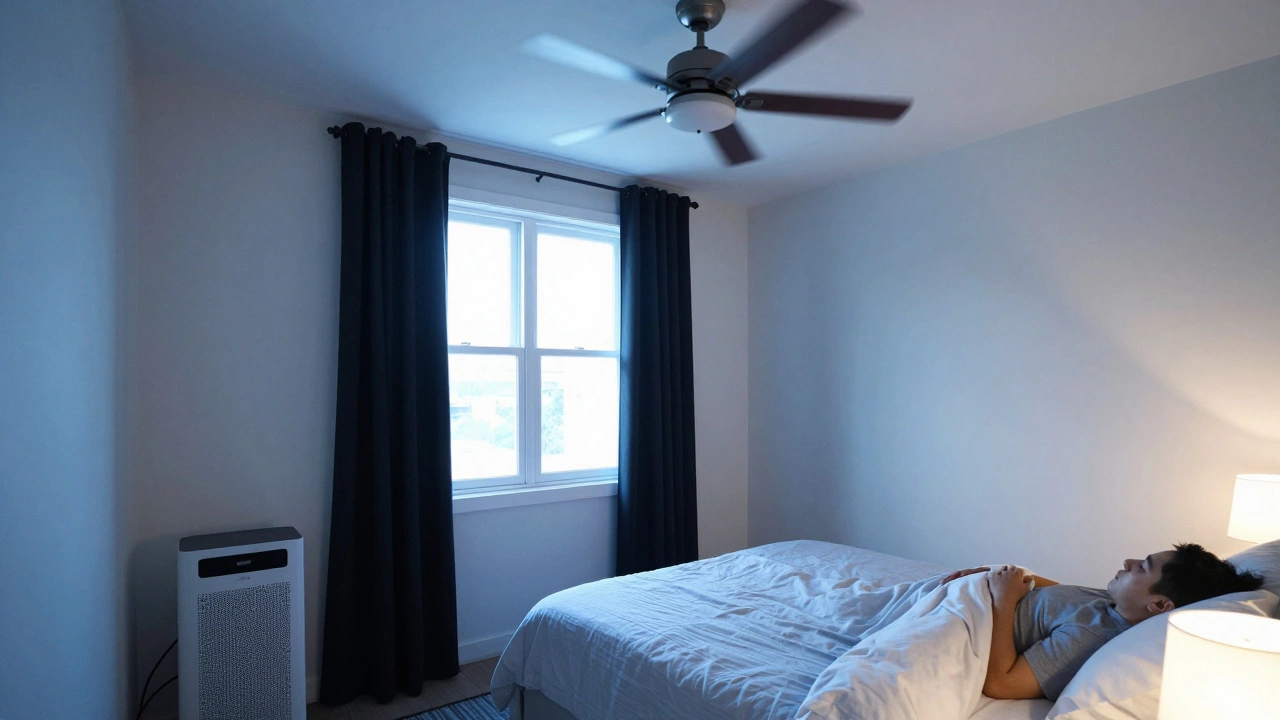
- Use Ceiling Fans: Circulate the cool air produced by the AC throughout the room. This allows you to set the thermostat higher while maintaining perceived comfort.
Is 8000 BTU enough for a 200 square foot bedroom?
No, 8,000 BTU is generally not enough for a 200 square foot bedroom. Standard guidelines suggest 20 BTUs per square foot, meaning a 200 sq ft room requires approximately 4,000 BTUs minimum, but due to inefficiencies in portable units and typical household conditions, you should aim for 10,000-12,000 BTUs (SACC rated) for effective cooling. An 8,000 BTU unit will struggle to maintain temperature, especially if there is any sun exposure or heat-generating electronics.
What is the difference between 8000 BTU and 12000 BTU portable AC?
The primary difference is cooling capacity and speed. A 12,000 BTU unit can cool a space roughly 50% larger than an 8,000 BTU unit. It will reach the desired temperature faster and cycle off more frequently, leading to better humidity control and potentially lower energy consumption in appropriately sized rooms. However, 12,000 BTU units are typically louder, heavier, and more expensive.
Can I use an 8000 BTU portable AC in a living room?
Only if the living room is very small (under 150 square feet) and open-concept spaces are avoided. Living rooms typically have more windows, doors, and heat sources (TVs, lighting) than bedrooms. An 8,000 BTU unit is rarely sufficient for a standard living room; most require 12,000 to 18,000 BTUs depending on size and layout.
Do portable ACs dehumidify the air?
Yes, all air conditioners act as dehumidifiers. As warm air passes over the cold evaporator coils, moisture condenses and drains away. An 8,000 BTU portable AC can remove several pints of water per day. However, if the unit is undersized for the room, it may run continuously without fully dehumidifying the space, leaving it feeling clammy despite being slightly cooler.
Why is my portable AC blowing warm air?
Several issues could cause this: the unit is undersized for the room, the exhaust hose is kinked or disconnected, the filters are clogged restricting airflow, or the refrigerant level is low. Ensure the hose is properly sealed to the window kit and that the unit has adequate clearance around it for air intake. If the problem persists, professional service may be required.