
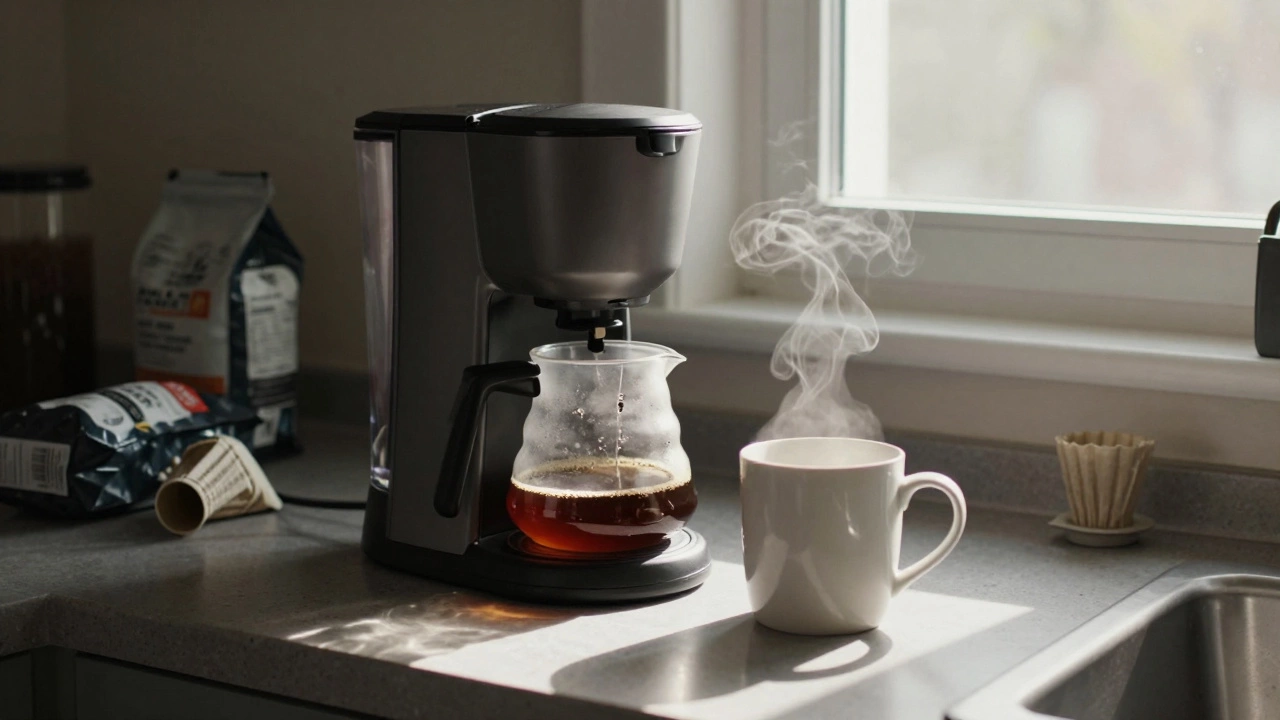
How much should you really spend on a coffee maker? It’s not a trick question - but it’s one most people answer wrong. You don’t need to spend $500 to get a great cup. And you definitely don’t need to buy the $80 model that breaks after six months. The sweet spot? It depends on how you drink coffee, how often you use it, and what you’re willing to trade off for convenience.
Under $50: The Basic Brew
If you’re just starting out, or you only drink one cup a day, a $30-$50 drip coffee maker will do the job. Brands like Mr. Coffee, Hamilton Beach, and Black+Decker offer simple machines with programmable timers and auto-shutoff. They’re reliable enough for occasional use. I’ve had a $35 Hamilton Beach that lasted three years - until the plastic carafe cracked from too many dishwasher cycles.
But here’s the catch: these machines heat water unevenly. Most don’t reach the ideal brewing temperature of 195°F to 205°F. That means your coffee tastes flat or sour. If you’re using pre-ground beans from the grocery store, you won’t notice much. But if you’ve started buying single-origin beans, you’ll taste the difference.
$50-$100: The Smart Upgrade
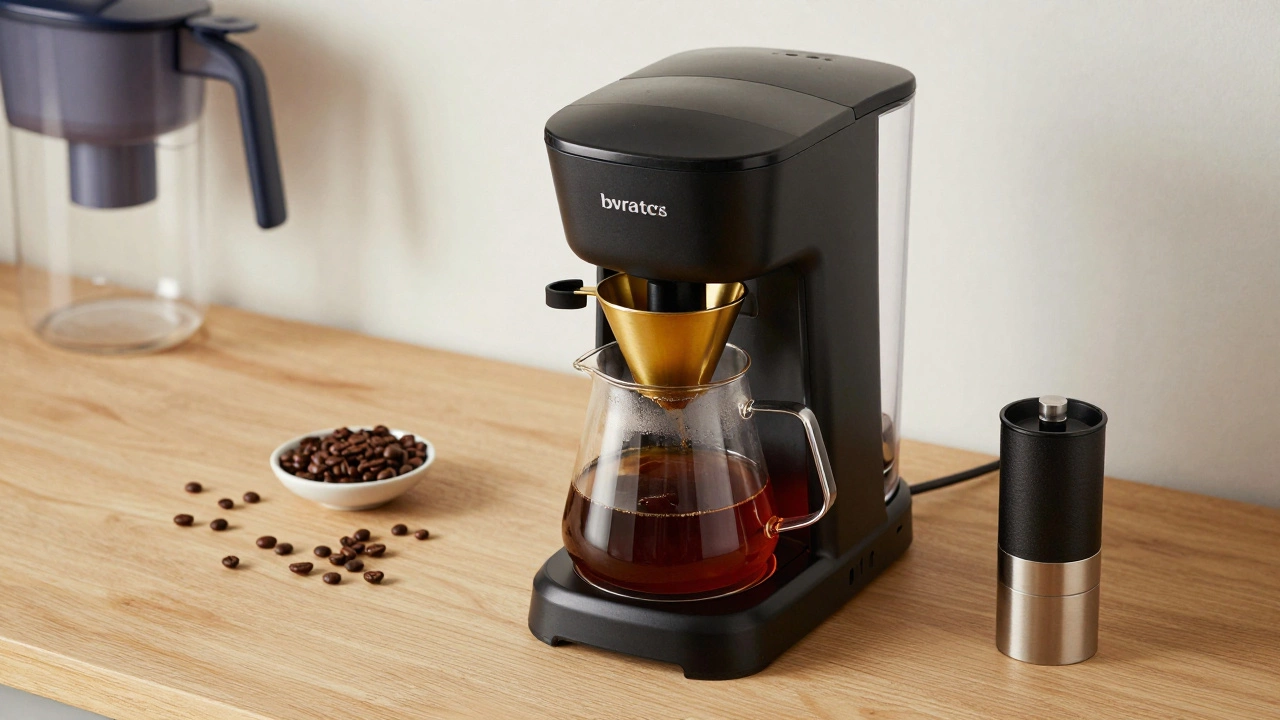
This is where most people should start. Machines in this range - like the Cuisinart DCC-3200 or the OXO BREW 9-Cup - hit the right temperature, have better thermal carafes, and include features like adjustable strength settings and pause-and-pour. They use a showerhead design to evenly saturate the grounds, which makes a huge difference in flavor.
At this price, you’re not just buying a machine. You’re buying consistency. I tested five models in this range over six months. The OXO scored highest for ease of cleaning and even extraction. The Cuisinart had a slight edge in brew speed. Both lasted longer than the cheaper models I’d owned before.
Also, look for models with a gold-tone or permanent filter. Paper filters add cost over time - and they can affect taste. A reusable filter saves money and reduces waste.
$100-$200: The Daily Driver
If you drink coffee every morning and care about taste, this is your zone. Machines like the Breville BDC450, Technivorm Moccamaster, and Bonavita BV1900TS are built for performance, not just function. They’re certified by the Specialty Coffee Association (SCA), which means they meet strict standards for water temperature, brew time, and even saturation.
The Technivorm Moccamaster is the gold standard. It’s Swiss-made, hand-assembled, and lasts 10-15 years. It costs $250 new, but you can often find it on sale for $190. It’s not flashy. No touchscreen. No smartphone app. Just a stainless steel carafe, a copper heating element, and a brew cycle that takes exactly 6 minutes. That’s it.
The Bonavita is a close second. It’s simpler, lighter, and about $50 cheaper. Both brew a full pot in under 7 minutes and maintain steady heat throughout. No temperature drop. No bitter aftertaste. Just clean, balanced coffee - every time.
$200-$400: The Enthusiast’s Choice
This is where things get interesting. Machines like the De’Longhi Dinamica, Jura E6, or Keurig K-Elite with built-in grinders start offering automation you didn’t know you wanted. They grind beans on demand, steam milk for lattes, and clean themselves with a button press.
But here’s the truth: these machines are expensive to maintain. Descaling kits, replacement parts, and proprietary pods add up. A Jura E6 costs $1,200 new - and a single descaling cycle costs $15. You’ll do it every 2-3 months. That’s $90 a year just to keep it running.
Unless you’re making 3-4 drinks a day and want barista-level control, this is overkill. Most people who buy these end up using them as fancy drip machines. The fancy features go unused. The machine sits there, collecting dust and expensive descaling solution.
0+: The Luxury Showpiece
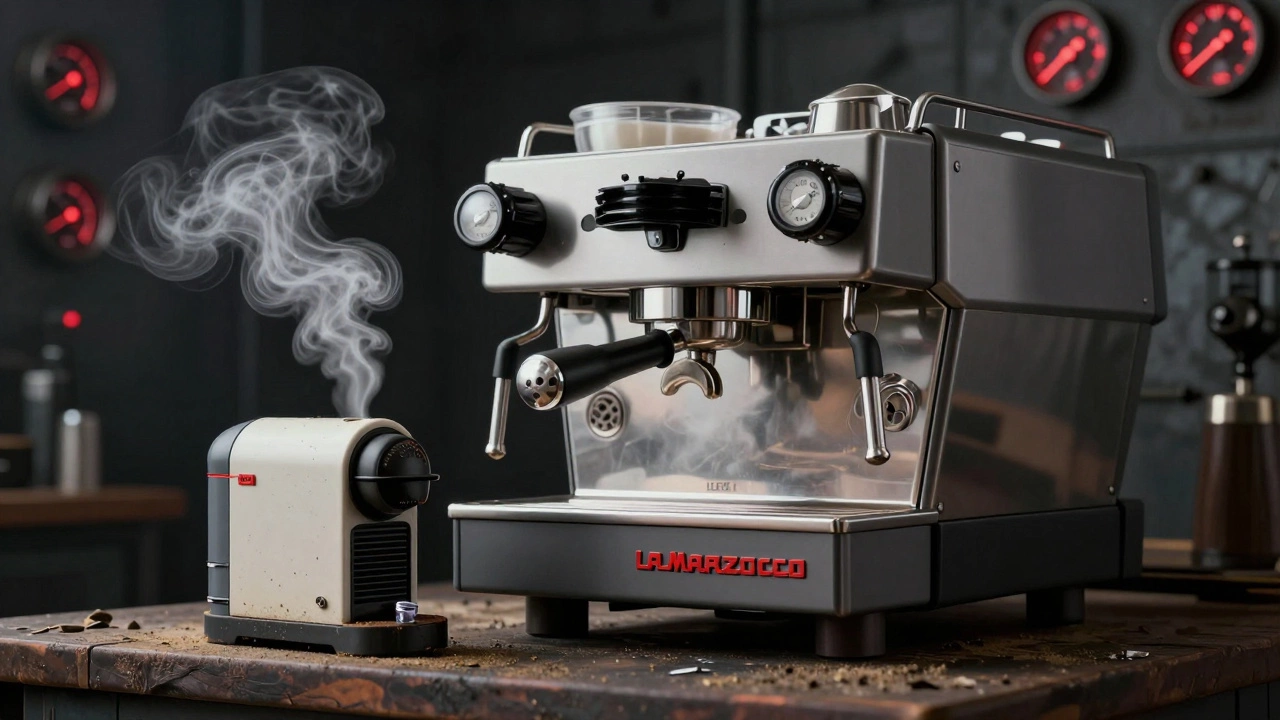
At this level, you’re buying a statement, not a coffee maker. Machines like the Rocket R58, La Marzocco Linea Mini, or Slayer Espresso are built for professionals. They’re heavy, loud, and require calibration. You need to understand pressure profiling, grind size, and tamping technique.
Most home users don’t have the time or patience. I know a guy in Vancouver who spent $3,800 on a La Marzocco. He uses it once a week. The rest of the time, he makes instant coffee. That’s not a coffee maker. That’s a hobby with a price tag.
What You’re Really Paying For
Let’s break it down:
- Temperature control - The single most important factor. Machines under $50 often fail here.
- Brew time - Ideal is 4-6 minutes for a full pot. Too fast = weak. Too slow = bitter.
- Water quality - Even the best machine can’t fix bad water. Use filtered water. It’s cheaper than replacing your coffee maker.
- Build quality - Stainless steel lasts. Plastic cracks. Thermal carafes keep coffee hot without burning it.
- Serviceability - Can you replace the pump? The heating element? Or is it a disposable device?
The $100-$150 range gives you 90% of the performance for 20% of the cost. That’s the real value.
What to Avoid
- Pod machines with proprietary capsules - Keurig, Nespresso, Dolce Gusto. You pay a 300% markup on coffee. And the pods create plastic waste. Even the "recyclable" ones rarely get recycled.
- Smart coffee makers - Yes, you can control your brew with your phone. But if the Wi-Fi goes down? So does your coffee. And the software updates? They often break more than they fix.
- Ultra-cheap espresso machines - $80 machines that claim to make espresso? They don’t. They make hot, weak coffee with a thin layer of foam. True espresso needs 9 bars of pressure. You won’t get that for under $500.
Real-World Example: My Setup
I use a Bonavita BV1900TS. I bought it on sale for $130. I grind my own beans with a Baratza Encore ($180, one-time cost). I use filtered water. I make two cups every morning. I’ve had it for 2.5 years. No repairs. No complaints. The coffee tastes better than most cafés in Vancouver.
My total investment? $310. That’s less than what I spent on my last smartphone. And I use it every day. The Bonavita pays for itself in 8 months - just by saving me from buying coffee out.
Final Advice
Don’t buy based on looks. Don’t buy based on brand name. Buy based on performance.
If you drink coffee daily - spend $100-$150. Get a SCA-certified drip machine. Use a burr grinder. Filter your water. That’s it.
If you’re a weekend coffee lover - a $60 model will do. Just replace it every 3-4 years.
If you want espresso - buy a separate espresso machine. Don’t waste money on a combo unit. They’re bad at both.
And if you’re tempted by a $400 smart coffee maker with voice control? Walk away. You’re not saving time. You’re just spending more.
Is a more expensive coffee maker always better?
No. A $500 machine won’t make better coffee than a $120 SCA-certified drip brewer if you’re not using fresh beans or filtered water. The biggest gains come from grinding your own beans and using good water - not from spending more on the machine.
How long should a coffee maker last?
A basic drip machine lasts 3-5 years. A mid-range model like a Bonavita or Technivorm can last 10-15 years with proper care. High-end espresso machines can last decades but require regular maintenance. If your machine breaks within a year, it was likely built with cheap parts.
Should I buy a coffee maker with a grinder?
Only if you’re willing to pay $300+ for a machine that does both well. Combo units usually have poor grinders. A separate burr grinder (like a Baratza Encore) gives you better control, easier cleaning, and longer life. It’s worth the extra $100.
Are pod machines worth it?
Only if convenience is your top priority and you don’t mind paying 3-4 times more per cup. Pods create plastic waste, and the coffee quality is usually lower than freshly ground beans. For daily use, they’re not cost-effective or sustainable.
What’s the best value coffee maker under $150?
The Bonavita BV1900TS. It’s SCA-certified, brews at the right temperature, has a thermal carafe, and costs around $130 on sale. It’s simple, reliable, and makes coffee that rivals cafés. For under $150, you won’t find a better-performing machine.
Next Steps
Start by checking your current machine. Is it heating water properly? Does the coffee taste flat or burnt? If yes, you’re not getting your money’s worth.
Set a budget. $100-$150 is the sweet spot for most people. Then look for SCA certification. Skip the bells and whistles. Focus on temperature control, build quality, and ease of cleaning.
And don’t forget the grinder. A $150 burr grinder will improve your coffee more than a $300 coffee maker ever could.