
Home Air Purifier Planner
Plan Your Setup
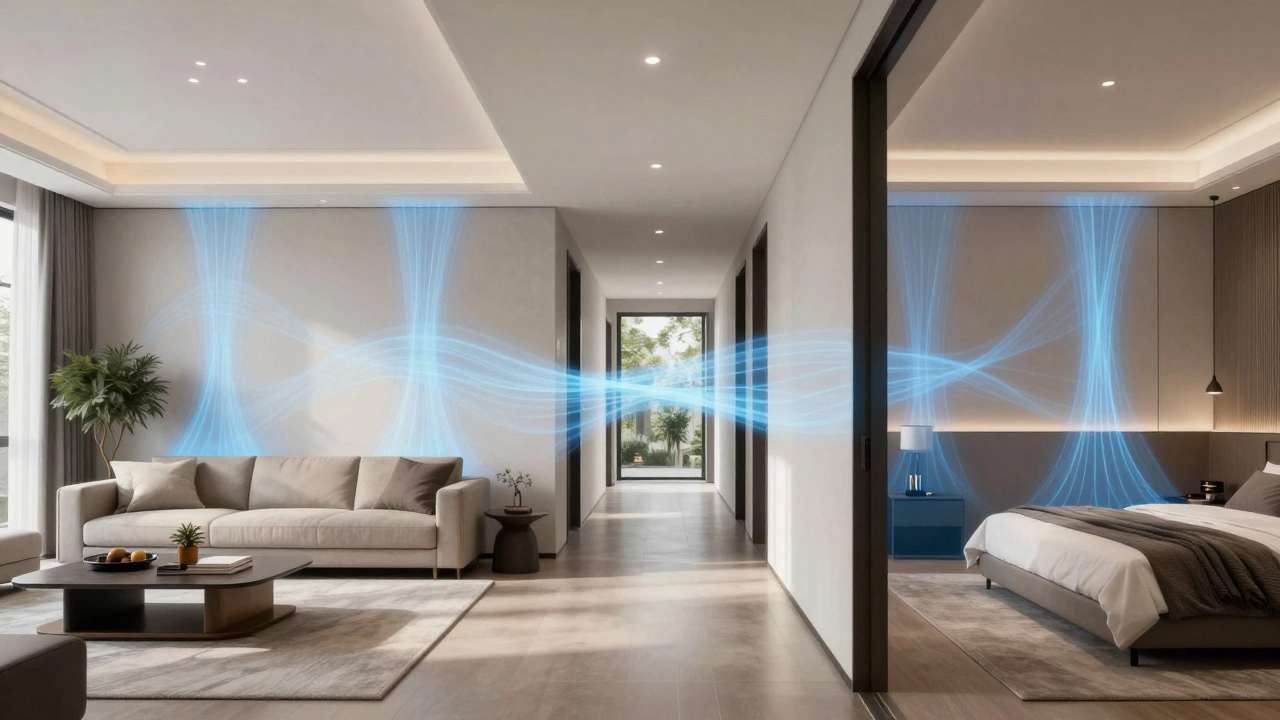
Based on the "Distributed Model," we recommend dedicated units for each major air zone to prevent stagnant air zones.
Recommended Total Units: 0
To achieve ~4.8 Air Changes per Hour (ACH) across all primary zones.
| Room | Units | Filter Type |
|---|
Enter your home details and click calculate to see your personalized air purification map.
Quick Guide: How to Plan Your Air Cleanup
- The Golden Rule: One purifier per room where you spend the most time.
- The Math: Match the CADR (Clean Air Delivery Rate) to your room square footage.
- The Strategy: Prioritize bedrooms and the main living area over hallways or bathrooms.
- The Trade-off: One giant unit in a central area is less effective than three smaller units in separate rooms.
You might think that buying one massive, high-powered air purifier and sticking it in the hallway will clear the air for your entire home. It sounds efficient, but air doesn't travel through walls and closed doors. If you're living in a three-bedroom house, you're essentially dealing with four or five distinct "air zones": the bedrooms, the living room, and perhaps a kitchen or dining area. Trying to clean the air in a master bedroom using a machine sitting in the living room is like trying to cool down a bedroom by leaving the AC on in the kitchen-it just doesn't work.
The Basics of Air Coverage
Before you start shopping, you need to understand CADR is the Clean Air Delivery Rate, a standard measurement that tells you how quickly a purifier can remove particles from the air. It's measured in cubic feet per minute (CFM). If a machine has a high CADR, it can handle a larger room. However, the air purifiers for home you see in stores often list a "recommended room size." Take these with a grain of salt. Most manufacturers test these in sealed, empty rooms. In the real world, your couch, curtains, and open doors change how air moves.
To get actual results, you want a machine that can provide at least 4.8 air changes per hour (ACH). This means the air in the room is completely filtered almost five times every hour. For a standard 12x12 bedroom, you aren't looking for a warehouse-sized industrial blower, but you do need something that can actually move the air volume of that specific space.
Calculating Needs for a 3 Bedroom Layout
Let's break down a typical 3-bedroom home. You likely have a primary bedroom, two smaller bedrooms, and a shared living/dining space. If you want a truly clean environment, the most effective setup is a "distributed model." This means placing a dedicated unit in each high-traffic or high-sleep area.
Why not just one big one? Because Airflow is restricted by physical barriers. When you close your bedroom door at night, you've created a sealed box. Any pollutants-like pet dander, dust mites, or pollen-stay trapped in that box. If your only purifier is in the living room, the air in your bedroom stays stagnant and dirty while you sleep.
| Room Type | Recommended Unit Count | Priority Level | Ideal Filter Type |
|---|---|---|---|
| Primary Bedroom | 1 | High | HEPA + Carbon |
| Kid/Guest Rooms | 1 per room | Medium | HEPA |
| Living/Dining Area | 1-2 (Depending on size) | High | HEPA + Pre-filter |
| Kitchen/Hallway | 0 (Usually) | Low | N/A |
Choosing the Right Filter Technology
Not all filters are created equal. If you're buying multiple units, you might want different types for different rooms. The gold standard is the HEPA Filter, which is a High-Efficiency Particulate Air filter capable of trapping 99.97% of particles as small as 0.3 microns. This is non-negotiable for bedrooms, especially if you have allergies or asthma.
However, in the living room or near the kitchen, you might want a unit with an Activated Carbon Filter. While HEPA catches particles (dust, pollen), carbon catches gases and odors (smoke, cooking smells, VOCs). If you have a 3-bedroom house and a dog that spends most of its time in the living room, a carbon-heavy filter in that area will stop the "dog smell" from drifting into the bedrooms.
Avoid Ionic Purifiers or Ozone Generators. Some of these devices claim to clean the air by releasing negatively charged ions or ozone gas. Not only is this less effective than physical filtration, but ozone can actually irritate the lungs, which is the opposite of what you want when trying to improve air quality.
Strategic Placement for Maximum Impact
Where you put the machine is almost as important as which one you buy. A common mistake is shoving the purifier into a corner or hiding it behind a curtain. For the air to be cleaned, it needs to circulate. Most purifiers pull air in from the sides or back and push clean air out the top.
- Avoid Corners: Give the unit at least 18 to 24 inches of clearance from walls. If it's tucked in a corner, it just recycles the same pocket of air.
- The "Air Path" Logic: In the living room, place the purifier near the center of the room or along the path where air naturally flows from the entrance.
- Bedroom Placement: Put the unit near the head of the bed, but not so close that the draft wakes you up. This ensures the air you breathe while sleeping is the cleanest.
- Avoid Kitchen Steam: Don't put a HEPA filter directly next to a steaming pot of pasta. The moisture can clog the filter fibers and make them less effective.
Managing the Budget: Do You Really Need Five Machines?
Buying four or five high-end purifiers can be expensive. If your budget is tight, you don't have to buy the top-of-the-line model for every single room. You can mix and match. Put a professional-grade, high-CADR unit in the living room where the most people gather and where the most dust enters from the front door.
For the bedrooms, you can opt for smaller, quieter "bedroom-specific" models. These are usually cheaper and designed to run on a silent "sleep mode" that won't keep you awake. In a 3-bedroom home, a common budget-friendly setup is one large unit for the main area and three small, affordable units for the bedrooms. This gives you total coverage without spending thousands of dollars.
Keep an eye on the Operating Costs. A cheap machine might save you money today, but if the replacement filters cost $80 every three months, you'll pay more in the long run. Check if the filters are washable or if the manufacturer offers a subscription service to lower the cost of replacements.
Can I use one large air purifier for the whole house if I leave the doors open?
While it's better than nothing, it's highly inefficient. Air doesn't move perfectly through doorways. You will have "dead zones" where the air remains stagnant. For a 3-bedroom house, you'll find that the air in the furthest bedroom is barely being cleaned, even with the doors wide open.
Should I put an air purifier in the kitchen?
Generally, no. The grease and steam from cooking can quickly clog a HEPA filter, ruining it much faster than normal. It's better to use a high-quality range hood for cooking fumes and place your air purifier in the adjacent dining or living area to catch the lingering odors.
How often should I change the filters in a multi-room setup?
Most HEPA filters last 6 to 12 months. However, the unit in your living room-which deals with more dust and pet hair-will likely need its pre-filter cleaned or replaced more often than the units in the bedrooms. Always follow the manufacturer's indicator light or set a calendar reminder.
Do I need a different purifier for each room?
Not necessarily a different brand, but different sizes. You want a high-CADR unit for the living room and smaller, quieter units for the bedrooms. Using a giant machine in a small bedroom is a waste of energy and can be unnecessarily noisy.
Will air purifiers help with mold in a 3 bedroom house?
They can remove mold spores from the air, which helps stop the spread of mold to other rooms. However, they cannot remove mold from walls or carpets. You still need to fix the source of the moisture to truly get rid of the problem.
Next Steps for Your Home Air Quality
If you're just starting out, don't feel pressured to buy everything at once. Start with the room where you spend the most time-usually the bedroom or the living room. Once you see the difference in air quality (you'll notice less dust on your furniture and fewer morning sneezes), you can gradually add units to the other bedrooms.
For those with severe allergies, prioritize the primary bedroom first. Since you spend 7-9 hours a night in that room, maximizing the air changes per hour there provides the biggest health benefit. If you have pets, prioritize the living room to catch dander before it migrates into the sleeping areas.