
Air Purifier Room Calculator
Your Room Analysis
Required Minimum CADR
Walk into your living room and take a deep breath. Does it smell fresh, or does it carry that faint, dusty stagnation common in homes sealed tight against the outside world? If you’ve recently bought one air purifier is a device designed to remove contaminants from the air in a given space, you might be wondering if it’s doing enough. The short answer is: probably not. One unit rarely cleans an entire house effectively unless you have a tiny studio apartment. Most homes need a strategic placement of multiple units to tackle specific pollution sources.
The question isn’t just about how many machines you can afford; it’s about physics and airflow. Air doesn’t mix perfectly on its own. Pollutants like pet dander, cooking grease, and outdoor smog settle where they are generated. To get truly clean air, you need to treat rooms individually. Let’s break down exactly how to calculate the number of purifiers you need based on your home’s layout, square footage, and the specific pollutants you’re trying to eliminate.
Understanding Clean Air Delivery Rate (CADR)
Before counting units, you need to understand the metric that determines whether a purifier actually works: the Clean Air Delivery Rate is a measurement of the volume of filtered air delivered by an air purifier. Often abbreviated as CADR, this number tells you how many cubic feet of clean air the machine pumps out every minute. It’s not about the size of the fan; it’s about efficiency.
A common rule of thumb in the industry is that a purifier should exchange the air in a room at least four to five times per hour. To find the right size, take the square footage of your room, multiply it by the ceiling height (usually 8 feet), and then divide by 60 to get the required CADR. For example, a 400-square-foot bedroom with 8-foot ceilings has 3,200 cubic feet of air. To clean that five times an hour, you need a CADR of roughly 267. If your purifier only has a CADR of 150, it will run constantly and still leave stale air pockets in the corners.
Many manufacturers list "coverage area" on their boxes, but these numbers are often inflated. They usually assume a low air change rate (like two times per hour) which is insufficient for allergy sufferers or homes with pets. Always check the actual CADR rating for dust, pollen, and smoke. If the smoke CADR is significantly lower than the dust CADR, the filter media is likely less effective at capturing smaller particles.
The Bedroom: Your Personal Sanctuary
You spend roughly one-third of your life sleeping. That makes the bedroom the most critical room for air purification. Dust mites thrive in bedding, and pet dander settles on pillows. If you suffer from allergies, waking up with a congested nose is often a sign that your bedroom air quality is poor.
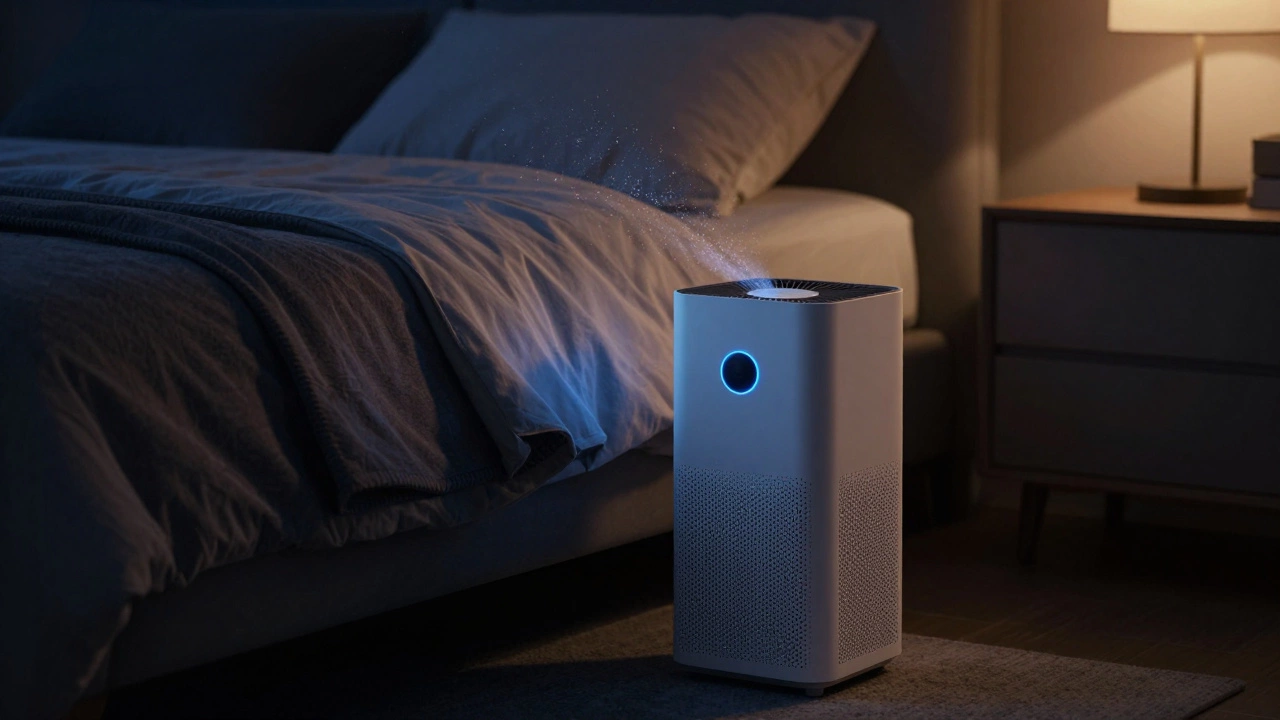
For a standard master bedroom (around 300-400 square feet), one mid-sized purifier with a CADR of 200+ is usually sufficient. Place it near the foot of the bed, away from walls, to allow for unrestricted airflow. Smaller bedrooms or guest rooms may only need a compact unit with a CADR of 100-150. The key here is noise. Since this unit runs while you sleep, look for models with a dedicated "sleep mode" that operates below 25 decibels. A loud purifier defeats the purpose if it keeps you awake.
The Living Room: The High-Traffic Zone
The living room is typically the largest open space in a home and sees the most foot traffic. Shoes track in outdoor pollutants, carpets trap dust, and windows let in pollen. Because people gather here, the concentration of volatile organic compounds (VOCs) from cleaning products, candles, or even furniture off-gassing can be higher.
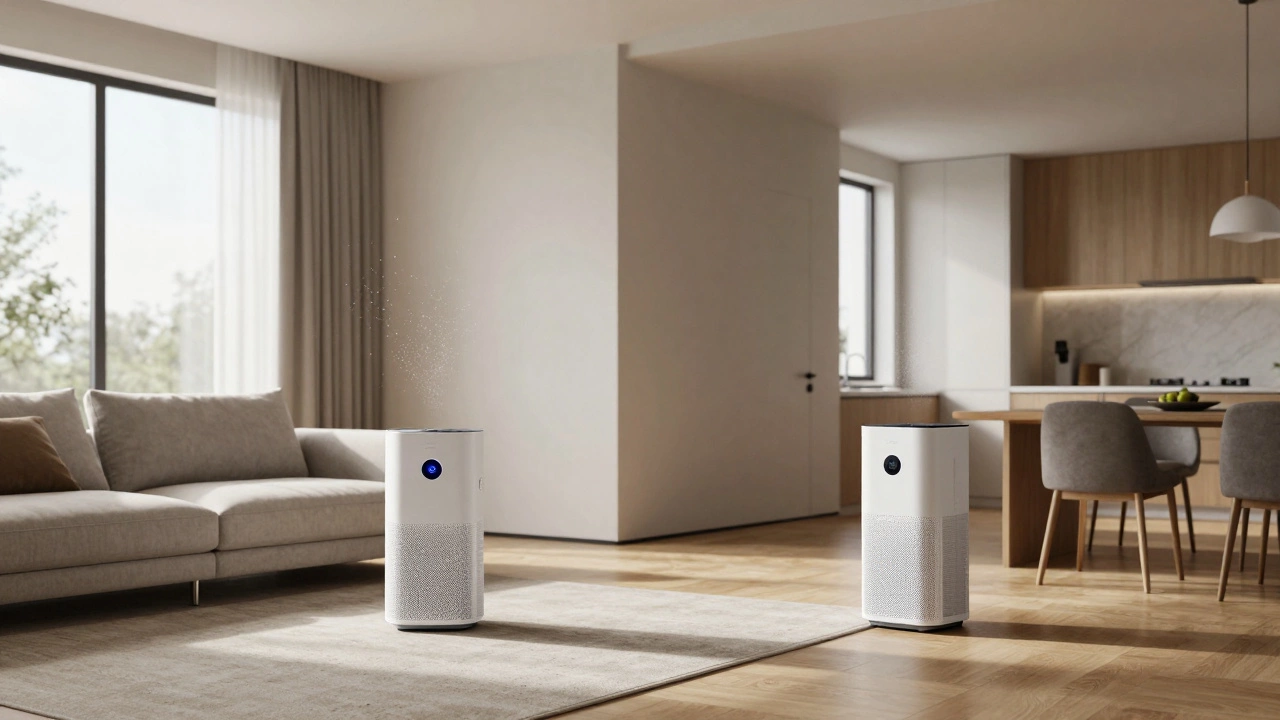
If your living room is under 500 square feet, one high-capacity purifier might suffice. However, most modern living rooms are larger or connected to dining areas. In an open-concept floor plan spanning 800-1,000 square feet, one unit will struggle to keep up. You’ll likely need two medium-sized purifiers placed strategically-one near the seating area and one closer to the entryway or kitchen connection. This dual setup ensures that air circulating through the main gathering space is continuously scrubbed.
Kitchen and Dining: Cooking Fumes and Odors
Cooking releases particulate matter, grease, and strong odors that range hoods don’t always capture completely. Even with a good exhaust fan, microscopic particles escape into the rest of the house. This is why kitchens and adjacent dining areas often benefit from dedicated air purification.
Standard HEPA filters can clog quickly when exposed to heavy cooking grease. For this room, you need a purifier with a pre-filter that catches large particles and a substantial activated carbon layer to absorb odors. If your kitchen is enclosed, one compact unit on the counter or floor is enough. If it’s open-plan, the purifier mentioned for the living room should ideally be positioned to pull air from the kitchen zone, or you add a second, smaller unit specifically for the cooking area.
Bathrooms: Humidity and Mold Prevention
Bathrooms are unique because the primary enemy isn’t just dust-it’s moisture. High humidity promotes mold growth and mildew, which release spores into the air. While an air purifier won’t fix a ventilation problem caused by a broken exhaust fan, it can help reduce airborne mold spores and bathroom odors.
Most standard air purifiers aren’t built to withstand high humidity levels found in bathrooms after a hot shower. Placing a plastic-cased electronic device directly next to a bathtub is risky. Instead, focus on ensuring your bathroom exhaust fan works correctly. If you still want extra protection, place a small, waterproof-rated purifier in the hallway outside the bathroom or use a dehumidifier instead. Generally, I don’t recommend dedicating a full-sized air purifier solely to a small bathroom unless you have severe mold issues.
Hallways and Closets: Dead Zones
Hallways and closets are often overlooked. They tend to be stagnant zones where air doesn’t circulate well. Musty smells in closets are usually due to trapped humidity and lack of airflow rather than active pollution. Rather than installing a purifier in every closet, ensure doors are left ajar occasionally and consider using silica gel packs to control moisture. Hallways usually benefit from the overflow of clean air from adjacent rooms, so no dedicated unit is needed unless the hallway is exceptionally long and acts as a main thoroughfare.
Central HVAC vs. Portable Units
Some homeowners ask if they can skip portable purifiers and just upgrade their central heating, ventilation, and air conditioning (HVAC) system with better filters. Central systems are great for whole-house baseline filtration, but they have limitations. They typically use MERV-8 or MERV-11 filters, which catch larger particles but miss fine PM2.5 pollutants like wildfire smoke or virus-laden aerosols. Additionally, central fans don’t run 24/7, meaning air sits unfiltered for hours.
Portable HEPA filters are high-efficiency particulate air filters that trap at least 99.97% of particles 0.3 microns in diameter in standalone units provide much higher air change rates in specific rooms. The best approach is often a hybrid: use a high-quality MERV-13 filter in your central HVAC for general maintenance, and deploy portable HEPA purifiers in high-priority rooms like bedrooms and living areas for targeted, aggressive cleaning.
| Home Type | Square Footage | Recommended Units | Key Placement Strategy |
|---|---|---|---|
| Studio Apartment | < 500 sq ft | 1 Large Unit | Center of the open space |
| Small House (1-2 Bed) | 500 - 1,000 sq ft | 2 Medium Units | One in bedroom, one in living/kitchen |
| Medium House (3 Bed) | 1,000 - 2,000 sq ft | 3-4 Units | Master bed, secondary beds shared, living room |
| Large House (4+ Bed) | 2,000+ sq ft | 4-6 Units | Each bedroom + main living area |
Special Considerations for Vancouver Homes
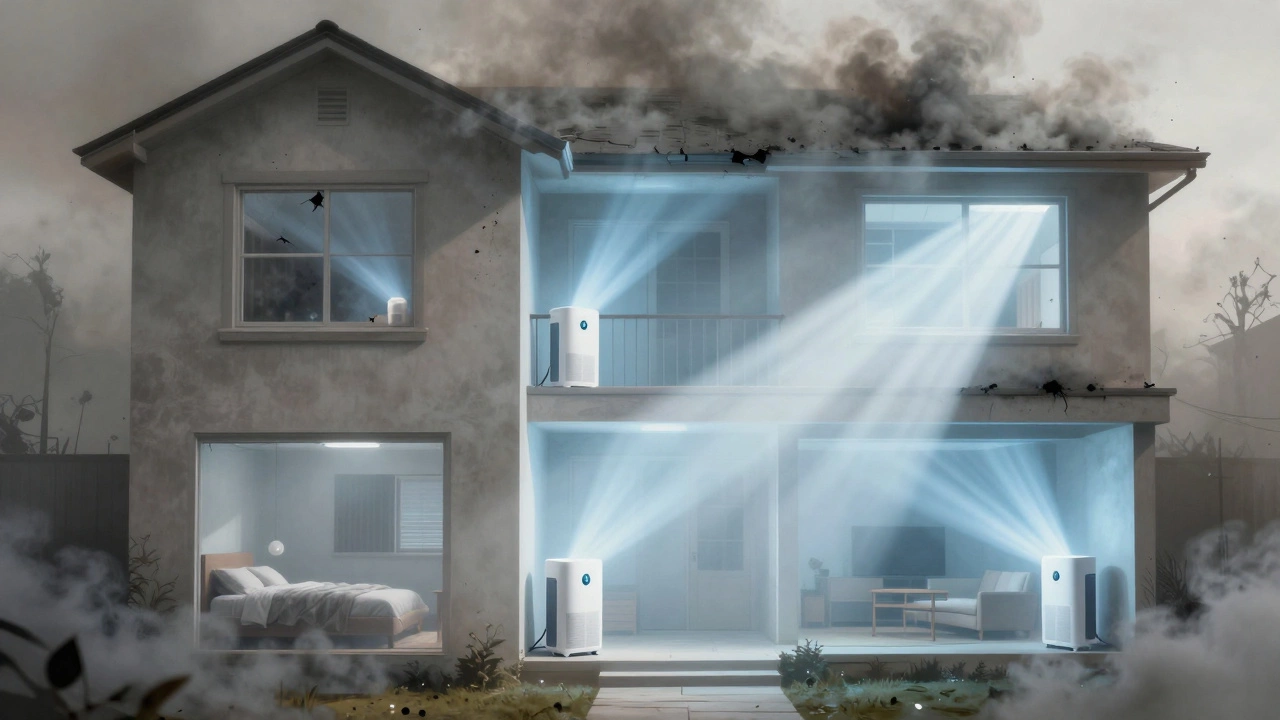
Living in Vancouver adds specific challenges to indoor air quality. During the summer months, wildfire smoke from British Columbia and the US Pacific Northwest can drastically increase PM2.5 levels indoors, even with windows closed. Older homes in neighborhoods like Kitsilano or Mount Pleasant may have drafts that let smoke seep in through cracks.
In these scenarios, the number of purifiers matters less than their capacity. You need units with high smoke CADR ratings. If you live in a multi-story home, remember that heat rises, and smoke particles can accumulate in upper floors. Ensure you have a purifier in the upstairs hallway or master bedroom. Also, consider sealing window gaps during fire season to reduce the load on your machines.
Maintenance and Filter Costs
Buying three air purifiers is only half the battle. Running them costs money. HEPA filters typically need replacement every 6-12 months, depending on usage and air quality. Activated carbon layers may need more frequent changes if you cook heavily or have pets. Calculate the ongoing cost before expanding your fleet. Some brands offer washable pre-filters that extend the life of the main HEPA filter, which is a smart long-term investment.
Also, don’t forget electricity. Modern purifiers are relatively efficient, but running multiple units 24/7 will show up on your BC Hydro bill. Look for Energy Star certified models to minimize impact. Most users find that the health benefits outweigh the modest increase in utility costs, especially during allergy season or wildfire events.
Can one air purifier clean an entire house?
Generally, no. Unless you have a very small open-concept studio, one unit cannot effectively circulate and filter air throughout multiple rooms separated by doors and walls. Airflow is restricted, leading to clean air in one room and polluted air in another. For whole-home coverage, you need either a centralized HVAC filtration upgrade or multiple portable units placed in each major living space.
How do I know if my air purifier is too small for my room?
If your purifier is constantly running at maximum fan speed without triggering the auto-sensor to shut off, it’s likely undersized. Another sign is if you still notice odors or feel stuffiness despite the unit running. Check the CADR rating against your room’s cubic footage; if the calculated required CADR is higher than the unit’s rating, you need a larger model.
Do I need an air purifier in every bedroom?
Ideally, yes, especially for bedrooms used regularly. Sleep quality is closely tied to air quality. If budget is tight, prioritize the master bedroom and any rooms occupied by children or allergy sufferers. Guest rooms can share a unit if the door is kept open, but dedicated units ensure consistent cleanliness.
Where is the best place to put an air purifier in a room?
Place the purifier in the center of the room if possible, or at least 12-24 inches away from walls and furniture. Avoid placing it in corners or behind curtains, as this restricts airflow intake and output. Ideally, position it between the source of pollution (like a window or pet bed) and where you spend most of your time (like a sofa or bed).
Are ionizing air purifiers safe for home use?
Ionizers can produce ozone as a byproduct, which is harmful to lungs and can exacerbate asthma. Health Canada and other agencies advise caution with ozone-generating devices. Stick to mechanical filtration methods like HEPA and activated carbon, which physically trap particles without producing harmful gases.