
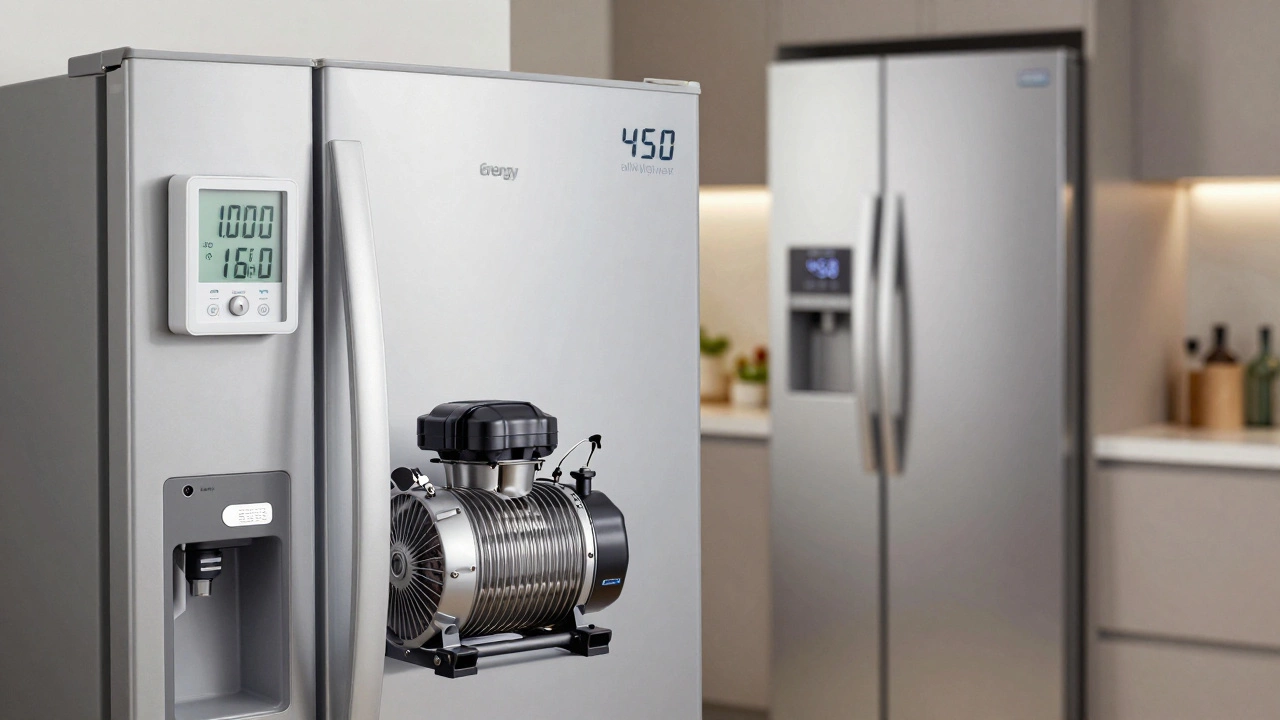
If you’re still using a refrigerator that’s 20 years old, you might be wondering: is it saving me money, or is it quietly draining my wallet? The answer isn’t what most people think. A fridge from the mid-2000s isn’t just outdated-it’s a energy hog compared to today’s models. You’re not saving money by keeping it. You’re paying more every month to keep it running.
How Much Electricity Does a 20-Year-Old Fridge Actually Use?
A typical refrigerator from the year 2005 used between 800 and 1,200 kilowatt-hours (kWh) per year. That’s not a guess-it’s from the U.S. Department of Energy’s testing data on models sold during that time. For comparison, a modern Energy Star-certified fridge uses about 350 to 500 kWh per year. That’s a 50% to 65% drop in energy use.
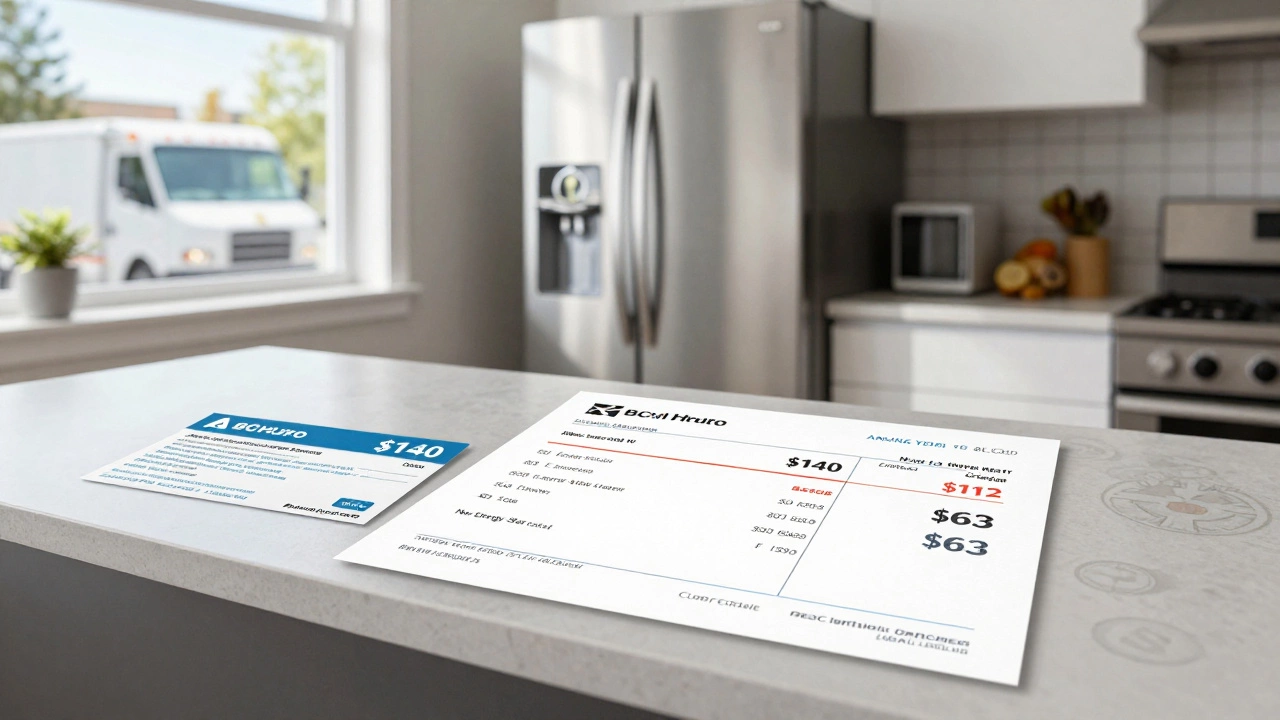
Let’s put that into dollars. In Vancouver, electricity costs about $0.14 per kWh as of 2025. A 20-year-old fridge running at 1,000 kWh/year adds $140 to your annual power bill. A new efficient fridge at 450 kWh/year? Just $63. You’re paying $77 extra every year just to keep the old one running. Over five years, that’s $385. That’s more than the price of a decent new fridge on sale.
Why Are Old Fridges So Inefficient?
It’s not just about age. It’s about technology. Older fridges didn’t have the features we take for granted today. No inverter compressors. No adaptive defrost cycles. No smart sensors that adjust cooling based on how often the door opens. Back then, compressors ran at full power all the time-whether the fridge was full or nearly empty.
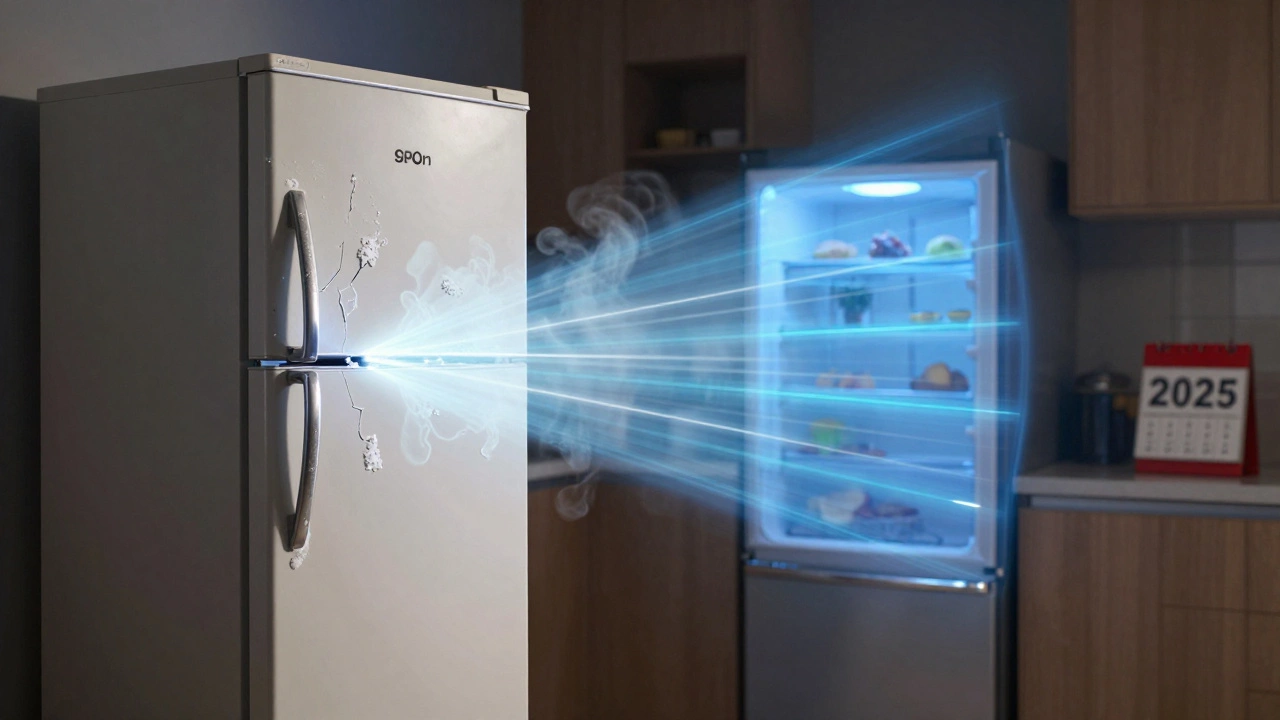
Insulation was thinner. Seals leaked more. The evaporator coils weren’t optimized. Even the door gaskets, which should keep cold air in, become brittle and crack after 15-20 years. You can’t see the leak, but you feel it when the fridge runs constantly, even in winter. That’s not normal. That’s failure.
Some people think, “I’ll just clean the coils and it’ll be fine.” Cleaning coils helps a little, but it won’t fix the core problem: the fridge was never built to be efficient. It was built to be cheap. And now, it’s costing you more than it’s worth.
Real-World Example: A Vancouver Household’s Experience
A neighbor in Burnaby kept a 1999 Whirlpool side-by-side fridge for 22 years. He swore it still worked fine. He didn’t notice the noise getting louder or the frost building up in the freezer. He didn’t realize the fridge was running 18 hours a day. In 2024, he replaced it with a 19-cubic-foot Energy Star model. His monthly power bill dropped by $18. That’s $216 a year. He paid $650 for the new fridge. He broke even in under three years. After that, every dollar he saved was pure profit.
He didn’t need a smart fridge with a touchscreen. He just needed one that didn’t waste electricity like a broken heater.
What About the Environmental Impact?
It’s not just about your wallet. A fridge that uses 1,000 kWh per year emits roughly 0.5 metric tons of CO₂ annually in British Columbia, where most electricity comes from hydro. That’s the same as driving a car for 2,000 kilometers. A modern fridge cuts that in half. If you replaced five old fridges across your neighborhood, you’d save over 2.5 tons of CO₂ per year. That’s like planting 60 trees.
And here’s something most people forget: old fridges often use R12 or R134a refrigerants. These are ozone-depleting or high-global-warming-potential gases. Modern fridges use R600a, a natural refrigerant with almost zero environmental impact. Even if your old fridge still works, it’s leaking refrigerant into the air. You’re not just wasting energy-you’re contributing to climate change.
When Should You Replace Your Old Fridge?
You don’t need to replace it the second it hits 20 years. But here’s a simple rule: if your fridge is older than 15 years and you’re paying more than $100 a year in extra electricity, it’s time to think about replacing it. That’s the break-even point for most households.
Look for these signs:
- The compressor runs constantly-even when the room is cool.
- You see frost or ice building up inside the freezer compartment.
- The back of the fridge feels unusually hot to the touch.
- The door doesn’t seal tightly-you can pull a piece of paper out easily.
- You hear clicking, buzzing, or grinding noises that didn’t used to be there.
These aren’t signs of wear. They’re signs of inefficiency. And they’re expensive to ignore.
What to Look for in a New Fridge
You don’t need the fanciest model. Just look for these three things:
- Energy Star certification-this means it meets strict efficiency standards set by Natural Resources Canada.
- Size that fits your needs-bigger isn’t better. A 18-22 cubic foot fridge is enough for most families. Going over 25 cubic feet without needing the space just means higher energy use.
- Top or bottom freezer-these are typically more efficient than side-by-side models. The cold air stays in better when you open the door.
Look for models with inverter compressors. They adjust speed based on demand, instead of turning on and off like an old fridge. That’s quieter, more reliable, and uses less power.
Brands like LG, Samsung, and Whirlpool have solid Energy Star models under $900. You can find deals in January or during Canada Day sales.
What Happens to the Old Fridge?
Don’t just leave it by the curb. In Vancouver, the city offers free pickup for old appliances through their Appliance Recycling Program. They safely remove refrigerants and recycle metals and plastics. Some utilities even give you a $50-$100 rebate when you turn in an old fridge and buy a new Energy Star model.
Check with BC Hydro or your local municipality. It’s free, easy, and better for the planet.
Final Thought: It’s Not About Nostalgia-It’s About Numbers
I get it. That old fridge might have held your first birthday cake. Maybe it’s the one you inherited from your parents. But nostalgia doesn’t pay your power bill. And it doesn’t stop carbon emissions.
A 20-year-old fridge isn’t a classic. It’s a liability. Replacing it isn’t a luxury-it’s a smart financial move and a small but real step toward reducing your environmental footprint. The money you save isn’t just on your electricity bill. It’s in peace of mind, fewer repairs, and knowing you’re not contributing to unnecessary waste.
That old fridge isn’t saving you money. It’s costing you more than you think.
Is it worth repairing a 20-year-old refrigerator?
Usually, no. Repairing a 20-year-old fridge-like replacing the compressor or fixing a leaky seal-costs $300-$600. That’s half the price of a new, efficient model. Even if it works after the repair, it’s still using 2-3 times more electricity than a modern fridge. You’ll pay more in energy over the next year than you saved on the repair.
How much can I save by replacing my old fridge?
If your fridge is 20 years old and uses 1,000 kWh/year, switching to a new Energy Star model that uses 450 kWh/year saves you about $77 per year in Vancouver. Over 10 years, that’s $770 in savings-plus you avoid repair costs and get a quieter, more reliable appliance.
Do all new refrigerators use less energy than old ones?
Yes, if they’re Energy Star certified. Even the cheapest new fridge made after 2020 uses at least 40% less energy than a 20-year-old model. The efficiency standards have improved dramatically since 2005. A 2025 fridge, even without smart features, is far more efficient than anything made before 2010.
Can I use my old fridge as a secondary unit?
Technically yes, but it’s not smart. A second fridge, especially an old one, can add $100-$150 a year to your power bill. That’s more than most people spend on groceries in a month. If you need extra space, consider a small, efficient mini-fridge instead-those use under 200 kWh/year.
Are there rebates for replacing old fridges in British Columbia?
Yes. BC Hydro and FortisBC offer rebates of $50-$100 when you recycle an old fridge and buy a new Energy Star model. Some municipalities also offer free pickup. Check your utility’s website or call them directly-rebates are often overlooked but easy to claim.