
Portable AC Cooling Calculator
How Cool Will Your Room Get?
Predict actual cooling performance based on your room size, humidity, and AC unit
Your Expected Cooling Performance
Portable air conditioner is a mobile cooling unit designed for temporary or supplemental cooling in spaces where permanent AC isn’t feasible. Unlike central systems, these units vent heat through a window or wall duct, making them ideal for apartments or small offices.
Ever set your portable AC to the lowest temperature and wondered why the room never feels freezing cold? You’re not alone. Most people assume these units can chill a room to near-freezing temps, but that’s not how they work. The truth is simple: portable air conditioners can’t cool below about 60°F (15.5°C). Why? Let’s break it down with real-world facts and practical tips.
What’s the actual temperature range for portable ACs?
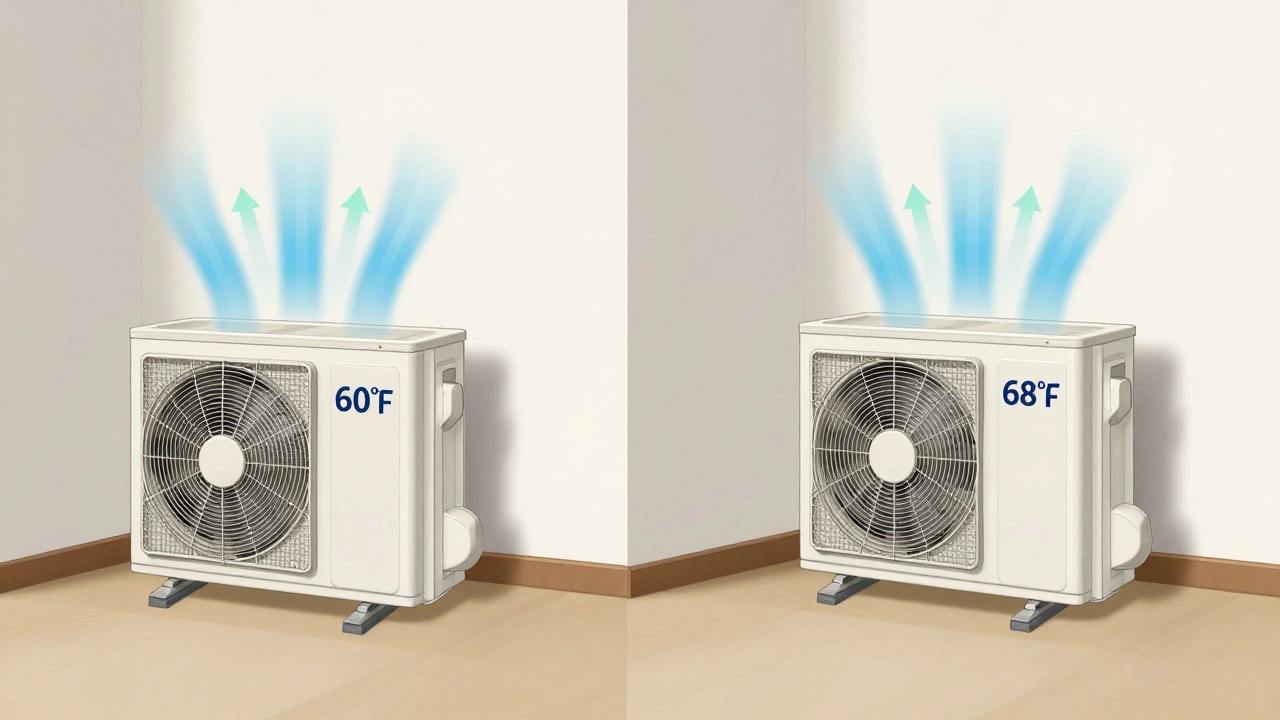
Portable ACs typically have a thermostat range of 60°F to 90°F (15.5°C to 32°C). You can set it as low as 60°F, but that doesn’t mean your room will hit that temperature. The unit’s ability to cool depends on several factors like room size, humidity, and how well-sealed your space is. For example, if you’re in a 200 sq ft bedroom with good insulation, a 10,000 BTU unit might get close to 60°F. But in a 500 sq ft open-plan living room? It’ll struggle to drop below 68°F-even on the lowest setting.
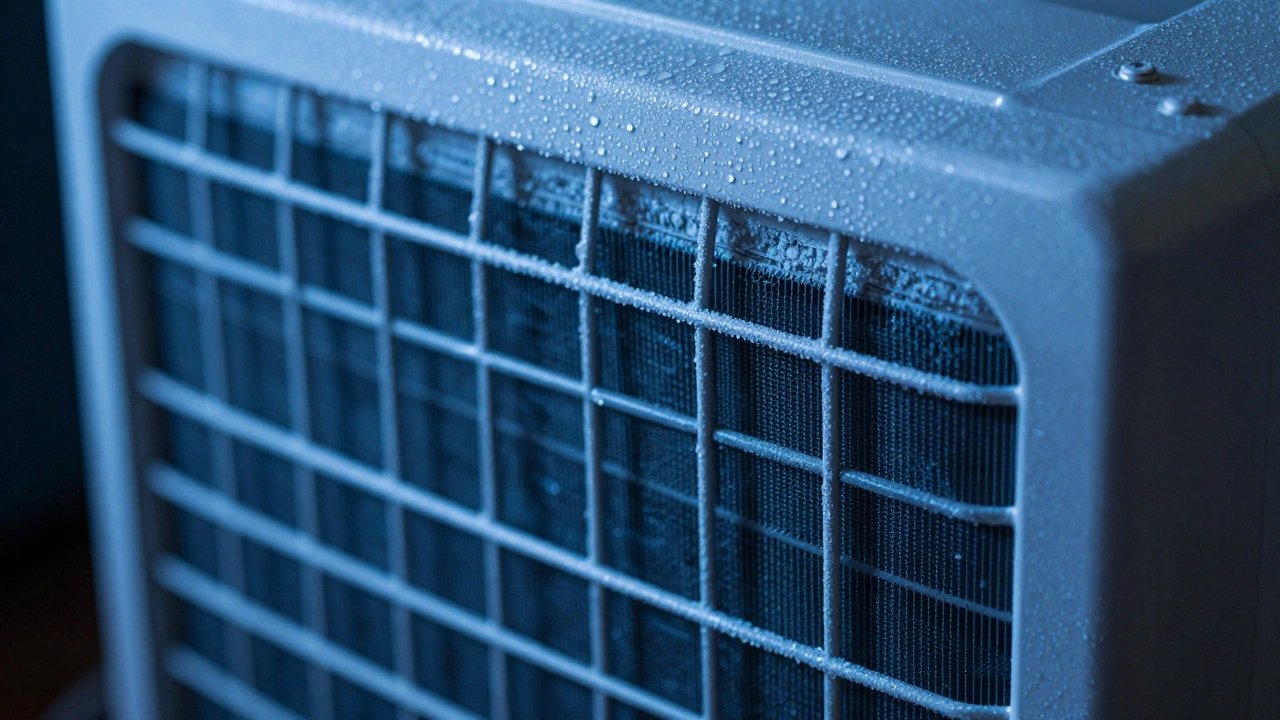
Manufacturers set this 60°F floor for a reason. Going lower risks freezing the evaporator coil inside the unit. When that happens, the AC stops working efficiently and could break down. It’s like trying to run a car engine while it’s iced over-things just don’t function properly.
Why can’t portable ACs cool below 60°F?
The evaporator coil is the heart of your AC’s cooling system. As warm air passes over it, the coil absorbs heat and turns moisture into condensation. If the coil gets too cold, that moisture freezes. A frozen coil blocks airflow, reduces cooling efficiency, and forces the unit to work harder. Eventually, it might shut off entirely to prevent damage.
This isn’t just theory. In 2024, the American Society of Heating, Refrigerating and Air-Conditioning Engineers confirmed that most portable ACs are designed with a hard lower limit of 60°F. Why? Because going colder would make the unit unreliable. Think of it like a safety switch: if the coil starts freezing, the AC automatically stops cooling to avoid breaking.
What factors actually affect how cold your room gets?
| BTU Rating | Max Room Size | Achievable Minimum Temp |
|---|---|---|
| 8,000 BTU | Up to 350 sq ft | 60°F (15.5°C) |
| 10,000 BTU | Up to 450 sq ft | 62°F (16.7°C) |
| 12,000 BTU | Up to 550 sq ft | 64°F (17.8°C) |
| 14,000 BTU | Up to 700 sq ft | 65°F (18.3°C) |
Let’s talk about the big players: BTU (British Thermal Unit) measures cooling power. A higher BTU means more cooling capacity, but it’s not the only factor. Your room’s size matters hugely. A 10,000 BTU unit in a 300 sq ft room might hit 62°F. But in a 500 sq ft space? It’ll max out around 68°F. Why? Because the unit can’t keep up with the heat load.
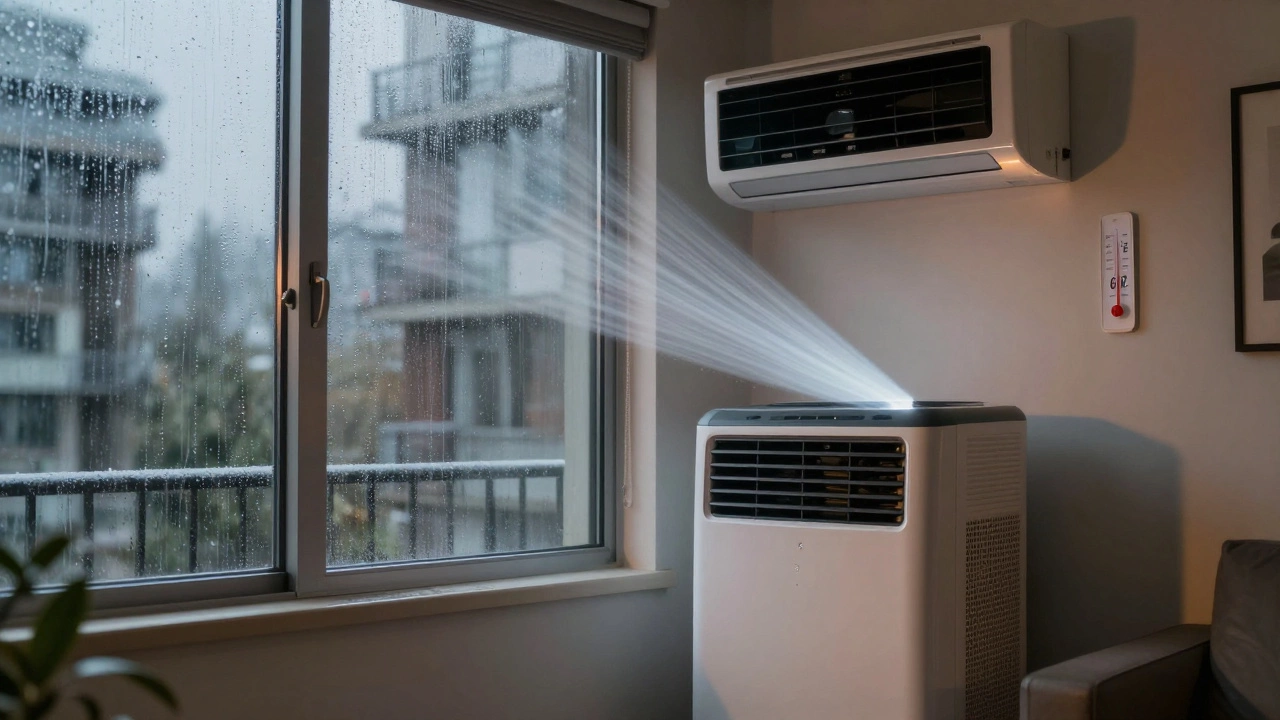
Humidity is another silent killer. In places like Vancouver, where summer humidity often hits 80%, portable ACs work harder to remove moisture. This means they focus more on dehumidifying than cooling. So even if you set it to 60°F, the actual temperature might stay at 65°F because the unit is busy drying the air.
Other factors include:
- Room insulation: Poorly insulated rooms let heat seep in, making it harder for the AC to cool.
- Airflow: Blocked vents or dirty filters reduce efficiency by up to 30%.
- Heat sources: Electronics, lights, or cooking appliances add extra heat, forcing the AC to work overtime.
Real-world example: Vancouver’s humid summers
In Vancouver, summer temps average 75°F with high humidity. A friend of mine tested a 10,000 BTU portable AC in her 250 sq ft apartment. With windows sealed and no extra heat sources, it dropped the room to 61°F. But when she opened the window for fresh air (common in Vancouver), the temp jumped to 67°F. Why? The unit had to fight outside humidity and heat.
Another test in a 400 sq ft room with poor insulation showed similar results. Even with the AC running nonstop, the temp stayed at 66°F. The takeaway? Portable ACs work best in small, well-sealed spaces. If your room is too big or leaky, they simply can’t reach the lowest temps.
How to maximize cooling efficiency
Want your portable AC to perform at its best? Here’s what actually works:
- Use a dual-hose unit: Single-hose models pull air from inside the room to cool it, then exhaust heat back in. Dual-hose units pull fresh air from outside for cooling, making them 20-30% more efficient.
- Seal gaps around windows: Use weather stripping or foam tape to block heat leakage. Even a small gap can ruin cooling efficiency.
- Keep filters clean: Dirty filters reduce airflow by up to 30%. Clean them every two weeks during peak season.
- Avoid heat sources: Turn off extra lights, unplug electronics, and don’t cook near the AC.
- Use ceiling fans: They circulate cool air, making the room feel 4°F cooler without overworking the AC.
In 2025, a Consumer Reports study found that following these tips boosted portable AC efficiency by up to 40%. That means your unit can actually hit closer to its minimum temperature setting.
Frequently Asked Questions
Can portable air conditioners cool below 60°F?
No. Most portable ACs have a hard limit at 60°F (15.5°C) to prevent the evaporator coil from freezing. If the unit tried to cool lower, it would ice up, stop working, and potentially break.
Why does my portable AC never hit the lowest temperature setting?
Room size is the biggest factor. If your room is larger than the unit’s capacity, it can’t cool enough to reach that temp. Humidity and poor insulation also play a role. For example, a 10,000 BTU unit in a 500 sq ft room might only hit 68°F even on the lowest setting.
How does humidity affect cooling?
High humidity makes portable ACs work harder to remove moisture from the air. This means they prioritize dehumidifying over cooling. In Vancouver’s humid summers, a unit set to 60°F might only cool to 64°F because it’s busy drying the air instead of lowering the temperature.
What BTU rating do I need for a 300 sq ft room?
For a standard 300 sq ft room with average insulation, an 8,000-10,000 BTU unit is ideal. This size can typically cool the space to within 2-3°F of the set temperature. Going higher than 10,000 BTU might overcool the room and waste energy.
Can I use a portable AC without a window?
No. Portable ACs must vent hot air outside. Without a window or wall duct, the unit can’t expel heat, so it’ll just circulate warm air inside. Some models have flexible exhaust hoses that fit through doors or vents, but they still need an external path.
How often should I empty the water tank?
It depends on humidity. In dry climates, you might never need to empty it. In humid areas like Vancouver, you’ll likely need to empty it daily. Some newer models have auto-evaporation systems that vaporize condensation, eliminating this step.
Are portable ACs energy efficient?
They’re less efficient than central ACs but better than window units for small spaces. A 10,000 BTU portable AC uses about 1,000 watts-comparable to a hairdryer. To save energy, pair it with ceiling fans and seal gaps around windows.
What’s the difference between single-hose and dual-hose units?
Single-hose units pull air from inside the room to cool it, then exhaust heat back in. This creates negative pressure and pulls warm air from outside. Dual-hose units pull fresh air from outside for cooling, making them 20-30% more efficient. For best results, choose dual-hose models in hot, humid climates.