

Styrofoam Microwave Safety Checker
Check Microwave Safety
You grab a takeout container-greasy, warm, and still full of food-and wonder: can I just pop this Styrofoam cup or tray into the microwave? It’s quick. It’s convenient. But is it safe? The answer isn’t as simple as yes or no. Most Styrofoam isn’t meant for microwaves, but some are. And the difference could mean the difference between a quick meal and a mess-or worse, a health risk.
What is Styrofoam, really?
Styrofoam is a brand name, but most people use it to mean any white, lightweight foam used for takeout containers, coffee cups, and packaging. The real material is expanded polystyrene (EPS), a plastic made from styrene. It’s cheap, insulates well, and is great for keeping food hot or cold. But it’s not designed to handle high heat.
When you microwave food, the energy heats the water molecules inside. That heat transfers to the container. Styrofoam starts to soften around 212°F (100°C), the boiling point of water. But microwaves can create hot spots-areas where the food gets much hotter than the rest. That’s when Styrofoam begins to warp, melt, or break down.
Why microwaving Styrofoam is risky
Here’s the real concern: chemicals. Styrofoam contains styrene, a substance the International Agency for Research on Cancer classifies as a possible human carcinogen. When heated, especially above 175°F (80°C), styrene can leach into your food. Studies from the U.S. Food and Drug Administration and the National Toxicology Program show this migration happens more under high heat or prolonged exposure.
It’s not just styrene. Add fatty or oily foods-like pizza, fried chicken, or buttery pasta-and the risk goes up. Oil heats faster and holds more heat than water, so it can push more chemicals out of the foam. A 2023 study in the Journal of Environmental Health found that microwaving fatty foods in polystyrene containers increased styrene levels in the food by up to 200% compared to room temperature storage.
And it’s not just chemical leaching. Melting Styrofoam can drip, warp, or even catch fire if it gets too hot. I’ve seen someone microwave a takeout box for too long-half the lid melted onto the turntable, and the smell lingered for days.
How to tell if Styrofoam is microwave safe
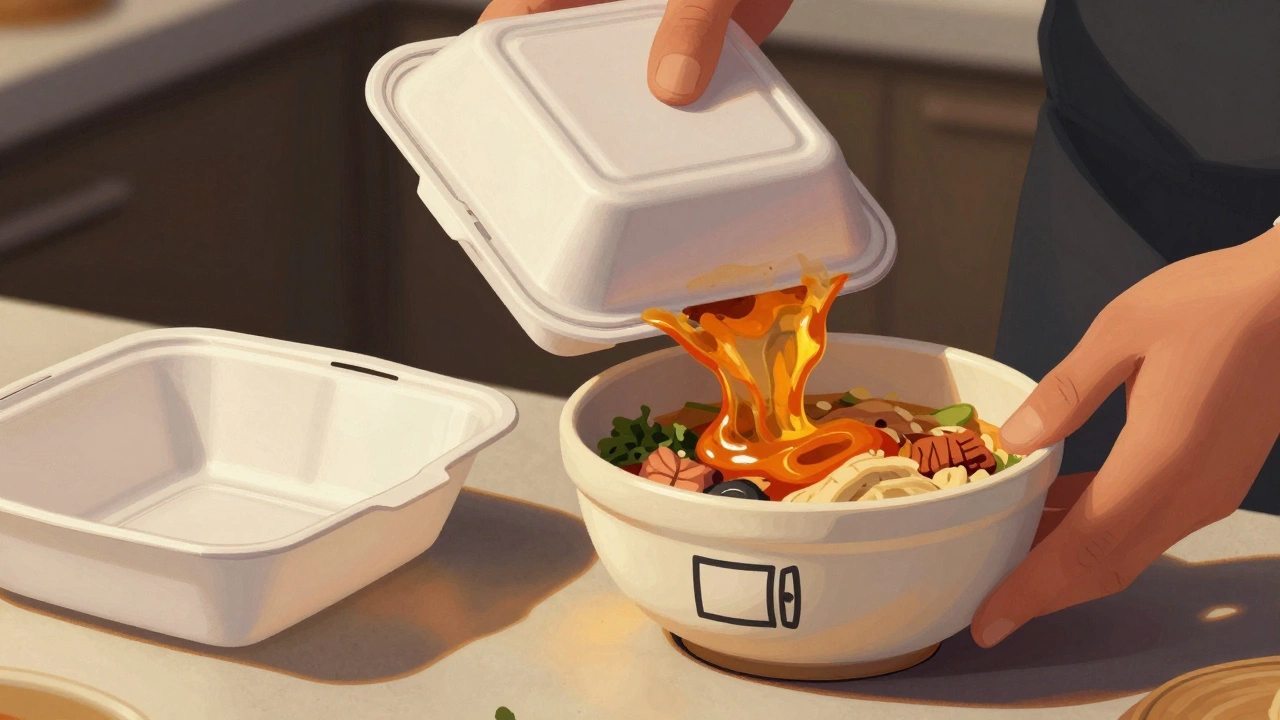
Not all foam containers are created equal. Some are made with additives or thicker walls to handle microwave heat. The only way to know for sure? Look for the label.
If you see a microwave-safe symbol-usually wavy lines or a microwave icon-it’s been tested and approved for microwave use. That label means the container has passed FDA safety standards for chemical migration under normal heating conditions.
But here’s the catch: many takeout places don’t label their containers. If there’s no symbol, assume it’s not safe. Don’t guess. Don’t hope. That little triangle with the number 6 on the bottom? That’s the recycling code for polystyrene. It tells you what it’s made of, not whether it’s microwave safe.
Some grocery stores sell microwave-safe foam containers-usually for pre-packaged meals. Those are fine. But if you’re unsure, transfer the food to a glass or ceramic dish. It’s one extra step, but it’s safer and cleaner.
What to use instead
There are better, safer options. Glass, ceramic, and microwave-safe plastic containers are your best bets. Look for labels that say “microwave safe” or “BPA-free.” Even paper plates can work for short heating times, as long as they’re not coated in wax or plastic.
Here’s what works well:
- Glass containers-heat evenly, don’t leach chemicals, and are easy to clean.
- Ceramic dishes-great for reheating soups and stews. Just make sure they don’t have metal trim.
- Microwave-safe plastic-look for the symbol. Avoid old, cracked, or discolored containers.
- Paper towels or parchment paper-use them to cover food, not as a container.
Don’t use aluminum foil, metal-trimmed dishes, or plastic bags. Those are dangerous in microwaves too.
What to do if you already microwaved Styrofoam
If you accidentally microwaved a Styrofoam container and nothing melted or smelled weird, you’re probably fine. A short, low-power zap with non-fatty food is unlikely to release dangerous amounts of chemicals. But don’t make it a habit.
If the container warped, melted, or left a weird taste in your food? Throw the food out. Clean the microwave thoroughly with vinegar and water. The smell and residue can linger and affect future meals.
And if you’re pregnant, have young kids, or are health-conscious? Play it extra safe. Skip the foam entirely. There’s no benefit worth the risk.
Bottom line: When in doubt, transfer it
Yes, microwaving Styrofoam can be tempting. It’s easy. It saves a dish. But the risks-chemical exposure, melted messes, potential long-term health effects-aren’t worth it. Even if the container says “microwave safe,” it’s still plastic. And plastic, even when labeled safe, isn’t designed for repeated heating.
Here’s a simple rule: if it came from a restaurant, transfer it to a glass or ceramic dish before microwaving. It takes 10 seconds. It costs nothing. And it eliminates the guesswork.
Styrofoam is great for holding your coffee on the way to work. But it’s not built for the microwave. Treat it like a disposable cup-not a cooking vessel.
Is all Styrofoam unsafe in the microwave?
No, not all Styrofoam is unsafe-but most of it is. Only containers labeled as microwave-safe have been tested and approved for use in microwaves. If there’s no label, assume it’s not safe. Takeout containers, coffee cups, and packing foam are almost never microwave-safe.
Can you microwave Styrofoam for 30 seconds?
Even 30 seconds can be risky. Styrofoam starts to soften at 212°F, and microwaves create hot spots. Fatty or oily foods heat faster and can cause chemicals to leach out in seconds. It’s not worth the chance. Transfer the food instead.
Does microwaving Styrofoam cause cancer?
Microwaving Styrofoam doesn’t directly cause cancer, but it can release styrene, a substance classified as a possible human carcinogen. Long-term exposure to styrene through repeated use of heated foam containers may increase health risks. The FDA allows trace amounts, but minimizing exposure is the smarter choice.
What happens if Styrofoam melts in the microwave?
If Styrofoam melts, it can release chemicals into your food and create a sticky mess inside the microwave. The odor can linger, and the residue is hard to clean. Discard the food, clean the microwave with vinegar and water, and never use that container again.
Are microwave-safe Styrofoam containers BPA-free?
Styrofoam (expanded polystyrene) doesn’t contain BPA. BPA is found in polycarbonate plastics, not EPS. But microwave-safe Styrofoam still contains styrene, which has its own health concerns. Just because it’s BPA-free doesn’t mean it’s completely safe.