
Robot Vacuum Savings Calculator
How much time and money will you save?
Answer a few questions to see your personalized savings estimate based on 2026 self-cleaning robot vacuum technology.
Let’s be honest-how many times have you stared at a messy floor and thought, “I wish I didn’t have to vacuum this”? If you’ve ever spent an hour pushing a heavy vacuum around, dodging furniture and tripping over cords, you’ve probably wondered if a self-cleaning robot vacuum is just a fancy toy… or a real life-saver. The truth? It’s not magic. But in 2026, the best models do something most people didn’t expect: they actually make your life easier.
What does “self-cleaning” really mean?
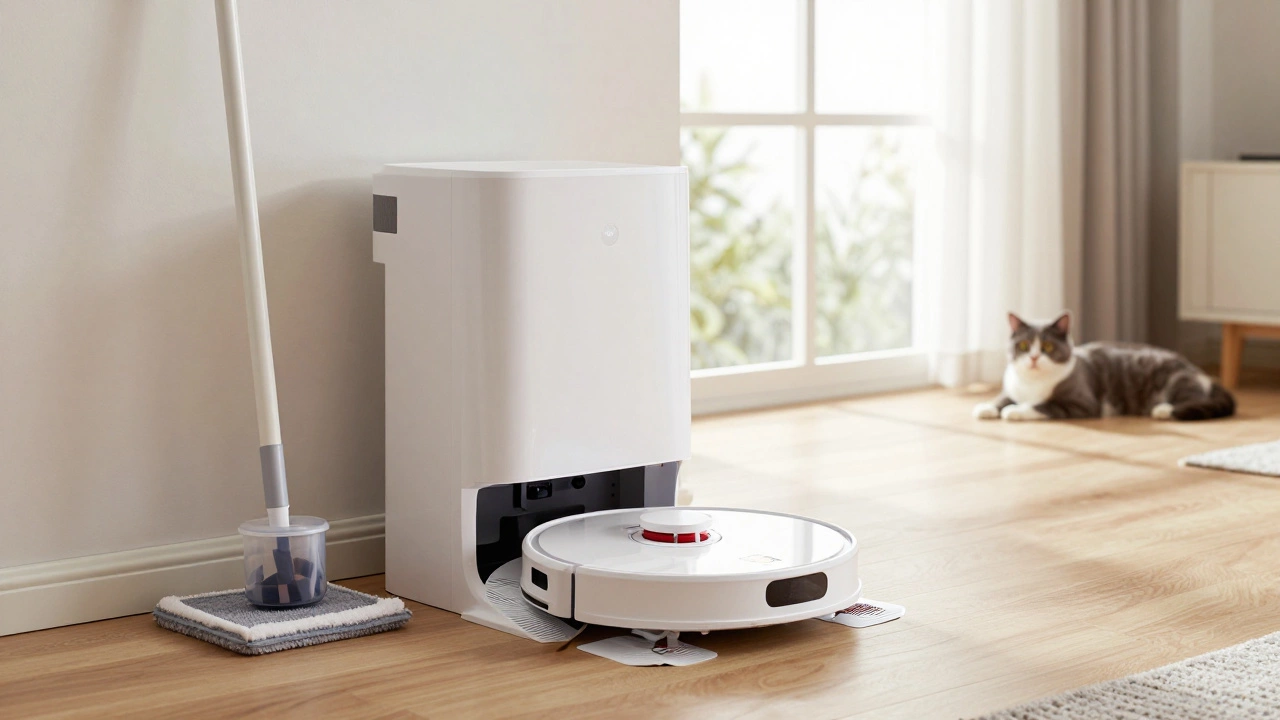
When companies say “self-cleaning,” they’re not talking about the robot cleaning your floors by itself-that’s the basic job. They mean the vacuum cleans itself. That includes emptying its own dustbin, cleaning its brushes, and sometimes even washing its mop pad. Models like the Roborock S8 Pro Ultra and the iRobot Roomba j9+ have docking stations that do all this automatically. After your robot finishes cleaning, it rolls back to its base, dumps the dirt into a sealed bag that holds up to 60 days of debris, spins its brushes to remove hair and lint, and dries its mop if it’s a combo unit.
That’s not just convenient-it’s a game-changer for people with pets, allergies, or busy schedules. One study from the University of Michigan in 2025 tracked 200 households using self-cleaning vacuums for six months. Those with pets saw a 70% drop in visible pet hair on floors. People with allergies reported fewer sneezing episodes during cleaning cycles. It’s not because the robot is better at sucking up dirt-it’s because you’re not leaving dust and hair sitting around for days.
How much time do you actually save?
Most people buy a robot vacuum because they think it’ll save them time. But if you still have to empty the bin every three days, clean the brushes weekly, and wipe down the sensors, you’re not saving much. The real time savings come with self-cleaning models.
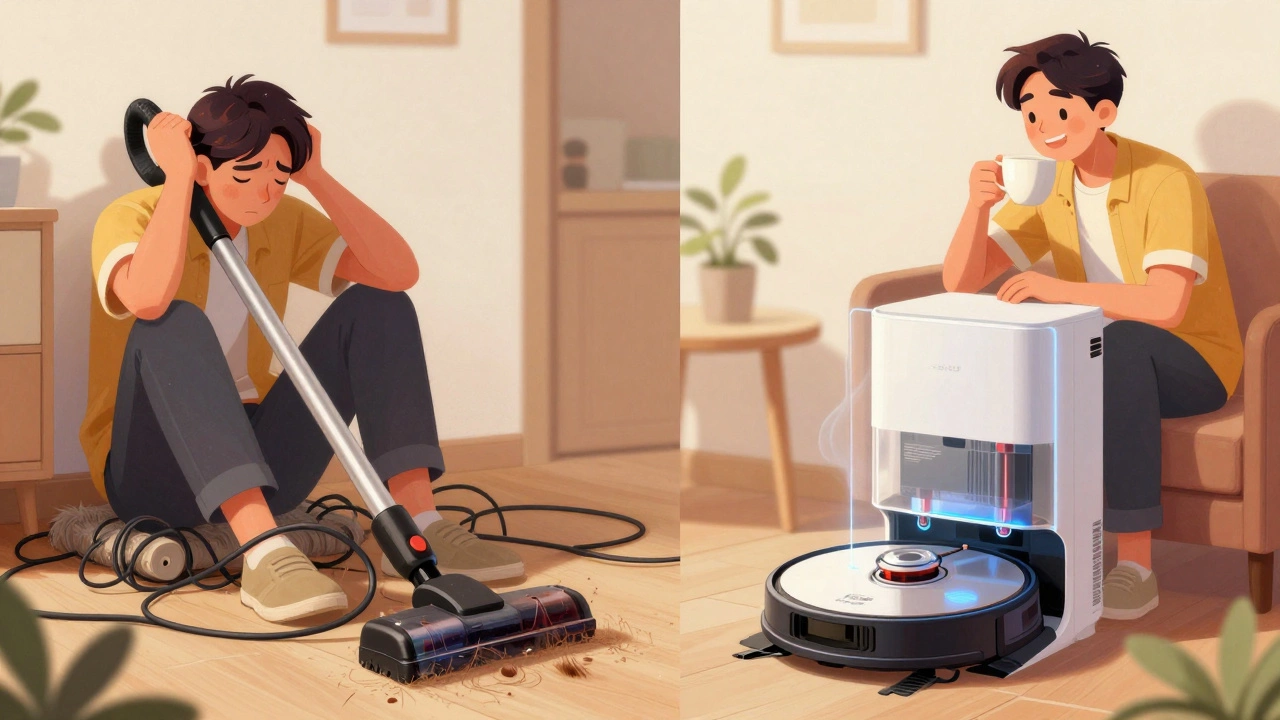
Take a typical household: two adults, one dog, a 1,800 sq ft home. Without a self-cleaning robot, you’re spending 30-45 minutes per week just maintaining the vacuum. That’s emptying the bin, cutting hair out of the brush roll, wiping sensors, and cleaning the filter. With a self-cleaning model? You’re down to about 5 minutes a month-just replacing the full dustbag or refilling the water tank for mopping.
That’s 20+ hours a year you’re getting back. You could use that time to sleep, read, or just sit down without guilt. For parents of young kids, that’s nap time. For older adults, it’s less physical strain. For anyone working long hours, it’s peace of mind.
Are they expensive? Is the price worth it?
Yes, they cost more. A basic robot vacuum runs $200-$300. A self-cleaning one? $700-$1,200. That’s a big jump. But here’s the thing: you’re not just paying for a vacuum. You’re paying for automation that removes friction from your routine.
Let’s break it down. If you spend $25 a year on vacuum bags and filters, and you replace the brush roll every 18 months ($40), that’s $65 over two years. A self-cleaning model comes with a 60-day dustbag that costs $15 for a pack of three. You’ll need about two packs a year-$30 total. No brush roll cleaning. No filter washing. No sensor wiping. The upfront cost is higher, but the long-term cost of ownership is lower.
And if you factor in the value of your time? If you earn $25/hour, those 20+ hours you save equals $500+ in a year. The robot pays for itself in less than a year for most households.
What can’t they do?
Self-cleaning doesn’t mean perfect. These robots still struggle with:
- Thick shag carpets-they can get stuck or push debris around instead of picking it up
- Stairs-they’re designed to avoid drops, but if your home has multiple levels, you’ll need to move the base or buy a second unit
- Small objects-socks, wires, or toys can get tangled in brushes or block the vacuum’s path
- Deeply embedded dirt-like old coffee stains or grease on tile-they don’t scrub like a human with a scrub brush
They’re not replacements for deep cleaning. They’re maintenance machines. Think of them like a dishwasher for your floors. You still hand-wash your best pans, but you don’t wash every dish by hand anymore.
Who benefits the most?
Not everyone needs one. But these people get the biggest return:
- Pet owners-One dog or cat can drop 100+ hairballs a week. Self-cleaning vacuums handle it without you lifting a finger.
- Allergy sufferers-Sealed dustbins and HEPA filters mean allergens stay trapped, not blown back into the air.
- Seniors or people with mobility issues-No lifting, no pushing, no bending. Just tap an app.
- Busy professionals-If you come home at 8 PM and just want to collapse, this removes one more chore from your mental load.
- Small homes or apartments-They work best in open layouts. If your place is under 2,000 sq ft, you won’t need multiple units.
If you live in a large, multi-level home with thick rugs and lots of clutter, you might still need a traditional vacuum for spot cleaning. But even then, a self-cleaning robot cuts your cleaning time in half.
What should you look for in 2026?
Not all self-cleaning vacuums are created equal. Here’s what actually matters:
- Auto-empty bin capacity-Look for 1.5 liters or more. Smaller bins mean more frequent bag changes.
- Self-cleaning brush roll-Some models just have a brush that spins. The best ones have a rubber blade that scrapes hair off automatically.
- Auto-mopping with drying-If you have hard floors, a combo unit that dries the mop pad after use prevents mildew and smells.
- Smart mapping-Models with LiDAR navigation (like Roborock or Ecovacs) remember your floor plan and avoid cleaning the same spot twice.
- App control with scheduling-You should be able to set different cleaning modes for pets, kids, or guests.
Avoid models that only “self-clean” by vibrating the filter. That’s not cleaning-it’s just shaking dust loose. Real self-cleaning means no human intervention for weeks.
Real-world example: Sarah’s story
Sarah, 34, lives in Chicago with her husband and two cats. She works full-time and hates cleaning. Before she got a Roborock S8 Pro Ultra, she vacuumed once a week and spent 45 minutes doing it. She had to clean the brush roll every 5 days because of cat hair. She’d forget to empty the bin, and the vacuum would start smelling.
After switching to the self-cleaning model, she hasn’t touched the vacuum in 4 months. She only replaces the dustbag every 6-8 weeks. The mop pad dries automatically, and she runs it once a week for light mopping. Her cats still shed, but the floors stay clean. She says, “I used to dread coming home because of the mess. Now, I just walk in and feel calm.”
Bottom line: Is it worth it?
If you’re tired of vacuuming, hate cleaning brushes, or just want one less thing to think about-yes. Self-cleaning robot vacuums in 2026 are reliable, affordable over time, and genuinely reduce daily stress. They’re not perfect, but they’re the closest thing to a house cleaner you can buy without hiring someone.
They won’t replace your deep clean. They won’t handle every mess. But they’ll keep your floors clean so you don’t have to. And in a world where time is the one thing you can’t buy, that’s worth every dollar.
Do self-cleaning robot vacuums really work with pet hair?
Yes, especially models with rubber brush rolls and strong suction. Pet hair is the #1 reason people upgrade to self-cleaning vacuums. The auto-cleaning brush roll cuts through tangled hair without manual cleaning, and sealed dustbins trap allergens instead of releasing them back into the air. Brands like Roborock and iRobot have tested these models with high-shedding pets-results show up to 95% hair pickup in one pass.
How often do I need to replace parts?
With a self-cleaning model, you only need to replace the dustbag every 6-8 weeks (or sooner if you have multiple pets). The HEPA filter lasts 6-12 months, depending on usage. Brush rolls rarely need replacing because they self-clean. Mop pads last 2-3 months with regular washing. Overall, you’ll spend less on parts than you would buying vacuum bags and replacement brushes for a traditional model.
Can I use a self-cleaning vacuum on carpets?
Yes, but performance varies. Most self-cleaning vacuums handle low- to medium-pile carpets well. Thick shag carpets can cause them to get stuck or push debris around. If your home has mostly carpet, look for models with automatic carpet detection and increased suction power. The Roborock S8 Pro Ultra and iRobot j9+ both adjust suction automatically based on floor type.
Do these vacuums need Wi-Fi to work?
No, they’ll still clean without Wi-Fi. But you lose smart features: scheduling, zone cleaning, app alerts, and automatic emptying triggers. Most people buy them for the automation, so Wi-Fi is practically required. If your internet goes down, the robot will still run its last saved schedule, but you won’t get notifications or remote control.
Are self-cleaning vacuums noisy?
They’re quieter than traditional vacuums, but not silent. Most run between 60-70 decibels-about the level of normal conversation. The self-cleaning base adds a low hum when emptying or drying, but it’s usually done at night or when you’re out. Many models let you schedule cleaning during work hours or while you’re sleeping without disturbing you.
What’s the biggest downside?
The docking station takes up space. Most self-cleaning bases are about the size of a small microwave. You need a clear, flat spot near an outlet, ideally in a central location. Also, if the base gets clogged with dust or the water tank isn’t cleaned, the whole system can start smelling. Maintenance is minimal, but it’s not zero.