
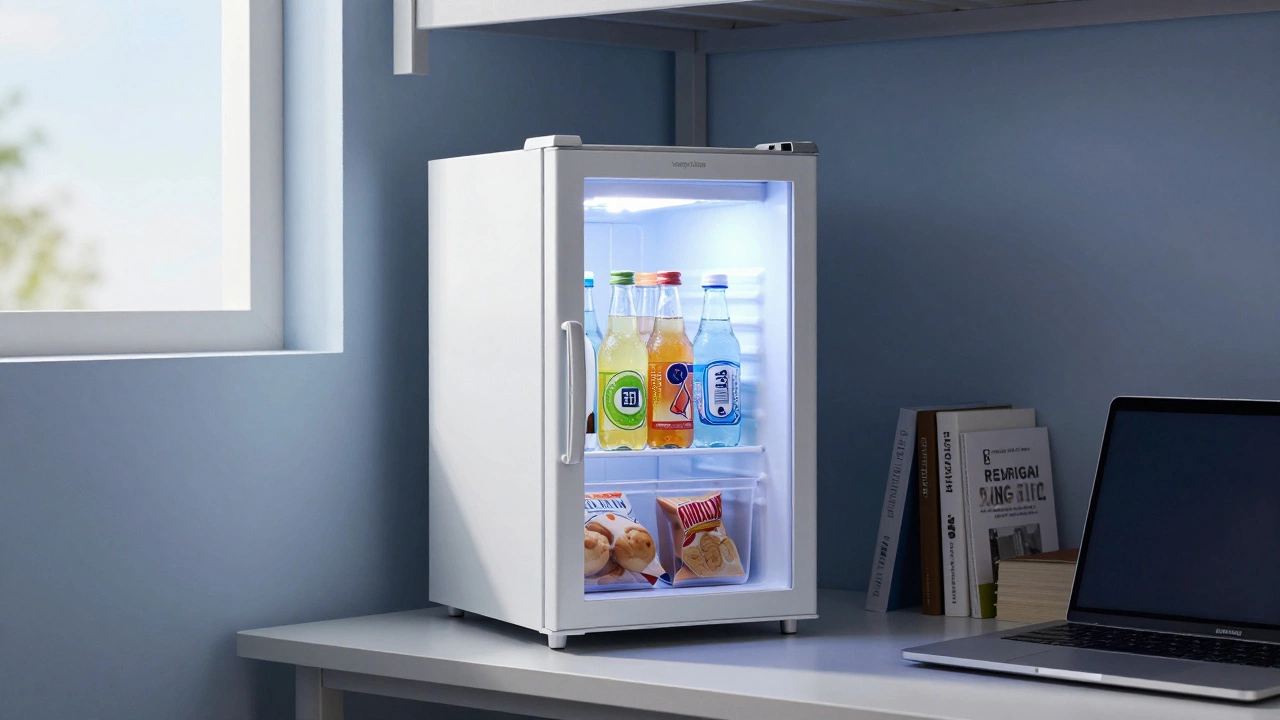
Mini Fridge Energy Cost Calculator
How Much Does Your Mini Fridge Really Cost?
Estimate your monthly electricity costs based on real-world efficiency data from Energy Star testing.
When you’re living in a dorm, a studio apartment, or just need a second fridge for snacks and drinks, a mini fridge seems like the obvious choice. But here’s the real question: are mini fridges more energy-efficient than full-size ones? The answer isn’t as simple as ‘smaller equals better.’ It depends on how you use it, what model you buy, and what you’re comparing it to.
Mini fridges use less power-but only if they’re used right
A typical mini fridge draws between 50 and 100 watts when running. That’s less than half of what a standard 18-cubic-foot refrigerator uses (which runs around 150 to 250 watts). But here’s the catch: mini fridges don’t run all the time. They cycle on and off to maintain temperature, just like larger fridges. So if you’re comparing wattage alone, yes, a mini fridge uses less energy per hour.
But energy use isn’t just about watts. It’s about total kilowatt-hours (kWh) over time. A mini fridge running 24/7 might use 1.5 to 2.5 kWh per day. A modern full-size Energy Star-rated fridge? Around 1.0 to 1.8 kWh per day. That’s right-some full-size fridges use less energy than a mini fridge, especially if the mini fridge is old, poorly sealed, or crammed full of warm food.
The real efficiency win comes when you’re using the mini fridge for its intended purpose: keeping a few drinks, condiments, or snacks cold. If you’re trying to store a week’s worth of groceries in a 1.7-cubic-foot unit, it’s working overtime. That’s when it starts eating more power than a properly sized main fridge.
Size isn’t the only factor-age and design matter more
Not all mini fridges are created equal. A 10-year-old model with a single door, basic insulation, and a compressor that’s been rattling since 2018 is going to suck up power like a vacuum cleaner. A new, Energy Star-certified mini fridge, on the other hand, can use up to 40% less electricity than older models.
Look for these features when shopping:
- Energy Star label - means it meets strict efficiency standards set by the U.S. EPA and Natural Resources Canada
- Thermoelectric cooling - quieter and uses less power, but not great for long-term food storage (better for drinks)
- Double-door design - separates freezer and fridge, reduces cold air loss
- LED lighting - uses a fraction of the power of incandescent bulbs
- Automatic defrost - prevents ice buildup, which forces the compressor to work harder
For example, the Whynter ARC-14S is a 14-bottle mini fridge with a top-mounted compressor and dual-zone cooling. It uses just 0.85 kWh per day according to Energy Star testing. Compare that to a 2012 GE mini fridge with the same capacity-it used nearly 1.9 kWh per day. That’s more than double the energy cost.
Mini fridges vs. full-size fridges: The real comparison
Let’s say you’re thinking of replacing your old full-size fridge with two mini fridges. One for drinks, one for food. Sounds smart, right? Maybe not.
Here’s a real-world breakdown based on average usage in a Vancouver apartment:
| Appliance Type | Capacity | Energy Use (kWh/day) | Annual Cost (CAD) | Best For |
|---|---|---|---|---|
| Mini Fridge (new, Energy Star) | 1.7 cu. ft. | 0.9 | $42 | Drinks, snacks, small items |
| Mini Fridge (old, non-Energy Star) | 1.8 cu. ft. | 1.8 | $84 | Not recommended |
| Full-Size Fridge (Energy Star, 18 cu. ft.) | 18 cu. ft. | 1.4 | $65 | Main food storage |
| Full-Size Fridge (old, pre-2010) | 20 cu. ft. | 2.5 | $116 | Replace ASAP |
As you can see, a modern full-size fridge can be more efficient than a cheap mini fridge. And if you’re running two mini fridges, you’re likely using more power than one good-sized main fridge.
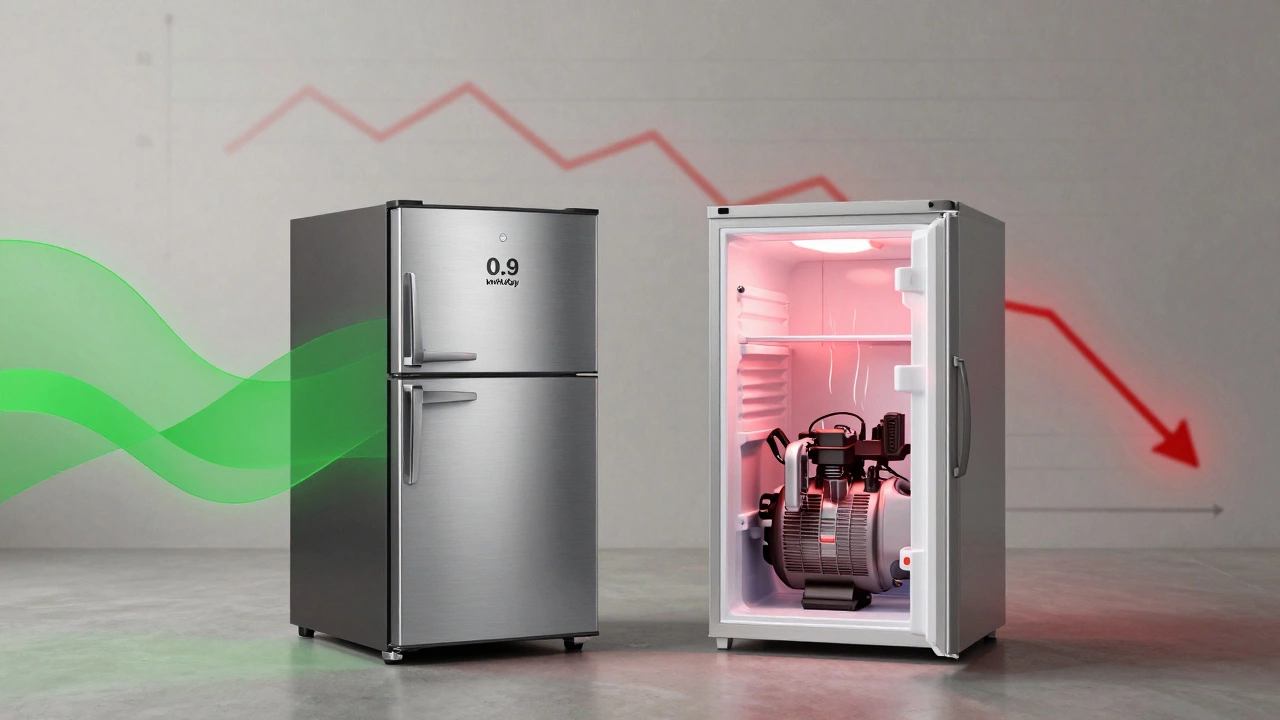
When a mini fridge actually saves you money
Mini fridges shine in three real-life scenarios:
- You’re adding one to an existing full-size fridge - Keep beer, yogurt, or baby food in the mini fridge so you’re not opening the big one every 20 minutes. Less cold air escapes. That saves energy on your main fridge.
- You live in a space without a full fridge - A dorm room, a home office, or a garage workshop. In these cases, a mini fridge is the only practical option, and it’s far more efficient than driving to the store every day for cold items.
- You’re using it as a secondary unit for seasonal items - Think summer drinks in the backyard or holiday treats in the basement. It’s better to run a small, targeted fridge than to keep your whole kitchen fridge colder than needed.
But if you’re using a mini fridge as your main fridge, you’re probably overworking it. The compressor runs longer. The temperature fluctuates. Food spoils faster. You end up buying more because things go bad. That’s not efficiency-that’s wasted money and food.
How to make your mini fridge more efficient
Even the best mini fridge can waste energy if you don’t use it right. Here’s how to keep it running lean:
- Keep it full - A fridge full of bottles and containers holds cold better than an empty one. If you don’t have enough stuff, fill empty spaces with water bottles. They act as thermal mass.
- Don’t put hot food in it - Let leftovers cool to room temperature first. Adding warm items forces the compressor to work overtime.
- Check the seal - If you can see light around the door when it’s closed, the gasket is worn. Replace it. A bad seal can increase energy use by 30%.
- Place it in a cool spot - Don’t put it next to the stove, oven, or in direct sunlight. A cooler room means less work for the compressor.
- Unplug it if you’re away for weeks - If you’re going on vacation and won’t use it, unplug it. A mini fridge left empty and unplugged uses zero power.
What to avoid: The traps that waste energy
There are three common mistakes people make with mini fridges:
- Buying the cheapest model - A $70 mini fridge from a discount store often has a weak compressor, thin insulation, and no Energy Star rating. It’ll cost you more in electricity over two years than a $200 efficient model.
- Using it as a pantry - Trying to store 10 lbs of meat, 5 cartons of milk, and 15 veggies in a 1.7 cu. ft. unit? It’s not designed for that. Overloading it blocks airflow, raises internal temps, and forces the motor to run constantly.
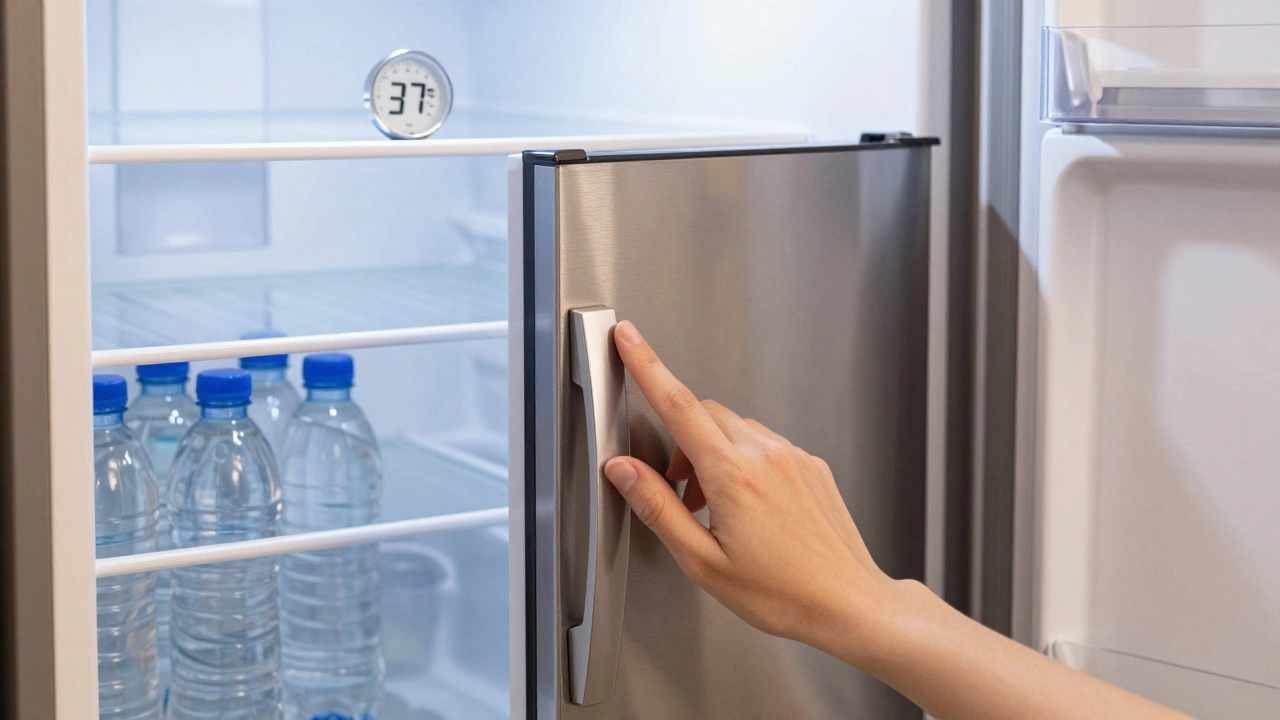
- Ignoring the temperature setting - Many people crank it to the coldest setting thinking it’ll keep things colder faster. It doesn’t. It just uses more power. Set it to 37°F (3°C) for the fridge and 5°F (-15°C) for the freezer if it has one. That’s all you need.
Bottom line: It’s about right-sizing, not just size
Mini fridges aren’t automatically energy-efficient. They’re only efficient when they’re the right tool for the job. If you need to store a week’s worth of groceries, a full-size fridge is still the better choice-even if it’s bigger. But if you’re just keeping drinks cold in your bedroom, or need a second fridge for your home office, a modern mini fridge is a smart, low-energy solution.
The key isn’t choosing small. It’s choosing smart. Look for Energy Star. Check the kWh rating. Avoid the cheapest option. And don’t use it like a full-size fridge. Do that, and you’ll save real money-without sacrificing convenience.
Are mini fridges cheaper to run than full-size fridges?
It depends. A modern Energy Star mini fridge uses less power than an old full-size fridge, but a new full-size fridge can be just as efficient-or even more so-than a poorly used mini fridge. Mini fridges save money when used as a secondary unit, not as a main fridge replacement.
How much electricity does a mini fridge use per month?
A new, Energy Star-certified mini fridge uses about 27 to 75 kWh per month, depending on size, age, and usage. Older models can use up to 55 kWh per month. For comparison, a modern full-size fridge uses 30 to 55 kWh per month.
Can a mini fridge keep food safe long-term?
Yes, if it’s a proper refrigerator with a reliable compressor and temperature control. But mini fridges are more sensitive to overloading and poor placement. If you’re storing meat, dairy, or leftovers for more than a few days, make sure the temperature stays below 40°F (4°C). Use a fridge thermometer to check.
Do mini fridges have freezers?
Some do, but they’re small and not meant for long-term freezing. A mini fridge freezer compartment can hold ice cubes or a few frozen snacks, but it won’t keep meat or ice cream solid for weeks. For real freezing, you need a proper freezer or a full-size fridge with a dedicated freezer section.
Should I unplug my mini fridge at night?
No. Turning it off at night causes the temperature to rise, which forces the compressor to work harder when it turns back on. This wastes more energy than leaving it on. Only unplug it if you’re away for a week or longer.