
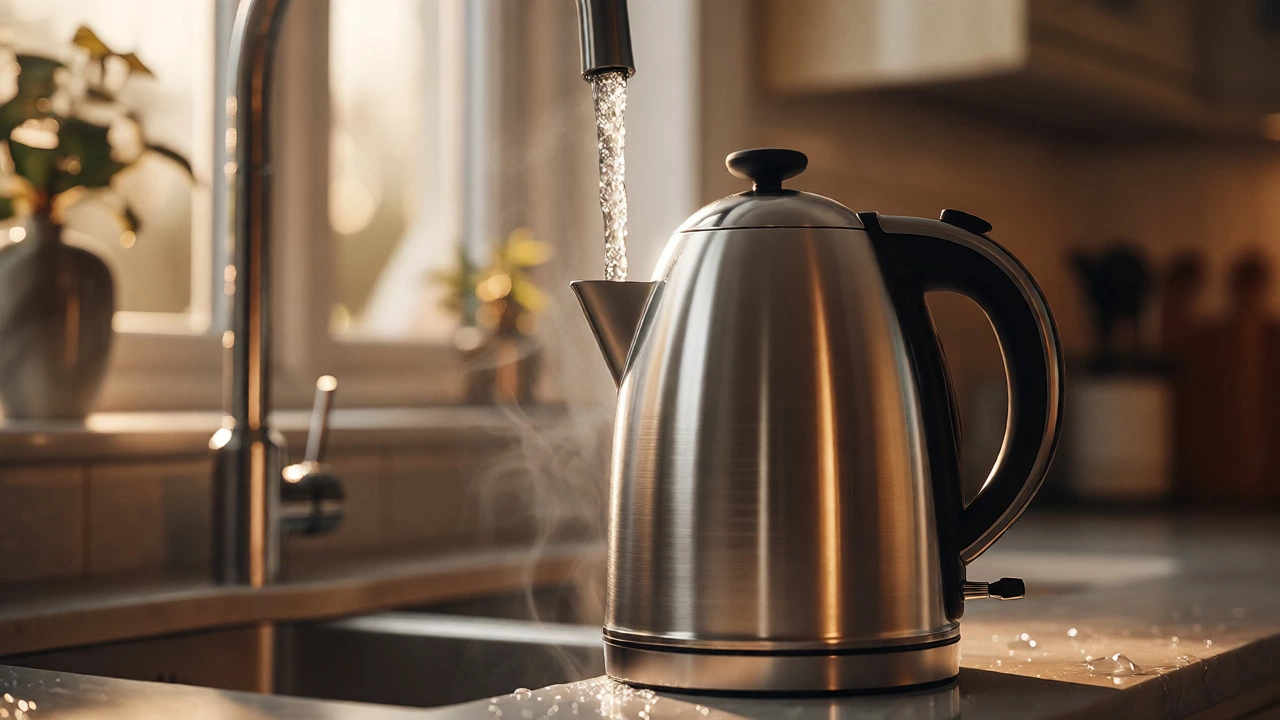
Kettle Water Source Simulator
See why manufacturers recommend cold water. Select a water source to simulate boiling conditions and view the long-term impacts on your appliance.
Select Water Source
Simulation Results
SafeWhy this happens:
Cold water minimizes rapid mineral crystallization. The heating element works efficiently without insulating scale layers, and metal leaching from pipes is minimal.
You’re rushing to make tea. The clock is ticking. You grab the electric kettle, fill it from the hot tap because you think it’ll boil faster, and hit the switch. It feels like a smart shortcut, right? Wrong. That little habit might be costing you money, damaging your appliance, and even affecting the taste of your morning brew.
Most people don’t realize that using hot tap water in a kettle is actually a bad idea. It’s not just an old wives’ tale; there are real mechanical and health reasons why manufacturers explicitly warn against it. Let’s break down exactly why cold water is the only way to go, so you can stop guessing and start boiling smarter.
The Scale Problem: Why Hot Water Ruins Your Kettle
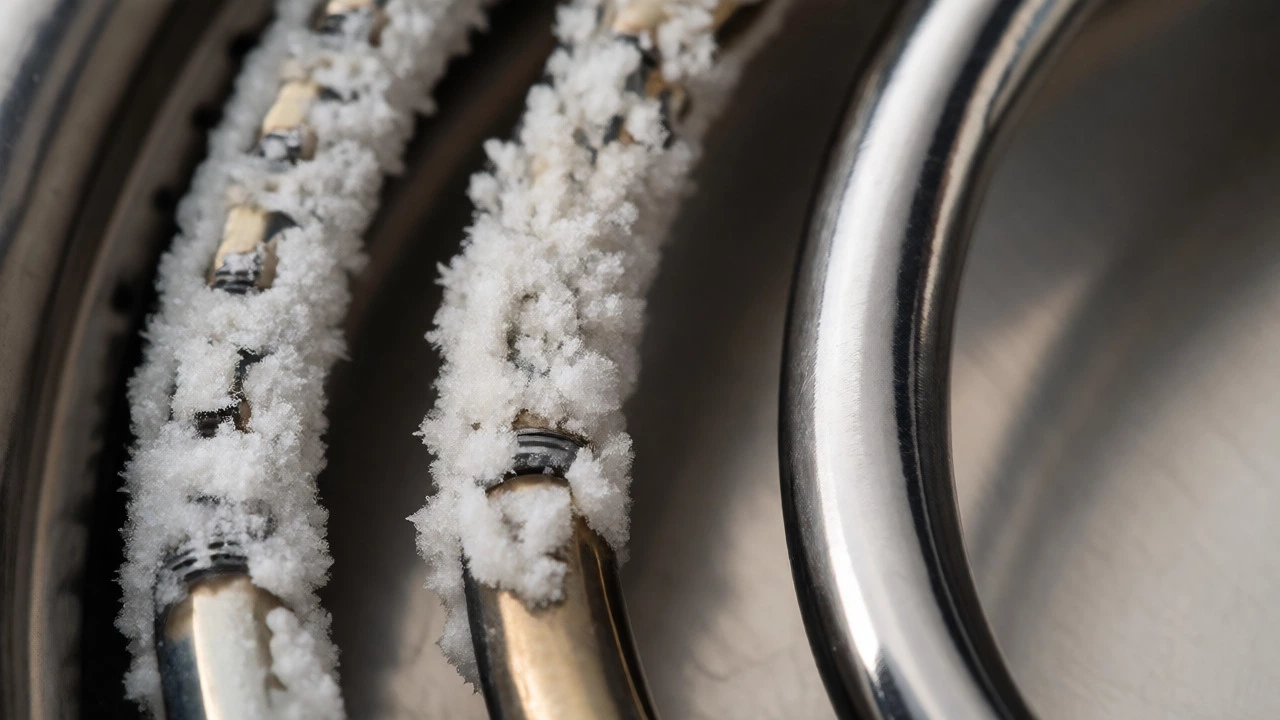
Here is the biggest issue: limescale builds up much faster when you use hot tap water. Limescale is that white, chalky residue you see on your heating element or inside the spout. It’s made mostly of calcium carbonate and magnesium, minerals naturally present in hard water areas (which covers a lot of places, including parts of Vancouver).
When water is heated, these minerals precipitate out of the solution and stick to surfaces. If you start with already-hot water, you’re skipping the initial phase where minerals stay dissolved longer. You’re essentially accelerating the crystallization process. Think of it like making rock candy; if you cool a saturated sugar solution slowly, crystals form neatly. But if you mess with the temperature rapidly or start close to saturation, things get messy and sticky fast.
Once limescale coats your heating element, two bad things happen:
- Inefficiency: The scale acts as an insulator. Your kettle has to work harder and longer to transfer heat through that crust to the water.
- Overheating: The thermostat might read the temperature incorrectly because the sensor is insulated by scale, causing the element to overheat and potentially burn out.
Using cold water slows this accumulation down significantly. It gives the minerals more time to stay in suspension before they decide to stick to the metal. Less scale means a longer lifespan for your kettle and less time spent descaling with vinegar or citric acid.
It Actually Takes Longer to Boil
This one sounds counterintuitive. If I start with water at 60°C (140°F) instead of 10°C (50°F), shouldn’t it reach 100°C (212°F) faster? In theory, yes. In practice, no.
Hot tap water isn’t as hot as you think. Most residential hot water heaters are set between 49°C and 60°C (120°F-140°F). Even if you run the tap until it’s maxed out, you’re starting at roughly half the boiling point. Meanwhile, cold tap water starts around 10°C-15°C (50°F-60°F).
But here’s the catch: hot water loses heat faster than cold water while you’re filling the kettle. By the time you finish pouring, turn off the tap, and put the lid on, that “hot” water has cooled down slightly due to evaporation and contact with the cooler air and kettle walls. More importantly, many modern kettles have safety features that detect rapid temperature changes. Some might pause or cycle the power differently if the input temperature is too high, negating any speed advantage.
Furthermore, if your kettle has a variable temperature setting (like those popular for brewing green tea or coffee), starting with unpredictable hot tap water makes precise temperature control nearly impossible. You want consistency, not a gamble.
The Health Risk: Lead and Pipe Sediment
Let’s talk about what’s hiding in your pipes. When water sits in your home’s plumbing, especially in older homes, it interacts with the materials of the pipes. If you have copper pipes with lead solder (common in houses built before 1986 in Canada and the US), lead can leach into the water.
Hot water dissolves metals much more aggressively than cold water. This is why plumbers always tell you to drink and cook with cold water only. If you fill your kettle from the hot tap, you’re getting a higher concentration of lead, copper, and other sediments that have settled in the hot water tank or pipes overnight.
While occasional exposure isn’t going to hurt you, doing this daily adds up. For pregnant women, infants, and young children, minimizing lead intake is critical. Using cold water ensures you’re getting the cleanest possible source from your municipal supply before it hits the heating element.
| Feature | Cold Tap Water | Hot Tap Water |
|---|---|---|
| Limescale Buildup | Slow and manageable | Rapid and heavy |
| Boiling Efficiency | Optimal element performance | Potential overheating risks |
| Contaminant Levels | Lower lead/metal leaching | Higher lead/metal leaching |
| Taste Clarity | Crisp and neutral | Can taste "stale" or metallic |
Taste Matters: Why Tea Tastes Better with Cold Water
If you care about flavor, this section is for you. Have you ever noticed that tea made with hot-tap water tastes flat or slightly stale? There’s a scientific reason for that.
Water contains dissolved oxygen. This oxygen plays a huge role in how we perceive flavor. Cold water holds more dissolved oxygen than warm water. When you boil cold water, you retain enough oxygen during the heating process to keep the tea leaves releasing their aromatic compounds effectively.
Hot tap water has often been sitting in a tank, where it’s lost much of its dissolved oxygen. Boiling deoxygenated water results in a duller cup of tea. It lacks that bright, crisp edge. Baristas and tea sommeliers swear by fresh, cold water for this exact reason. If you’re spending good money on loose-leaf tea or specialty coffee beans, don’t ruin the experience with stagnant, oxygen-depleted water.
Energy Costs: Is It Really Saving You Money?
People use hot tap water to save electricity. They figure if the water heater does some of the work, the kettle uses less power. On paper, this looks logical. In reality, the savings are negligible, and the costs might outweigh them.
First, consider the energy loss. Your central water heater keeps a large volume of water hot 24/7, losing heat to the surrounding air (standby losses). Drawing hot water from the tap requires running the pump and mixing valves, which uses energy. Second, because hot tap water leads to faster scale buildup, your kettle becomes less efficient over time. A kettle with 3mm of scale can take up to 10% longer to boil, eating back any initial energy savings.
Third, running the hot tap to wait for the water to heat up wastes gallons of cold water down the drain. In Vancouver, where water conservation is important, this is wasteful. Filling with cold water is instant. No waiting, no waste.
How to Maintain Your Kettle for Peak Performance
Since you’re now committed to using cold water, let’s make sure your kettle stays healthy. Here’s a quick maintenance routine to extend its life:
- Empty After Use: Don’t leave water sitting in the kettle overnight. Stagnant water encourages mineral settling and bacterial growth.
- Descaling Schedule: Every month (or every two weeks if you live in a very hard water area), mix equal parts water and white vinegar (or use citric acid powder). Boil it, let it sit for 15 minutes, then rinse thoroughly.
- Wipe the Exterior: Keep the base dry. Moisture on the electrical contacts can cause corrosion or short circuits.
- Check the Filter: Many kettles have a mesh filter in the spout. Rinse it under cold water weekly to remove trapped scale particles.
By sticking to cold water and regular cleaning, you’ll likely double the lifespan of your appliance. Instead of replacing a $50 kettle every two years because the element burned out, you could be using it for five or six.
Frequently Asked Questions
Does using hot tap water void my kettle warranty?
Often, yes. Many manufacturer manuals specifically state that only cold drinking water should be used. If a technician finds excessive scale damage consistent with hot water usage, they may deny a warranty claim. Always check your specific user guide.
Is filtered water better than cold tap water?
Yes, if your local water is very hard. A carbon filter removes chlorine and some sediment, improving taste. However, standard pitcher filters don’t remove all calcium and magnesium, so you’ll still need to descale regularly. Reverse osmosis systems remove almost all minerals, preventing scale entirely but sometimes making water taste "flat" due to lack of minerals.
What if I’m in a hurry? Can I use warm water?
Warm water (around 40°C/100°F) is generally safe and won’t cause immediate harm, but it still accelerates scale compared to cold water. If you’re truly in a rush, it’s okay occasionally, but make it a habit to return to cold water to protect the appliance long-term.
Why does my new kettle smell weird?
New kettles often have a plastic or rubber odor from the manufacturing process. To fix this, boil a mixture of water and lemon slices twice, then discard. Using cold water helps prevent this smell from becoming permanent by avoiding rapid thermal shock to the plastics.
Does cold water really taste better?
Subjectively, most people prefer it. Objectively, cold water retains more dissolved gases and fewer leached metals. Hot tap water can pick up flavors from the water heater tank (often made of steel or glass-lined steel) and pipes, resulting in a metallic or stale aftertaste.
Final Thoughts: Make the Switch Today
Changing your habit takes ten seconds. Next time you need hot water, turn the handle to cold. Fill the kettle. Wait. Yes, it might take 10 seconds longer to boil, but you’re saving your wallet, protecting your health, and enjoying better-tasting beverages. It’s a small change with a big payoff.
If you’re looking for a kettle that handles hard water well, look for models with stainless steel interiors and replaceable filters. Avoid cheap plastic elements if possible. And remember: cold water in, hot water out. Simple as that.