
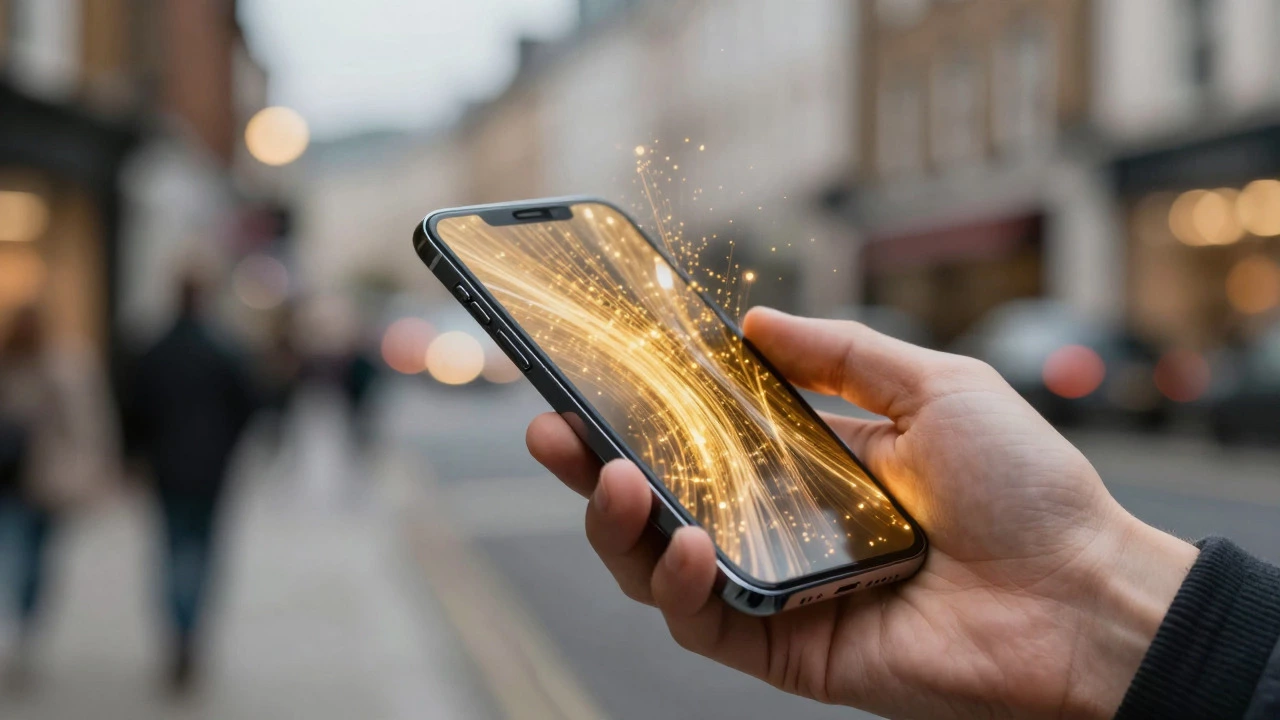
Are You Ready for the Post-Smartphone Era?
The smartphone era is fading. By 2026, AR glasses and wearables are taking over. Answer these questions to see how ready you are for this shift and what device might replace your phone.
Your Result:
Look at your pocket. That slab of glass and metal is the most powerful tool humanity has ever created, yet it feels increasingly like a relic. We stare down at it while walking, miss conversations because we’re texting, and carry a heavy brick just to check a notification. By mid-2026, the industry consensus is shifting: the smartphone era isn’t ending with a bang, but with a fade into the background. The question isn't if cell phones will be replaced, but what will take their place.
The short answer? It won’t be one single device. It will be a combination of Augmented Reality (AR) Glasses that overlay digital information onto the real world, combined with lightweight wearable computers that handle processing and connectivity. This shift moves us from looking at screens to looking through them.
The Death of the Slab: Why Smartphones Are Peaking
To understand what comes next, you have to look at why the current model is breaking. Since the launch of the first iPhone in 2007, the design language hasn’t changed much: a rectangular screen, a camera bump, and a battery. But the user experience has hit a wall. We are suffering from "screen fatigue." Our attention spans are fragmented, and our necks hurt from looking down.
In 2026, major tech giants are quietly pivoting. Apple’s visionOS ecosystem, Meta’s Ray-Ban collaborations, and Samsung’s investment in foldable and rollable displays all point to the same conclusion: the static screen is obsolete. The central entity here is Spatial Computing, which replaces the 2D interface of iOS or Android with a 3D environment that exists around you. Instead of tapping a tiny icon on a 6-inch display, you interact with holographic interfaces using eye tracking and subtle hand gestures.
The Leading Contender: Augmented Reality Glasses
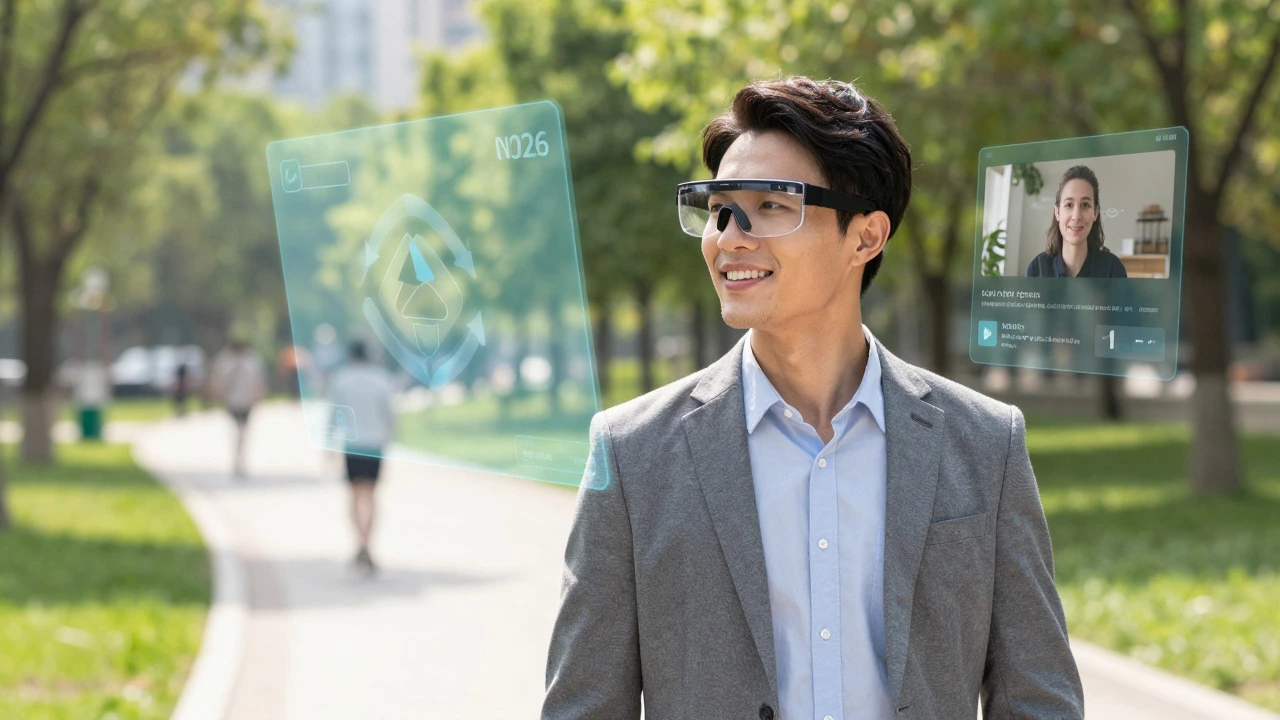
If you had to bet on one form factor to replace the phone, it’s AR glasses. Unlike Virtual Reality (VR) headsets, which isolate you from the world, AR glasses keep you present. They project navigation arrows onto the sidewalk, translate foreign menus in real-time, and allow you to make video calls where the person appears to be sitting across from you.
By 2026, the hardware constraints that plagued early models-bulkiness, poor battery life, and low resolution-are largely solved. Micro-OLED displays now offer pixel densities indistinguishable from the naked eye. Batteries last a full workday thanks to efficient chipsets from Qualcomm and MediaTek. The key difference between these glasses and smartglasses of the past is the integration of AI. These aren't just cameras; they are intelligent assistants that understand context.
| Feature | Smartphone (Current) | AR Glasses (Future) |
|---|---|---|
| Interface | Touchscreen (2D) | Gaze & Gesture (3D/Spatial) |
| Immersion | Isolating (looking down) | Integrated (looking through) |
| Input Method | Fingers typing | Voice, Eye-tracking, Neural links |
| Battery Life | 1-2 days | All-day (with case swapping) |
| Social Acceptance | Universal | Growing rapidly in 2026 |
The Role of Artificial Intelligence
You can’t talk about the post-smartphone world without talking about AI. In the smartphone era, you had to actively search for information. You opened an app, typed a query, and waited. In the new era, Generative AI pushes information to you before you even ask. Imagine walking into a store and seeing prices and reviews float above products. Or having a meeting where an AI assistant summarizes key points and adds them to your calendar automatically, all via a whisper-quiet earpiece.
This shifts the burden from human memory to machine assistance. The phone was a tool you operated; the AR ecosystem is an environment that operates for you. Companies like Google and Microsoft are integrating large language models directly into the operating system of these wearables, making the device feel less like a gadget and more like a second brain.
Other Emerging Form Factors
While AR glasses are the frontrunner, they aren't the only players. Several other technologies are vying for the role of primary communication device:
- Smart Rings and Bands: Devices like the Oura Ring or Samsung Galaxy Ring are becoming more than fitness trackers. With haptic feedback and voice control, they serve as minimalist notifications centers. For many, this might replace the phone for basic alerts, though not for media consumption.
- Projectors: Some startups are developing wrist-worn projectors that cast a virtual keyboard and screen onto any flat surface. This solves the input problem for users who still prefer tactile typing.
- Brain-Computer Interfaces (BCI): Still in early stages, companies like Neuralink are working on direct neural connections. While unlikely to replace phones by 2030, BCI could eventually allow you to "think" a text message, eliminating the need for physical input entirely.
Barriers to Adoption: Privacy and Social Norms
Why don’t we all have AR glasses already? It’s not just technology; it’s sociology. There is a significant privacy concern. If everyone is wearing cameras that record everything they see, public spaces lose their anonymity. Legislation in the EU and California is already catching up, requiring visible indicators when recording is active.
Then there’s the social awkwardness. Looking at someone through tinted lenses can feel impersonal. Early adopters in 2026 report that transparent lenses and discreet designs are crucial for mainstream acceptance. The goal is for the technology to disappear, leaving only the utility.

The Transition Period: What to Expect in the Next 5 Years
The replacement won’t happen overnight. Think of it like the transition from landlines to mobiles, or desktops to laptops. For the next decade, you’ll see a hybrid period. People will carry both a slimmed-down smartphone (perhaps just a battery pack and processor hub) and their AR glasses. Over time, the phone will shrink until it’s no longer necessary to carry separately.
For consumers, this means investing in ecosystems rather than single devices. Choose a platform (Apple, Meta, Google) that offers seamless integration between your watch, glasses, and home devices. The value isn’t in the hardware alone, but in how well the software connects your physical and digital lives.
Conclusion: A More Connected World
The device that replaces the cell phone won’t look like a phone. It will look like eyewear, jewelry, or nothing at all. The core function-connecting people and accessing information-remains, but the method becomes invisible. We move from carrying a window to the internet to living inside it. As we stand in 2026, the pieces are falling into place. The future isn’t in your pocket; it’s in your eyes.
Will AR glasses completely replace smartphones?
Eventually, yes. However, the transition will take 5-10 years. Initially, smartphones will act as companion devices or charging hubs for AR glasses. As battery technology and processing power improve, the standalone phone will become obsolete for most users.
How much do AR glasses cost in 2026?
Entry-level AR glasses start around $300-$500, similar to premium sunglasses. High-end models with advanced spatial computing capabilities range from $800 to $1,500. Prices are expected to drop as manufacturing scales up.
Are AR glasses safe for eyesight?
Current research suggests AR glasses are safer than smartphones because they encourage looking up and moving around rather than staring down at a close-up screen. However, prolonged use may cause eye strain, so experts recommend taking regular breaks.
What happens to my apps if I switch to AR?
Most major apps (social media, banking, maps) are being redesigned for spatial interfaces. Your data remains synced via cloud services. Legacy 2D apps can still be viewed on virtual screens within the AR environment during the transition period.
Which company is leading the AR revolution?
Apple, Meta, and Google are the primary competitors. Apple leads in ecosystem integration and build quality, Meta dominates in social features and affordability, while Google excels in AI integration and search functionality. The market is highly competitive in 2026.