
Coffee Savings & Profit Calculator
Your Coffee Habits
Results
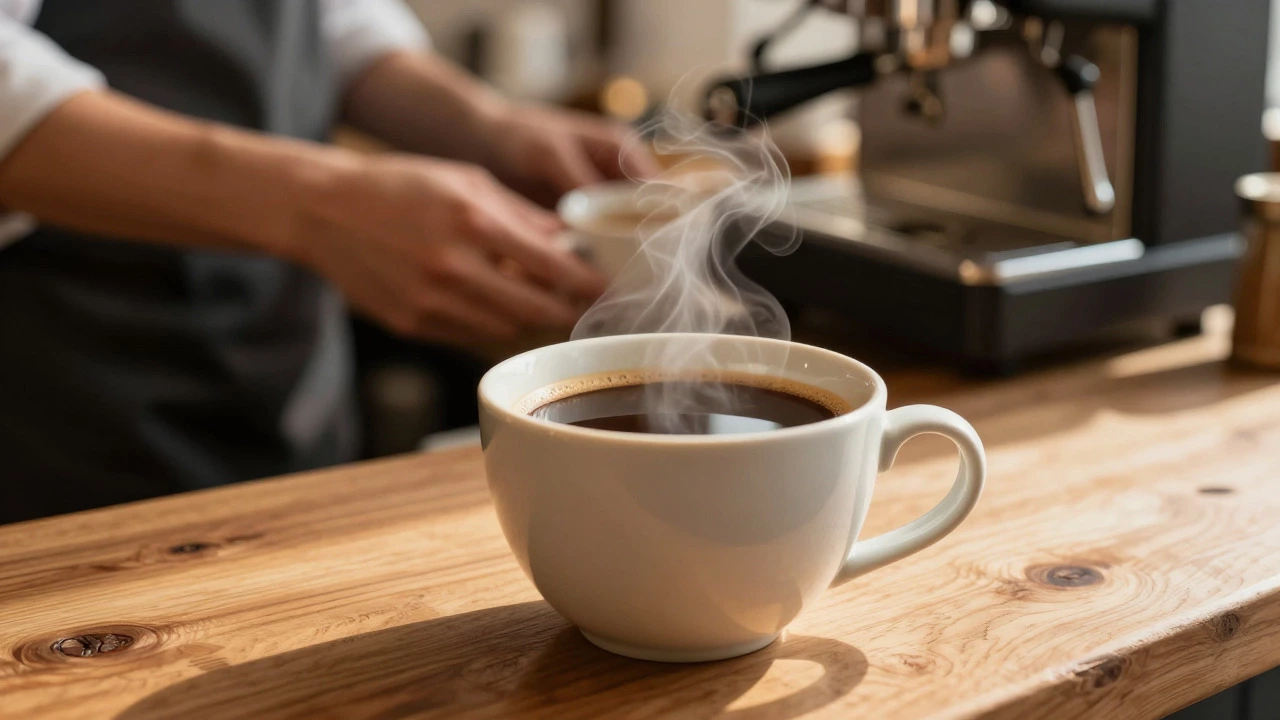
That double-shot latte you grabbed this morning probably cost you $5.50. You didn't think twice about it. But if you were running the shop, that transaction tells a much more complex story. The gap between what you paid and what the barista spent to make that drink is where the magic-and the money-happens. This gap is known as the profit margin, and in the coffee industry, it is notoriously high compared to almost any other food or beverage product.
However, "high margin" doesn't automatically mean "easy money." Many new cafe owners look at these numbers and assume they will print cash from day one. They quickly learn that while the markup on the liquid itself is massive, the overhead costs can eat those profits alive if you aren't careful. Understanding exactly how much profit sits in that ceramic mug is the first step to deciding whether to open your own shop or simply upgrade your home setup with a better machine.
The Breakdown: Cost vs. Price
To understand the profit, we have to strip away the branding, the ambiance, and the Wi-Fi password. We need to look at the raw materials. In the coffee industry, this is often referred to as the Cost of Goods Sold (COGS). For a standard 12-ounce cup of brewed coffee, the direct costs are surprisingly low.
| Item | Average Cost (USD) | Notes |
|---|---|---|
| Coffee Beans | $0.20 - $0.30 | Based on $15-$20/lb specialty beans |
| Paper Cup & Lid | $0.10 - $0.15 | Higher for custom printed cups |
| Milk (for lattes/cappuccinos) | $0.30 - $0.40 | Varies by local dairy prices |
| Syrup/Flavoring | $0.05 - $0.10 | Optional add-on |
| Total Direct Cost | $0.65 - $0.95 | Before labor or rent |
If you sell that same cup for $5.00, your gross profit is roughly $4.00 to $4.35. That translates to a gross profit margin of about 80% to 85%. Compare that to a burger, which might have a 60% margin, or a glass of wine, which hovers around 70-75%. Coffee is one of the most profitable commodities you can sell by volume.
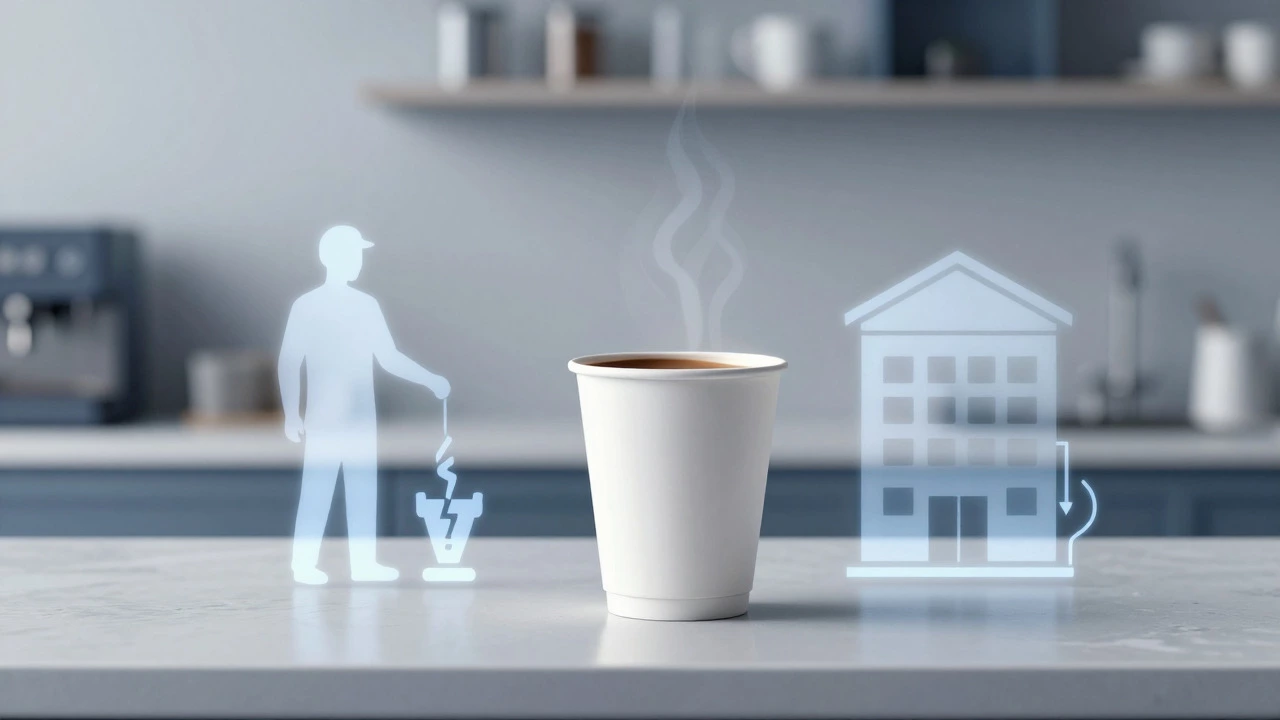
But here is the catch: Gross profit is not net profit. You haven't paid the barista yet. You haven't paid the electricity bill for the espresso machine. You haven't covered the rent for that prime corner spot downtown. These operating expenses are what turn an 80% gross margin into a much slimmer net profit.
The Hidden Costs: Labor and Overhead
When people ask about coffee profitability, they usually focus on the beans. But in reality, labor is the biggest expense for any coffee business. A skilled barista isn't just pouring water; they are managing inventory, cleaning equipment, handling payments, and creating a customer experience. In major cities like Vancouver or New York, minimum wage laws and living wage expectations push labor costs up significantly.
Labor typically accounts for 25% to 35% of total sales. Rent and utilities can take another 10% to 15%. Then there are smaller but necessary costs: credit card processing fees (usually 2.5% to 3%), insurance, marketing, and waste disposal. If you add all these operational costs to the direct material costs, your net profit margin-the actual money left over for the owner-usually settles between 10% and 15% for a well-run independent cafe.
This means that for every $5.00 cup of coffee sold, only 50 cents to 75 cents ends up as pure profit. It sounds small, but scale matters. If you sell 200 cups a day, that’s $100 to $150 in daily profit. Over a year, that adds up to a respectable income. However, if sales drop to 100 cups a day due to bad weather or competition, that thin margin disappears entirely.
Home Brewing: The Ultimate Profit Hack
Now, let's flip the script. What if you aren't opening a cafe, but you're looking to save money by brewing at home? The math works in your favor even more dramatically here because you eliminate the largest variable: labor and rent.
Let's say you buy a bag of high-quality specialty coffee beans for $18. That bag weighs 1 pound (approx. 454 grams). A standard single-serve espresso shot uses about 18-20 grams of coffee. That means one bag yields roughly 22 shots. If you stretch that to a larger drip coffee cup, you might get 30-40 servings depending on strength preference.
Divide $18 by 30 servings, and your cost per cup is just $0.60. Add the negligible cost of electricity to run your machine and maybe $0.05 for a reusable mug wash, and you are looking at less than $0.70 per cup. Compared to the $5.50 store-bought price, you are saving nearly $5 per cup. If you drink two coffees a day, five days a week, you save approximately $50 a week, or $2,600 a year.
This is why investing in a good home coffee machine is one of the highest-return financial decisions a coffee lover can make. You don't need a $3,000 commercial-grade La Marzocco to get great results. Modern consumer machines offer incredible value.
Machine Types and Their Impact on Cost
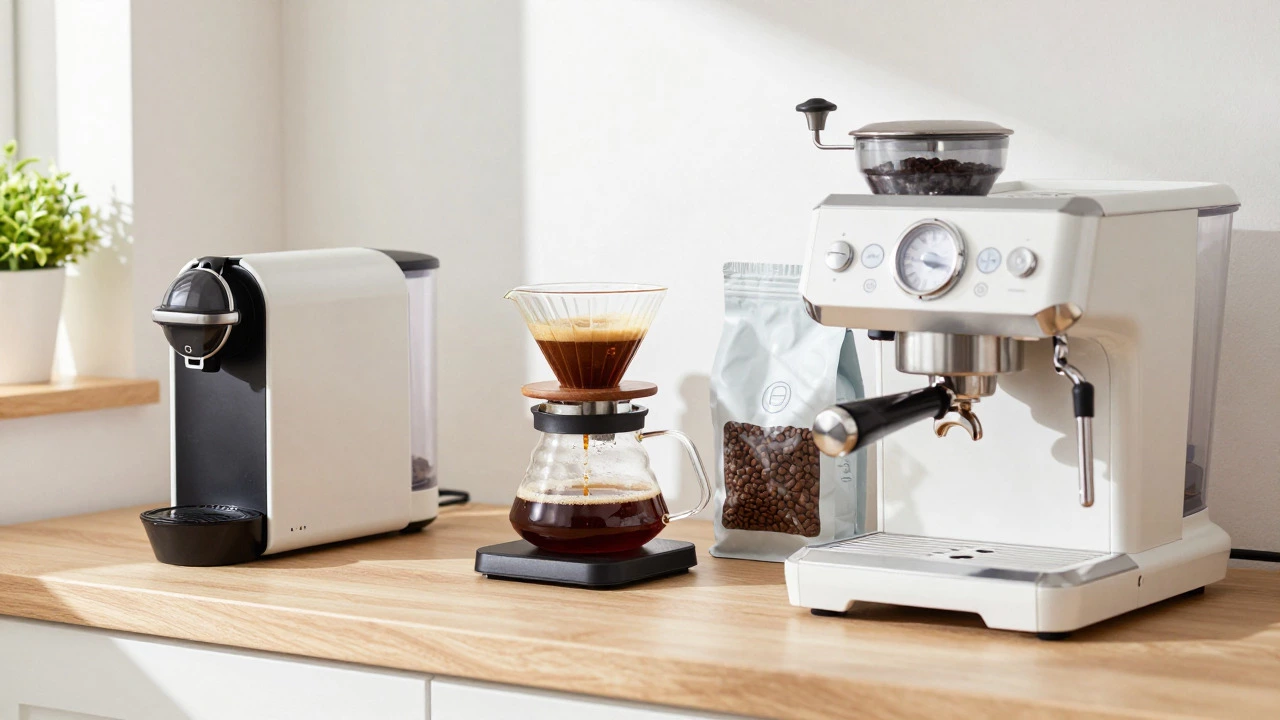
The type of machine you choose affects both your initial investment and your long-term cost per cup. Let's break down the three main categories you'll encounter when shopping for deals.
| Machine Type | Initial Cost | Cost Per Cup | Best For |
|---|---|---|---|
| Pod/Capsule Systems | $100 - $300 | $0.40 - $0.60 | Convenience and speed |
| Drip Coffee Maker | $50 - $200 | $0.15 - $0.30 | Bulk brewing and families |
| Espresso Machine (Semi-Auto) | $300 - $1,500+ | $0.30 - $0.50 | Quality and customization |
| Bean-to-Cup Automatic | $500 - $2,000+ | $0.40 - $0.60 | Balance of quality and ease |
Pod systems, like Nespresso or Keurig, seem expensive per unit ($0.40-$0.60), but they include the packaging and convenience factor. You never have to grind beans or clean a portafilter. Drip makers are the cheapest option per cup because you brew large batches at once, utilizing economies of scale. However, the quality of drip coffee varies wildly based on the filter and water temperature control.
Espresso machines require the highest skill level and maintenance. You need to buy a grinder separately (a crucial component often overlooked), tamp the grounds correctly, and purge the steam wand after every milk drink. But the payoff is a café-quality beverage at home for less than half the price of buying it out. Semi-automatic machines give you control over extraction time and pressure, allowing you to tweak the flavor profile. Fully automatic bean-to-cup machines handle grinding, tamping, and brewing internally, offering a middle ground between pod convenience and espresso quality.
Factors That Swing the Profit Needle
Whether you are a business owner or a home brewer, several external factors can drastically change your bottom line. One of the biggest is the source of your beans. Commodity coffee, sourced from large-scale farms, can cost as little as $3 per pound. Specialty coffee, which is roasted locally and scored highly by Q-graders, can exceed $30 per pound. While the difference in cost per cup is only a few cents, the perceived value changes everything. Customers will pay $6 for a specialty pour-over but might balk at paying $4 for generic diner coffee.
Water quality is another silent killer of profit and taste. Bad water ruins expensive beans. In areas with hard water, scale builds up inside machines, reducing efficiency and eventually breaking heating elements. Investing in a filtration system protects your machine's lifespan and ensures consistent taste. For businesses, this means fewer repair bills. For homeowners, it means your $800 machine lasts ten years instead of three.
Finally, consider the "waste" factor. In a commercial setting, spoiled milk, spilled drinks, and under-extracted shots thrown out during training add up. At home, you might discard a bad shot because you dialed in the grind size incorrectly. Minimizing waste is key to maximizing profit. Learning proper technique-whether it's steaming milk without burning it or dialing in your espresso grind-directly impacts how much of your input becomes a consumable product.
Decision Time: Buy or Brew?
So, what is the average profit on a cup of coffee? For a cafe, it's a slim 10-15% net margin after all bills are paid. For you, at home, it's a savings of 80-90% compared to retail prices. The coffee industry thrives on convenience and experience, not just the caffeine hit. When you pay $5 for a latte, you are paying for the chair, the atmosphere, and the person who made it.
If your goal is to save money, the path is clear. Invest in a reliable machine, buy whole beans from a reputable roaster, and learn the basics of brewing. You don't need to be a master barista to enjoy a superior cup of coffee for a fraction of the price. Start with a mid-range drip maker or a basic espresso machine, and treat it as a long-term investment. The returns compound every single morning.
How much does it actually cost to make a cup of coffee at home?
Depending on the method, it ranges from $0.15 for drip coffee to $0.50 for espresso using high-end beans. This includes the cost of the beans, electricity, and minimal wear-and-tear on the machine. It excludes the initial purchase price of the equipment.
Is it cheaper to buy coffee pods or whole beans?
Whole beans are significantly cheaper per ounce. Pods charge a premium for convenience and packaging. While pods might cost $0.40-$0.60 per cup, whole beans used in a manual or semi-auto machine can cost as little as $0.15-$0.30 per cup, assuming no waste.
What is the most profitable coffee drink to sell?
Black coffee has the highest margin because it requires only water and beans. However, lattes and cappuccinos often generate higher total revenue per transaction because customers are willing to pay more for milk-based drinks, despite the slightly higher ingredient cost.
Do I need a grinder for an espresso machine?
Yes, absolutely. Pre-ground coffee loses its freshness quickly and lacks the precise particle size needed for proper espresso extraction. A burr grinder is essential for achieving café-quality results at home.
How long does it take to recoup the cost of a home espresso machine?
If you drink two coffees a day and would otherwise spend $5 each, you save $10 daily. A $500 machine pays for itself in 50 days, or roughly seven weeks. After that, every cup is pure savings.