
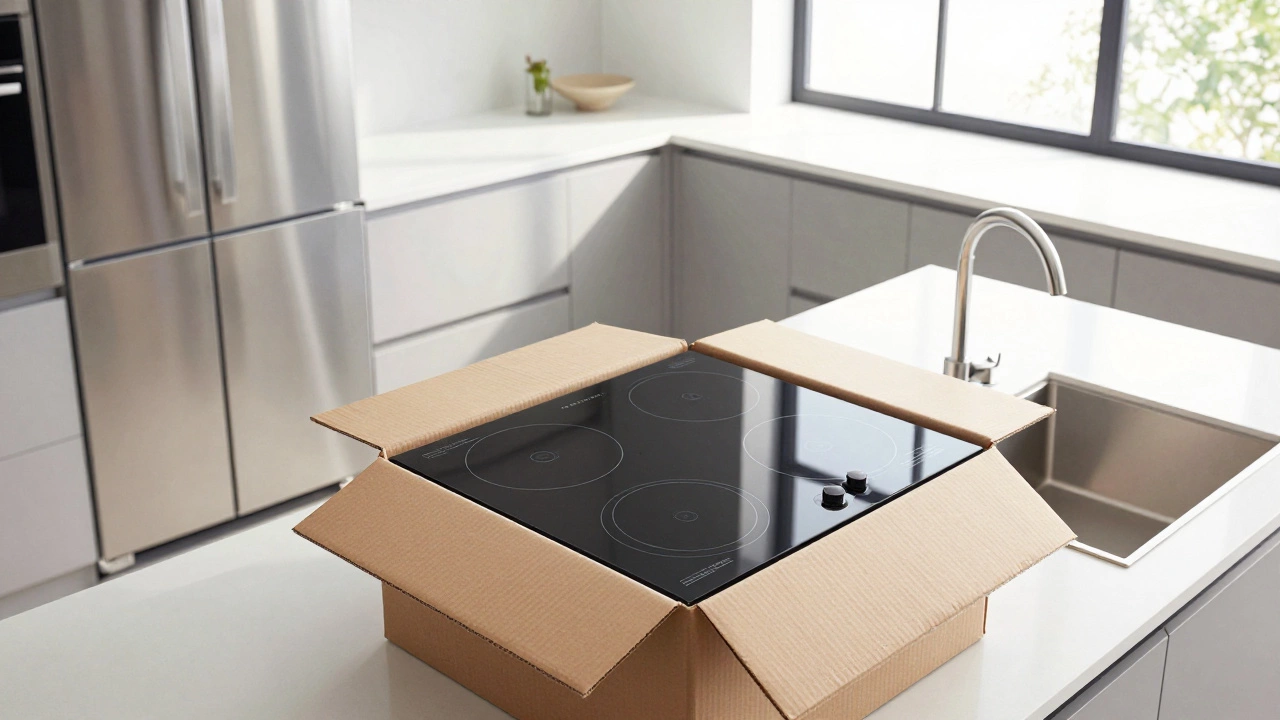
IRA Kitchen Appliance Savings Calculator
Select Your Upgrades
Enter estimated costs for new equipment.Total Estimated Savings
Based on federal tax credits + utility rebates
Savings Breakdown
- Federal Tax Credits: $0.00
- Utility Rebates: $0.00
Did you know?
If you bundle these upgrades over multiple years, you can stack these annual limits to approach the "$8,000" figure mentioned in headlines when combined with HVAC upgrades.
There is a lot of noise around the Inflation Reduction Act (IRA) rebates. You might have seen headlines screaming about an "$8,000 rebate" for upgrading your home. It sounds too good to be true, and honestly, it’s a bit misleading if you don’t know the details. The short answer? There isn't a single check for $8,000 that you can cash in at the post office for buying a new fridge or stove.
Instead, the law creates a complex system of tax credits and rebates designed to lower your energy bills by switching to efficient electric appliances. If you bundle several upgrades together-like replacing your gas furnace, water heater, and multiple kitchen appliances-you can approach that $8,000 figure over time. But for most people looking specifically at kitchen appliance bundles, the math works differently.
How the $8,000 Number Actually Works
To understand where the money comes from, we need to look at the two main buckets of incentives created by the IRA: the Residential Clean Energy Credit and the Home Energy Property Improvement Credit. These are not direct rebates sent to your bank account; they are tax credits that reduce the amount of income tax you owe when you file your returns.
The Residential Clean Energy Credit allows you to claim 30% of the cost of qualifying improvements. This includes heat pumps, solar panels, and battery storage. While this doesn't directly cover standard kitchen appliances like refrigerators or dishwashers, it sets the stage for whole-home electrification.
The real meat for kitchen upgrades lies in the Home Energy Property Improvement Credit. Here is the breakdown for 2026:
- Energy Efficient Home Improvements Credit: You can get up to $1,200 per year in tax credits for installing qualified energy-efficient property. This includes things like smart thermostats, windows, doors, and insulation.
- Advanced Energy Efficiency Home Improvement Credit: This is the big one for appliances. You can claim 30% of the cost of qualifying energy-efficient appliances, up to specific annual limits.
So, how do we get to $8,000? If you combine the maximum annual credits over several years, plus potential state-level rebates and utility company offers, the total savings can reach that number. For example, if you replace your HVAC system, water heater, and all major kitchen appliances over three years, stacking these federal credits with local incentives could easily sum up to $8,000 or more in value. However, you cannot spend $8,000 on just a refrigerator and expect a full refund.
Kitchen Appliance Eligibility: What Counts?
Not every shiny new gadget qualifies for the IRA incentives. The government has strict criteria based on energy efficiency standards. To qualify for the tax credit, your new kitchen appliances must meet specific requirements set by the Department of Energy (DOE).
| Appliance Type | Requirements | Max Annual Credit |
|---|---|---|
| Electric Heat Pump Clothes Dryer | MUST be ENERGY STAR certified | $200 |
| Electric Heat Pump Water Heater | MUST be ENERGY STAR certified | $200 |
| Heat Pump Space Heater / AC | Must meet DOE efficiency standards | $600 |
| Electric Cooking Range / Cooktop | Must be ENERGY STAR certified | $600 |
| Dishwasher | Must be ENERGY STAR certified | $600 |
| Refrigerator | Must be ENERGY STAR certified | $600 |
Note that gas appliances generally do not qualify unless they are part of a broader electrification plan that meets specific low-emission criteria, which is rare for standard consumer units. The push is clearly toward electric and heat pump technology. Also, keep in mind that these limits are per year. If you buy a qualifying dishwasher today and a qualifying refrigerator next year, you can claim the credit for both in their respective years.
Bundling Your Upgrades for Maximum Savings
If you are planning a kitchen renovation, timing is everything. Since the tax credits are capped annually, you might want to spread out your purchases. However, there is another angle: utility rebates and state programs.
Many electric utilities offer immediate rebates for switching from gas to electric induction cooktops or heat pump dryers. These rebates are often stacked on top of the federal tax credit. For instance, a utility company might give you $500 off an induction range, and then you can still claim the federal tax credit for the remaining cost, up to the limit.
Consider this scenario:
- You buy an ENERGY STAR certified induction cooktop for $1,200.
- Your utility gives you a $400 rebate immediately.
- You pay $800 out of pocket.
- You claim 30% of the original cost ($360) as a tax credit, but since the cap for cooking ranges is $600, you claim the full $360 (or up to $600 if the appliance was more expensive).
- Net cost to you: $440.
This is how you maximize value. By bundling your kitchen appliance purchases with other home improvements like insulation or a smart thermostat, you hit the higher tiers of the Home Energy Property Improvement Credit. The key is documentation. Keep every receipt, certification label, and proof of payment. The IRS will ask for evidence that the appliance met the efficiency standards at the time of purchase.

Common Pitfalls to Avoid
Don't assume any "energy-efficient" label qualifies. Look specifically for the ENERGY STAR certification mark. Without it, the appliance does not count toward the IRA credit. Also, be careful with used appliances. The tax credit applies only to new equipment installed in your primary residence in the United States. If you live in a rental property, you likely cannot claim these credits unless you own the building.
Another mistake is confusing rebates with tax credits. A rebate reduces the price at checkout. A tax credit reduces your tax bill later. If you don't owe enough taxes, you won't benefit from the credit. For example, if your tax liability is $500 but you qualify for a $1,000 credit, you only save $500. Some credits are non-refundable, meaning you don't get a check for the difference. Always consult a tax professional to understand your specific situation.
State and Local Incentives
Federal incentives are just the beginning. Many states have their own programs that complement the IRA. California, New York, and Massachusetts, for example, have robust clean energy funds that offer additional rebates for electric appliances. Check your state's energy department website or use resources like DSIRE (Database of State Incentives for Renewables & Efficiency) to find local opportunities.
Some cities also offer free installation services for heat pump water heaters or clothes dryers as part of air quality improvement initiatives. These programs often target low-to-moderate-income households, so eligibility varies. Don't overlook these options-they can significantly reduce your upfront costs.
Is the $8,000 rebate a direct payment?
No, the $8,000 figure is a cumulative estimate of potential savings through federal tax credits, utility rebates, and state incentives over several years. It is not a single direct payment or check sent to consumers.
Do gas appliances qualify for the IRA rebate?
Generally, no. The IRA incentives focus on electric and heat pump technologies to promote electrification. Gas appliances typically do not meet the eligibility criteria for the Advanced Energy Efficiency Home Improvement Credit.
Can I claim the credit for used appliances?
No, the tax credit applies only to new equipment. Used appliances, even if they are energy-efficient, do not qualify for the IRA incentives.
What happens if I don't owe enough taxes to use the full credit?
Most IRA tax credits are non-refundable. This means you can only reduce your tax liability to zero. Any unused portion of the credit may be carried forward to future tax years, depending on current IRS rules.
How do I prove my appliance qualifies?
You need to keep receipts, manufacturer certifications (like ENERGY STAR labels), and proof of payment. When filing your taxes, you will submit Form 5695 to claim the residential energy credits.