
When people talk about a smart home, they’re not just referring to a few gadgets plugged into Wi-Fi. They mean a whole system where lights, locks, thermostats, speakers, and even appliances work together - often without you lifting a finger. But if you’ve been listening to tech news or chatting with installers, you’ve probably heard other names for it too. So what’s another name for a smart home? The most common alternatives are automated home, connected home, and intelligent home. Each term carries a slightly different nuance, but they all point to the same idea: a house that responds to your habits, commands, and even your presence.
Automated Home: The Classic Term
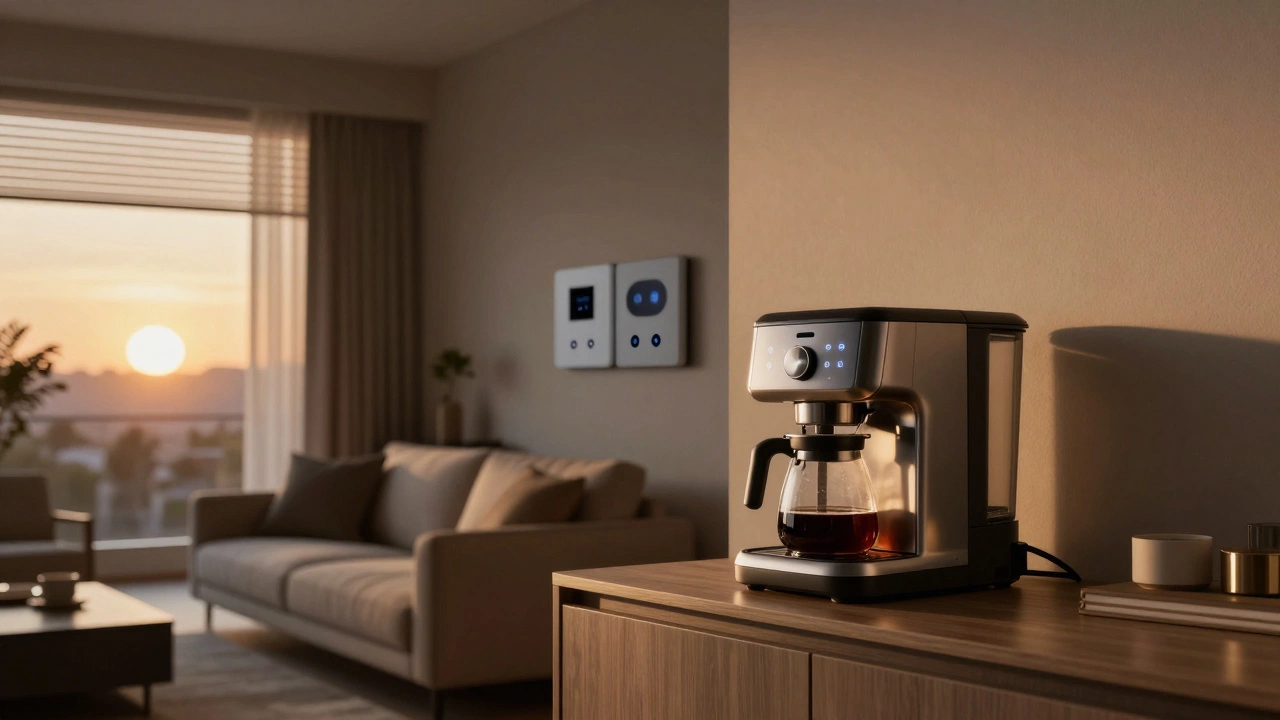
"Automated home" has been around since the 1980s, back when home systems used wired control panels and infrared remotes. It’s still widely used today, especially by contractors and older tech enthusiasts. The word "automated" focuses on the action - things happening on their own. Your lights turn on at sunset. Your blinds close when the room gets too bright. Your coffee maker starts brewing when your alarm goes off. These aren’t just smart features; they’re programmed routines. That’s automation.
Companies like Control4 and Crestron still market their systems as "home automation," emphasizing reliability and custom installation. Unlike plug-and-play gadgets, automated homes often involve whole-house wiring, dedicated hubs, and professional setup. If you’re thinking of a system that runs without constant phone app checks, "automated home" is the term you’ll hear in high-end builds.
Connected Home: The Wi-Fi Era
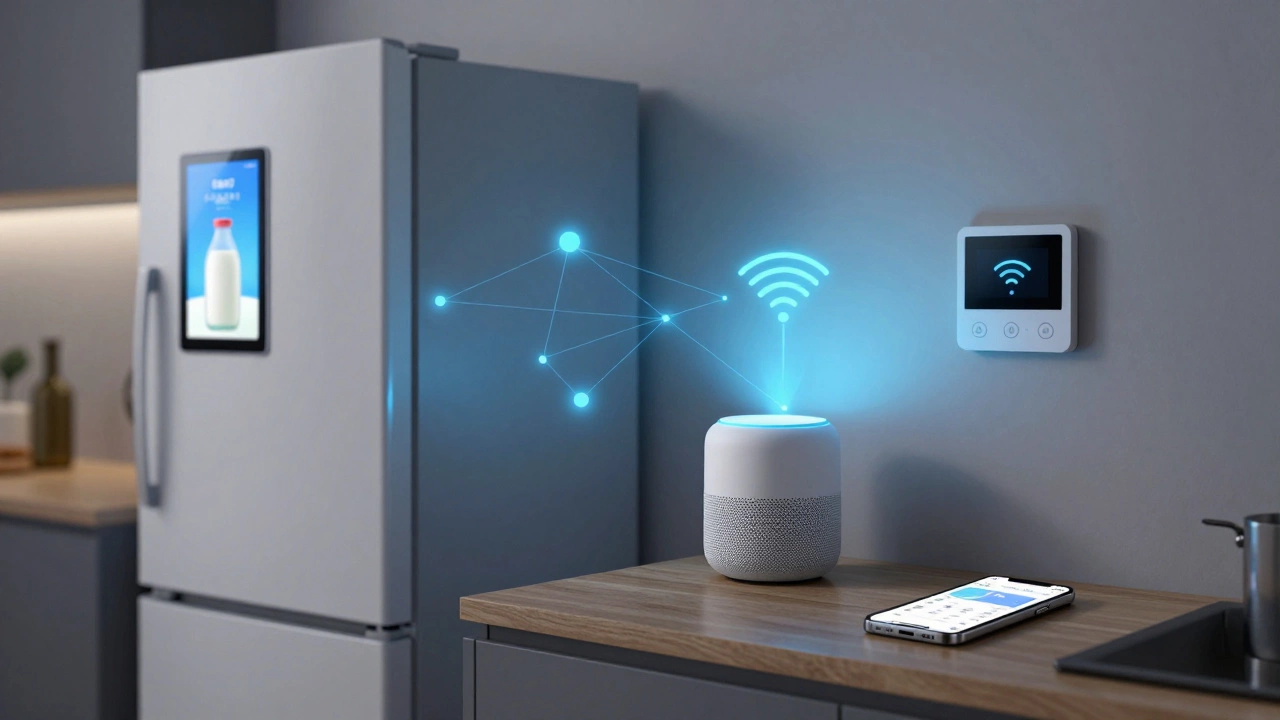
"Connected home" became popular in the 2010s, right after Wi-Fi became standard in every room. This term highlights the network - the way devices talk to each other and to your phone. It’s less about complex programming and more about being online. Your thermostat connects to the cloud. Your camera sends alerts to your tablet. Your fridge reminds you to buy milk because it knows you’re low.
Brands like Google Nest, Amazon Echo, and Apple HomeKit built their businesses around the connected home model. You don’t need an electrician to install it. Just plug in a smart bulb, download an app, and you’re in. The downside? Connectivity issues. If your Wi-Fi goes down, your "connected home" can feel like a collection of expensive bricks. That’s why some people still prefer the reliability of wired automation.
Intelligent Home: The AI Twist
"Intelligent home" is the newest label, and it’s starting to replace "smart home" in marketing materials. Why? Because "smart" has become overused. Every toaster claims to be smart now. "Intelligent" suggests learning. It’s not just reacting - it’s adapting.
An intelligent home notices that you always lower the temperature at 10:30 p.m. and does it before you ask. It learns your voice patterns so it doesn’t respond to TV commercials. It can tell if you’re home based on motion, door sensors, and even your car’s location. Systems like Home Assistant with custom AI modules or advanced Nest algorithms are pushing this category forward. You won’t find "intelligent home" on a box in a big-box store yet - but you’ll see it in premium tech reviews and whitepapers.
Home Automation: The Broader Category
Here’s where things get messy. "Home automation" is sometimes used as a synonym for smart home - but technically, it’s the umbrella term. It includes everything from simple timers to AI-driven systems. A smart home is a type of home automation. So if someone says "I have home automation," they might mean anything from a motion-sensor hallway light to a full AI管家 (personal AI管家) that runs your entire household.
For clarity, think of it like this:
- Home automation = the big category
- Smart home = automation with voice, apps, and internet
- Connected home = smart home that relies on Wi-Fi
- Automated home = smart home with pre-set routines, often wired
- Intelligent home = smart home that learns and predicts
Most people use "smart home" as shorthand. But if you’re comparing systems or reading technical specs, these distinctions matter. A $500 smart thermostat is still just a connected device. A $5,000 system that adjusts humidity based on your sleep patterns and air quality data? That’s intelligent.
Why the Different Names Matter
You might wonder why this all matters. After all, isn’t it just marketing? Not quite. The name you choose affects what you buy.
If you want something you can install yourself, look for "connected home" products - think Alexa-compatible gadgets. If you’re renovating a house and want systems that work even when the internet fails, ask about "automated home" setups with local hubs. If you’re tired of telling your devices what to do and want them to figure it out on their own, search for "intelligent home" features.
Also, warranty and support vary. Companies selling "smart homes" often push app updates and cloud services. Those selling "automated homes" offer on-site maintenance and hardware replacements. The support you get depends on the label.
What Do Experts Call It?
In Vancouver, where I live, most electricians and tech installers still say "home automation" when talking to clients. It’s the term that covers all bases. Architects and interior designers say "smart home" because it sounds modern. Tech reviewers use "intelligent home" to describe the latest AI-driven systems.
A 2025 survey by the Canadian Home Technology Association found that 68% of new home builds in British Columbia include some form of automation - but only 31% of homeowners could correctly define the difference between "smart" and "automated." Most just say "smart." That’s fine for casual use. But if you’re planning a major upgrade, knowing the terms helps you ask better questions.
Bottom Line
So what’s another name for a smart home? It depends on what you care about. If you like convenience and apps - it’s a connected home. If you want silent, reliable routines - it’s an automated home. If you want your house to think ahead - it’s an intelligent home. And if you’re talking to a professional installer? Say "home automation." It’s the term they understand.
There’s no single right answer. But now you know the differences - and that’s the first step to building a home that actually works for you, not the other way around.
Is "smart home" the same as "home automation"?
"Smart home" is a subset of "home automation." Home automation is the broad category that includes any system that controls home functions automatically - from simple timers to AI-driven setups. A smart home specifically uses internet-connected devices, voice control, and apps to automate tasks. So yes, all smart homes are automated, but not all automated homes are "smart" in the modern sense.
Can a home be automated without Wi-Fi?
Yes. Many automated homes use wired systems, Z-Wave, Zigbee, or infrared signals instead of Wi-Fi. These systems often run on local hubs that don’t need the internet to function. For example, a motion-sensor light or a programmable thermostat that turns on at 6 p.m. every day doesn’t need to be online. That’s why older, high-end home automation systems are often more reliable during power outages or internet failures.
What makes a home "intelligent" instead of just "smart"?
An intelligent home doesn’t just follow commands - it learns patterns and predicts needs. For example, a smart thermostat adjusts to a schedule you set. An intelligent one notices you wake up earlier on weekdays, lowers the heat when you leave for work, and warms the house before you return - all without you telling it to. It uses sensors, AI, and historical data to make decisions. Think of it like a personal assistant who knows your habits better than you do.
Are there any downsides to calling your home a "connected home"?
Yes. The term "connected home" implies everything runs over Wi-Fi and the cloud. That means if your internet goes out, many devices stop working. You might lose remote access, voice control, or even automatic updates. Some people prefer systems with local control or backup protocols. So if reliability matters more than convenience, "connected home" might not be the best label for your setup.
Which term should I use when shopping for smart devices?
When shopping, use "smart home" - it’s the most widely recognized term and will show you the broadest range of products. But dig deeper into the specs. Look for whether the device works offline, uses local processing, or has a hub. If you want advanced features like learning routines or voice recognition without cloud dependency, search for "intelligent" or "AI-enabled" features. Don’t rely on marketing labels alone.