
Vacuum Suction Power Estimator
Stop guessing. Tell us about your home, and we'll tell you exactly how much suction power you actually need.
Your Home Profile
Select your options and click Calculate to see which vacuum specs fit your lifestyle.
You’re standing in your living room, staring at a spec sheet that looks like it was written by an engineer who forgot you just want clean carpets. The box says "200 Air Watts." Another says "25 kPa." A third boasts about "strong suction" without giving you a single number to back it up. It’s confusing, right? You want to know if this machine will actually pull pet hair out of the rug or just push dust around. Here is the truth: there is no single "good" number that works for every floor type. But once you understand what those numbers actually mean, picking the right vacuum cleaner becomes surprisingly simple.
The Myth of One Size Fits All Suction
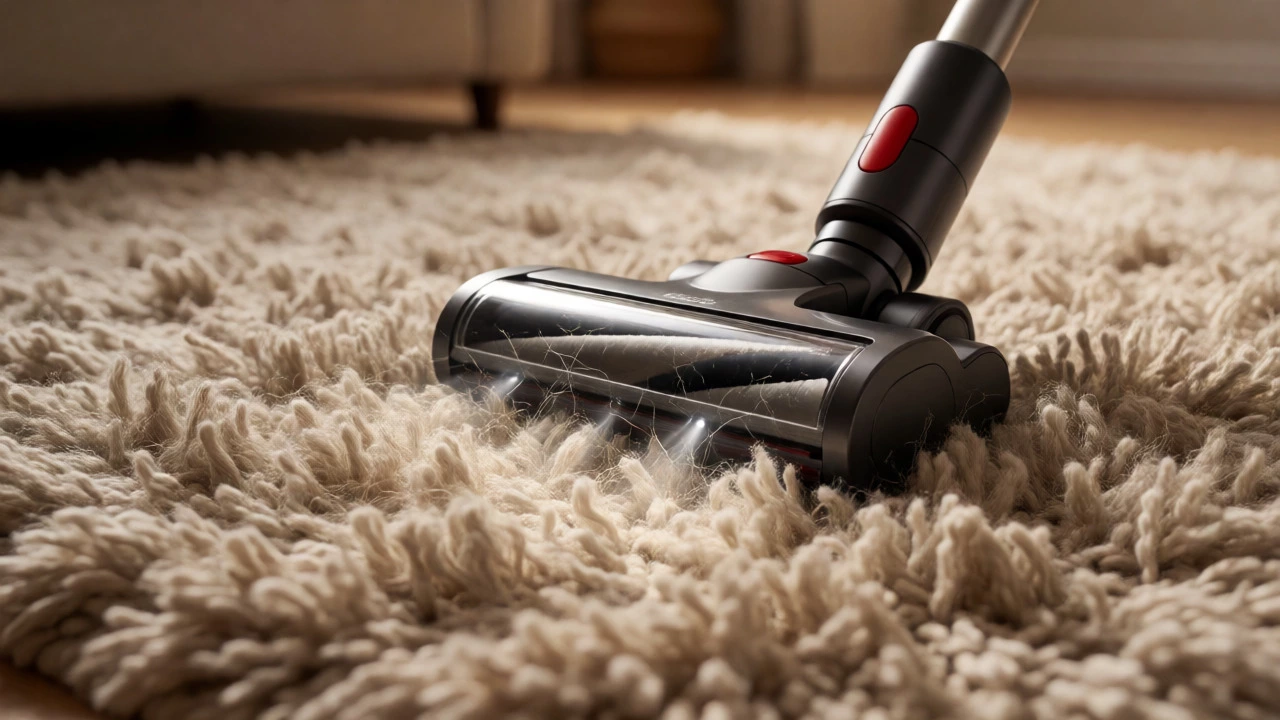
Most people think higher suction is always better. That’s only half true. If you have thick shag carpeting and two shedding Golden Retrievers, yes, you need raw power. But if you live in a modern apartment with polished concrete floors and throw rugs, too much suction can actually be a problem. Strong vacuums can stick to hard floors so hard that they become difficult to push, or worse, they can damage delicate hardwood finishes by dragging grit across the surface under extreme pressure.
Suction power is not a single metric. It is a combination of airflow (how much air moves) and static pressure (how hard the air pulls). Think of it like a garden hose. If you put your thumb over the end, you increase the pressure (kPa), but you reduce the volume of water coming out (CFM). A vacuum needs both to work well. This balance is often measured in Air Watts (AW), which combines these two factors into one usable number.
Decoding the Numbers: Air Watts vs. Pascals
Manufacturers love to throw around different units because most shoppers don’t know how to compare them. Let’s break down the big three you’ll see on boxes.
Pascals (Pa) or Kilopascals (kPa) measure static pressure. This is the force used to lift debris off the floor. Higher kPa means the vacuum can grab heavier particles or deeply embedded dirt. However, high kPa alone doesn’t mean good cleaning if the airflow is low. You might see cordless sticks advertising 20,000 Pa. Sounds impressive, but if the motor is small, the airflow won’t carry that dust into the bin efficiently.
Cubic Feet per Minute (CFM) measures airflow volume. This tells you how fast the air is moving through the hose. High CFM is crucial for carrying large debris, like Cheerios or sand, from the brush roll to the dustbin. Without enough CFM, even strong suction just lifts the dirt and drops it back down.
Air Watts (AW) is the gold standard for comparing overall efficiency. It calculates the product of airflow and pressure. While some brands hide their AW ratings, reputable ones like Dyson or Shark usually list them. An Air Watt rating gives you a realistic idea of how hard the motor is working to create useful cleaning energy.
| Vacuum Type | Air Watts (AW) | Suction Pressure (kPa) | Best For |
|---|---|---|---|
| Corded Upright | 200 - 300+ | 25 - 40 kPa | Deep pile carpets, heavy traffic areas |
| Premium Cordless Stick | 150 - 250 | 20 - 30 kPa | Mixed flooring, daily maintenance |
| Budget Cordless Stick | 80 - 120 | 10 - 18 kPa | Hard floors, light debris |
| Robot Vacuum | 20 - 60 | 2 - 5 kPa | Daily dust, crumbs between deep cleans |
How Much Power Do You Actually Need?
Let’s get specific based on your home environment. I’ve tested dozens of models in my Vancouver condo, and the requirements change drastically depending on what’s underfoot.
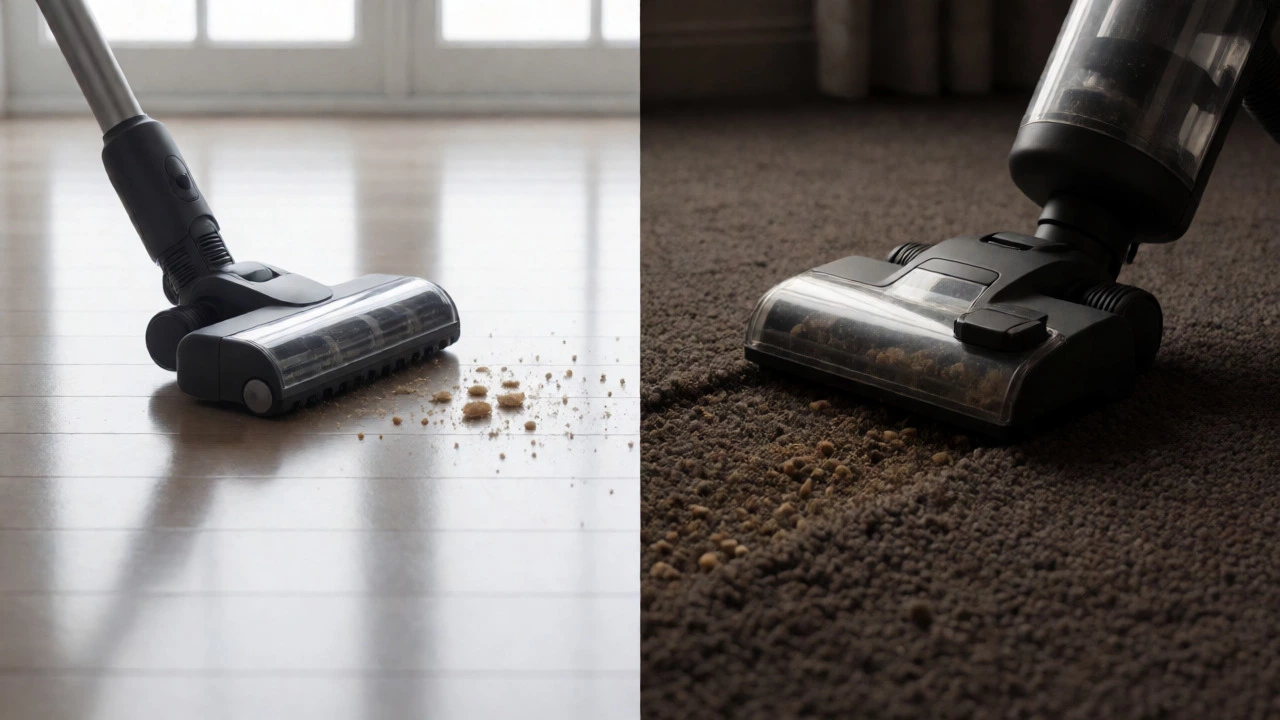
If you have mostly hardwood, tile, or laminate floors, you don’t need a monster truck of a vacuum. In fact, anything above 150 Air Watts is often overkill. A solid 100-120 AW model will pick up dust, pet dander, and crumbs perfectly fine. The key here isn’t raw power; it’s filtration. On hard floors, fine dust stays suspended longer, so you need a vacuum with a HEPA filter to trap that micro-particle matter rather than blowing it back into the room.
For low-to-medium pile carpet, aim for the 150-200 AW range. This is the sweet spot for most suburban homes. You need enough pressure to agitate the fibers and pull out trapped allergens, but you also need decent airflow to keep the bin clear. At this level, look for adjustable suction settings. Being able to dial down the power for bare floors prevents the vacuum from "sticking" and saves battery life on cordless models.
If you deal with high-pile shag rugs or wall-to-wall carpeting, especially with pets, you need serious muscle. Look for corded uprights or premium cordless models rated at 220+ Air Watts. Why? Because deep fibers create significant resistance. Weak motors stall when trying to suck through dense wool or synthetic blends. You need consistent torque to maintain airflow despite the blockage caused by the carpet itself.
The Hidden Factor: Filtration and Sealing
Here is something salespeople rarely mention: suction power is useless if the vacuum leaks air. Imagine buying a car with a V8 engine but leaving all the windows open while driving. That’s what happens with poor sealing.
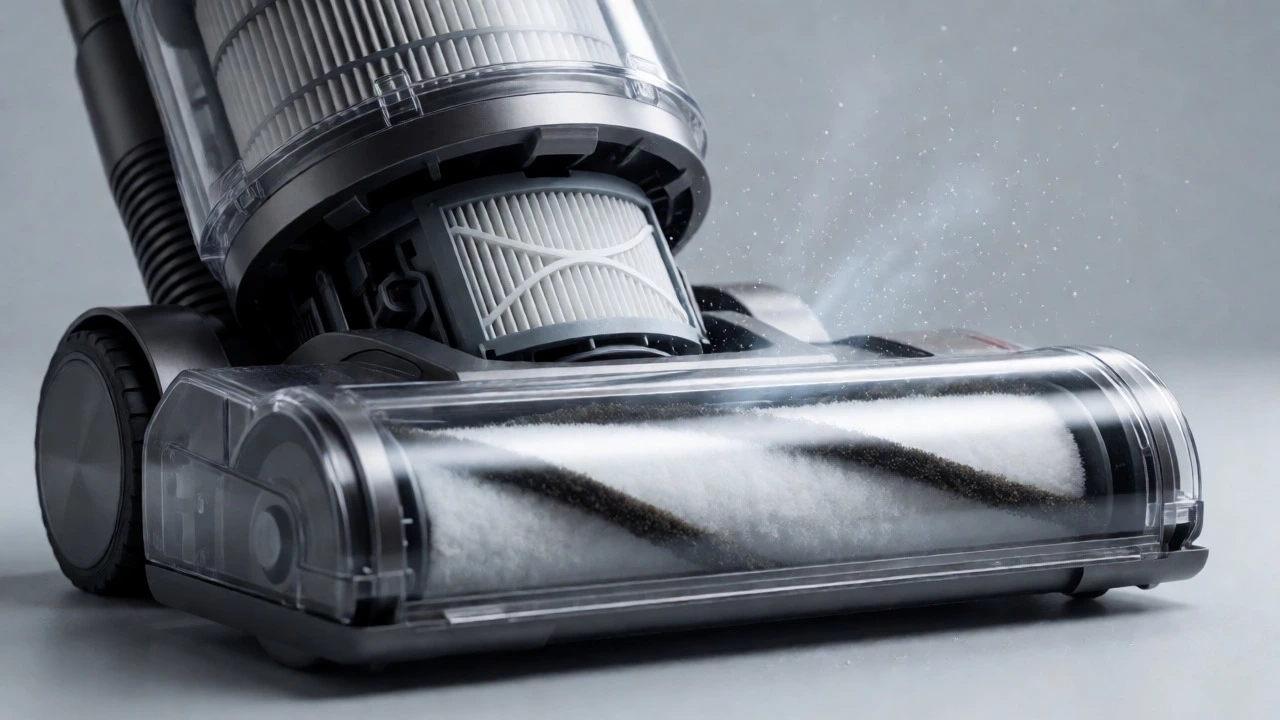
A vacuum creates a vacuum seal. If there are gaps in the hose connections, the bin lid, or the body joints, air rushes in from outside instead of being pulled through the brush head. This kills effective suction instantly. When looking at specs, check for terms like "fully sealed system" or "HEPA filtration." These indicate that the manufacturer has engineered the chassis to prevent air leaks, ensuring that the advertised Air Watts translate to actual cleaning power at the nozzle.
I once reviewed a mid-range vacuum that claimed 200 AW but had a loose gasket on the dust cup. In practice, it felt like a 120 AW machine. Always read reviews specifically mentioning "air leaks" or "seal integrity" before trusting the box numbers.
Corded vs. Cordless: The Power Trade-off
The debate between corded and cordless vacuums is really a debate about consistency versus convenience.
Corded vacuums plug directly into your wall outlet. They provide unlimited, consistent power. A 200 AW corded unit delivers that same 200 AW whether you’ve been vacuuming for five minutes or fifty. There is no fade. If maximum suction is your priority, corded wins every time.
Cordless vacuums rely on lithium-ion batteries. Early models struggled to maintain peak suction for more than ten minutes. Modern tech has improved, but physics still applies. As the battery drains, voltage drops, and suction weakens. Many premium cordless models now feature "smart" sensors that adjust suction based on floor type to conserve battery. If you choose cordless, ensure it has a "Max" mode that bypasses these limits for short bursts of deep cleaning, though expect runtime to plummet to under 10 minutes in that mode.
Practical Tips for Maximizing Performance
You don’t always need to buy a new machine to get better results. Often, your current vacuum is underperforming due to maintenance issues.
- Check the filters: Clogged foam or HEPA filters restrict airflow significantly. Wash reusable filters monthly and let them dry completely for 24 hours before reinstalling. A wet filter can kill your motor.
- Inspect the brush roll: Hair wraps around the bristles, increasing friction and reducing agitation. Use scissors to cut away tangled hair weekly. This restores the mechanical action needed for carpet cleaning.
- Empty the bin early: Don’t wait until it’s full. Once the bin is half-full, airflow restriction increases, and suction drops. Emptying at the halfway mark keeps performance high.
- Adjust height settings: Most uprights have a dial for carpet height. If set too low, the brush digs into the carpet, causing drag and overheating. If too high, it doesn’t touch the fibers. Adjust it until the brush rolls freely but makes contact.
Frequently Asked Questions
Is 100 Air Watts enough for a vacuum?
Yes, for hard floors and light-duty tasks. 100 AW is sufficient for picking up dust, crumbs, and short pet hair on tile, wood, or low-pile rugs. However, for deep-carpeted homes with long-haired pets, 100 AW may struggle to remove embedded debris effectively.
Why does my vacuum lose suction after a few minutes?
This is common in cordless models as the battery depletes, causing voltage drop. In corded models, it usually indicates a clog in the hose, a full dustbin, or dirty filters blocking airflow. Check for blockages first, then clean the filters.
Do robot vacuums have enough suction power?
Generally, no. Most robot vacuums operate between 20-60 AW, which is far lower than uprights. They are excellent for maintaining cleanliness between deep cleans but cannot replace a powerful vacuum for removing deep-set dirt or pet hair from thick carpets.
Does higher wattage always mean better suction?
No. Motor wattage (W) measures electricity consumption, not cleaning performance. A highly efficient 500W motor can produce better suction than a poorly designed 1000W motor. Always look for Air Watts (AW) or kPa ratings for a true measure of cleaning power.
How do I test my vacuum's suction at home?
Perform the "tape test." Place a strip of painter's tape on a smooth floor. Run the vacuum over it. If the tape remains stuck, suction is weak. Alternatively, try lifting a lightweight object like a sock using the hose nozzle; if it struggles, the airflow may be compromised.