
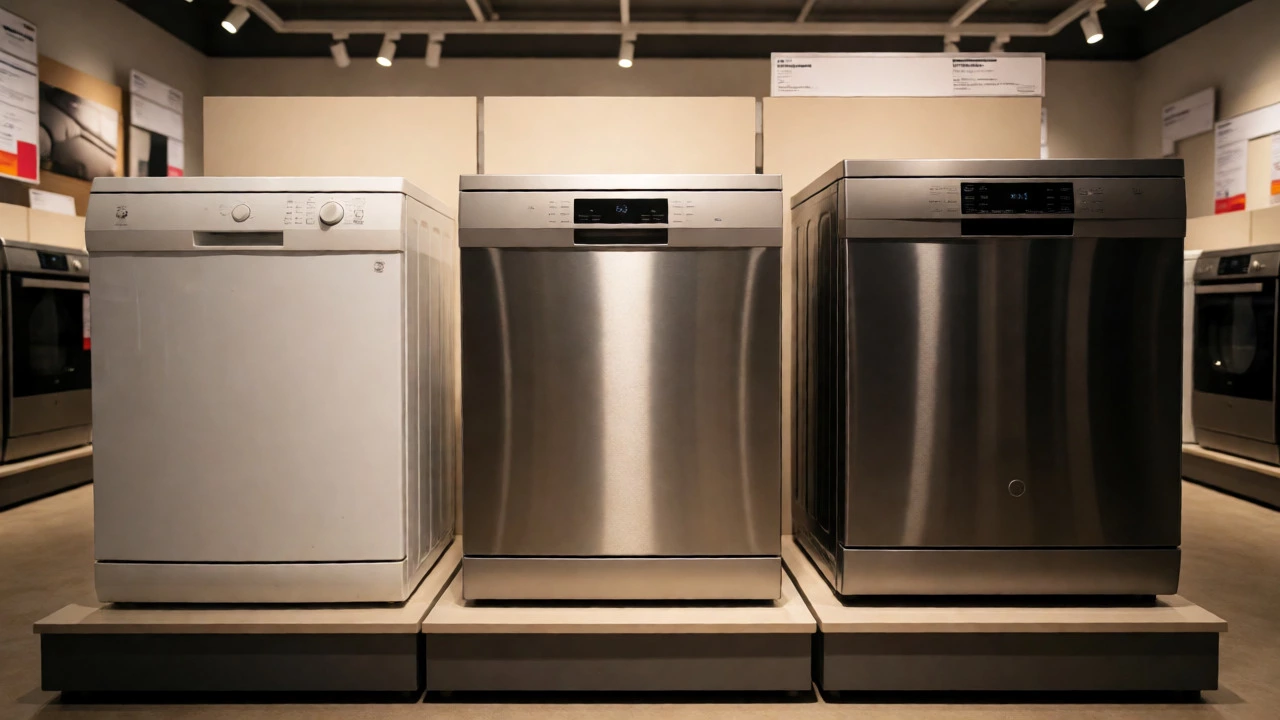
Dishwasher Price Value Checker
Select the type of dishwasher you are considering and enter the price to see if it falls into a fair range, is overpriced, or is a great bargain.
Budget Tier
$350 – $550
Basic cleaning, plastic tubs, louder noise.
Mid-Range (Sweet Spot)
$600 – $900
Stainless steel, quiet (<45dB), better drying.
Premium Tier
$1,000+
Ultra-quiet, smart features, premium finishes.
You walk into an appliance store or scroll through Amazon, and the numbers hit you like a slap. You see a dishwasher for $350, another for $800, and a fancy one with Wi-Fi for $1,200. It’s confusing. Is the expensive one actually better, or are you just paying for a shiny logo? The truth is, there is no single "right" number. But there is a sweet spot where you get reliable cleaning without throwing money away.
I’ve helped dozens of friends in Vancouver navigate this exact maze. Some regretted saving $100 on a noisy machine that broke after two years. Others overpaid for features they never touched. Here’s how to find the right price tag for your kitchen, your budget, and your sanity.
The Three Price Tiers Explained
Most dishwashers fall into three distinct buckets. Knowing which bucket you’re shopping in saves you from sticker shock.
Budget Tier ($350 - $550)
These are the entry-level models. Brands like Whirlpool, basic Frigidaire, or GE often dominate this range. You get the core function: it washes dishes. But don’t expect miracles. These machines usually have plastic tubs (which absorb odors), louder motors (you’ll hear them while cooking), and fewer wash cycles. If you live alone or rarely host dinner parties, this might be fine. But if you have a family of four eating heavy meals daily, these units often struggle with dried-on food unless you pre-rinse everything.
Mid-Range Tier ($600 - $900)
This is where the magic happens. For most people, this is the "good price." At this level, you start seeing stainless steel interiors, which resist stains and smell better. Noise levels drop significantly-often below 45 decibels, meaning you can hold a conversation in the same room. You also get third racks for utensils, half-load options, and more reliable drying systems. Brands like Bosch (entry models), KitchenAid, and higher-end Samsung sit here. This tier offers the best balance of performance and longevity.
Premium Tier ($1,000+)
Do you need it? Probably not. Premium models offer ultra-quiet operation (under 40 dB), smart connectivity, specialized wash zones, and premium finishes like fingerprint-resistant black stainless. They are built for open-concept homes where noise matters or for enthusiasts who want specific washing programs for crystal wine glasses. Unless you have a strict aesthetic requirement or extreme noise sensitivity, the jump from $900 to $1,200 rarely improves cleaning results enough to justify the cost.
What Are You Actually Paying For?
When you look at a spec sheet, ignore the marketing fluff. Focus on these three attributes, because they directly correlate with price and satisfaction.
| Feature | Budget (<$550) | Mid-Range ($600-$900) | Premium ($1,000+) |
|---|---|---|---|
| Tub Material | Plastic | Stainless Steel | Stainless Steel + Sound Dampening |
| Noise Level | 50-55 dB (Loud) | 44-49 dB (Quiet) | <42 dB (Whisper Quiet) |
| Drying Method | Condensation / Fan | Zeolite or Auto-Open Door | Advanced Zeolite / CrystalDry |
| Cycles | Basic (Normal, Heavy) | Multiple (Quick, Delicate, Sanitize) | Specialized (Glass Care, Pot Scrub) |
Noise Level: This is the biggest quality-of-life upgrade. A 50 dB dishwasher sounds like a running vacuum cleaner. A 44 dB model sounds like a library whisper. If your kitchen is near your living room or bedroom, do not buy anything above 48 dB. In my experience, the difference between 44 and 48 dB is noticeable but manageable; the difference between 44 and 52 dB is annoying.
Tub Material: Plastic tubs are cheaper to manufacture, but they trap grease smells. Over time, your "clean" dishes might smell slightly stale. Stainless steel reflects heat for better drying and doesn’t hold onto odors. If you can stretch your budget to get a stainless interior, do it. It extends the life of the machine and keeps things hygienic.
Drying Performance: Cheap dishwashers rely on residual heat to dry plastics, which often fails. Mid-range models use fans or zeolite minerals (a natural material that absorbs moisture) to actively pull water off plates. If you hate wiping wet bowls out of the machine, prioritize drying technology over smart features.
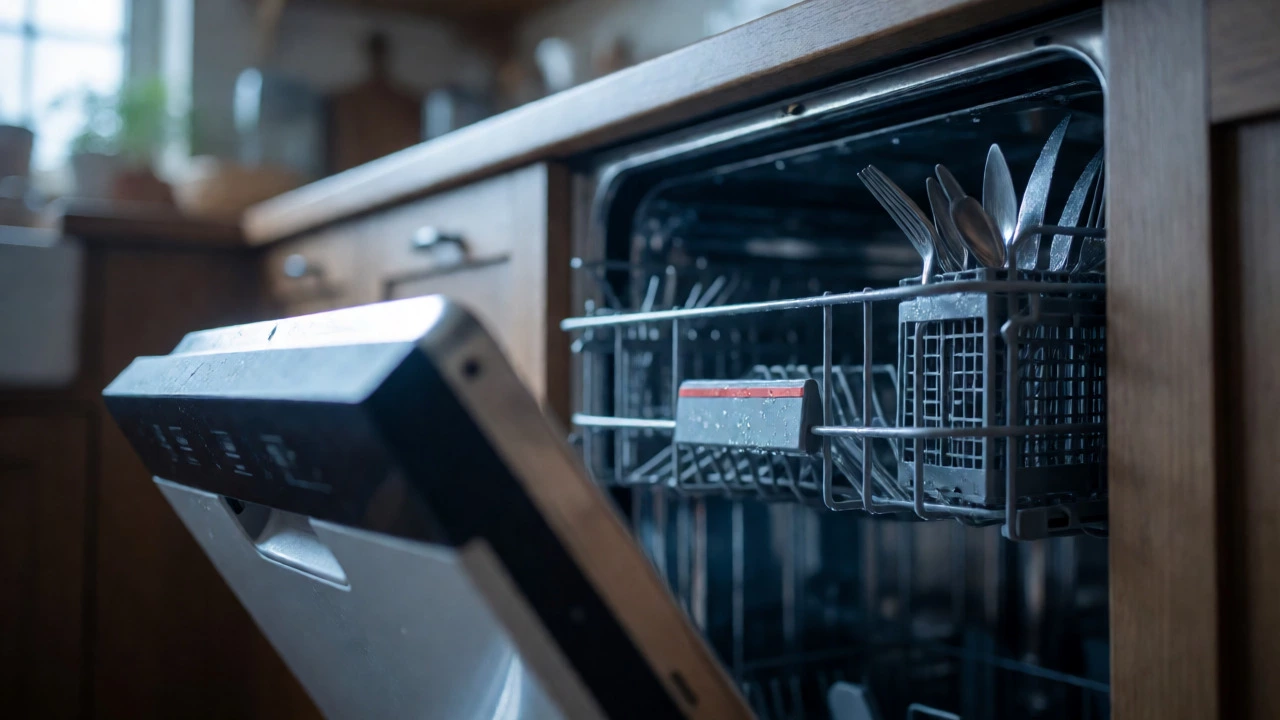
Hidden Costs That Blow Your Budget
The price tag on the box is rarely the final price. I’ve seen homeowners shocked by extra charges during installation. Here’s what you need to factor in before deciding if a $600 dishwasher is truly affordable.
- Installation Fees: If you are replacing an old unit, plumbers or electricians may charge $150-$300. If your new dishwasher has different dimensions or requires a new electrical outlet, costs go up. Always ask retailers if installation is included.
- Hoses and Fittings: Sometimes the new machine doesn’t come with a long enough water hose or drain line. Buying these separately adds $20-$50.
- Delivery: Many stores charge $50-$100 for delivery, especially if you need it taken upstairs or removed from packaging.
- Water Softener Add-ons: If you live in an area with hard water (common in parts of Canada and the US), you might need a rinse aid dispenser upgrade or a built-in softener, which can add $50-$100 to certain high-end models.
So, a "cheap" $400 dishwasher could easily become a $600 project once you pay for professional help. Compare total out-the-door prices, not just shelf prices.
Brand Reliability Matters More Than Features
You can have the coolest features in the world, but if the pump fails in year two, you’ve wasted your money. Repair costs for dishwashers average $150-$250 per visit. Since most units only last 7-10 years, frequent repairs eat up any savings you made upfront.
Bosch consistently ranks highest in reliability surveys. Their mid-range models (like the 100 series) are often praised for lasting 10+ years with minimal issues. Yes, they cost more than generic brands, but the cost-per-year of ownership is lower.
Whirlpool and its subsidiaries (Maytag, KitchenAid) are solid workhorses. Parts are cheap and easy to find. If something breaks, any local technician can fix it. They aren’t as quiet as Bosch, but they are dependable.
Samsung and LG offer great tech and sleek designs. However, their repair networks can be slower, and some users report electronic control board failures. If you buy these, check if the retailer offers extended warranty coverage.
Avoid obscure brands sold exclusively online with no local service centers. If a part breaks, waiting three weeks for shipping means hand-washing dishes for a month.

When to Buy: Timing Saves Hundreds
Did you know dishwashers follow a predictable sales cycle? Retailers clear inventory when new models launch. In North America, manufacturers typically release new lines in September and October. Therefore, late summer (August-September) is a prime time to buy older models at steep discounts.
Holiday weekends like Labor Day (early September) and Black Friday (November) also bring significant markdowns. If you see a highly-rated model from last year discounted by 20-30%, grab it. The technology hasn’t changed drastically in five years. A 2025 model bought in 2026 will clean just as well as a 2026 model, often for $150 less.
The Verdict: What Is a Good Price?
For the average household, a good price is between $600 and $850 CAD/USD. This range gets you a stainless steel tub, quiet operation, and reliable drying without paying for gimmicks.
If you are strictly budget-constrained, aim for $450-$550 but accept higher noise and potential odor issues. Do not go below $400 unless you are okay with hand-washing stubborn pots.
If you demand silence and style, $1,000-$1,200 is reasonable. Anything above $1,300 enters diminishing returns territory unless you have specific design needs.
Remember, the cheapest option is rarely the most economical. Factor in energy efficiency (look for ENERGY STAR certification to save on utility bills), durability, and installation costs. A $700 dishwasher that lasts 12 years beats a $400 one that dies in 5.
Is it worth spending more on a quieter dishwasher?
Yes, if your kitchen is open-plan or near living areas. The difference between 50dB and 44dB is substantial. You won't constantly hear the machine running, which reduces mental fatigue. For closed kitchens, the premium for silence may not be worth it.
Do expensive dishwashers clean better?
Not necessarily. Cleaning performance depends more on spray arm design and water pressure than price. Mid-range models often clean just as well as premium ones. Expensive models focus on noise reduction, drying speed, and aesthetics rather than raw scrubbing power.
How long should a dishwasher last?
The average lifespan is 7 to 10 years. High-quality brands like Bosch can reach 12-15 years with proper maintenance. Cheaper models often fail around the 5-7 year mark due to plastic component wear or motor burnout.
Are stainless steel interiors really necessary?
They are highly recommended. Stainless steel resists staining, doesn't retain food odors, and conducts heat better for drying. Plastic tubs are cheaper but can yellow over time and harbor bacteria in microscopic scratches. The small price increase is worth the hygiene benefit.
Should I buy an extended warranty?
Usually, no. Most reputable brands offer a 1-year full warranty and 5-10 years on major components (motor/pump). Extended warranties often exclude labor costs, which are the bulk of repair bills. Instead, set aside the warranty cost in a savings account for potential future repairs.