
Coffee Machine Value & Cost Calculator
Your Preferences
Based on your preferences...
Long-Term Cost Comparison (1 Year)
Quick Guide to Options
Drip Brewer
Best for simplicity and lowest cost per cup. Look for thermal carafes.
Lowest Cost/CupSemi-Auto Espresso
Best for flavor enthusiasts. Requires grinder investment (~$150).
High SkillPod System
Best for speed and convenience. Highest long-term cost.
Highest Cost/CupYou want great coffee, but you also want to keep your wallet happy. It’s a classic dilemma. The problem isn’t that good machines are expensive; it’s that the market is flooded with options that promise premium results at budget prices, only to deliver lukewarm disappointment. Finding a good affordable coffee machine means cutting through the marketing noise and understanding exactly what mechanism fits your morning routine without breaking the bank.
In 2026, "affordable" doesn't mean cheap plastic that breaks in six months. It means getting the most performance per dollar spent. Whether you crave the ritual of an espresso or just need a fast, reliable cup of drip coffee, there is a sweet spot where quality meets price. Let’s figure out which machine belongs on your counter.
The Quick Summary: What You Need to Know
- For pure simplicity: A high-end thermal carafe drip maker (like the Cuisinart DCC-3200) offers the best bang for the buck under $100.
- For espresso lovers: Look for semi-automatic pump machines with dual boilers or heat exchangers, such as the Breville Bambino Plus, starting around $300-$400.
- For convenience: Pod-based systems (Nespresso Vertuo) offer low upfront costs ($80-$120) but higher long-term expenses per cup.
- Key Rule: Never buy a grinder separate from a cheap machine if you can avoid it; built-in grinders in sub-$200 machines often perform poorly.
Defining "Affordable" in the Coffee World
Before we look at specific models, we need to set expectations. In the world of coffee hardware, "affordable" usually falls into three distinct tiers. Understanding these helps you avoid buyer’s remorse.
| Tier | Price Range (USD) | Best For | Compromise |
|---|---|---|---|
| Budget | $50 - $150 | Drip coffee, single-serve pods | Limited temperature control, plastic parts |
| Mid-Range | $150 - $350 | Semi-auto espresso, advanced drip | Manual skill required for espresso |
| Entry-Premium | $350 - $600 | Super-automatics, high-end semi-auto | Maintenance costs, repair complexity |
The "sweet spot" for most people lies in the Mid-Range category. This is where you start seeing stainless steel boilers instead of heating elements, and precise temperature control that actually matters for extraction.
Option 1: The Reliable Drip Brewer
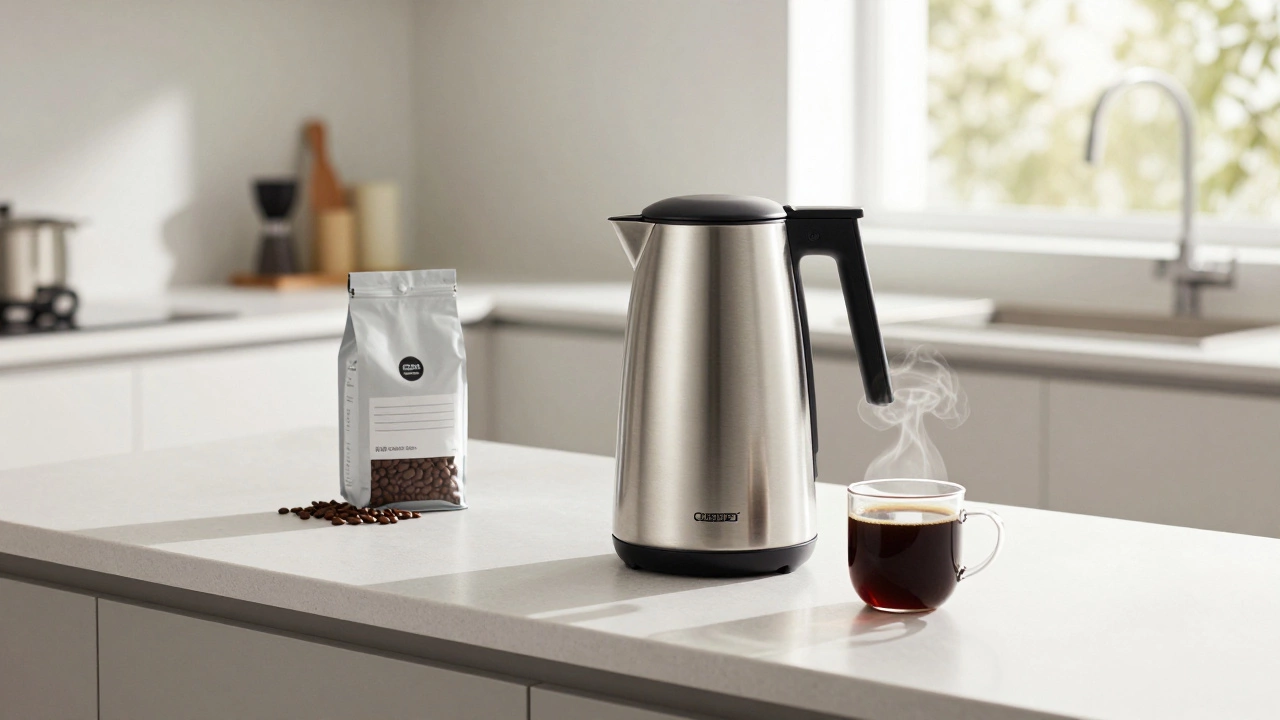
If your definition of a good coffee is a hot mug of black coffee that tastes clean and consistent, you don’t need fancy pressure or steam wands. You need a machine that holds temperature steady between 195°F and 205°F.
The Cuisinart DCC-3200 is a programmable coffee maker with a thermal carafe that keeps coffee hot for hours without burning it. Why is this the gold standard for affordability?
- Thermal Carafe: Unlike glass pots sitting on hot plates, this uses vacuum insulation. Your coffee stays hot without developing that burnt, acidic taste common in cheaper makers.
- Brew Strength Control: You can choose regular or bold, giving you flexibility without buying different beans.
- Durability: These machines last years because they have fewer moving parts than espresso machines.
For under $100, you get reliability that rivals machines costing twice as much. If you drink more than one cup a day, the cost-per-cup drops significantly when you use ground beans rather than pods.
Option 2: The Semi-Automatic Espresso Machine
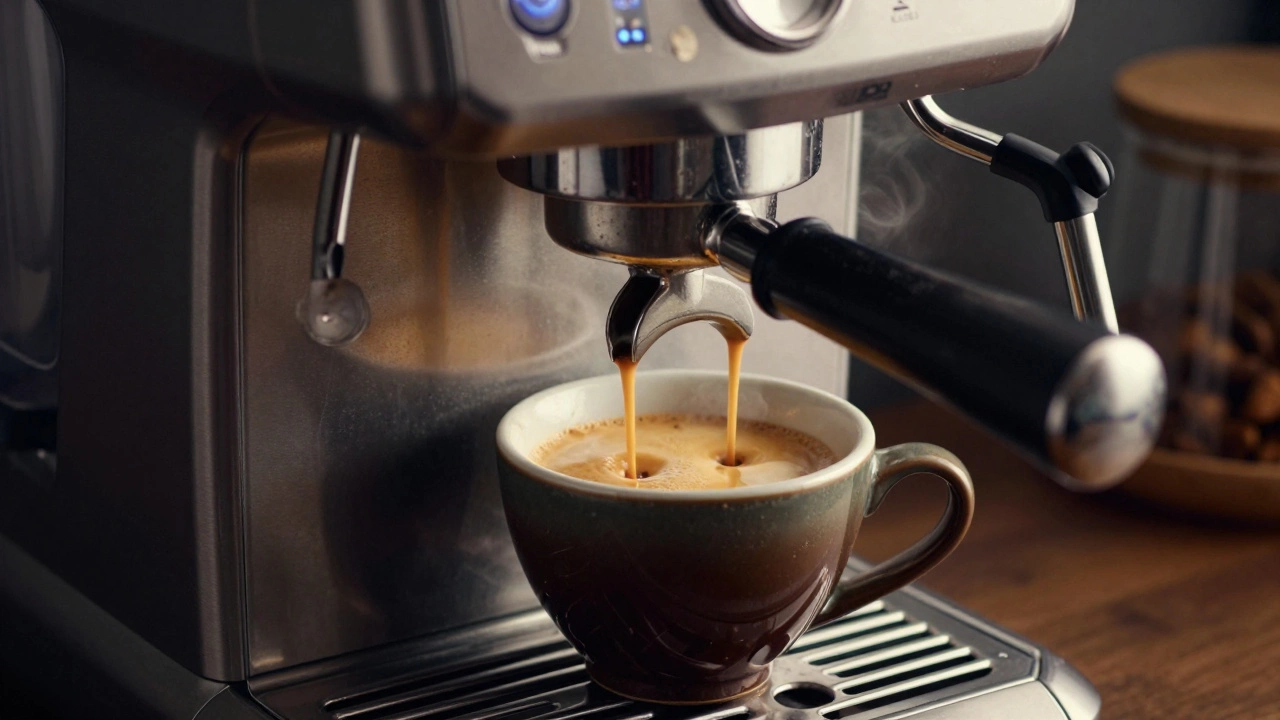
This is where things get tricky. Many people see a sleek espresso machine for $200 and assume it will make café-quality shots. It won’t. Cheap espresso machines suffer from poor pressure stability and inadequate temperature management.
To get "good" espresso affordably, you need a machine with a thermoblock or heat exchanger system. The Breville Bambino Plus is a compact semi-automatic espresso machine with automatic milk texturing and rapid heat-up time. While it sits at the higher end of "affordable" (around $300-$400), it is the cheapest machine that truly delivers professional-grade results.
Why not go cheaper? Machines like the De'Longhi Dedica are popular budget picks, but they require significant manual effort to dial in shots and often struggle with milk texture consistency. The Bambino Plus automates the milk steaming, which is the hardest part for beginners. If you are willing to learn the craft, this machine pays for itself by saving you from daily café visits.
Option 3: The Convenience of Pods (Nespresso & Keurig)
Let’s be honest: sometimes "good" means "fast." If you are rushing to work or school, the friction of grinding beans and tamping grounds is too high. Here, pod machines shine.
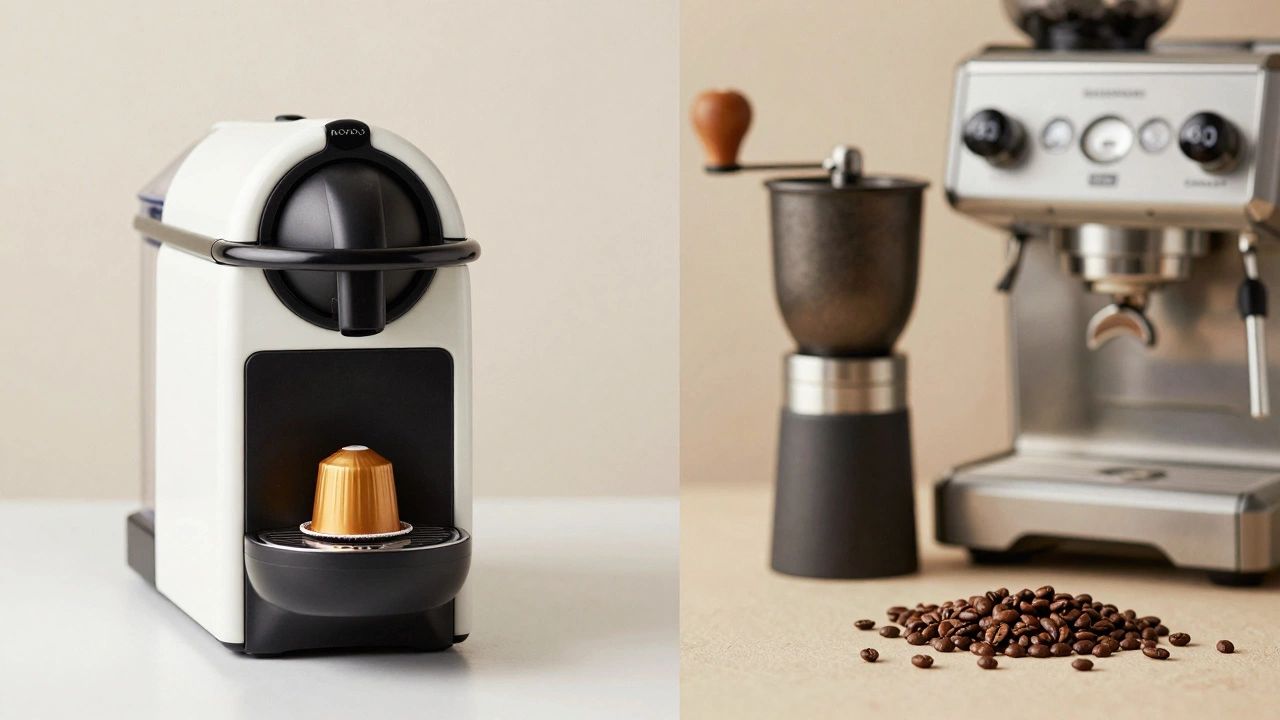
The Nespresso Vertuo Next is a centrifusion-based pod machine that brews both espresso and larger coffee cups using barcode-scanning technology. It costs around $100-$150. The upside? Zero cleanup. Just pop the used pod out and rinse your cup. The downside? The cost per cup. Nespresso pods cost roughly $0.80 to $1.20 each. Over a year, that adds up to hundreds of dollars.
Is it worth it? Only if you value time over money. If you care about environmental impact, consider the reusable capsule option, though it requires more cleaning. For those who prefer American-style drip coffee via pods, Keurig K-Classic is a widely compatible single-serve brewing system known for its vast selection of K-Cup varieties. It is incredibly cheap upfront ($80-$100) but produces a thinner, less flavorful cup compared to true espresso or fresh-ground drip.
The Hidden Cost: Grinders and Maintenance
A common mistake buyers make is focusing solely on the machine price. If you buy a $300 espresso machine but use pre-ground coffee stored in a tin for weeks, your coffee will taste stale. Freshness is the single biggest factor in flavor.
If you choose a drip machine, a simple blade grinder ($20) works fine. But for espresso, you need a burr grinder. A decent entry-level burr grinder like the Baratza Encore is a conical burr grinder designed for home espresso and drip brewing with consistent particle size. costs around $150. So, your total "affordable" setup is actually $450. Is it still affordable? Yes, compared to the $800+ setups often recommended, but it’s important to budget for the grinder.
Maintenance is another hidden cost. Espresso machines require descaling every 3-6 months. Super-automatics need brush cleaning and internal flushing. Drip machines just need a vinegar wash once a month. Factor this into your decision. If you hate maintenance, stick to pods or drip.
How to Choose: A Decision Checklist
Still unsure? Answer these three questions to narrow down your choice.
- How much time do you have in the morning?
- Less than 2 minutes: Go for Nespresso or Keurig.
- 5-10 minutes: Go for a drip machine or semi-auto espresso.
- Do you enjoy the process?
- No, I just want caffeine: Pod system or drip.
- Yes, I like experimenting: Semi-auto espresso.
- What is your monthly coffee budget?
- Under $30: Ground beans + drip machine.
- $30-$60: Pods or occasional café visits.
- $60+: Whole beans + espresso machine + grinder.
Common Pitfalls to Avoid
When shopping for affordable machines, watch out for these red flags:
- "Commercial Grade" Claims: If a machine says "commercial grade" but costs $150, it’s lying. Real commercial components cost thousands. Stick to reputable home brands.
- Plastic Water Tanks: In espresso machines, plastic tanks can affect taste and durability. Look for stainless steel reservoirs if possible.
- Lack of Temperature Stability: Read reviews specifically mentioning "temperature consistency." If users complain about cold crema or sour shots, the boiler is likely insufficient.
- Proprietary Filters: Some drip machines require expensive replacement filters. Check if standard paper filters work to save money long-term.
Final Thoughts on Value
There is no single "best" affordable coffee machine because your needs dictate the value. A $100 Cuisinart is a better deal for a family that drinks four cups of drip coffee a day than a $400 Breville is. Conversely, for a solo espresso enthusiast, the Breville saves money by replacing daily lattes.
Focus on the core function. Does it brew hot? Does it extract properly? Does it fit your counter? Once you answer those, the rest is preference. Start with the basics, master them, and upgrade later if your tastes evolve. That’s the smartest way to spend your coffee budget.
What is the best cheap coffee machine for beginners?
For absolute beginners who want ease of use, the Nespresso Vertuo Next is the best choice due to its automated brewing process and minimal cleanup. If you prefer traditional coffee, the Cuisinart DCC-3200 is the most reliable and easy-to-use drip machine under $100.
Can you get good espresso from a $200 machine?
It is difficult. Most $200 machines lack the stable pressure and temperature control needed for consistent espresso. You might get decent shots occasionally, but they will often be inconsistent. For reliable results, aim for at least $300-$400 for a semi-automatic machine like the Breville Bambino series.
Are pod coffee machines really cheaper in the long run?
No. While the upfront cost of a pod machine is lower, the cost per cup is significantly higher. Using ground beans in a drip or espresso machine typically costs $0.20-$0.50 per cup, whereas pods cost $0.80-$1.50 per cup. Over a year, the difference can be hundreds of dollars.
Do I need a separate grinder for an affordable coffee machine?
For drip coffee, a basic blade grinder is sufficient. For espresso, yes, you need a dedicated burr grinder. Pre-ground coffee loses freshness quickly, resulting in sour or bitter shots. An entry-level burr grinder like the Baratza Encore is a worthwhile investment if you pursue espresso.
What is the lifespan of an affordable coffee machine?
A well-maintained drip machine can last 5-10 years. Pod machines typically last 3-5 years due to mechanical wear from frequent pod ejections. Semi-automatic espresso machines, if descaled regularly, can last 7-10 years. Proper maintenance is key to extending any machine's life.