
Air Purifier Cost & Risk Estimator
Enter your usage details to estimate annual costs and identify potential downsides like ozone generation or high filter expenses.
You just bought a sleek new machine, plugged it in, and now you feel like you’re breathing the pristine mountain air of Banff right in your Vancouver apartment. It’s a great feeling-until the electricity bill creeps up, the fan sounds like a jet engine at night, or you start getting headaches that weren’t there before. We often hear about how air purifiers save us from allergies and pollution, but nobody talks enough about the annoying, costly, or even harmful side effects they can bring into your home.
Is there a downside to air purifiers? Yes, absolutely. While they are powerful tools for improving indoor air quality, they come with trade-offs involving maintenance costs, energy consumption, potential health risks from certain technologies, and operational annoyances. The key isn’t to avoid them entirely, but to understand exactly what you’re signing up for before you hit "buy."
The Financial Reality: Filters and Energy Bills
Let’s talk money first, because this is the most common complaint I hear from friends and family. Buying the unit is just the entry fee. The real cost comes from replacing filters. Most modern units use HEPA (High-Efficiency Particulate Air) filters combined with activated carbon. These aren’t cheap consumables.
A standard replacement HEPA filter can cost anywhere from $50 to over $100, depending on the brand and size. And you can’t stretch their life indefinitely. If you live in a dusty area or have pets shedding year-round, you might need to swap them out every six months. In Vancouver, where we deal with seasonal pollen and occasional wildfire smoke, those filters work overtime. During a heavy smoke event, a filter might saturate in weeks rather than months, forcing an unplanned expense.
Then there’s electricity. A high-end unit running 24/7 on medium-high settings isn’t going to break the bank, but it’s not free either. Some older or less efficient models draw significant power. If you’re trying to be eco-friendly, check the Energy Star rating. An inefficient purifier running all day adds up over a year, especially if you have multiple units for different rooms.
Health Risks: When Cleaning the Air Makes It Worse
This is the part that surprises people. Not all air purification methods are created equal, and some can actually introduce pollutants instead of removing them. The biggest culprit here is ozone.
Certain types of purifiers, specifically those using electrostatic precipitators or ionizers, generate small amounts of ozone as a byproduct of charging particles so they stick to plates or fall out of the air. Ozone is a lung irritant. At low levels, it might cause coughing or chest tightness; at higher levels, it can trigger asthma attacks. The California Air Resources Board (CARB) has strict limits on indoor ozone emissions for this exact reason. If you buy a cheap, uncertified ionizer, you might end up with a room that smells "clean" (like after a thunderstorm) but is actually irritating your respiratory system.
| Technology Type | Primary Mechanism | Potential Downside | Best For |
|---|---|---|---|
| HEPA Filter | Mechanical filtration trapping particles | Filter replacement costs; airflow restriction | Allergies, dust, pollen, pet dander |
| Ionizer/Electrostatic | Charging particles to make them settle | Ozone generation; dirty collection plates | Small spaces, budget-conscious users |
| UV-C Light | Killing bacteria/viruses with UV radiation | Mercury leakage risk (if broken); ineffective without airflow | Combating airborne pathogens |
| Activated Carbon | Adsorption of gases and odors | Saturates quickly; can release trapped VOCs if overheated | Smoke, cooking odors, chemical fumes |
Noise Levels: The Sound of Clean Air
If you plan to put an air purifier in your bedroom, silence is golden-or should be. Many units advertise "whisper-quiet" operation, but that usually refers to the lowest setting. On the lowest setting, the Clean Air Delivery Rate (CADR)-a metric measuring how fast the unit cleans the air-is often too low to make a noticeable difference in a medium-sized room.
To actually clean the air effectively, you need to crank it up. Suddenly, that quiet hum becomes a constant white noise that might disrupt light sleepers. I’ve had clients tell me they turn the purifier off at night because the fan noise keeps them awake, only to wake up with congested noses because the air wasn’t being filtered while they slept. It’s a frustrating catch-22. Look for units with dedicated "sleep modes" that prioritize decibel reduction over maximum CADR, but understand the trade-off: you’re cleaning the air slower.
Space and Aesthetics: They’re Not Invisible
Air purifiers are bulky. A unit capable of handling a large living room is essentially a tall box or cylinder taking up floor space. In smaller apartments, this can feel cluttered. You also have to place them correctly. They need clearance around the intake and output vents to work efficiently. Shoving one behind a couch or into a corner reduces its effectiveness significantly, meaning you’re paying for performance you don’t get.
Plus, let’s be honest: some designs are just ugly. If you have a carefully curated minimalist aesthetic, a giant plastic tower with blinking LED lights might clash with your vibe. While newer models are getting sleeker, many still look like medical equipment. And those LEDs? Even dimmed, they can be distracting in a dark bedroom unless you tape them over or find a model with a full "lights off" option.
Maintenance Hassles: It’s Not Just Changing Filters
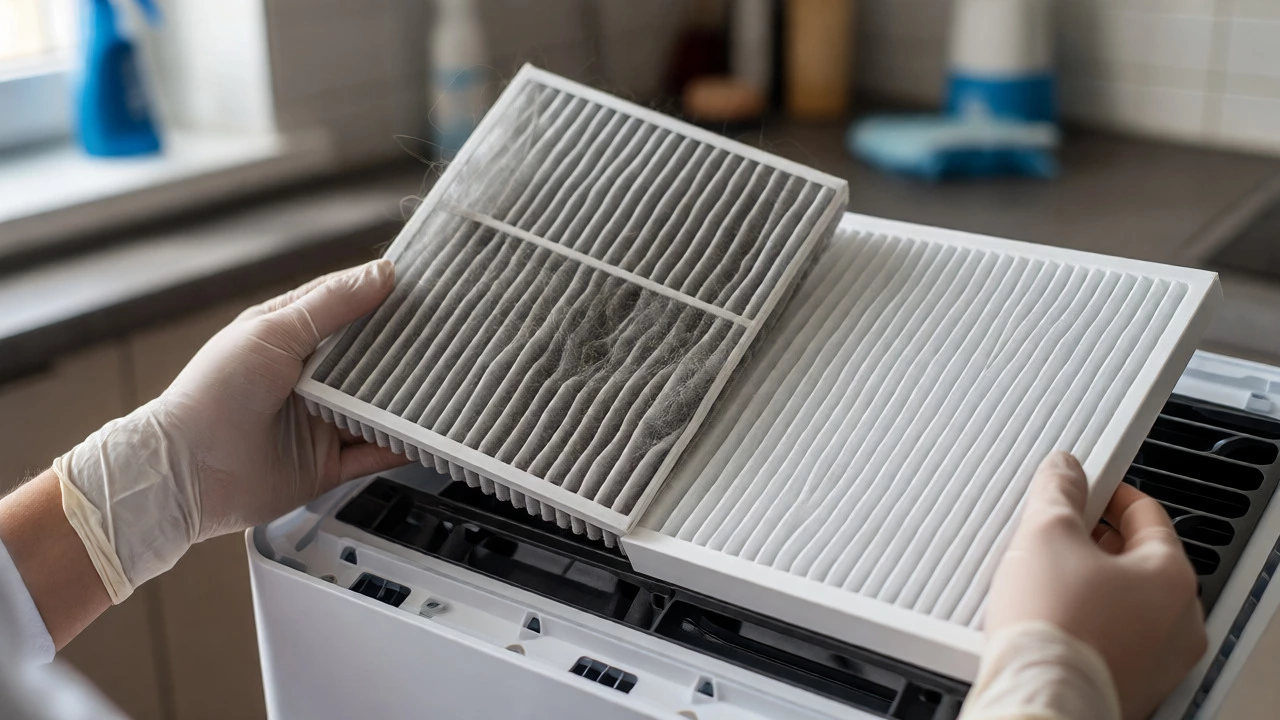
Changing the HEPA filter is straightforward, but other parts require attention. Pre-filters, which catch big stuff like hair and lint, need washing every month or two. If you forget, they clog up, reducing airflow and making the main filter work harder (and fail faster).
If you have an electrostatic or ionizer unit, you need to clean the metal collector plates regularly. These get coated in a fine layer of dust and grime. If you skip this, the unit stops working well and can start smelling bad. It’s messy work. You’ll be wiping down oily dust, which isn’t exactly pleasant. Neglecting maintenance doesn’t just reduce efficiency; it can turn your air purifier into a source of mold or mildew smells if moisture gets trapped in dirty filters.
False Sense of Security
Here’s a psychological downside: people think buying an air purifier solves all their indoor air problems. It doesn’t. It helps with particulates and some gases, but it won’t fix poor ventilation, high humidity leading to mold growth, or volatile organic compounds (VOCs) off-gassing from new furniture if the carbon filter is saturated.
I’ve seen folks run a small desktop purifier in a huge open-concept kitchen and wonder why the cooking smells linger. They assume the machine is broken or weak. Actually, they just undersized it. Or worse, they rely on the purifier to handle smoke during a wildfire, closing all windows and letting CO2 build up because they’re afraid to ventilate. An air purifier doesn’t add oxygen to the room; it just cleans what’s already there. You still need fresh air exchange.
How to Mitigate the Downsides
So, should you ditch the idea? No. The benefits usually outweigh these drawbacks if you choose wisely. Here’s how to minimize the negatives:
- Check CARB Certification: Ensure any electronic purifier is certified by the California Air Resources Board. This guarantees ozone emissions are within safe limits.
- Calculate Total Cost of Ownership: Before buying, look up the price and lifespan of replacement filters. Multiply the annual cost by five years. Does it fit your budget?
- Match Size to Room: Use the CADR rating to ensure the unit can handle your room’s square footage. Under-sizing leads to frustration; over-sizing leads to wasted energy.
- Prioritize Sleep Mode: If it’s for a bedroom, test the noise level in-store or read reviews specifically mentioning sleep mode decibels.
- Automate Maintenance: Set calendar reminders for filter changes and pre-filter washes. Treat it like changing oil in your car-non-negotiable for performance.
Air purifiers are fantastic tools, but they aren’t magic boxes. They require investment, maintenance, and realistic expectations. By understanding the downsides upfront, you can pick a model that fits your lifestyle rather than becoming another gadget gathering dust in the corner.
Do air purifiers increase electricity bills significantly?
Generally, no. Most modern air purifiers consume between 10 and 100 watts, similar to a laptop or a light bulb. Running one 24/7 might add $5-$15 to your monthly electric bill, depending on local rates. High-end models with heating elements or very powerful fans may cost more, but standard HEPA units are quite energy-efficient.
Can air purifiers cause headaches?
Yes, particularly if they use ionizing technology that generates ozone. Ozone is a known lung irritant and can cause headaches, dizziness, or throat irritation in sensitive individuals. Additionally, if a filter is old and moldy, it can circulate spores or bacteria back into the air, triggering allergic reactions or sinus pressure that feels like a headache.
How often do I really need to change the filter?
Manufacturer recommendations vary, typically ranging from 6 to 12 months. However, this depends heavily on usage and air quality. If you have pets, live near a busy road, or experience frequent wildfire smoke, you may need to replace filters every 3-6 months. Always check the visual condition of the filter-if it looks grey and clogged, change it regardless of the timeline.
Are air purifiers noisy?
On high settings, yes, they can be loud enough to interfere with conversation or TV. On low or sleep settings, most modern units operate below 30-40 decibels, which is comparable to a whisper or a quiet library. Noise sensitivity varies by person, so checking specific decibel ratings for each speed setting is crucial if you plan to use it in a bedroom.
Do air purifiers remove viruses?
True HEPA filters capture particles as small as 0.3 microns with 99.97% efficiency. Since many viruses attach to larger droplets or aerosols, HEPA filters can effectively trap virus-laden particles. Some units also use UV-C light to kill captured pathogens, though the efficacy of UV alone is debated without sufficient exposure time. Filtration is generally considered more reliable for physical removal.