
OLED vs QLED TV Selection Tool
Find Your Perfect TV
Answer a few questions about your viewing habits to determine whether OLED or QLED is better for you in 2026.
1. How bright is your viewing room?
2. What do you primarily watch?
3. What screen size do you need?
4. What's most important to you?
When you’re shopping for a new 4K TV in 2026, one question keeps popping up: OLED or QLED? It’s not just marketing jargon - the difference affects how your favorite movies look, how bright your sports games shine, and even how long the TV will last. If you’ve been confused by ads claiming one is "perfect" and the other is "the future," you’re not alone. Let’s cut through the noise and show you exactly what each technology does, where it wins, and who should pick which one.
How OLED Works - The Dark Truth
OLED stands for Organic Light-Emitting Diode. Each pixel in an OLED screen produces its own light. That means when a pixel needs to show black, it turns off completely. No backlight. No dimming. Just pure, infinite black. This isn’t a trick. It’s physics. And it changes everything.
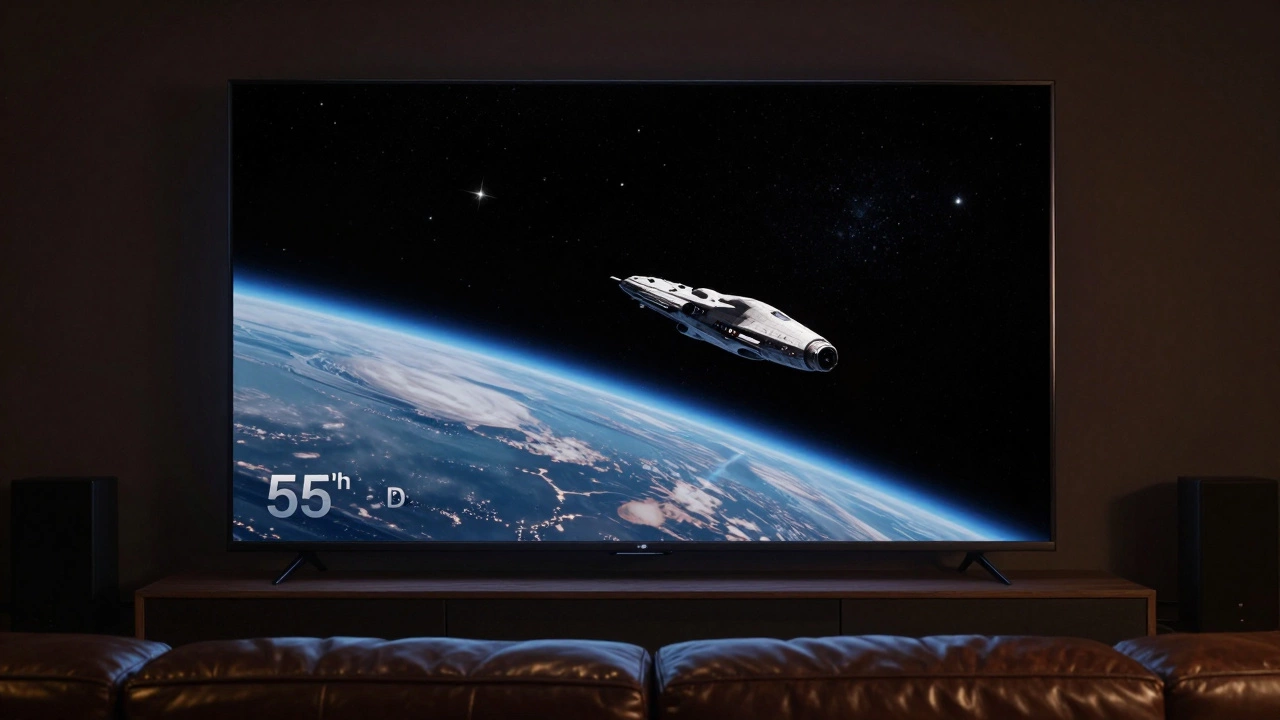
Think about watching a space scene in Interstellar - the stars pop against a black void. On a cheaper LED TV, you’ll see a gray haze. On OLED, the black is deeper than your bedroom at midnight. That’s why OLEDs get perfect contrast ratios. They don’t just claim to be better - they *are* better at showing true darkness.
Colors on OLED are also incredibly accurate. Because each pixel emits its own color without filters, the reds are richer, the greens are more natural, and the skin tones look real. That’s why filmmakers and colorists often prefer OLED for studio monitoring.
How QLED Works - Brighter Isn’t Always Better
QLED stands for Quantum Dot Light-Emitting Diode. It’s not self-emissive like OLED. Instead, it uses a traditional LED backlight with a layer of quantum dots that boost color and brightness. Think of it like a flashlight shining through colored glass. The glass (quantum dots) makes the light more vibrant, but the light is still coming from behind.
This gives QLED one big advantage: brightness. In a sunlit room, a QLED TV can hit 2,500 to 3,000 nits of brightness. Most OLEDs top out around 1,000 nits. That’s why QLEDs look stunning during the day - your sports highlights, HDR movie explosions, and video game explosions don’t wash out.
But here’s the catch: because the backlight is always on, blacks aren’t true. Even with local dimming zones, you’ll still see a faint glow around dark objects. That’s called blooming. It’s subtle, but once you notice it, you can’t unsee it - especially in dark scenes like Blade Runner 2049.
Picture Quality Showdown
Let’s break this down point by point.
| Feature | OLED | QLED |
|---|---|---|
| Black Levels | Perfect - pixels turn off | Good, but with blooming |
| Brightness | Up to 1,000 nits | Up to 3,000 nits |
| Color Accuracy | Exceptional, wide gamut | Very good, slightly oversaturated |
| Viewing Angles | 178° - no color shift | 160° - slight color fade |
| Response Time | 0.001ms - instant | 5ms - fast, but slower |
If you watch TV in a dim room - which most people do - OLED wins on contrast and motion. The difference is obvious in action scenes. A car chase in Mad Max: Fury Road on OLED looks razor-sharp. On QLED, you might catch a tiny bit of motion blur or smearing.
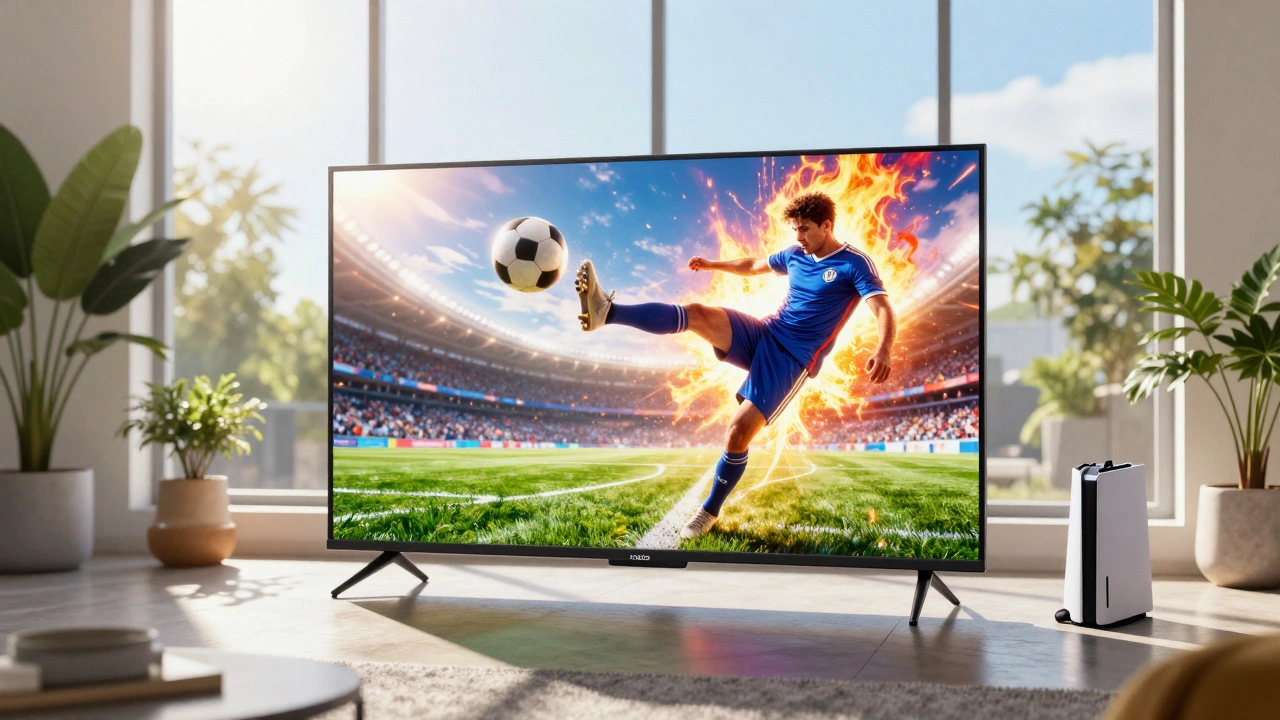
But if you have a bright living room with windows facing the TV, QLED’s brightness makes a real difference. You won’t have to pull the blinds. The picture stays punchy.
Long-Term Wear and Tear
One of the biggest fears around OLED is burn-in. That’s when a static image - like a news channel logo or a video game HUD - leaves a ghost on the screen over time.
It’s not as common as people think. Modern OLED TVs (2023 and newer) have pixel-shifters, logo dimming, and automatic brightness limits. Samsung even tested OLEDs for 100,000 hours of use - that’s over 11 years of 24/7 operation - and saw minimal degradation.
Still, if you leave your TV on the same channel all day for work or gaming, QLED is safer. It doesn’t have burn-in risk. The quantum dots don’t degrade like organic compounds. That’s why many businesses use QLED for digital signage.
For most home users, burn-in isn’t a real concern. But if you’re planning to use your TV as a monitor for work, or you play the same game with a static HUD for 10+ hours a week, QLED gives you peace of mind.
Price and Value
In 2026, OLED prices have dropped sharply. A 55-inch OLED now starts at $850. A comparable QLED runs $700. The gap is smaller than ever.
But here’s the twist: QLEDs come in more sizes - including 75-inch and 85-inch models - at lower prices. If you want a giant screen without breaking the bank, QLED still leads. OLEDs above 77 inches are rare and expensive.
Also, QLEDs often include better speakers, more HDMI 2.1 ports, and brighter gaming modes. If you care about sound or next-gen gaming, check the specs. Some QLEDs now have 144Hz refresh rates and VRR support that rival OLEDs.
Who Should Choose Which?
Let’s make this simple.
- Choose OLED if: You watch mostly in low light, you care about deep blacks and perfect contrast, you love movies or documentaries, you sit close to the screen, or you want the best motion handling for sports.
- Choose QLED if: Your room gets bright sunlight, you watch a lot of daytime TV or sports, you play games with static HUDs, you want a larger screen (75+ inches), or you’re on a tighter budget.
There’s no "best" TV. There’s only the best TV for you.
What About Mini-LED?
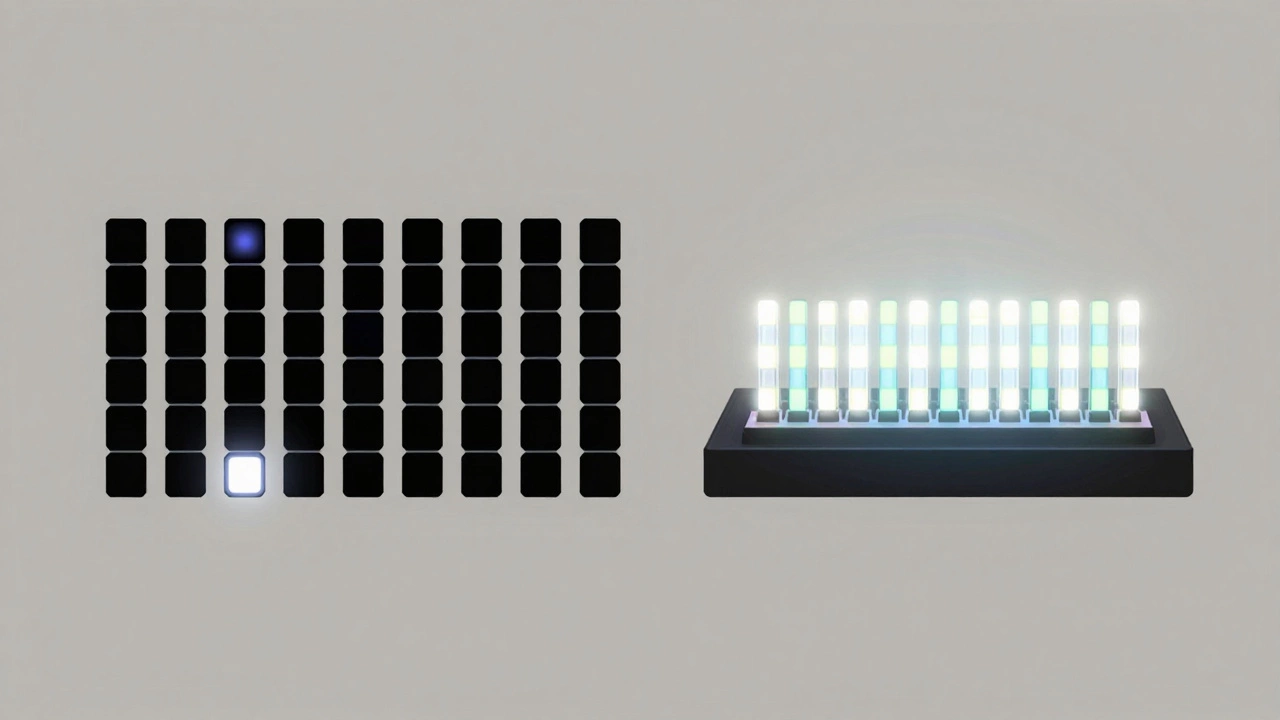
You might have heard of Mini-LED. It’s not a new panel type - it’s just a better backlight. Mini-LED uses thousands of tiny LEDs instead of dozens. That means better local dimming, less blooming, and brightness that rivals QLED.
Many 2026 TVs labeled "QLED" actually use Mini-LED backlights. So when you’re comparing, look for "Mini-LED backlight" in the specs. It’s a hidden upgrade.
Mini-LED QLEDs are a strong middle ground - better blacks than standard QLED, brighter than OLED, and cheaper than OLED in large sizes.
Final Verdict
In 2026, OLED is the premium choice for picture quality. It delivers what no other tech can: true black, perfect contrast, and flawless motion. If you want the most cinematic experience, OLED is still king.
But QLED isn’t falling behind. It’s evolving. With Mini-LED, higher brightness, and better gaming features, it’s the smarter pick for bright rooms, big screens, and budget buyers.
For most people, the decision comes down to one thing: where you watch. If your TV faces a window, go QLED. If you have a home theater setup, go OLED.
And if you’re still unsure? Rent one for a weekend. Most retailers let you test TVs at home. You’ll know the second you see the difference.
Is OLED better than QLED for gaming?
For gaming, OLED has the edge in response time and motion clarity - crucial for fast-paced shooters or racing games. Its near-instant pixel response eliminates motion blur. However, if you play games with static HUDs (like health bars or maps) for long sessions, QLED is safer from burn-in. Many new QLEDs now offer 144Hz refresh rates and HDMI 2.1, making them competitive. For most gamers, OLED is ideal unless you’re using the TV as a PC monitor.
Does QLED have better color than OLED?
QLED TVs often show brighter, more saturated colors because of their quantum dot layer. But OLED delivers more accurate, natural colors. Think of it like this: QLED makes colors pop like a poster. OLED makes them feel real, like a painting. For movies and TV shows mastered in HDR, OLED’s color accuracy wins. For daytime viewing or bright content, QLED’s vibrancy stands out.
Can you see burn-in on OLED TVs today?
Burn-in is rare on modern OLED TVs. Manufacturers now include pixel-shifting, logo dimming, and automatic brightness limits. Real-world testing shows that even after 5+ years of daily use, most users don’t notice any permanent image retention. It’s mostly a concern for people who leave static images on screen for hours every day - like a news ticker or a gaming HUD. For average use, it’s not a problem.
Are QLED TVs more energy efficient than OLED?
It depends on what you’re watching. OLED uses less power when showing dark scenes - because pixels turn off. QLED uses more power because the backlight stays on. But in bright scenes - like a sunny beach or a white room - QLED can be more efficient because OLED has to light up every pixel. On average, they’re about equal. The biggest factor is brightness settings: lower brightness = lower power use, regardless of tech.
Which lasts longer - OLED or QLED?
QLED panels typically last longer because they don’t rely on organic materials that degrade over time. OLED pixels can lose brightness after 30,000-50,000 hours of use. But that’s still 15-25 years of normal viewing. Most people upgrade before that happens. In practice, both technologies last long enough to outlive your interest in the TV.
If you’re still deciding, remember this: OLED gives you the most immersive, cinematic experience. QLED gives you brightness, size, and durability. Neither is wrong. Just pick the one that matches how you live.