

Dishwasher Durability & Value Calculator
Select the specifications of your potential purchase to estimate its expected lifespan and annual cost.
Estimated Lifespan
*Based on industry averages for component failure rates and repair costs.
Assumes standard daily usage and basic maintenance.
Awaiting Input
Select your dishwasher specs on the left and click Calculate to see the durability analysis.
You just spent $800 on a new dishwasher. Three years later, the pump seizes up, or the control board fries itself into oblivion. You are left standing in your kitchen holding a receipt that has already expired. It is frustrating, expensive, and entirely avoidable if you know what to look for before you swipe your credit card.
When we talk about durable dishwashers, we aren't just talking about how many cycles it can run. We are talking about build quality, component sourcing, and design philosophy. Some brands engineer their machines to last 15 years with basic maintenance. Others are designed with planned obsolescence in mind, meant to fail right after the warranty expires. If you want an appliance that won't leave you stranded with a sink full of greasy plates, you need to understand the mechanics behind reliability.
The Reality of Appliance Lifespan
According to data from the National Association of Home Builders and various consumer reports, the average lifespan of a modern dishwasher is between 9 and 12 years. This is down significantly from the 15-20 year lifespans common in appliances manufactured in the 1990s. Why the drop? Complexity. Modern units have more electronics, more sensors, and tighter tolerances. More parts mean more things that can break.
However, averages hide the extremes. There are models known to fail within 5 years, and there are workhorses that hit 20 years without major repairs. The difference usually comes down to three factors: the motor type, the tub material, and the brand’s service network.
Motor Technology: Induction vs. Standard
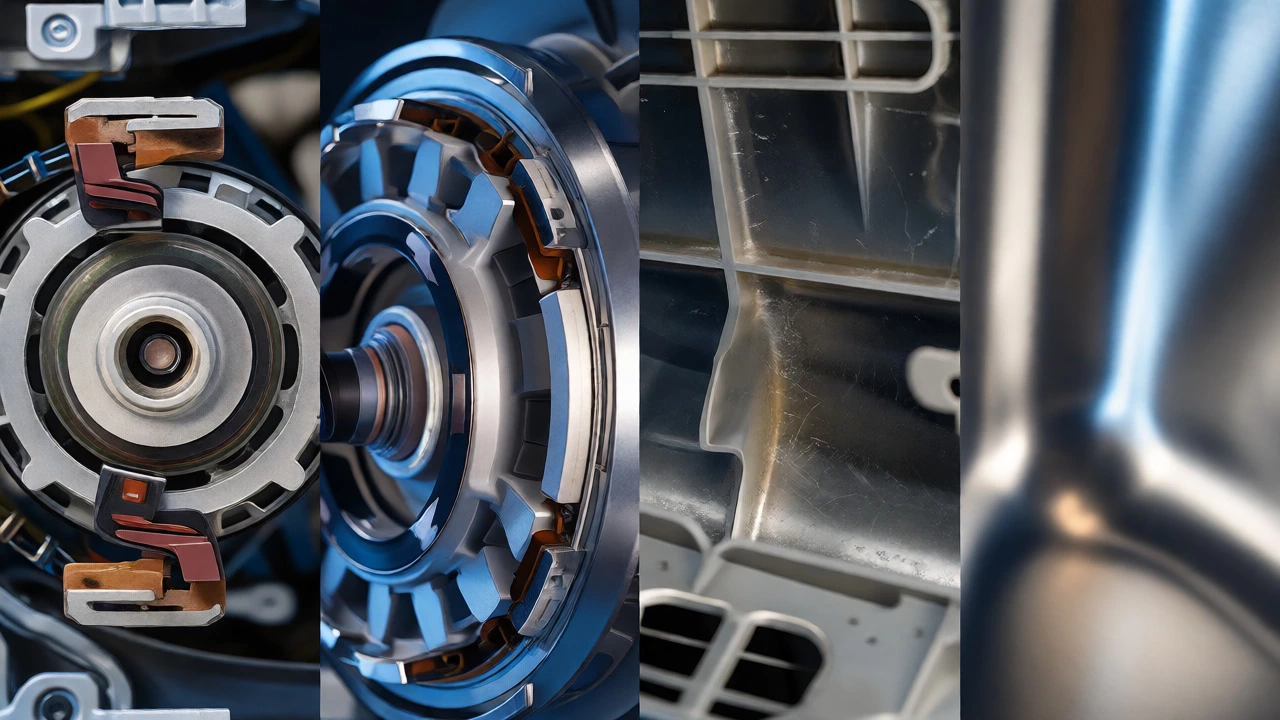
The heart of any dishwasher is its motor. This is where durability starts. Most standard, lower-cost dishwashers use a universal AC motor. These motors rely on brushes that wear down over time. Once those brushes degrade, efficiency drops, noise increases, and eventually, the motor fails. Replacing a universal motor often costs nearly as much as buying a new unit because labor is intensive.
On the other hand, high-end and mid-range reliable models often use induction motors (also known as brushless DC motors). An induction motor uses magnetic fields to spin the impeller. There are no physical brushes to wear out. This means fewer moving parts in contact with each other. Brands like Bosch and Miele heavily utilize this technology. While these units cost more upfront, the motor itself rarely fails under normal use. If you are looking for longevity, check the spec sheet for "induction motor" or "brushless motor." It is a small detail that saves you hundreds of dollars in future repairs.
Tub Material: Stainless Steel vs. Plastic
Open the door of a cheap dishwasher and you will likely see a white plastic interior. Open a premium one, and you see brushed stainless steel. This isn't just for looks. Plastic tubs are cheaper to manufacture and quieter because they absorb vibration. But plastic degrades. Over ten years of hot water exposure and detergent chemicals, plastic can become brittle. It may crack around the heating element mounts or develop leaks at the seams.
Stainless steel tubs are the gold standard for durability. They resist corrosion, do not retain odors, and do not warp under heat. If a leak occurs, it is usually due to a gasket failure rather than the tub itself cracking. Furthermore, stainless steel conducts heat better, which helps dry dishes more effectively without needing an extra drying cycle. When comparing options, prioritize a full stainless steel tub over a hybrid model (stainless bottom, plastic sides) if your budget allows. The hybrid is a compromise; the full steel is a commitment to longevity.
| Feature | Plastic Tub | Stainless Steel Tub |
|---|---|---|
| Average Lifespan | 7-10 Years | 12-15+ Years |
| Heat Resistance | Moderate (Risk of warping) | High (No warping) |
| Odor Retention | High (Porous surface) | Low (Non-porous) |
| Repair Cost | Often uneconomical | Gasket replacement only |
| Price Impact | $400 - $600 range | $700 - $1,200+ range |
Brand Reliability: Who Actually Lasts?
Marketing claims are noisy. Service call rates are quiet but honest. Based on repair technician reports and extended warranty claim data, certain brands consistently outperform others in terms of reliability.
Miele is widely considered the tank of the dishwasher world. Their engineering philosophy is built around a 20-year lifespan. They test their hinges for 20,000 open/close cycles. That is roughly 20 years of daily use. They also use a unique system called AutoDos, which integrates detergent dispensing directly into the machine, reducing user error. The downside? Price. A Miele dishwasher often costs two to three times more than a standard Whirlpool or GE model. You are paying for the insurance policy of never having to replace it.
Bosch sits in the sweet spot for most homeowners. They dominate the market for a reason. Their 800 series and above feature stainless steel tubs, induction motors, and robust filtration systems. Repair technicians report that Bosch pumps and control boards hold up well beyond the 10-year mark. Parts availability is excellent, meaning if something does break, a local tech can fix it quickly without ordering custom components from Germany.
What about mainstream brands like Whirlpool and GE Appliances? These are solid choices for budget-conscious buyers. They are not necessarily less durable in terms of mechanical failure, but they often use more plastic components and simpler electronics. This makes them easier and cheaper to repair, even if they don't last as long as a Miele. If you buy a Whirlpool, expect 8-10 years of good service. If you buy a Miele, expect 15+. Both are valid strategies depending on your financial situation.
The Hidden Killer: Water Quality and Maintenance
You can buy the most durable dishwasher in the world, but hard water will kill it anyway. Calcium and magnesium deposits build up on the heating element and inside the spray arms. Eventually, the heater burns out trying to heat cold water, or the jets clog, leading to poor cleaning performance and strain on the pump.
If you live in an area with hard water (you know it if your faucets have white crusty buildup), you must maintain your dishwasher differently. Use a rinse aid every single load. Rinse aids contain surfactants that prevent droplets from forming and leaving mineral spots. They also help the machine drain completely, reducing stagnant water that breeds bacteria and mold.
- Clean the Filter: Most modern dishwashers have a manual filter trap. Check it weekly. Debris here restricts water flow and forces the pump to work harder.
- Run a Cleaning Cycle: Once a month, run an empty cycle with a cup of white vinegar on the top rack or a specialized dishwasher cleaner. This dissolves grease and mineral scale.
- Leave the Door Ajar: After a cycle, crack the door open. This lets moisture escape. Trapped humidity promotes mold growth in the seals and gaskets, which leads to leaks and bad smells.
Smart Features: Help or Hindrance?
Do Wi-Fi-enabled dishwashers break more often? Generally, yes. Every electronic component added to a machine is another potential point of failure. Smart features require circuit boards, Wi-Fi modules, and complex software interfaces. If the Wi-Fi module dies, it might not stop the wash cycle, but it could trigger error codes that confuse the main controller.
For maximum durability, simplicity is key. Look for models with mechanical buttons or simple touch pads rather than large color LCD screens. Fewer pixels mean fewer things to burn out. If you want smart features, consider adding them via a separate smart plug or dedicated sensor rather than relying on built-in connectivity. Your goal is a machine that cleans dishes, not one that needs a firmware update.
Making the Final Decision
So, what is the most durable reliable dishwasher? For pure longevity regardless of cost, Miele wins. For the best balance of price, performance, and reliability, Bosch is the clear leader. For tight budgets where you accept a shorter lifespan in exchange for lower upfront cost, Whirlpool offers decent value.
Ignore the flashy marketing terms like "CrystalDry" or "PrecisionWash" unless you verify the underlying hardware. Look for the stainless steel tub. Look for the induction motor. Check the local reputation of the brand’s service network. If you cannot find a qualified repair person for Brand X in your zip code, do not buy Brand X, no matter how durable it claims to be. Reliability is not just about the product; it is about the support ecosystem surrounding it.
Are stainless steel tubs really worth the extra cost?
Yes, for most buyers. Stainless steel resists stains, odors, and bacterial growth far better than plastic. It also conducts heat efficiently, improving drying performance. While the initial price is higher, the extended lifespan and reduced likelihood of tub-related leaks usually make it cost-effective over a 10-year period.
How long should a reliable dishwasher last?
A high-quality dishwasher from a reputable brand like Miele or Bosch should last between 12 and 15 years with proper maintenance. Budget models typically last 7 to 10 years. Regular cleaning of filters and using rinse aid can add several years to the lifespan of any model.
Is it better to repair or replace a broken dishwasher?
The general rule of thumb is the 50% rule. If the repair cost exceeds 50% of the price of a new comparable unit, replace it. However, if the dishwasher is under 5 years old and the issue is a minor part like a pump seal, repair is usually worthwhile. For units over 10 years old, replacement is almost always the smarter financial move.
Do expensive dishwashers clean better than cheap ones?
Not necessarily. Cleaning performance depends more on spray arm design and water pressure than price. Many mid-range models clean just as well as luxury units. Where expensive models excel is in noise reduction, drying capability, and durability of internal components, not necessarily in removing food residue.
What is the biggest cause of dishwasher failure?
Control board failures and pump issues are the most common causes. Hard water damage accelerates both. Additionally, neglecting to clean the filter leads to restricted water flow, which strains the pump and causes premature wear. Using too much regular soap instead of dishwasher detergent can also destroy seals and electronics.