
Find Your Perfect Carafe Type
From the time you finish brewing to when you drink it.
Quick Facts
- Glass: Best for immediate drinking. Risk of "burnt" flavor after 2 hours.
- Thermal: Keeps liquid at brewing temp for up to 12+ hours.
You have just pressed "brew" and your kitchen fills with that fresh aroma. It smells incredible. You sit down for your morning cup, take a sip, and realize the second cup was lukewarm. Why did that happen? You probably reached for a machine with a thermal carafe or wondered if you should stick with the old-fashioned glass option. In the world of coffee brewing, the choice between these two holding vessels changes everything about your daily ritual.
We aren't just talking about how long your drink stays hot. While temperature matters, we are also talking about durability, taste perception, and how much maintenance you want to deal with. Whether you are brewing enough for a family gathering or just yourself, understanding the mechanics helps you buy the right equipment for your specific habits.
How Heat Retention Actually Works
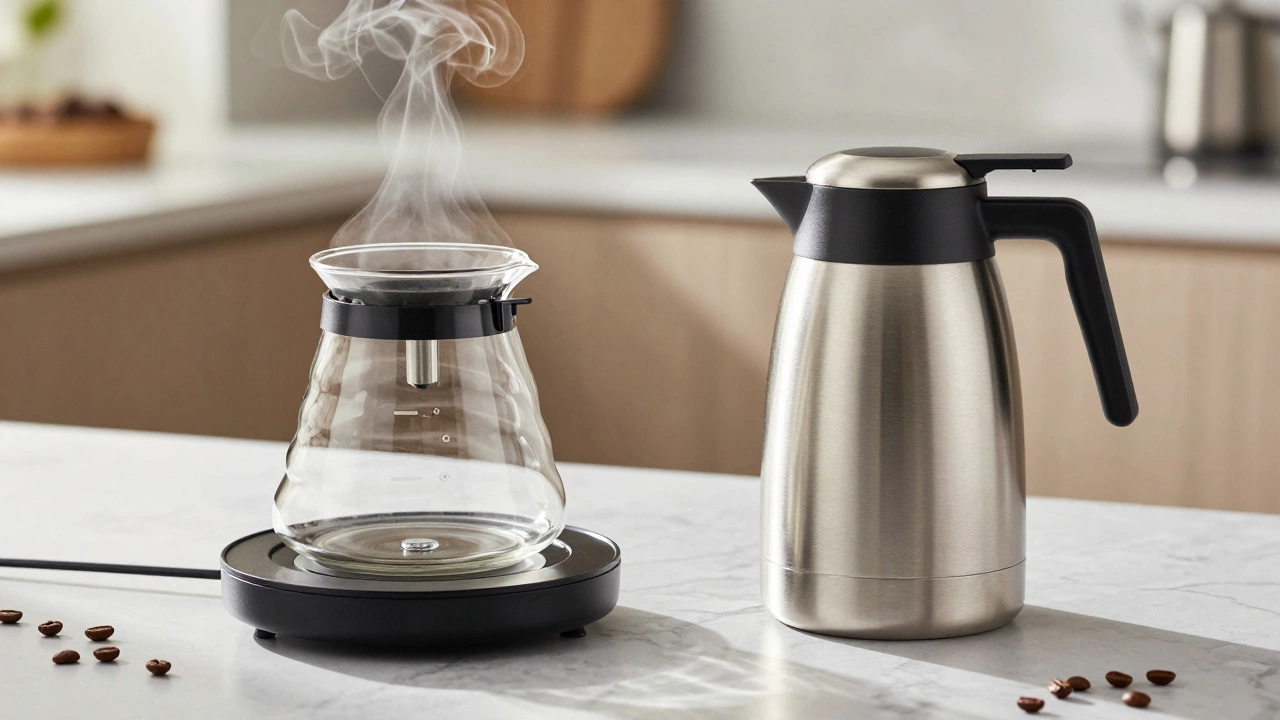
Let’s look at the physics behind keeping your brew hot. A standard glass carafe is a clear vessel made from tempered borosilicate or regular soda-lime glass that holds liquid after brewing typically sits on top of a warming plate. This plate keeps the bottom heated, but there is a catch. The heating element runs constantly. Over several hours, this can cause the Maillard reaction to continue, essentially burning the coffee oils at the bottom. This creates that distinct sour, burnt flavor many people hate.
On the other hand, a thermal carafe is a double-walled container usually made of stainless steel designed to minimize heat transfer through vacuum insulation works differently. There is no external heater. The walls are vacuum-sealed, trapping the heat inside. When you pour from a good quality thermal unit six hours later, the coffee tastes very close to what it tasted ten minutes after brewing. You lose no heat to the environment.
| Feature | Thermal Carafe (Stainless) | Glass Carafe |
|---|---|---|
| Heat Duration | Up to 24 hours | 1 to 2 hours |
| Energy Usage | Negligible after brewing | Continuous power draw |
| Taste Preservation | No degradation | Burnt notes over time |
| Filling Visibility | Limited (metal walls) | Clear view of level |
If you live in a place with cold winters, like Vancouver, you often find that you want your beverage steaming even when you walk into the kitchen three hours later. A thermal carafe excels here because the interior surface stays cool to the touch outside while remaining boiling inside. This is the definition of effective insulation.
Flavor Profile and Brewing Mechanics
Many people believe the metal might impart a metallic taste to the water. This is largely a myth when the manufacturing quality is high. Manufacturers coat the interior of the steel lining with food-grade epoxy or use 18/8 stainless steel that resists leaching. However, the real difference lies in the brewing pressure and flow rate.
Glass carafes Tempered Glass Pot are lighter and allow air bubbles to escape more easily during the fill process. If you pour quickly, you might get foam splatter.
Thermal bottles have a slightly heavier lid mechanism to seal tightly. Some cheaper models require you to push the button firmly to release the valve. This valve ensures pressure doesn't build up, but it can sometimes clog with coffee grounds or oil residue. If you don’t clean the nozzle area carefully, that can affect the flow, which indirectly impacts how well you pour and potentially how much sediment gets into your cup.From a pure flavor standpoint, glass wins on transparency. You see the color of the liquid. Dark roast looks different from light roast. With a thermal unit, you often rely on markings on the side, or you guess until you hear the liquid gurgling against the metal wall.
Durability and Handling Risks
Imagine dropping your morning pot. What happens? A glass vessel is fragile. Even tempered borosilicate breaks under sufficient impact. When it drops on a tile floor, shards scatter everywhere. It becomes a safety hazard in a household where you rush out the door early.
Stainless steel construction is virtually indestructible in daily use. It handles knocks against cabinet doors, counters, and accidental drops without cracking. The only part that tends to break is the plastic lid assembly. These lids often snap, leak, or get lost. A cracked glass base renders the whole thing useless; a scratched steel body looks worn but still holds liquid perfectly fine.
There is also the issue of weight. An empty glass carafe weighs significantly less than a vacuum-insulated double-wall bottle. If you have arthritis in your hands or struggle with grip strength, pouring half a gallon of heavy coffee can be difficult with a thermal pot. Many modern designs address this with lever-action pour spouts, but the sheer mass remains.
Maintenance and Cleaning Challenges
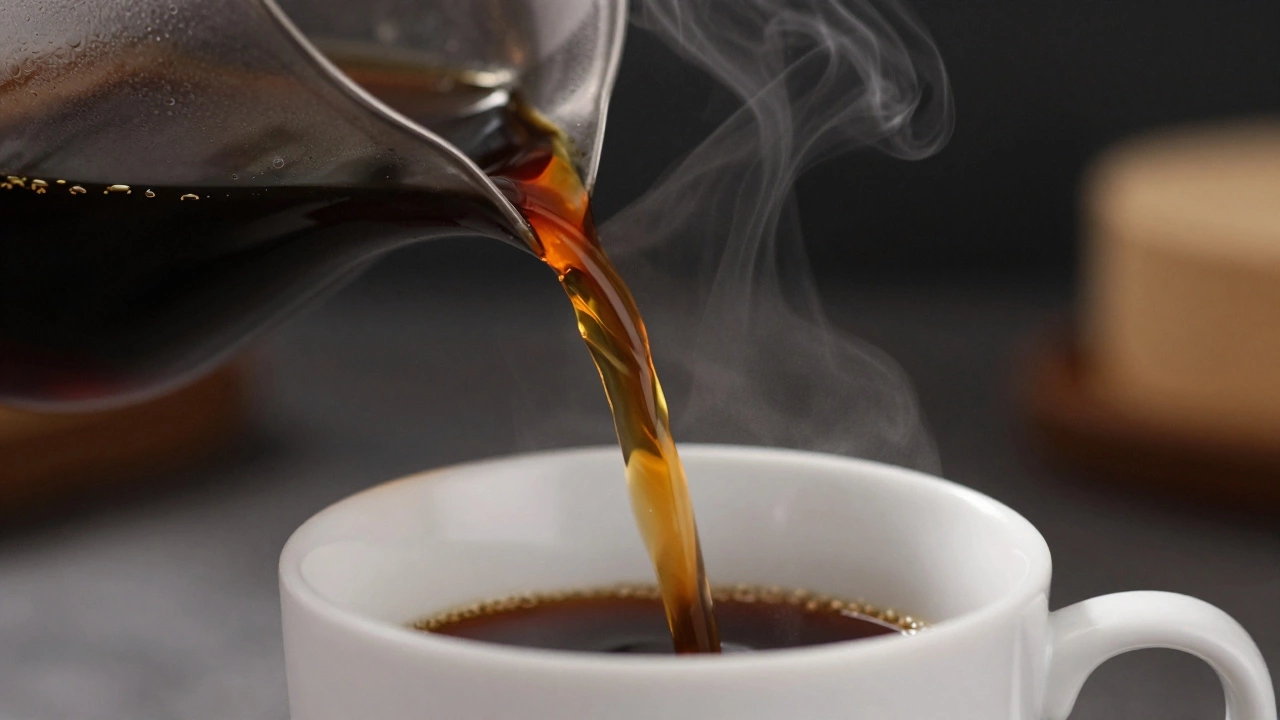
This is where the rubber meets the road for most users. You want to wash your vessel, but the internal shape makes it tricky. Descaling The process of removing mineral buildup caused by hard water from appliances happens much easier in glass. Hard water leaves calcium deposits over time. You can see them clearly inside the glass pot. You simply run a mixture of white vinegar and water through the machine and wipe the inside with a cloth.
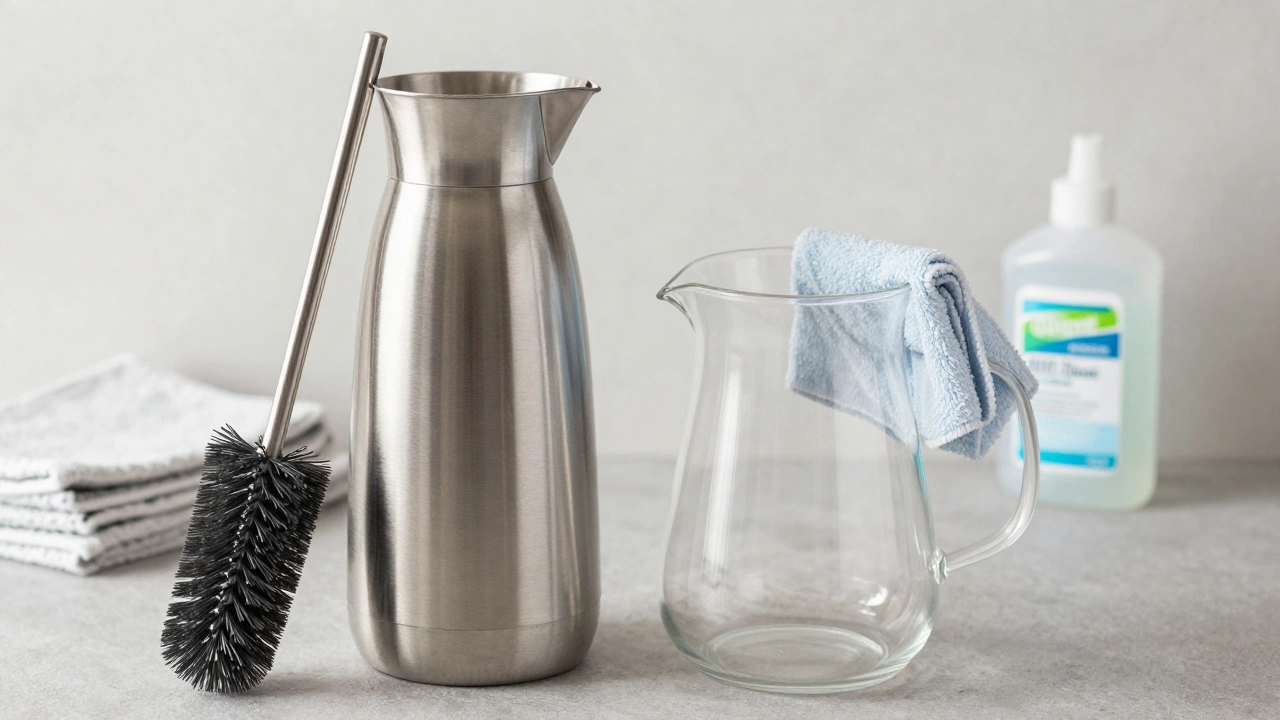
A thermal carafe is narrower at the neck, making it hard to reach. You cannot scrub the bottom easily without a special long-bristled bottle brush. Furthermore, the interior is dark. You often won’t see the scale building up until your water flow slows down drastically. For stubborn stains, you need to soak it overnight. Since the lid has complex valves and seals, descaling the lid itself requires disassembling parts you weren’t meant to take apart. Manufacturer manuals say "hand wash," but the reality involves scrubbing tight corners with small tools.
- Glass: Easy to see dirt, easy to dry completely.
- Thermal: Difficult to dry inside, risk of mold in damp crevices.
Despite the cleaning difficulty, the lack of a heating plate on the coffee machine base means the exterior of the thermal unit never gets stuck-on burnt coffee. Glass pots sit on a hot plate, meaning dried sludge bonds to the glass bottom, requiring scraping. Thermal units just sit on the counter or a drip tray, staying pristine externally.
Cost Analysis and Machine Compatibility
When shopping for deals, you will notice a price gap. Machines featuring glass tend to be entry-level or mid-range options. The components are cheaper to manufacture and ship. However, the market for premium espresso-driven drip brewers often defaults to thermal because serious home baristas do not tolerate burnt flavor.
If you are buying a replacement, check the footprint. A 10-cup thermal bottle is physically taller than a 10-cup glass pot. Measure your cupboard space. Thermal units often stand nearly 10 inches tall, plus the lid height. Glass ones are shorter and wider. Your kitchen storage dictates which style fits.
Also, consider the lifespan. A cheap plastic warmer plate on a glass setup often fails within three years due to constant heat cycling. Thermal units remove that electronic component entirely. While the steel unit lasts forever, the pumps inside the coffee maker can still fail regardless of the pot type. However, you eliminate one failure point by switching away from the burner plate.
Who Should Choose Which Style?
This depends entirely on your drinking schedule. Let's categorize your typical day.
- The Sipping Drinker: If you brew a pot and drink every single drop within an hour, a glass carafe is sufficient. It saves you money upfront.
- The Office Worker: If you make a full pot in the morning but finish it at your desk five hours later, thermal is mandatory. Without it, you will be microwaving burnt coffee.
- The Entertainer: If you host guests, glass allows people to see what they are getting and helps you gauge exactly how much coffee remains visually. Thermal units hide the volume.
I have lived with both setups. In my own kitchen routine here in Vancouver, the cold rain and grey skies mean I prioritize temperature. Thermal wins every single day for me. But I understand that others prefer the classic aesthetic and low cost of glass. It isn’t a bad product; it is just outdated technology for specific needs.
Common Concerns Addressed
You likely have lingering questions about how these fit into your existing life. We cover the most frequent follow-up inquiries below to ensure nothing is left unclear.
Can I put a thermal carafe in the dishwasher?
Generally, no. Most manufacturers recommend hand washing thermal carafes. Dishwasher heat and detergents can damage the vacuum seal over time, causing the insulation to fail. Additionally, the metal paint finishes may peel, leaving bare steel that rusts.
Why does my thermal carafe leak?
Leaks almost always occur at the lid interface. Usually, a small O-ring or silicone seal has shifted or been blocked by coffee grounds. Remove the lid, check the sealing surface for debris, and re-seat the cap tightly. If the seal is cracked, replace it rather than the whole unit.
Is glass safer than thermal for microwave reheating?
Yes, glass is microwave-safe. Metal thermal containers explode or spark in a microwave. However, if your goal is reheating, you have already failed the purpose of using thermal. Reheating degrades flavor compounds significantly. Drink hot, or add cold milk instead.
Do thermal carafes reduce caffeine content?
No. Neither material affects caffeine levels. Caffeine extraction occurs during the brew cycle in the machine basket. Once in the carafe, chemical composition remains stable regardless of whether the vessel is insulated or on a hot plate.
How do I clean the inside of a narrow thermal bottle?
Purchase a dedicated long-handle bottle brush. Alternatively, create a mix of baking soda and water to form a paste, fill the carafe with hot water, agitate vigorously, let sit for an hour, and rinse thoroughly. Avoid abrasive steel wool pads which scratch the protective coating.
Ultimately, the decision comes down to patience and convenience. Do you value seeing the contents or tasting the peak freshness? Thermal technology offers a superior sensory experience for those willing to manage a bit more complexity in cleaning. Glass remains the king of simplicity and cost savings. Assess your priorities before clicking that buy button on the latest deal.