
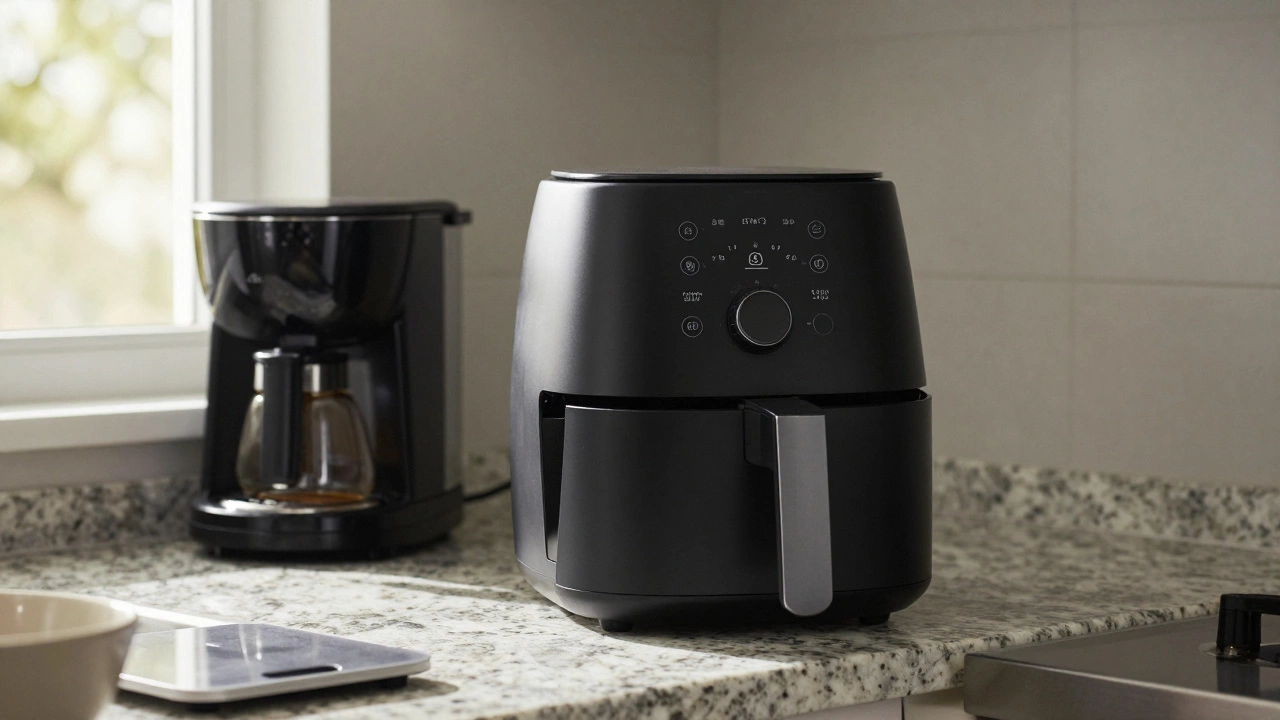
You open the closet, and it’s already stuffed with gadgets you barely touch. Another countertop appliance just feels like clutter. Yet, everyone talks about how good their fried food tastes after switching to this compact machine. Before you hand over your money, ask yourself: does this tool solve a real problem, or is it just another gadget destined for the back of a cupboard?
The short answer depends entirely on how you cook today. If you spend hours cleaning grease filters or waiting for the oven to preheat, this device changes the game. If you rarely cook meat or frozen snacks, you might not see the return on investment. We’ll break down the actual costs, space requirements, and culinary results so you can make a call without guesswork.
Quick Summary
- Energy Efficiency: Uses less power than a traditional oven due to smaller size and faster cooking times.
- Cooking Speed: Cuts prep time by roughly 20-30 minutes on average per meal.
- Space Impact: Requires permanent counter space; storage options vary by model design.
- Health Factor: Significantly reduces oil usage compared to deep frying without sacrificing texture.
- Versatility: Functions as a convection oven, dehydrator, and roaster depending on settings.
How It Actually Works
To understand if you need one, you first need to understand what makes it tick. An Air Fryer is essentially a compact convection oven that circulates hot air rapidly around food. It uses a heating element positioned near the top of the unit and a powerful fan to push that heat through a wire basket.
This method creates a Maillard reaction-the chemical process responsible for browning and flavor-on the surface of your food. Unlike a microwave, which excites water molecules to heat food internally, the air fryer applies dry heat from the outside in. This distinction matters because it allows for crispy skins on potatoes and meats, something microwaves simply cannot achieve.
Many people assume it uses "oxygen frying," which sounds fancy but isn’t quite accurate. There is no magic involved; it’s physics. Because the air moves so quickly, it transfers heat more efficiently than a static oven. When you look at the specs of modern units available in 2026, most hover between 1400 and 1800 watts. That is enough power to sear steaks but low enough to keep electricity costs manageable for a small household.
The Real Cost: Electricity vs. Convenience
Living in a place like Vancouver, where utilities factor into monthly budgets, we need to look at the numbers. Does running this appliance every night spike your bill? A standard oven draws between 2000 and 5000 watts, while a typical air fryer sits around 1500 watts. On paper, the difference seems small. The savings come from runtime.
An oven needs 10 minutes to preheat alone. Then you bake for 30 minutes. Total: 40 minutes. An air fryer heats up in 2 minutes and cooks the same portion in 20 minutes. Total: 22 minutes. You are halving the energy consumption for that task.
Consider a scenario where you cook chicken breasts. In a conventional oven, you might set the temperature to 400°F for 25 minutes. Using 3 kW for half an hour consumes roughly 1.5 kWh. In the air fryer, 1.5 kW for 20 minutes consumes roughly 0.5 kWh. Over a month of daily meals, those savings add up. While it won't save you hundreds, it eliminates the waste of heating a massive metal box to cook three chicken legs.
| Appliance | Wattage | Preheat Time | Avg Cook Time |
|---|---|---|---|
| Air Fryer | 1500W | 2 Minutes | 15-25 Minutes |
| Convection Oven | 3000W+ | 10-15 Minutes | 30-45 Minutes |
| Microwave | 1000W | 0 Minutes | 5-10 Minutes |
Does It Fit Your Kitchen Layout?
The biggest complaint people have years later is not about performance-it’s about storage. These devices are not designed to disappear. Most sit around 12 inches wide, which eats into your workspace quickly. If your counter is already packed with a toaster, coffee maker, and scale, adding another brick of plastic creates stress.
Square footage matters here. Measure your usable counter length before shopping. You need clearance above the handle for ventilation and opening the basket. Some newer models feature stackable handles or vertical designs to address this, but you still need the room to operate the machine safely.
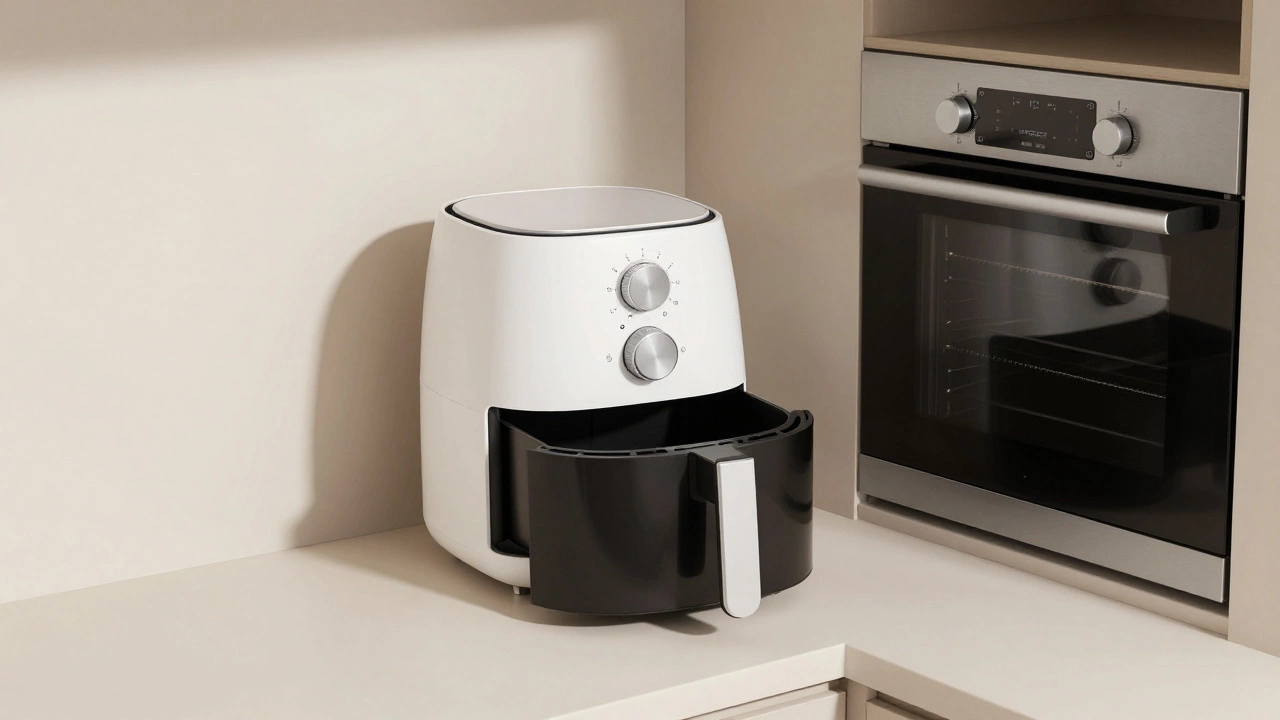
If space is tight, consider the basket style versus the drawer style. Drawers pull out horizontally and need empty floor space behind the unit. Baskets hinge forward and need overhead space. Look at your specific corner before committing to a bulky tower.
What Can You Actually Cook?
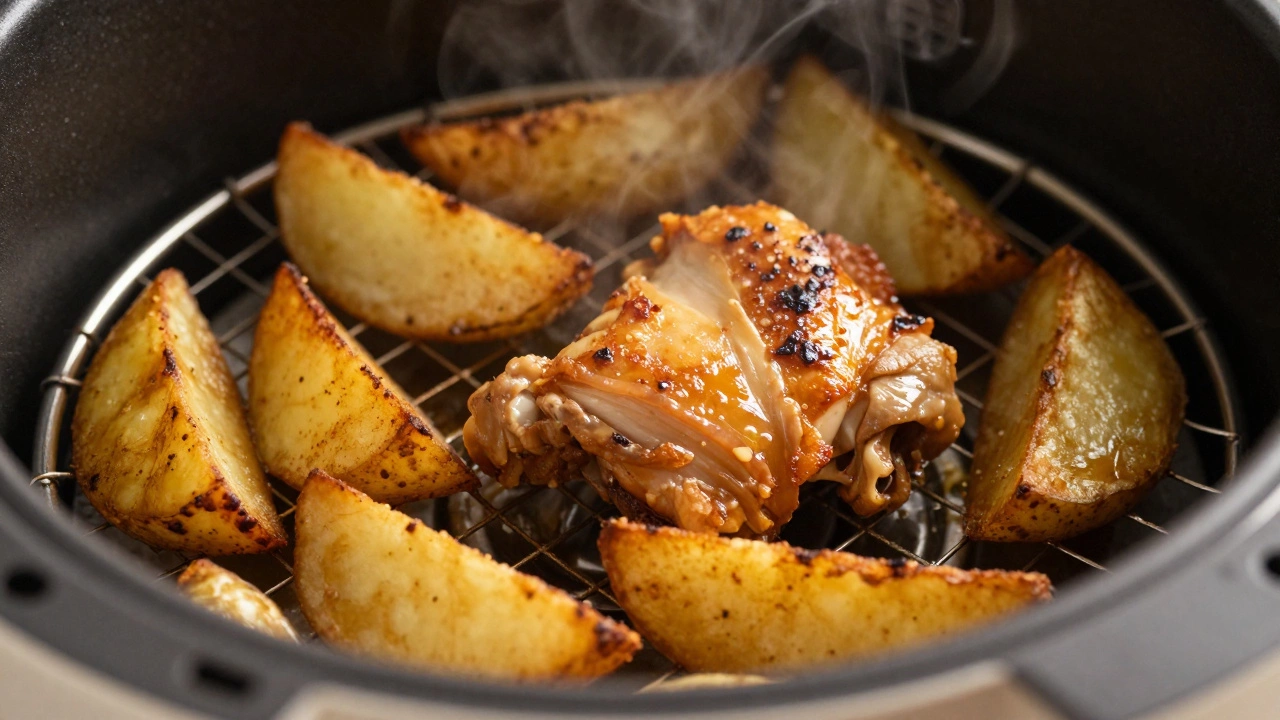
People buy these expecting french fries and nuggets, but the versatility goes deeper. With the right accessories, it acts as a multi-cooker. You can roast vegetables until they crisp up perfectly, which is hard to do in a pan. Frozen foods reheat better here than in any other appliance because the air circulation revives the crust instead of steaming it soft.
Meat lovers notice a significant change in texture. Pork chops come out juicy, and salmon skin crisps up beautifully. Even breads work well if you use parchment liners to prevent sticking. The limitation comes with large items. You cannot roast a whole turkey unless you have an extra-large XL model, which takes up even more room.
Cleaning is often cited as a pain point. The non-stick coating on cheaper models peels after heavy use, leaving residue stuck to the bottom. Premium versions use ceramic or stainless steel interiors. Investing in the latter ensures you aren't scrubbing carbonized grease forever. If you plan to run it daily, skip the entry-level $50 models and aim for ones with removable, dishwasher-safe baskets.
Alternatives: Convection Ovens and Microwaves
Before pulling out your credit card, look at what you already own. Many modern ovens have a "convection" setting that mimics the air frying effect. If your oven is gas or has a dedicated fan assist, you can replicate 80% of the air fryer experience without buying anything new. Just put the rack lower and reduce the temperature by 25 degrees.
A microwave is faster for simple reheating tasks. If your primary goal is heating up leftovers in a rush, the air fryer might feel slow by comparison. It struggles with soggy foods or dense casseroles that need uniform internal warming. However, for frozen pizzas or appetizers, the air fryer is superior.
Microwave is an appliance using electromagnetic waves to vibrate water molecules in food, great for speed but bad for texture. Combo Unit often combines both worlds.If you cook frequently for a crowd, the convection oven is better. Batch cooking ten burgers in an air fryer means multiple batches, which takes longer than one sheet pan in an oven. It really shines when cooking for one or two people consistently.
Buying Advice for 2026
When shopping now, don't get swayed by digital screens alone. Focus on capacity measured in quarts, not just volume. An 8-quart basket looks big but holds much less actual food due to shape. A 6-quart square basket often holds more than a round 8-quart one.
Prioritize temperature control ranges. Older models stopped at 400°F. Newer units allow higher heat for searing, up to 450°F. Check warranty terms, as electronics often fail within the first year. Finally, verify noise levels. High-speed fans can be louder than a garbage disposal, which matters in open-concept living areas.
Frequently Asked Questions
Do air fryers save money on grocery bills?
Yes, primarily because you use significantly less oil. Deep frying requires liters of oil that eventually gets tossed. Air frying uses little to none, reducing ingredient costs over time. Additionally, shorter cook times mean your freezer runs more often for fresh ingredients rather than thawed items.
Can you bake cakes in an air fryer?
You certainly can, but it requires specific molds. Metal pans work best. However, the small chamber limits size. Cupcakes, brownies, and personal loaves work well. Do not expect to bake a full wedding cake here. For baking larger goods, stick to your main oven.
Is the noise level loud?
Most models hum similar to a vacuum cleaner on low setting. Noise cancellation technology is improving, but a high-wattage fan always generates some sound. Place it away from conversation zones if you cook frequently in the evening.