
Freezer Lifespan & Repair Decision Calculator
Enter details and click "Analyze Status" to see results.
You just heard a weird hum coming from the basement, or maybe your ice cream is starting to soften faster than usual. The big question hits you: how many years should a freezer last? It’s not just about saving money on a replacement; it’s about knowing when repair is worth it and when you’re just throwing cash into a dying machine. Most people expect their appliances to last forever, but the reality is that a freezer has a specific expiration date, usually between 10 and 20 years depending on the type and how well you treat it.
If you are looking for a quick answer before reading the rest, here is what you need to know right now.
Key Takeaways
- Average Lifespan: Chest freezers typically last 16-20 years, while upright freezers average 10-14 years.
- Signs of Failure: Excessive frost buildup, loud noises, warm exterior walls, and inconsistent internal temperatures are red flags.
- Maintenance Matters: Cleaning condenser coils every six months can extend life by several years.
- Repair Rule: If a repair costs more than 50% of a new unit's price, replace it.
- Brand Impact: Commercial-grade units often outlast residential models by a decade.
The Real Numbers Behind Freezer Longevity
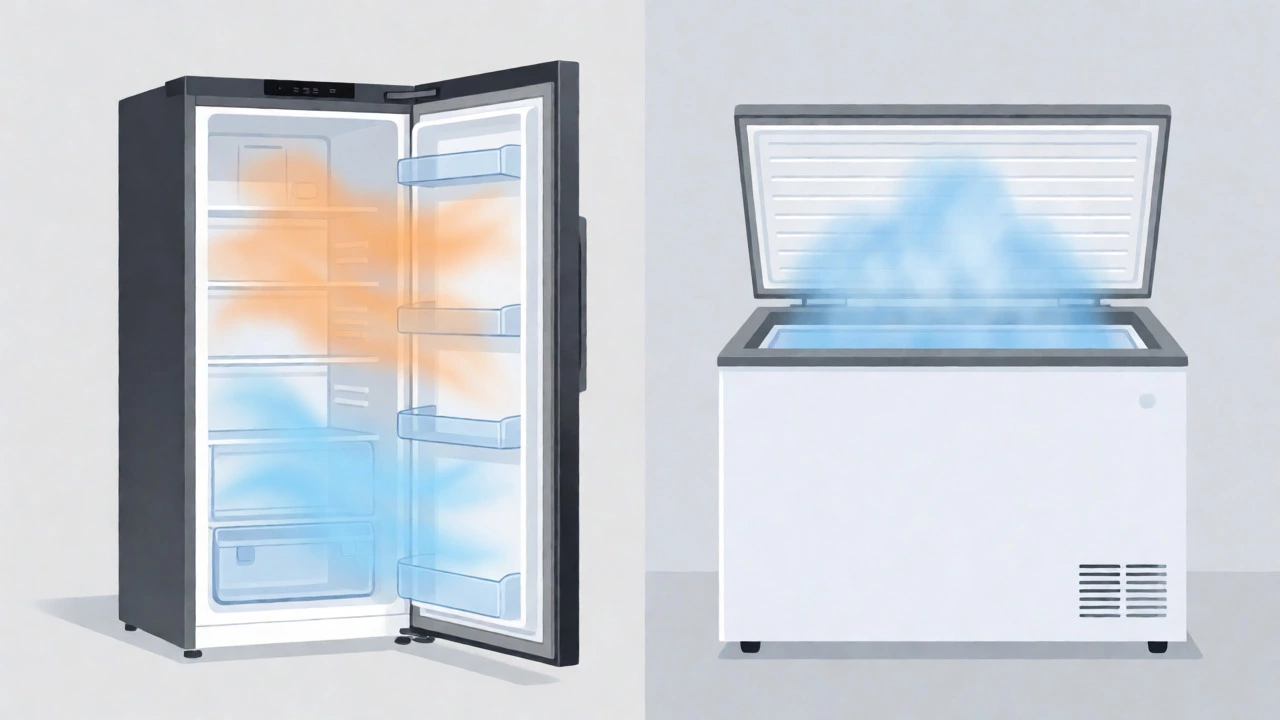
Let’s cut through the marketing fluff. There isn’t one single number for "freezer life" because design plays a huge role in durability. When we talk about Chest Freezers, we are referring to top-loading units that generally have fewer moving parts and better insulation efficiency. Because cold air sinks, opening a chest freezer doesn't let all the cold air escape like an upright door does. This means the compressor works less hard to maintain temperature. Industry data suggests that chest freezers consistently outlive their upright counterparts. You can realistically expect a well-maintained chest model to hit the 18-year mark, sometimes pushing 20 if you live in a moderate climate and keep it clean.
Upright Freezers, which look like mini-refrigerators, face different challenges. They rely on fans to circulate air (frost-free models) or deal with gravity issues when you open the door frequently. Every time you crack that door, warm humid air rushes in, forcing the system to work harder to cool down again. This extra stress wears out the compressor and fan motors faster. Consequently, upright freezers tend to fail earlier, often around the 10 to 14-year range. If you buy a cheap builder-grade upright, don’t be surprised if it struggles past year 8.
What about combo units? If you have a refrigerator with a built-in freezer, the lifespan is tied to the whole appliance. These complex systems have more components that can fail-ice makers, water dispensers, dual evaporators. A standard fridge-freezer combo averages about 13 years. However, the freezer section itself might fail independently due to defrost timer issues or clogged drains, even if the fridge part still works fine.
Why Do Some Freezers Die Young?
You’ve probably seen a 25-year-old freezer in someone’s garage that still runs like a charm, while your neighbor’s three-year-old unit quit on them. What gives? It comes down to usage patterns and environmental factors. The biggest killer of any cooling appliance is heat rejection failure. If your freezer sits in a hot garage in Vancouver during a summer heatwave, or next to an oven that gets blazing hot, the compressor has to work overtime. Compressors are mechanical hearts; push them too hard, and they burn out.
Another major factor is power surges. Modern freezers have electronic control boards that manage temperature and defrost cycles. A lightning strike or grid fluctuation can fry these boards instantly. Using a surge protector is a cheap insurance policy against this kind of premature death. Also, consider how full you keep the freezer. A completely empty freezer actually works harder because there is no thermal mass to hold the cold when the door opens. Conversely, overstuffing blocks airflow vents. The sweet spot is keeping it about 75-80% full, allowing air to circulate freely around the food.
How to Spot a Dying Freezer Early
Don’t wait until your meat turns brown to realize something is wrong. Your freezer talks to you if you listen. Here are the concrete signs that your unit is nearing the end of its life.
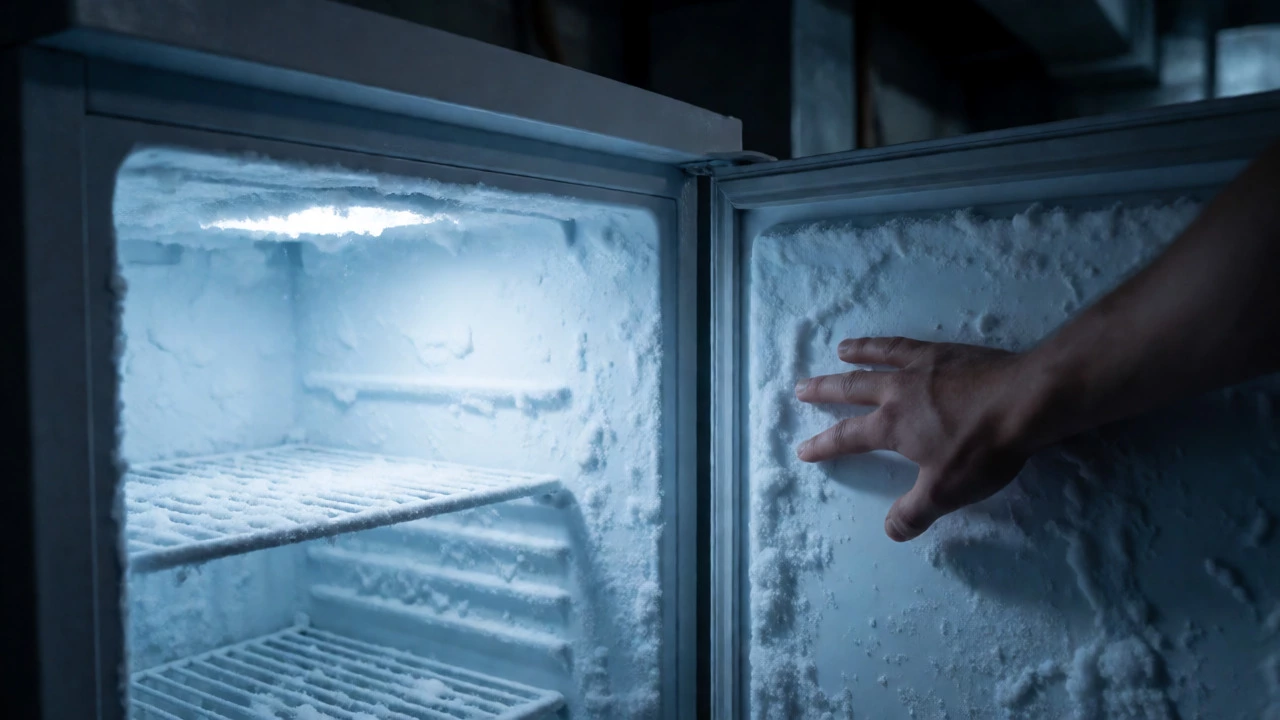
- Excessive Frost Buildup: If you see thick ice layers forming inside a non-frost-free unit much faster than usual, your gasket (door seal) might be leaking air, or the defrost system is failing. In frost-free models, visible ice on the back wall indicates a broken heater element or timer.
- Loud Noises: A healthy freezer hums quietly. If you hear grinding, knocking, or buzzing, the compressor mounts may be loose, or the motor bearings are wearing out. This is often the final warning shot.
- Warm Exterior Walls: Touch the sides of the freezer. They should feel slightly warm near the coils, but if the entire cabinet feels hot to the touch, the insulation is compromised or the refrigerant level is low.
- Inconsistent Temperatures: Use a standalone thermometer. If your freezer reads -10°C instead of the required -18°C (0°F), it’s struggling. Check for door gaps using the dollar bill test: close the door on a bill; if it slides out easily, your seal is bad.
Maintenance Tips That Actually Extend Life
Most people never touch their freezer until it breaks. But five minutes of maintenance twice a year can add years to its lifespan. First, tackle the condenser coils. On older models, these are black grids at the back; on newer ones, they might be behind a kickplate at the bottom front. Dust acts as an insulator, preventing heat from escaping. Vacuum them gently every six months. If you have pets, do it monthly.
Second, check the door gaskets. Clean them with warm soapy water to remove grime that prevents a tight seal. If the rubber is cracked or torn, replace it. A $20 gasket kit can save you hundreds in electricity bills and prevent compressor strain. Third, leave space around the unit. Ensure there are at least two inches of clearance on the sides and back for airflow. Cramping a freezer into a tight closet without ventilation is a recipe for early failure.
| Freezer Type | Poor Maintenance | Standard Care | Excellent Care |
|---|---|---|---|
| Chest Freezer | 10-12 Years | 16-18 Years | 20+ Years |
| Upright Freezer | 6-8 Years | 10-12 Years | 14-16 Years |
| Fridge-Freezer Combo | 8-10 Years | 12-14 Years | 15+ Years |
| Commercial Grade | 12-15 Years | 20-25 Years | 30+ Years |
Repair or Replace: The Decision Matrix
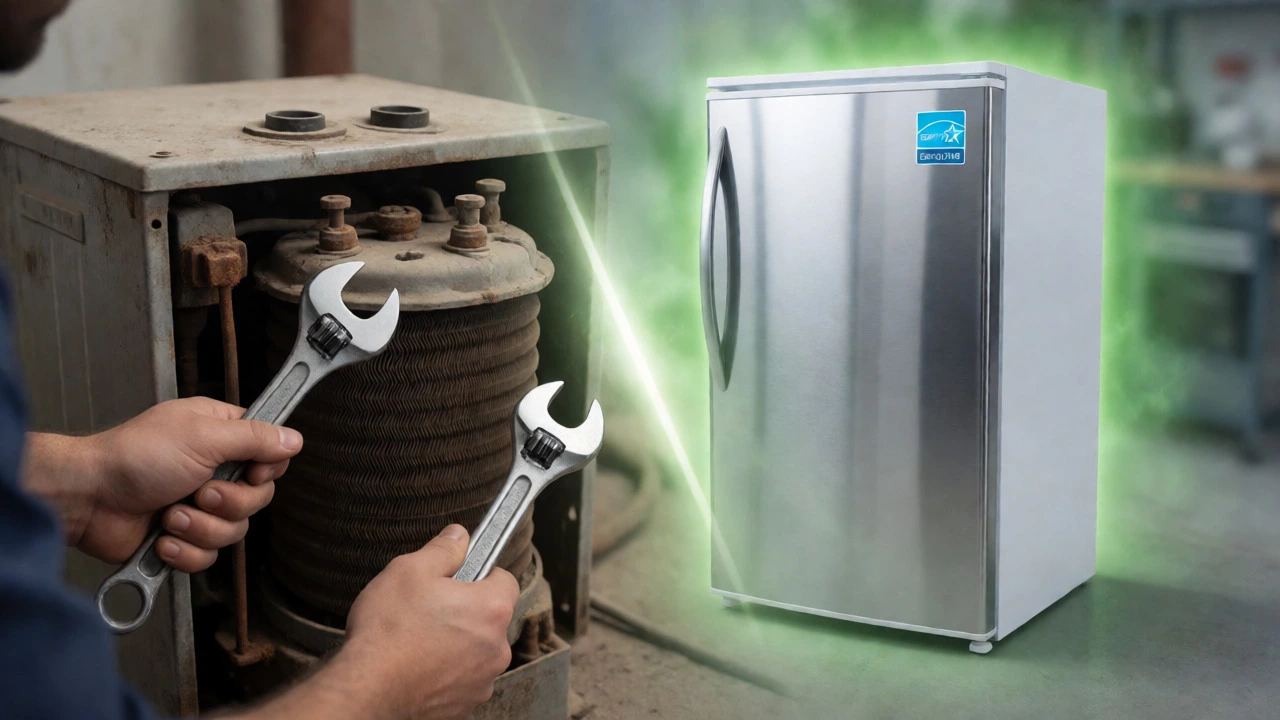
So your freezer died. Now what? You don’t always need to buy a new one immediately. Use the 50% rule. If the cost of repairs exceeds 50% of the price of a comparable new unit, replace it. For example, if a new chest freezer costs $400 and the repair quote is $250, buy the new one. Why? Because if the compressor failed, other components like the relay or start capacitor are likely near the end of their lives too. You’ll just be paying for another repair next year.
However, if the issue is simple-like a bad door gasket ($20-$50) or a faulty thermostat ($50-$100)-and the unit is under 10 years old, repair it. Newer freezers are significantly more energy-efficient than those made 15 years ago. An Energy Star certified model can save you $30-$50 a year in electricity compared to an old clunker. Over five years, that’s enough to offset the purchase price of a mid-range replacement.
Related Concepts and Connected Topics
Understanding freezer lifespan ties directly into broader kitchen appliance management. Refrigerators share similar mechanics but operate at higher temperatures, which can actually reduce strain on the compressor compared to deep-freezing applications. However, they have more complex electronics. If you are planning a kitchen remodel, consider bundling your purchases. Many retailers offer discounts if you buy a matching fridge and freezer set, though mixing brands is often smarter for longevity since different manufacturers excel at different components.
Another related entity is Smart Home Integration. Modern smart freezers allow you to monitor temperature via smartphone apps. This feature isn't just a gimmick; it provides real-time alerts if the door is left ajar or if the temperature rises unexpectedly. This proactive monitoring can catch failures before food spoils, effectively extending the usable life of your inventory and giving you time to address minor mechanical issues before they become catastrophic.
Frequently Asked Questions
Is it cheaper to run an old freezer or buy a new one?
It depends on the age. Freezers manufactured before 2010 use roughly 50% more energy than current Energy Star models. If your old unit runs constantly and makes noise, the electricity savings from a new model will likely pay for the appliance within 3-5 years. However, if the old freezer runs quietly and infrequently, it might be cheaper to keep running it until it fails mechanically.
Can I fix a freezer that won't freeze?
Sometimes. First, check if the unit is plugged in and the breaker hasn't tripped. Next, ensure the thermostat is set correctly. If the compressor runs but it doesn't get cold, you might have a refrigerant leak or a faulty compressor. If the compressor doesn't run at all, it could be a bad start relay or capacitor, which are relatively inexpensive fixes. If the compressor runs but stops after a few seconds, it's likely overheating due to dirty coils or a failing motor.
Do chest freezers really last longer than uprights?
Yes, statistically they do. The primary reason is thermal efficiency. Cold air is heavier than warm air, so when you open a chest freezer, the cold stays inside. In an upright freezer, cold air spills out, requiring the compressor to restart and work harder to re-cool the interior. This increased cycle frequency causes more wear on mechanical parts over time.
How often should I clean my freezer?
Clean the interior once or twice a year to remove spills and odors. More importantly, clean the exterior condenser coils every six months. If you have pets or live in a dusty area, clean the coils quarterly. Keeping the coils dust-free ensures the heat exchange process works efficiently, reducing strain on the compressor.
What is the ideal temperature for a freezer?
The FDA recommends keeping your freezer at 0°F (-18°C) or below. At this temperature, bacterial growth stops, and food remains safe indefinitely, though quality degrades over time. Setting it colder than necessary forces the compressor to work harder, potentially shortening the appliance's lifespan without adding significant benefit to food preservation.