
Electric Kettle Matchmaker
Answer three quick questions to get a personalized recommendation for your next electric kettle.
Your Ideal Kettle Profile
Material
Spout Type
Temperature Control
Capacity & Safety
You’re standing in the kitchen aisle, staring at a wall of shiny metal pots that all promise to boil water. It’s overwhelming. Some cost $25, others $150. One looks like a spaceship, another like a classic teapot. Why does one have a spout shaped like a bird’s neck and another just a wide mouth? The truth is, an electric kettle isn't just about boiling water; it's about how you drink your tea, coffee, or instant noodles. If you buy the wrong one, you might scorch your delicate green tea or spill hot water everywhere while trying to pour a precise cup of pour-over coffee.
Material Matters More Than You Think
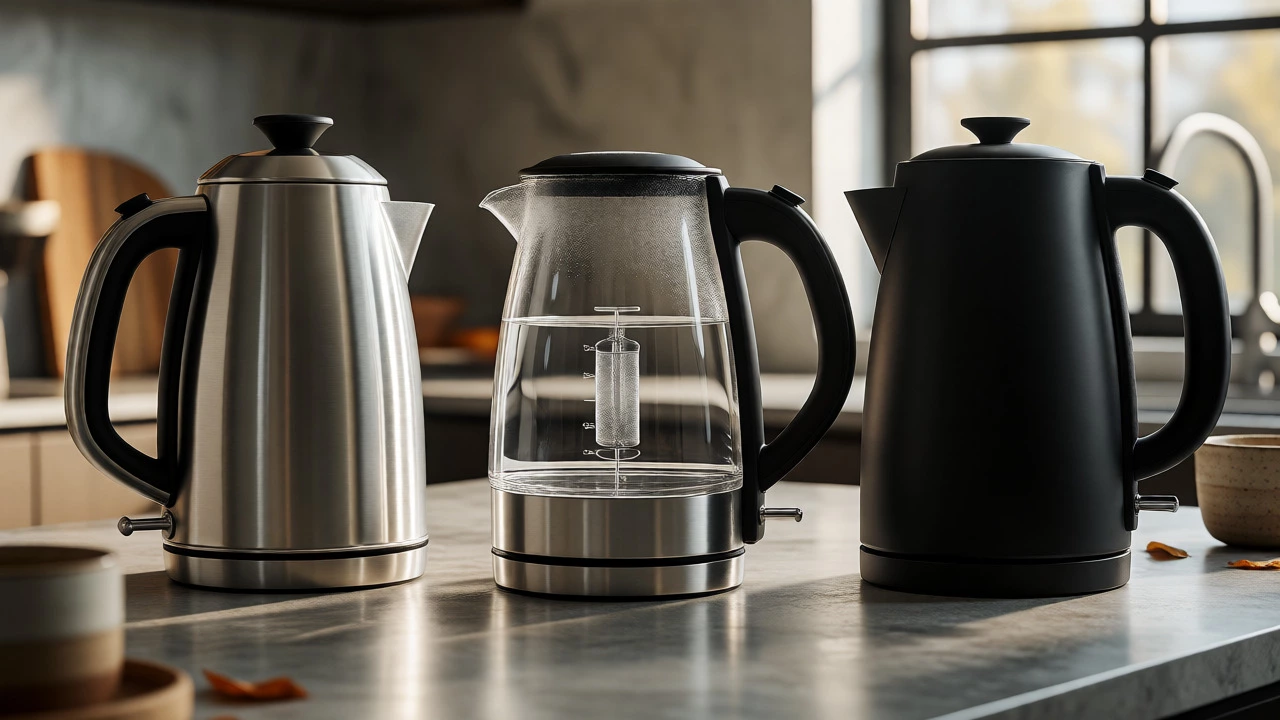
The first thing you’ll notice when handling kettles is the material. This isn't just about aesthetics; it affects taste, safety, and longevity. Most people default to plastic because it’s cheap and doesn’t get as hot on the outside. But here’s the catch: even "BPA-free" plastic can retain odors over time. If you’ve ever had a plastic container smell like last week’s soup, you know what I mean. That flavor can leach into your morning chamomile.
Stainless steel is the gold standard for most households. Look for food-grade 304 stainless steel. It’s durable, easy to clean, and doesn’t impart any metallic taste if high quality. However, the exterior gets dangerously hot. If you have kids or clumsy hands, this might be a hazard unless the kettle has a double-wall design.
Glass kettles are seeing a resurgence, largely because they let you see the water level and the heating element. They are inert, meaning they won’t alter the taste of your water. The downside? They break if you drop them, and they cool down faster than steel. Ceramic offers a nice middle ground-excellent heat retention and no metallic taste-but it’s heavy and fragile. For most Vancouverites living in apartments with limited counter space, stainless steel remains the pragmatic choice for its durability and slim profile.
Spout Design: Precision vs. Speed
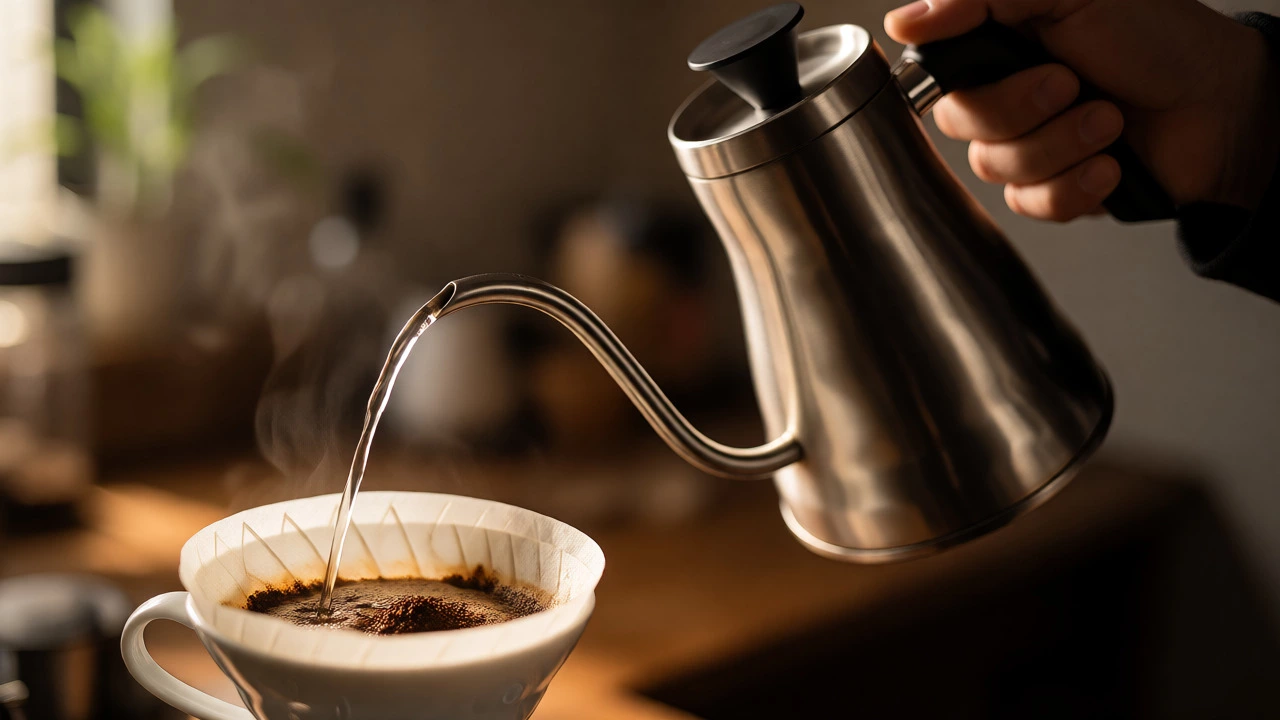
This is where the price tag often jumps. Do you need a gooseneck spout, which is a long, thin spout designed for slow, controlled pouring? If you brew pour-over coffee or use a V60 dripper, absolutely. A gooseneck spout lets you control the flow rate, ensuring even saturation of coffee grounds. It prevents the "flooding" effect that ruins extraction.
If you mostly make tea bags, instant oatmeal, or French press coffee, a standard wide-mouth spout is fine. These pour faster and are easier to clean. Just be aware that cheap wide-spout kettles tend to drip. You’ll end up with puddles on your counter. Look for kettles with a sharp, angled lip rather than a rounded rim. It cuts off the water flow cleanly, stopping the drip.
Temperature Control: Is It Worth the Extra Cost?
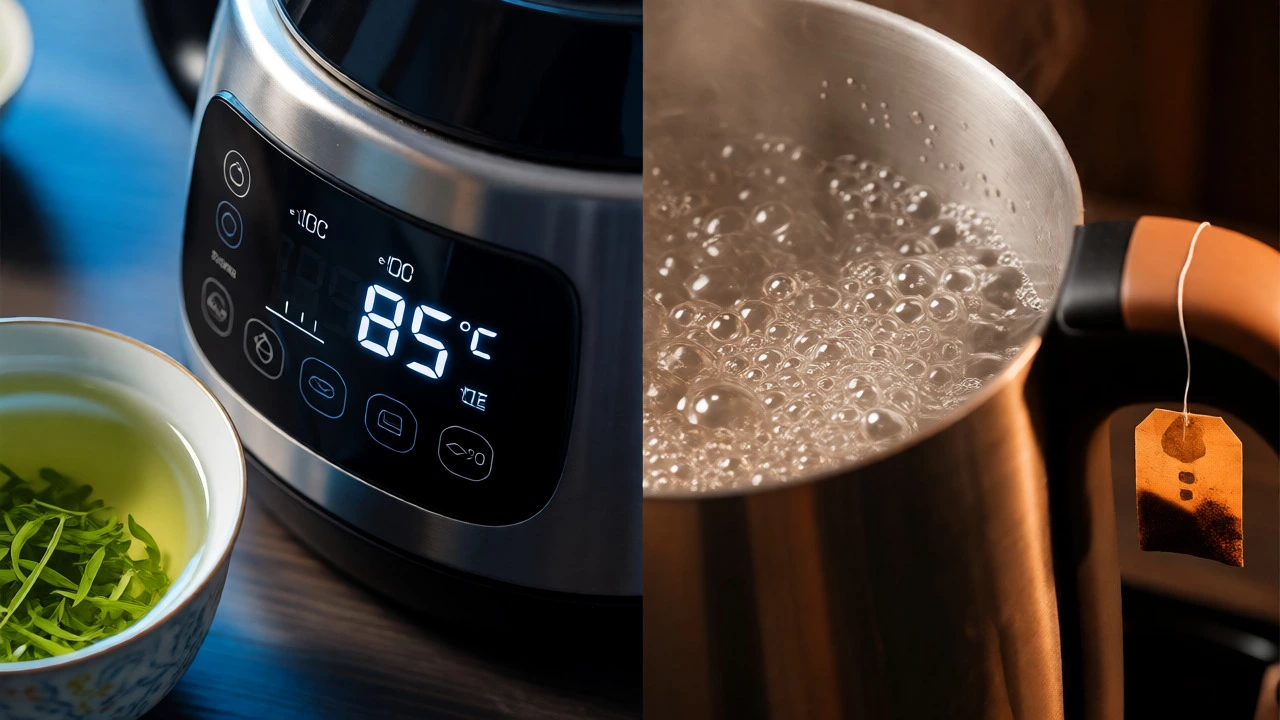
Boiling water at 100°C (212°F) is great for black tea but terrible for green tea or white tea, which can turn bitter and astringent if brewed with boiling water. This is where variable temperature settings come in.
| Beverage Type | Ideal Temp (°C) | Ideal Temp (°F) | Why It Matters |
|---|---|---|---|
| Green Tea | 70-80 | 158-176 | Prevents bitterness; preserves delicate flavors. |
| White Tea | 75-85 | 167-185 | Protects subtle floral notes. |
| Oolong Tea | 85-95 | 185-203 | Releases complex aromas without scorching leaves. |
| Black Tea | 95-100 | 203-212 | Requires near-boiling for full body. |
| Pour-Over Coffee | 90-96 | 195-205 | Optimal extraction range for most beans. |
Kettles with PID controllers (Proportional-Integral-Derivative) hold the temperature steady within ±1 degree. Cheaper models might claim "variable temp" but fluctuate wildly. If you’re a serious tea drinker or coffee enthusiast, invest in a kettle with actual digital readouts and hold functions. If you just want hot water for instant noodles, a simple on/off switch saves you money and complexity.
Heating Element and Boil Time
Most modern kettles use concealed heating elements. This means the coil is under a flat plate at the bottom, not exposed like old-school kettles. Concealed elements are easier to descale because there’s no coil for mineral buildup to cling to. In areas with hard water, like parts of British Columbia, limescale is a real issue. A concealed element makes cleaning a breeze-you just fill it with vinegar or citric acid, let it sit, and rinse.
Wattage determines speed. In North America, standard outlets support 1500 watts. Don’t expect magic from a 1200-watt kettle; it will take longer. High-end kettles sometimes hit 1500W efficiently, boiling a liter in under three minutes. Check reviews for "boil time" specifically. Marketing materials often boast about power, but poor insulation can waste energy, making the kettle slower than its wattage suggests.
Safety Features You Shouldn’t Ignore
Water boils fast, but accidents happen quickly too. Automatic shut-off is non-negotiable. Every electric kettle must have this. When the water reaches boiling point, a bimetallic strip bends and cuts the circuit. If the kettle runs dry, a second sensor should trigger a cut-off to prevent fire hazards.
Cool-touch handles are critical, especially with stainless steel bodies. Some handles stay cool because they’re made of silicone or plastic, while others insulate the metal. Test the handle before buying if possible. Also, look for a secure lid lock. You don’t want the lid flying off when you tilt the kettle to pour, splashing boiling water onto your arm. A hinged lid that stays open while filling but closes securely during boiling is ideal.
Capacity and Counter Space
How much water do you actually need? A 1.7-liter kettle is the industry standard. It fits most mugs and serves 2-3 people. If you live alone, a 1-liter kettle heats faster and takes up less room. Large families might consider 2-liter models, but beware: larger kettles are heavier when full. A 2-liter kettle weighs over 4 pounds when filled. Can you lift it comfortably with one hand?
Consider your storage. Gooseneck kettles are tall and awkward to store in cabinets. Standard kettles are more compact. Some models come with cordless bases that swivel 360 degrees, allowing you to place the kettle down from any angle. This seems minor until you’re holding a pot of boiling water and fumbling for alignment.
Brand Reputation and Warranty
In the world of small appliances, brand reliability varies wildly. Brands like Breville, Fellow, and Cuisinart generally offer better build quality and customer support. Cheaper brands from unknown manufacturers might save you $20 upfront but fail within a year. Check the warranty length. Two years is a good sign of confidence in the product. One year is standard. No warranty is a red flag.
Read recent reviews focusing on durability issues. Does the hinge break? Does the paint chip? Does the base lose contact after six months? Real-world usage reveals these flaws. In 2026, sustainability is also a factor. Look for brands offering replacement parts, like new filters or bases, so you don’t have to throw away the whole unit if one part fails.
Is glass or stainless steel better for an electric kettle?
Stainless steel is generally better for durability and heat retention. Glass is chemically inert and shows scale buildup easily, but it breaks if dropped and cools faster. Choose stainless steel for daily heavy use and glass if you prioritize visual monitoring and have soft water.
Do I really need a gooseneck kettle?
Only if you brew pour-over coffee or require precise pouring control for certain teas. For standard tea bags, French press, or instant foods, a standard spout is sufficient, easier to clean, and usually cheaper.
How often should I descale my electric kettle?
It depends on your water hardness. In hard water areas, descale monthly using a mixture of white vinegar and water or citric acid. In soft water areas, every 3-6 months is sufficient. Regular descaling maintains heating efficiency and prevents mineral taste.
Are expensive kettles worth it?
Yes, if you value precision temperature control, quiet operation, and durable build quality. Expensive kettles often feature PID controllers for accurate temps and better insulation. If you only need basic boiling, a mid-range model ($40-$60) performs identically for speed and reliability.
Can I put milk in an electric kettle?
No, never put milk directly in a standard electric kettle. Milk burns onto the heating element, creating a difficult-to-clean residue and potentially damaging the thermostat. Heat water separately and mix with milk, or use a dedicated milk frother.