
Window AC Energy Cost Calculator
Daily Cost
Monthly Cost (30 Days)
Quick Savings Tips
- ✓ Clean filters monthly to improve efficiency by up to 15%.
- ✓ Use Sleep Mode at night to gradually raise the temperature.
- ✓ Seal gaps around the unit with rigid foam inserts, not just plastic panels.
- ✓ Keep direct sunlight off the front sensor to prevent false high readings.
It’s 2:00 PM in July. The sun is hammering your roof, the humidity is thick enough to chew, and you just flipped on that boxy unit sitting in your bedroom window. Within seconds, cool air blasts out, but somewhere deep in your gut, you feel a phantom flicker on your electric meter. You’re wondering: do window air conditioners use a lot of electricity? It’s the question every homeowner dreads when the first summer bill arrives.
The short answer is yes, they do consume significant power compared to fans or dehumidifiers. But here is the nuance most people miss: a modern window unit might actually cost you less per hour than running a central air system for an entire house, provided you are only cooling the room you are in. The real killer isn’t the AC itself; it’s how you use it, what model you bought, and whether your windows are sealed tight. Let’s break down the actual numbers, cut through the marketing fluff, and figure out exactly how much this comfort costs you.
The Math Behind Your Monthly Bill
Let’s stop guessing and look at the watts. Power consumption is measured in Watts (W), and your utility company charges you by the kilowatt-hour (kWh). One kWh is 1,000 Watts running for one hour. To find out if your unit is a hog, you need to know its BTU rating and its Energy Efficiency Ratio (EER).
A typical 5,000 BTU window AC-the kind you’d put in a small guest room-draws about 450 to 600 watts. A larger 8,000 to 10,000 BTU unit, suitable for a master bedroom or living room, pulls between 900 and 1,200 watts while the compressor is running. That sounds high until you compare it to other appliances. A hair dryer uses 1,500 watts. An oven can hit 3,000+ watts. So, while an AC is a heavy hitter, it’s not uniquely monstrous.
However, the compressor doesn’t run 100% of the time. Once the room hits your set temperature, the compressor cycles off, leaving just the fan running, which uses maybe 50-70 watts. If your insulation is good, the compressor might only run 30-40% of the day. If your windows leak heat like a sieve, it runs non-stop.
| AC Capacity (BTU) | Power Draw (Watts) | Hourly Cost (Compressor On) | Hourly Cost (Fan Only) |
|---|---|---|---|
| 5,000 BTU | ~500 W | $0.075 | $0.01 |
| 8,000 BTU | ~800 W | $0.12 | $0.01 |
| 12,000 BTU | ~1,100 W | $0.165 | $0.01 |
| Central Air (Whole House) | ~3,500 W | $0.525 | $0.05 |
See those numbers? Running a 12,000 BTU unit for eight hours at night might cost you around $1.30. That’s the price of a coffee. But if you leave that same unit running all day while you’re at work, you’re looking at $4.00 a day. Over a 30-day month, that adds up fast. The variable isn’t the machine; it’s your schedule.
Window Unit vs. Portable AC: The Efficiency Gap
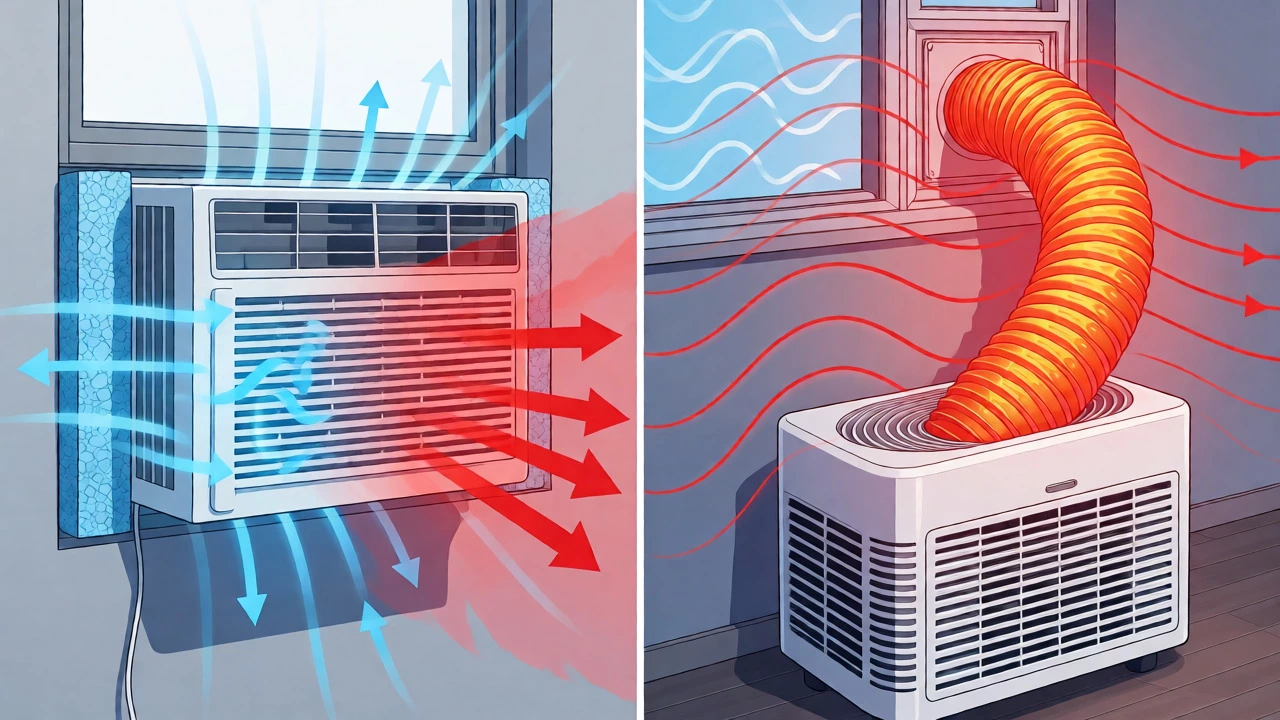
You mentioned portable air conditioners in your query, so let’s address the elephant in the room. Many people think a portable AC is cheaper to run because it looks smaller or moves easily. In reality, portable air conditioners are generally less efficient than window units.
Why? Physics. A window unit sits directly against the exterior wall, dumping hot air straight outside. A portable unit relies on a flexible exhaust hose routed through a window kit. This hose gets incredibly hot-often exceeding 100°F-and radiates that heat back into the room. The portable AC has to work harder to overcome this re-entry of heat. Additionally, many portable units have single-hose designs that pull indoor air to cool the condenser, creating negative pressure that sucks hot outdoor air in through cracks in doors and windows. This makes the unit run longer and draw more power.
If you are strictly comparing energy usage, a window unit will almost always beat a portable unit of the same BTU rating. Expect a portable AC to use 10-15% more electricity for the same cooling effect. Unless you are renting and cannot drill holes or modify windows, stick with the window model for efficiency.
How Modern Tech Changes the Equation
Not all window ACs are created equal. If you bought your unit ten years ago, you might be paying double what you should. The shift from standard compressors to Inverter Technology has revolutionized energy consumption.
Standard ACs operate on a binary switch: full blast or off. When the room gets warm, the compressor kicks in at maximum power, causing a massive surge in electricity use. An inverter AC adjusts the compressor speed based on the demand. It ramps up quickly to cool the room, then slows down to maintain the temperature without shutting off completely. This avoids the energy-heavy startup surges and maintains a steady, lower power draw.
Look for the ENERGY STAR® label. As of 2024 standards, ENERGY STAR certified window ACs must meet strict minimum EER requirements. For example, a 5,000 BTU ENERGY STAR unit might have an EER of 12.0, whereas a non-certified cheap model might sit at 9.5. Higher EER means more cooling per watt. Over a five-year lifespan, upgrading to an inverter model can save you hundreds of dollars in electricity, often paying for the higher upfront purchase price within two summers.
The Hidden Leaks That Spike Your Bill
You can buy the most efficient AC on the market, but if your installation is poor, you are burning money. The biggest culprit? Poor sealing.
When you install a window unit, you extend accordion panels to fill the gap between the AC chassis and the window frame. If those panels are loose, or if you used flimsy plastic instead of rigid foam inserts, hot air pours in. This forces the AC to run continuously. I’ve seen homeowners spend $300 on a high-efficiency unit and then seal it with duct tape that peels off in the heat. Don’t do that.
- Use Rigid Foam Inserts: Cut custom foam blocks to fit the side gaps perfectly. They insulate better than the plastic accordion sides.
- Seal the Bottom: Hot air rises, but cold air sinks. Ensure the bottom of the unit is tightly sealed against the sill.
- Check the Rear Vent: Make sure nothing is blocking the rear grille where hot air exits. If the hot air recirculates into the room, efficiency plummets.
Another sneaky issue is thermostat placement. Most window ACs have a built-in thermostat near the front intake. If sunlight hits the front of the unit, or if you place it near a lamp or TV that generates heat, the sensor reads a false high temperature. The AC thinks the room is hotter than it is and keeps the compressor running unnecessarily. Keep the unit shaded if possible, or use a remote thermostat if your model supports it.
Smart Habits to Slash Consumption
You don’t need to suffer in the heat to save money. Small behavioral tweaks yield big results.
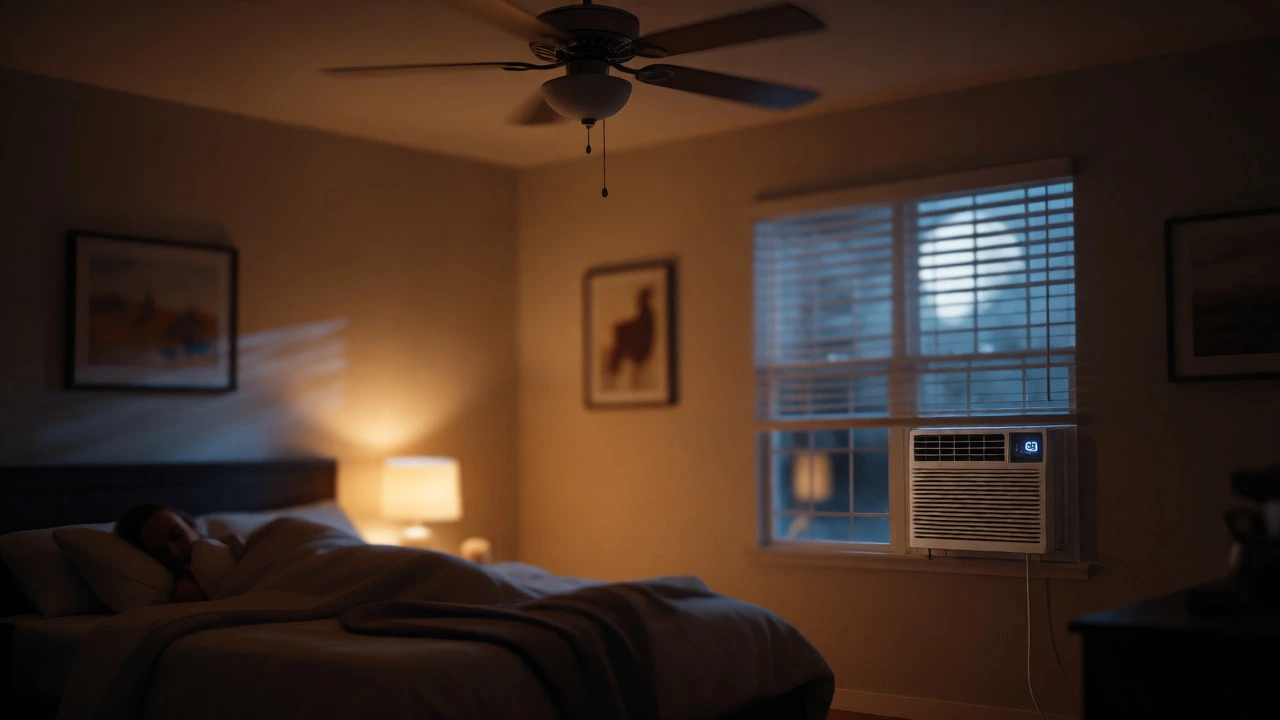
First, use the "Sleep Mode." This feature gradually raises the set temperature by 1-2 degrees over the first few hours of the night. Since you’re under covers, you won’t notice the slight warmth, but the compressor works significantly less as the ambient temperature naturally drops overnight.
Second, pair your AC with a ceiling fan. Fans don’t cool the air; they move it across your skin, creating a wind-chill effect. By raising your AC setting by 4 degrees (e.g., from 72°F to 76°F) and running a fan, you can achieve the same perceived comfort while cutting AC runtime by nearly half. Remember, fans cost pennies to run; ACs cost dollars.
Third, manage your heat sources. Turn off incandescent lights, unplug gaming consoles, and avoid using the oven during peak afternoon hours. Every bit of internal heat you generate is extra load for the AC to remove.
When Is It Time to Replace?
If your unit is older than 10 years, check the nameplate for the manufacturing date. Older units lack the refined refrigerant flows and insulation of modern models. If you find yourself cleaning filters weekly and still getting weak airflow, the coils might be dirty internally or the refrigerant level low. Repairing an old window AC often costs more than buying a new, efficient model. Given the current cost of electricity, replacing a 15-year-old unit with a new inverter model is usually a smart financial move within the first season.
How many amps does a window air conditioner use?
Most standard window ACs plug into a standard 110V/120V outlet and draw between 5 and 15 amps depending on their size. A small 5,000 BTU unit typically draws about 5-6 amps, while a large 12,000 BTU unit may draw 10-12 amps. Always ensure your circuit isn't overloaded by sharing the outlet with other high-draw appliances like space heaters or microwaves.
Is it cheaper to run a window AC or central air?
For cooling a single room, a window AC is significantly cheaper to run. Central air systems distribute cooled air throughout the entire home, including unused rooms, which wastes energy. If you only occupy one or two rooms during the day, zoning with window units can reduce your total cooling energy usage by 30-50% compared to running central air for the whole house.
Does leaving the AC on all day cost more than turning it off and on?
Turning it off when you leave and back on when you return is almost always cheaper. The myth that "startup surges" make leaving it on cheaper applies mostly to very short absences (under 30 minutes). For workdays or longer outings, letting the house warm up and then cooling it down uses far less total energy than maintaining a constant temperature against continuous heat infiltration.
How much does it cost to run a window AC for 8 hours?
Assuming an average rate of $0.15 per kWh and a mid-sized 8,000 BTU unit running at 800 watts, the cost would be approximately $0.96 for 8 hours if the compressor ran continuously. However, since compressors cycle, the realistic cost is likely between $0.30 and $0.60 depending on insulation and outside temperature.
Do dirty filters increase electricity usage?
Yes, significantly. A clogged filter restricts airflow, forcing the blower motor to work harder and reducing the evaporator coil's ability to absorb heat. This causes the compressor to run longer to reach the set temperature. Cleaning filters monthly can improve efficiency by up to 15%, directly lowering your electric bill.