
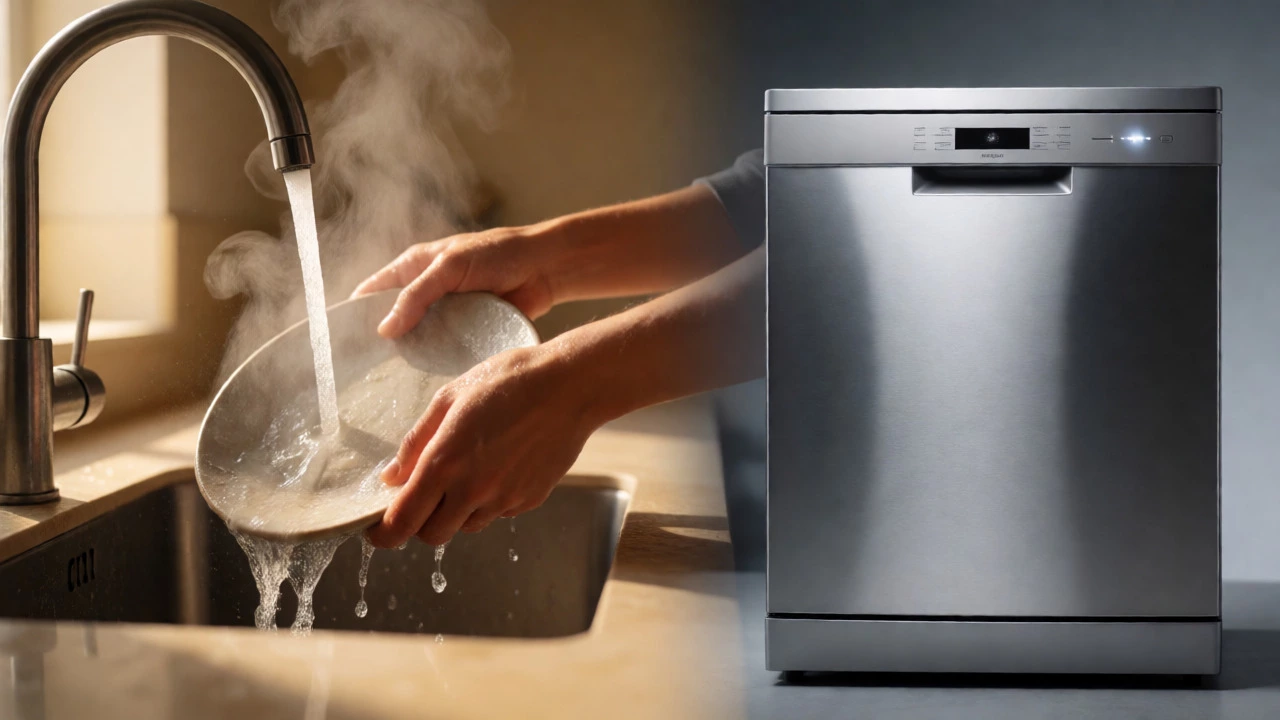
Dishwasher vs. Hand Wash Cost Calculator
Most people underestimate the cost of hand washing by ignoring water usage and the value of their own time. Use this tool to see which method is truly cheaper for your lifestyle.
Your Habits & Rates
Dishwasher Calculating...
Modern Energy Star Model
$0.00
Estimated Annual Cost
- Water: $0
- Energy: $0
- Time: $0
Hand Wash Calculating...
Running Tap Method
$0.00
Estimated Annual Cost
- Water: $0
- Energy: $0
- Time: $0
The difference depends heavily on whether you leave the tap running while scrubbing.
💡 Pro Tip:
If you prefer hand washing, use the Two-Basin Method. Fill one sink with soapy water and one with rinse water. This reduces water usage from ~27 gallons to ~5-8 gallons, making it competitive with dishwashers but still costing you time.
You probably think you're saving money by scrubbing plates in the sink because you don't have to pay for electricity or worry about appliance wear and tear. But here's the twist: if you're using hot running water, you might actually be burning more cash than a modern machine does. The answer isn't just "yes" or "no"-it depends entirely on how you wash and what kind of dishwasher you own.
Key Takeaways
- Modern dishwashers use less water: A typical cycle uses 3-5 gallons (11-19 liters), while hand washing can use up to 27 gallons (100 liters) if the tap is left running.
- Energy costs are comparable: Heating water for hand washing often matches or exceeds the electricity used by an Energy Star-rated dishwasher.
- Time is money: If you value your time at even $10/hour, hand washing becomes significantly more expensive over a year.
- The exception: Hand washing wins only if you fill two basins (one for washing, one for rinsing) and use cold water for the rinse.
The Water Usage Reality Check
Let's look at the numbers. When people say hand washing is cheaper, they usually assume they turn the faucet off between steps. In reality, most people leave the hot water running while scrubbing. According to data from the Environmental Protection Agency (EPA), leaving the tap on while washing dishes can waste up to 27 gallons of water per load. That’s a massive amount.
Compare that to a standard dishwasher. Modern models, especially those with the Energy Star label, are designed to recycle water during the cycle. They typically use between 3 and 5 gallons per load. Even older models rarely exceed 10 gallons. So, right off the bat, the dishwasher has a huge advantage in water conservation.
Does this matter for your bill? Absolutely. In Vancouver, where I live, water rates have been climbing steadily. If you wash a full load of dishes daily, using 20 extra gallons per day adds up to roughly 7,300 wasted gallons a year. At current municipal rates, that’s not a trivial amount. Plus, heating that extra water costs energy, which we’ll get to next.
Heating Costs: Gas vs. Electric
Water itself is cheap; heating it is where the real money goes. Whether you heat your water with natural gas or electricity, raising the temperature to 140°F (60°C) requires significant energy. Dishwashers have built-in heaters that bring water to optimal cleaning temperatures efficiently. Hand washing relies on your home’s water heater, which loses heat as water travels through pipes.
Here’s a rough calculation for a typical household. Let’s assume you wash dishes five times a week. Hand washing with hot running water might cost you around $0.15-$0.25 per session in energy alone. A dishwasher cycle, depending on your local electricity rates, might cost $0.10-$0.20. It looks close, but remember the water volume difference. The dishwasher heats less water, so it uses less energy overall.
If you have a heat pump water heater or a solar thermal system, the math shifts slightly. These systems are more efficient, making hand washing relatively cheaper in terms of energy. However, even then, the sheer volume of water required for effective hand washing keeps the dishwasher ahead in total resource consumption.
The Hidden Cost of Your Time
We often ignore our own labor when calculating household expenses. But let’s be honest: washing dishes takes time. On average, hand washing a full load takes about 30 minutes. A dishwasher runs for 1.5 to 2 hours, but you’re not standing there. You can load it and walk away.
If you value your time at just $15 an hour, hand washing costs you $7.50 per load in lost productivity. Over a year, that’s nearly $2,000 worth of time spent scrubbing grease off pans. Compare that to the few cents saved on utilities, and the economic argument heavily favors the dishwasher. For many families, the convenience factor translates directly into financial value.
When Hand Washing Actually Wins
Is the dishwasher always better? Not necessarily. There are specific scenarios where hand washing is cheaper and more effective.
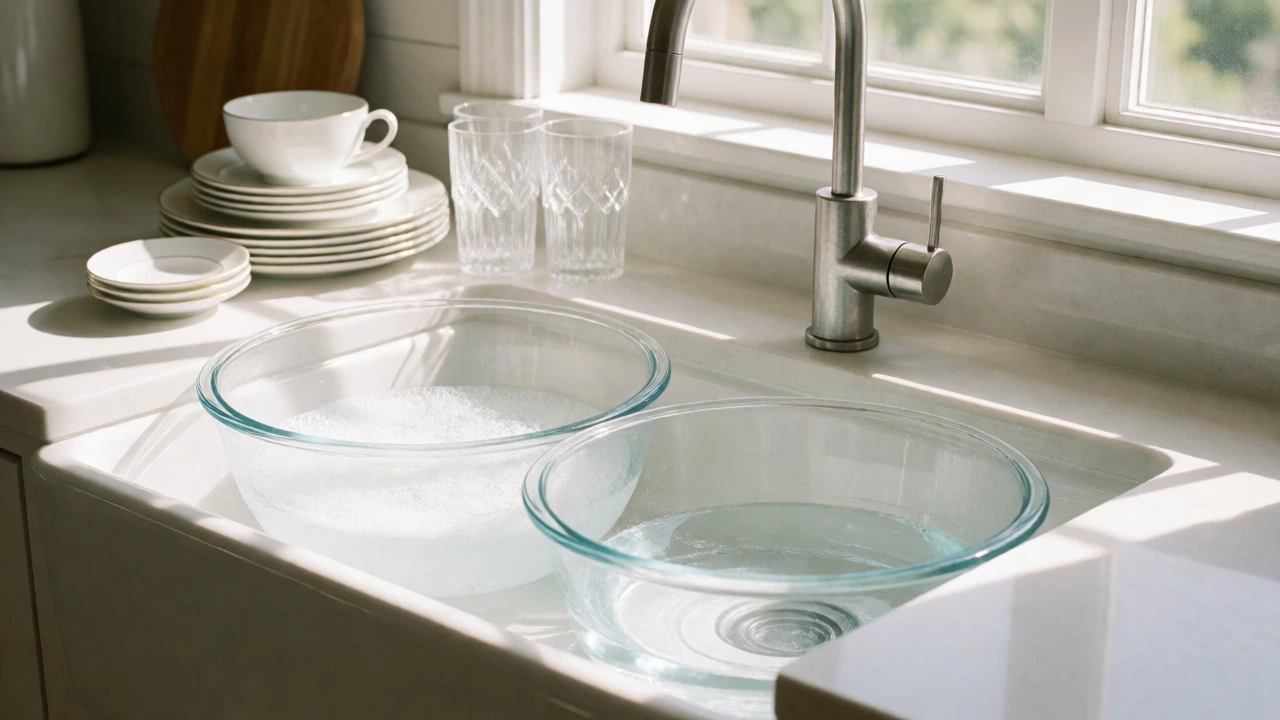
First, partial loads. If you only have three plates and a mug, running a full dishwasher cycle wastes water and energy. In this case, filling a basin with warm soapy water and rinsing quickly in a second basin is far more efficient. This method, often called the "two-basin method," uses minimal water and no electricity beyond heating the initial batch.
Second, delicate items. Hand washing preserves the life of fine china, crystal, or non-stick cookware. Dishwasher detergents are harsh abrasives that can degrade coatings over time. Replacing a scratched non-stick pan costs more than the savings from a dishwasher cycle. So, for specialty items, hand washing protects your long-term investments.
Dishwasher Efficiency Comparison
Not all dishwashers are created equal. An old model from the 1990s will consume much more than a new high-efficiency unit. Here’s how different types stack up against hand washing.
| Method | Water Used (Per Load) | Energy Use | Time Required | Estimated Annual Cost* |
|---|---|---|---|---|
| Old Dishwasher | 10-15 gallons | High | Passive | $40-$60 |
| Energy Star Dishwasher | 3-5 gallons | Low | Passive | $15-$25 |
| Hand Wash (Running Tap) | 20-27 gallons | Medium-High | Active (30 mins) | $50-$80 + Time |
| Hand Wash (Two Basins) | 5-8 gallons | Low-Medium | Active (30 mins) | $20-$30 + Time |
*Assumes 5 loads per week, average Canadian utility rates, excluding labor value.
Tips to Maximize Savings
If you decide to stick with your dishwasher, follow these rules to keep costs low. First, skip the pre-rinse. Modern detergents are formulated to break down food particles. Rinsing under the tap before loading wastes gallons of water. Scrape solids into the trash, but let the machine do the rest.
Second, run full loads only. Running half-empty cycles doubles your per-item cost. If you don’t have enough dishes, wait until the next meal or store dirty dishes in a lidded container to prevent smells.
Third, use the eco-mode. Most modern dishwashers have an energy-saving setting. It extends the cycle time but lowers the water temperature and reduces drying energy. Since you aren’t watching the clock, this is free money saved.
If you prefer hand washing, adopt the two-basin method strictly. Fill one sink with hot soapy water and the other with cool rinse water. Never leave the hot tap running. This cuts water usage by 80% compared to the running-tap method.
Frequently Asked Questions
Does using the heated dry option on a dishwasher cost more?
Yes, significantly. The heated dry element consumes a large portion of the cycle's total energy. Using air-dry or opening the door after the cycle finishes can reduce energy usage by up to 15% without compromising cleanliness.
Is it cheaper to wash dishes in cold water by hand?
Cold water saves energy, but it doesn't remove grease effectively. You end up using more soap and scrubbing harder, which takes longer. Warm water is generally more efficient for cleaning, even if it costs slightly more to heat.
How long does a dishwasher last compared to hand-washing habits?
A quality dishwasher lasts 10-15 years. While the upfront cost is higher, the annual operating cost is lower than the cumulative cost of water, energy, and time spent hand washing over the same period.
Do dishwasher pods cost more than liquid detergent?
Pods are convenient but often cost more per load. Powder or gel detergents allow you to adjust the dosage based on soil level, potentially saving money on lightly soiled loads.
Can I save money by washing dishes at night?
If your utility provider offers time-of-use pricing, yes. Running the dishwasher during off-peak hours (usually overnight) can lower electricity costs. Check your local rate plan to see if this applies to you.
Next Steps for Your Kitchen
Start by tracking your actual habits for a week. Do you really turn off the tap? How many loads do you run weekly? Once you have real data, compare it against your utility bills. If you find yourself hand washing with the tap running, consider investing in an affordable dishwasher. Look for models with high Energy Factor ratings. Even entry-level models today outperform manual washing in resource efficiency.