
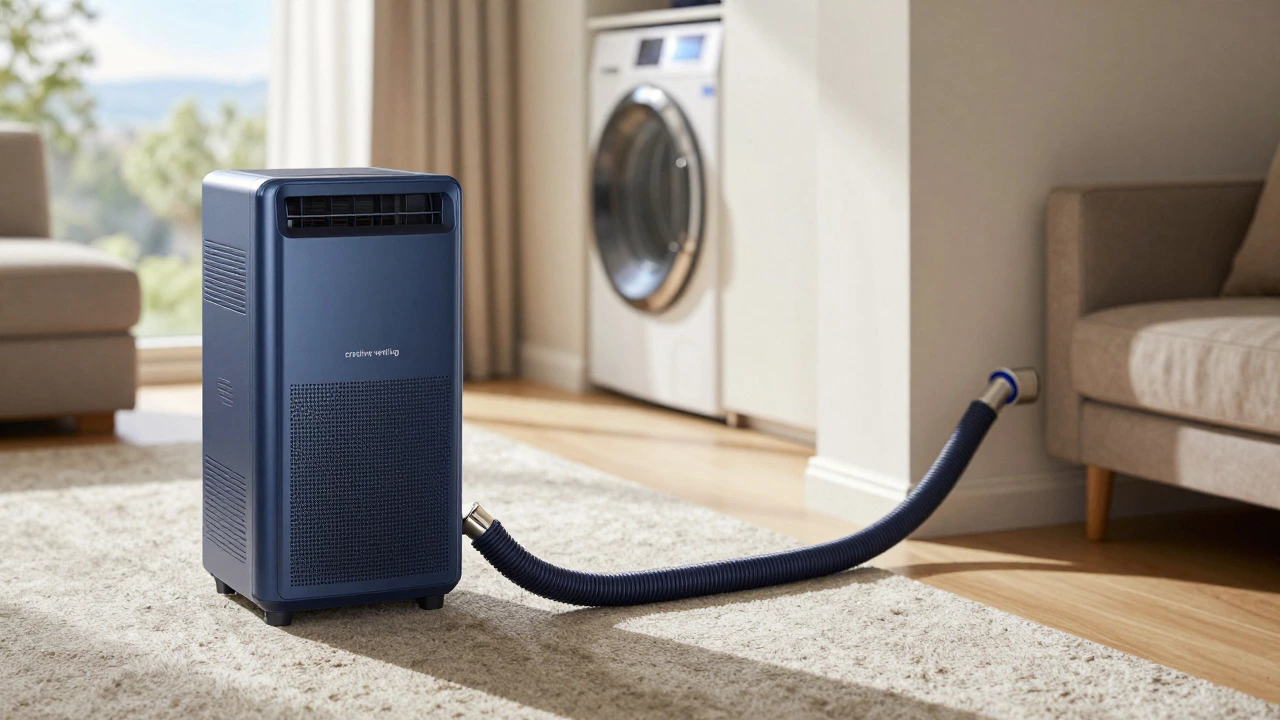
Portable AC Venting Solution Finder
Tell us about your space
Select the options that apply to your situation to find the perfect solution.
Configure your settings and click "Find My Solution" to see recommendations.
Imagine it is July in Vancouver. The humidity is thick, the heat is sticking to your skin, and you just bought a Portable Air Conditioner a self-contained cooling unit designed for single-room use that requires ventilation to expel hot air. You set it up in your living room, but then you hit a wall: there is no window nearby. Or maybe you live in an apartment with strict rules against drilling holes or hanging heavy hoses out of sightlines. Can you actually cool your space without turning your window into a messy exhaust pipe?
The short answer is yes, but with a major caveat. A standard portable air conditioner cannot simply blow hot air back into the same room it is trying to cool. That would be like running on a treadmill while pushing a car uphill-you’d burn energy but go nowhere. However, there are several creative, effective ways to vent the heat elsewhere if a traditional window setup isn’t possible.
Why Venting Is Non-Negotiable for Standard Units
To understand your options, you first need to grasp how these machines work. Unlike a split-system central AC or a mini-split, a Single-Hose Portable AC a common type of portable cooler that draws room air in, cools it, and exhausts the resulting heat outside through one hose relies on a simple thermodynamic principle: it moves heat from inside to outside. It doesn't destroy heat; it relocates it.
If you leave the exhaust hose disconnected, the unit will overheat and shut down within minutes due to safety sensors. If you try to vent the hot air back into the room, you create a loop where the AC works harder and harder to cool air that is immediately reheated by its own exhaust. This results in high electricity bills and zero net cooling. So, the goal is always to get that hot air out of the conditioned space.
Option 1: The Dryer Vent Kit (The Best Window Alternative)
If you have a clothes dryer in your laundry room, basement, or even a closet near the room you want to cool, you’ve found your best friend. Most portable ACs come with a universal adapter kit that allows you to connect the exhaust hose to a standard 4-inch dryer vent port.
- How it works: You attach the AC’s exhaust hose to the dryer vent outlet using the provided adapter. The hot air travels through the existing dryer ductwork and exits your home through the exterior wall vent.
- Pros: No windows needed. No drilling new holes. Looks clean because the hose is hidden inside the walls.
- Cons: You can’t run the dryer and the AC at the same time unless you have a complex splitter valve setup (which is rare). Also, ensure the dryer vent isn’t too long or full of lint, as this restricts airflow and reduces the AC’s efficiency.
This is often the most overlooked solution. Many people assume they need a window, but a dryer vent is essentially a pre-installed window for hot air. Check your laundry area before buying any fancy adapters.
Option 2: Door Vent Kits
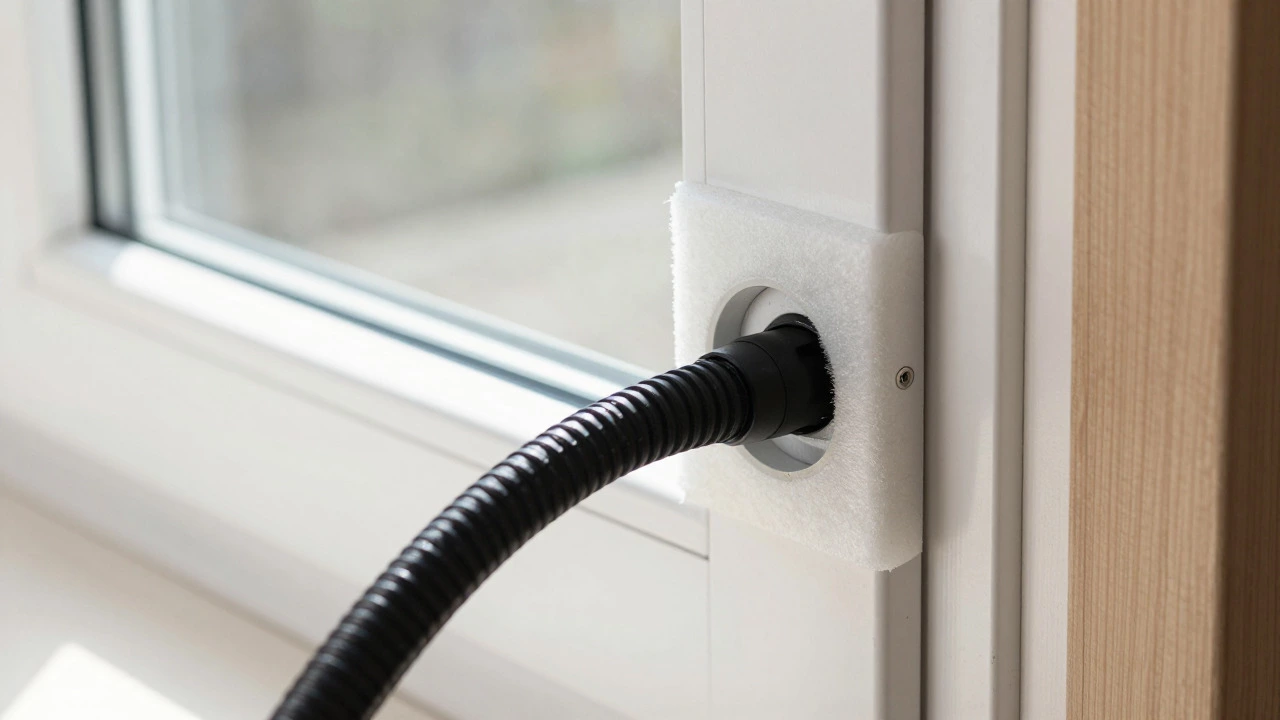
If your room has an exterior door-like a patio door, a sliding glass door, or even a standard entry door-you can use a specialized door vent kit. These kits are widely available online and in hardware stores. They typically consist of a foam panel or a rigid plastic frame that fits into the door frame, leaving a hole for the AC hose.
For sliding doors, there are specific kits that slide along with the door pane. For hinged doors, you usually cut a piece of foam insulation to fit the gap between the closed door and the frame, then punch a hole for the hose. It’s not pretty, but it’s functional. Just make sure the seal is tight. If hot air leaks back into the room around the edges of the kit, your cooling performance will drop significantly.
Option 3: Evaporative Coolers (Swamp Coolers)
If you truly cannot vent anything outside, you might consider switching technologies entirely. An Evaporative Cooler a device that cools air by passing it through water-saturated pads, relying on evaporation rather than refrigerant compression, often called a swamp cooler, does not require an exhaust hose. Instead, it uses a fan to pull warm air through wet pads. As the water evaporates, it absorbs heat, lowering the air temperature.
However, there is a catch. Evaporative coolers add moisture to the air. In dry climates like Arizona or Nevada, they are incredibly effective and efficient. In humid places like Vancouver, Florida, or New Orleans, they do almost nothing. In fact, they can make the room feel muggier and stickier. Only choose this option if you live in a low-humidity environment. If you’re in a humid zone, skip this and look at the next option.
Option 4: Ductless Mini-Splits
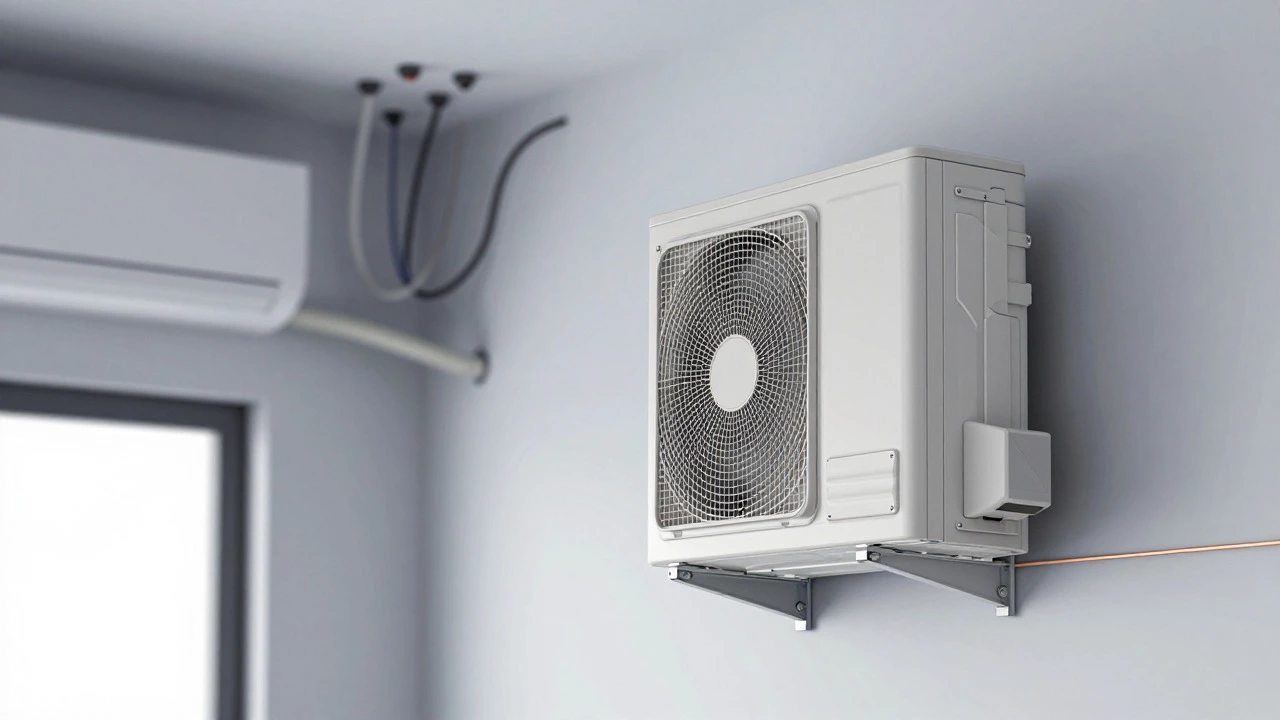
If you are willing to invest more money upfront, a Ductless Mini-Split System a high-efficiency HVAC system consisting of an outdoor compressor unit and an indoor air-handling unit connected by small-diameter lines is the gold standard for windowless cooling. Unlike portable units, mini-splits don’t use bulky flexible hoses. They use thin copper tubing and electrical wires that pass through a small 3-inch hole in an exterior wall.
This hole is tiny compared to a window installation. It’s easy to patch if you move, and it doesn’t block your view or light. Mini-splits are also significantly more energy-efficient than portable ACs. While a portable AC might cost $500-$800, a mini-split installation can range from $1,500 to $3,000 depending on labor. But for long-term comfort and lower electric bills, it’s worth considering if you plan to stay in the space for more than a year.
Option 5: Ceiling Vents and Attic Access
In some older homes or apartments, you might have access to ceiling vents, return air grilles, or attic hatches. While less common, some homeowners have successfully routed AC exhaust hoses through these openings to vent hot air into unconditioned spaces like attics or crawl spaces.
Be careful here. If you vent hot air into an insulated attic, you might raise the temperature of the whole house, defeating the purpose. This only works if the air can escape freely to the outside, such as through soffit vents or ridge vents. Consult with a contractor before modifying your ceiling structure to avoid damaging insulation or creating moisture traps.
Comparison of Windowless Cooling Methods
| Method | Cost | Installation Difficulty | Best For | Efficiency |
|---|---|---|---|---|
| Dryer Vent Kit | $0-$20 (Adapter) | Easy | Laundry rooms, basements | High |
| Door Vent Kit | $20-$50 | Medium | Rooms with exterior doors | Medium |
| Evaporative Cooler | $100-$300 | None | Dry climates only | Low (in humidity) |
| Mini-Split | $1,500+ | Professional | Long-term, permanent cooling | Very High |
| Ceiling/Vent Routing | Variable | Hard/Risky | Specific architectural layouts | Variable |
Pitfalls to Avoid When Venting Creatively
When you deviate from the standard window installation, you introduce risks. Here is what to watch out for:
- Hose Length Matters: Every foot of extra hose reduces cooling capacity. If you route the hose through a long dryer duct or across a room to a distant door, keep it as straight as possible. Sharp bends choke the airflow.
- Seal the Gaps: Whether you’re using a door kit or a dryer vent, ensure the connection is airtight. Hot air leaking back into the room wastes energy. Use weather stripping or foam tape to seal any gaps around the hose entry points.
- Don’t Block Air Intakes: Make sure the AC unit itself has plenty of room to breathe. It needs to pull in cool air from the room. Don’t tuck it into a corner or behind furniture.
- Check Your Lease: If you’re renting, check your lease agreement. Drilling a hole for a mini-split might violate terms, whereas a temporary door kit or dryer vent connection might be acceptable. Always ask permission first.
Frequently Asked Questions
Can I just leave the exhaust hose open in the room?
Technically yes, but it’s pointless. The AC will blow cold air in one direction and hot air in another. Since both stay in the room, the net temperature change is near zero. You’ll just waste electricity and potentially trip the unit’s overheating sensor.
Will a dehumidifier cool my room without a window?
A dehumidifier removes moisture, which can make a room feel cooler by reducing stickiness. However, the process of removing moisture generates heat. Like a portable AC, a standard dehumidifier needs to vent that heat outside. If you don’t vent it, the room gets hotter, though drier. It won’t actively lower the temperature like an AC.
Is it safe to vent a portable AC into a bathroom exhaust fan?
It’s risky. Bathroom fans are not designed to handle the volume of air or the continuous operation required by an AC. The fan motor could burn out, and the ductwork might not be sealed properly, allowing hot air to leak into the ceiling cavity. It’s better to use a dryer vent or a dedicated wall sleeve.
Do dual-hose portable ACs work better without a window?
Dual-hose units are more efficient because they pull intake air from outside rather than from the room, preventing negative pressure. However, they still need to vent the hot exhaust hose outside. They don’t solve the window problem, but they perform better once you find a way to vent them (like a dryer vent).
What is the cheapest way to cool a room with no windows?
If you have a dryer vent, using an adapter is the cheapest method ($0-$20). If not, a box fan placed in a nearby doorway to create cross-ventilation during cooler evening hours costs very little. For active cooling, a used evaporative cooler (if you’re in a dry climate) is affordable, but ineffective in humidity.