
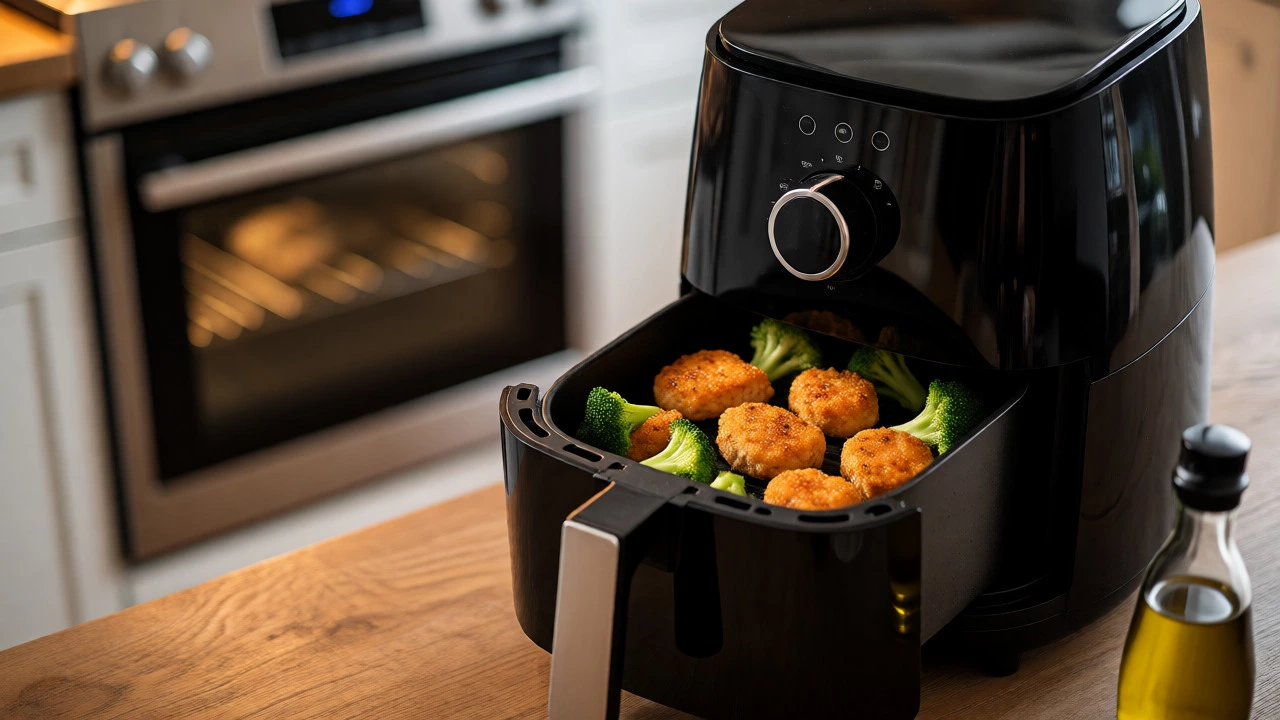
Air Fryer vs. Oven Health Calculator
Select your meal scenario to see which appliance offers better health outcomes regarding fat reduction, nutrient preservation, and acrylamide risk.
Air Fryer
Conventional Oven
Expert Tip
You stare at the box of frozen chicken nuggets or the fresh batch of broccoli on your counter. The question pops up every time you want a quick meal without the guilt trip: is an air fryer healthier than an oven? It’s one of the most common debates in modern kitchens, fueled by marketing hype and genuine confusion about how these appliances actually work. You’ve probably heard that air fryers are the ultimate health hack, slashing calories and fat while keeping food crispy. But does the science back this up, or is it just clever branding?
The short answer isn’t a simple yes or no. It depends entirely on what you’re cooking, how you’re cooking it, and what you define as "healthy." Both devices use hot air to cook food, but the mechanics differ enough to change the nutritional outcome. Let’s break down the real differences so you can decide which appliance deserves counter space in your kitchen.
Understanding the Mechanics: Convection vs. Rapid Air Circulation
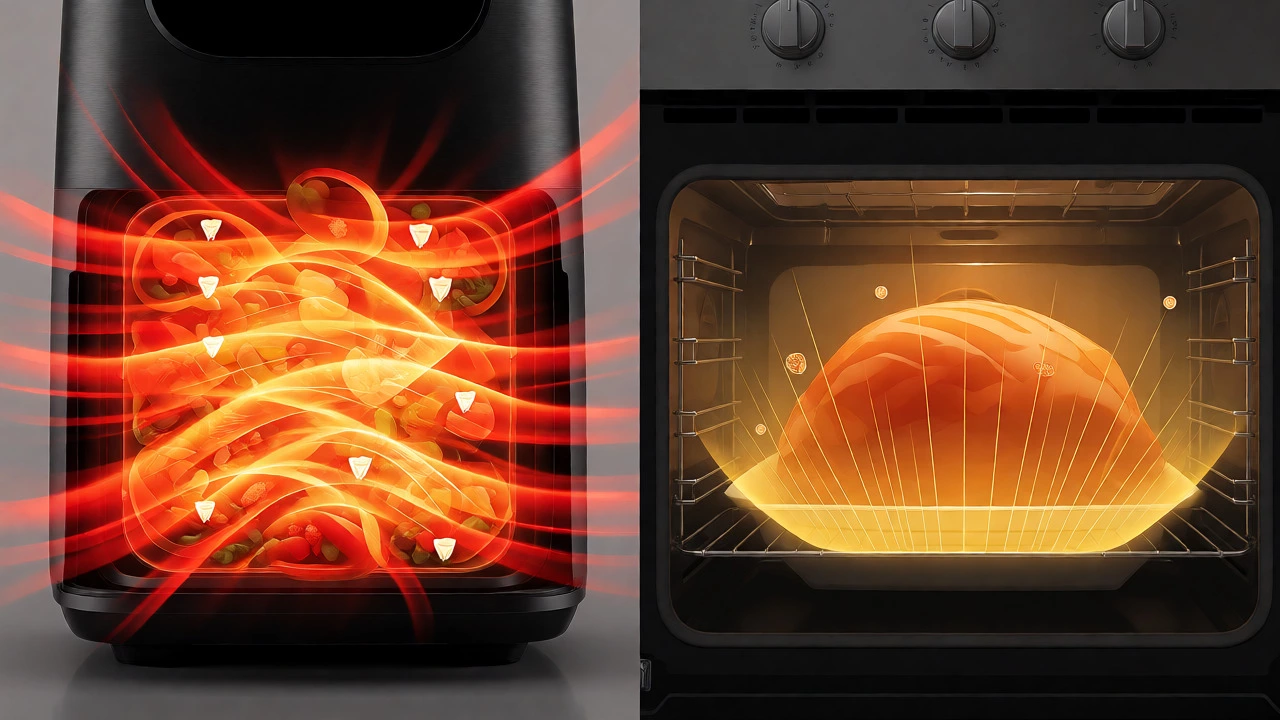
To judge healthiness, you first need to understand the technology. An air fryer is essentially a small, powerful convection oven. It uses a high-speed fan to circulate extremely hot air around the food, creating a Maillard reaction (browning) much faster than a standard oven. A traditional oven, specifically a conventional one, relies on radiant heat from elements at the top and bottom, with natural air circulation. If you have a convection oven, it also has a fan, but it’s usually less intense and operates in a larger cavity.
Why does this matter for health? Because speed and intensity affect nutrient retention and oil usage. Air fryers cook food 20-30% faster than ovens. This shorter exposure to heat can help preserve heat-sensitive nutrients like Vitamin C and B vitamins, which degrade during long roasting sessions. However, if you’re comparing an air fryer to a high-end convection oven with similar temperature settings, the difference in nutrient loss becomes negligible.
The Oil Factor: Where Air Fryers Win Big
Here is where the air fryer genuinely shines. Deep frying submerges food in oil, leading to massive calorie spikes. Traditional baking often requires brushing vegetables or meats with olive oil or butter to prevent drying out and to aid browning. An air fryer’s rapid air circulation mimics the crispiness of deep-frying with only a teaspoon of oil-or sometimes none at all.
Consider a standard serving of French fries:
- Deep Fried: ~17 grams of fat, ~340 calories.
- Oven Baked (with oil): ~8 grams of fat, ~250 calories.
- Air Fried (minimal oil): ~2 grams of fat, ~150 calories.
If you’re trying to reduce overall fat intake, the air fryer offers a tangible advantage. It forces you to rethink recipes that rely on heavy sauces or excessive oils for flavor. You’re not tricking your body; you’re physically reducing the amount of lipid-based calories consumed. For someone managing cholesterol or weight, this reduction is significant over weeks and months.
Nutrient Retention: Speed Matters
Vitamins and minerals don’t vanish instantly, but they do degrade under prolonged heat and light exposure. Water-soluble vitamins, such as Vitamin C and folate, are particularly vulnerable. When you roast cauliflower in an oven for 45 minutes, you lose more Vitamin C than when you air fry it for 15 minutes.
A study published in the Journal of Food Science highlighted that shorter cooking times generally correlate with higher retention of antioxidant compounds in vegetables. While specific data varies by vegetable, the principle holds: less heat stress equals better nutrient preservation. If you’re steaming veggies in the microwave, you might retain even more, but among dry-heat methods, the air fryer’s speed gives it a slight edge over conventional roasting.
Acrylamide Formation: The Hidden Risk
Not all heat effects are positive. Acrylamide is a chemical compound that forms in starchy foods (like potatoes and bread) when cooked at high temperatures. It’s classified as a probable carcinogen by the World Health Organization. High heat creates acrylamide, regardless of whether the source is an oven or an air fryer.
Because air fryers cook faster and hotter, there’s a risk of burning food before the inside is done, potentially increasing acrylamide levels. However, research suggests that air frying can actually reduce acrylamide formation compared to deep frying by up to 90%. Compared to oven baking? The results are mixed. Some studies show air frying produces slightly less acrylamide because the food spends less time in the danger zone (above 120°C/248°F). Others show comparable levels. The key takeaway: avoid charring your food. Burnt bits are unhealthy in any appliance.
Comparing Cooking Outcomes
| Feature | Air Fryer | Conventional Oven | Convection Oven |
|---|---|---|---|
| Oil Required | Minimal (0-1 tsp) | Moderate (1-2 tbsp) | Moderate (1-2 tbsp) |
| Cooking Time | Fast (10-20 mins) | Slow (30-60 mins) | Moderate (20-40 mins) |
| Nutrient Loss | Low (due to speed) | Higher (due to duration) | Low-Moderate |
| Best For | Small batches, frozen foods, veggies | Large roasts, casseroles, baking | Roasting, multi-rack cooking |
| Calorie Reduction | High (vs. deep frying) | Moderate (vs. deep frying) | Moderate |
When the Oven Wins on Health
It’s not always in the air fryer’s favor. Ovens excel at cooking large cuts of meat evenly. Overcrowding an air fryer basket leads to uneven cooking, forcing you to keep food in longer or turn it repeatedly, which can dry out lean proteins like chicken breast. Dry protein is less satisfying, often leading people to add sauces or fats post-cooking, negating the initial health benefit.
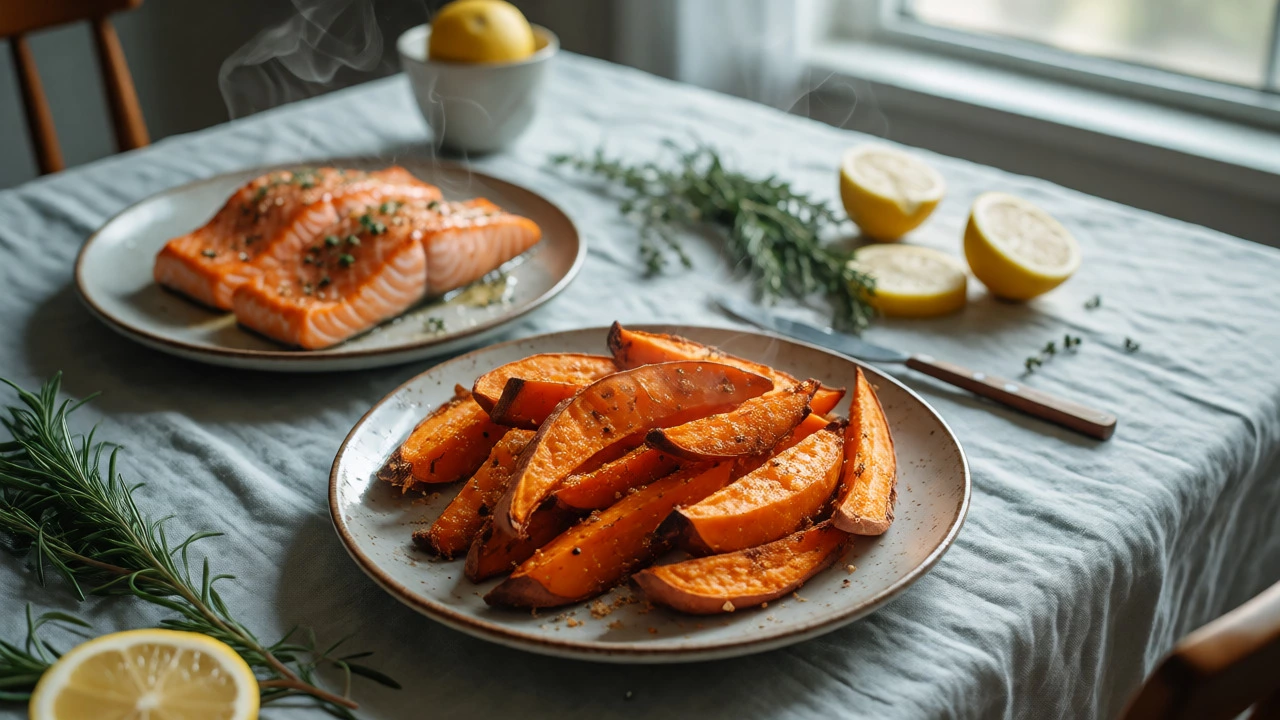
Furthermore, ovens allow for gentle, low-temperature cooking. If you’re slow-roasting salmon or vegetables at 300°F (150°C), you minimize oxidative stress on delicate fats like omega-3s. Air fryers typically run at higher minimum temperatures (often starting at 350°F/175°C), which can oxidize healthy fats more quickly. For heart-health-conscious individuals prioritizing fatty acid integrity, a gentle oven roast might be superior.
Practical Tips for Healthier Cooking
Regardless of which device you choose, technique matters more than the gadget. Here is how to maximize health benefits:
- Don’t Overcrowd: In an air fryer, leave space between items. Steam gets trapped in crowded baskets, making food soggy instead of crispy, which tempts you to add more oil later.
- Use Spray Bottles: Instead of pouring oil, use a mister. This ensures an even, thin coat rather than pooling.
- Watch the Char: Remove food as soon as it’s golden brown. Dark brown or black spots indicate higher acrylamide levels.
- Skip Processed Breads: Many frozen air fryer meals are loaded with sodium and preservatives. Fresh ingredients roasted in either appliance are always healthier than pre-packaged alternatives.
The Verdict: Context Is King
Is an air fryer healthier than an oven? Yes, primarily because it encourages lower oil usage and reduces cooking time, preserving nutrients. But it’s not magic. If you fill your air fryer with heavily processed, salt-laden snacks, it’s no healthier than eating them from a bag. If you use your oven to roast a variety of colorful vegetables with minimal oil, it’s equally nutritious.
Think of the air fryer as a tool for convenience-driven health. It removes the friction of preheating a large oven and cleaning up greasy pans, making it easier to stick to home-cooked meals. That behavioral shift-cooking more often-is arguably the biggest health benefit of all.
Can I replace my oven with an air fryer?
For many daily tasks, yes. Air fryers handle reheating, roasting vegetables, and cooking small portions efficiently. However, they cannot accommodate large turkeys, sheet pan dinners for families, or delicate pastries that require stable, ambient heat. Most households find having both appliances ideal.
Do air fryers destroy nutrients?
No, they generally preserve nutrients better than boiling or long-duration roasting due to shorter cooking times. However, high heat can degrade some antioxidants. Steaming remains the gold standard for nutrient retention, but air frying is a strong second place among dry-heat methods.
Is air fried chicken healthier than baked chicken?
If both are prepared with minimal oil, the nutritional profile is nearly identical. The main difference is texture and moisture. Air fried chicken may be drier if not monitored, leading to added sauces. Baked chicken retains more moisture if brined properly. Choose based on preference, not perceived health superiority.
Are plastic parts in air fryers safe?
Most modern air fryers use BPA-free plastics and non-stick coatings rated for high temperatures. To be safe, avoid heating empty units and discard baskets if the coating chips significantly. Metal accessories are available for those concerned about plastic contact.
Does air frying remove more fat than oven baking?
Yes, for fatty meats like bacon or sausage. The design allows rendered fat to drip away into the bottom tray, separating it from the food. In an oven, fat often pools around the meat, allowing it to re-absorb unless you use a rack. This makes air frying particularly effective for reducing saturated fat intake.