
The "Honest Truth" Analysis:
Fill in the details to see the impact analysis...
*Estimation based on average 6-quart air fryer specifications and standard kitchen electrical codes.
Quick Summary of the Downsides
- Limited capacity makes cooking for families a multi-batch chore.
- High energy draw can trip older circuit breakers.
- Non-stick coatings often peel or flake over time.
- They take up significant counter space for a single-purpose tool.
- Certain foods (like wet batters) simply don't work.
The Space Struggle and Kitchen Clutter
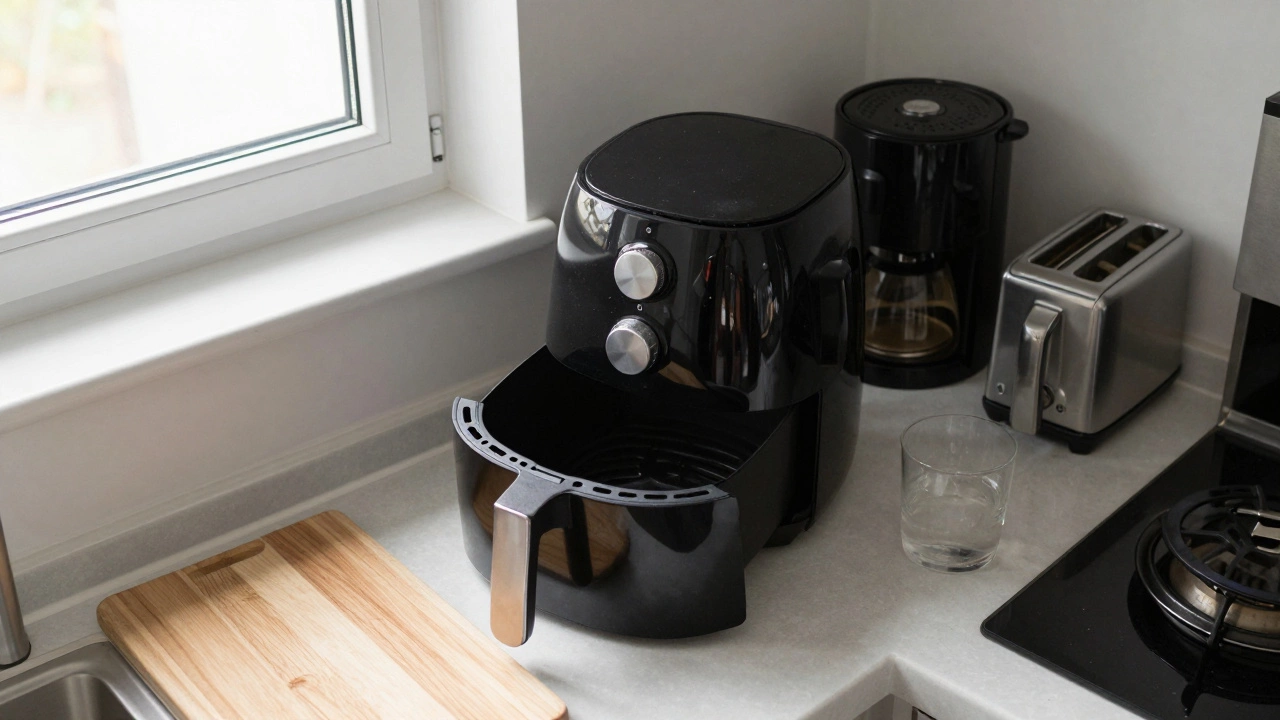
One of the biggest regrets people have after buying an air fryer is the "countertop takeover." These machines are bulky. Because they need a few inches of breathing room around the exhaust vents to avoid overheating, you can't just tuck them into a tight corner. Air Fryers is a compact kitchen appliance that uses convection to simulate frying by circulating hot air at high speeds around food.
Think about your average kitchen setup. You've already got a toaster, a coffee maker, and maybe a blender. Adding a massive plastic bucket that only does one thing often leaves you with zero room to actually prep your vegetables. If you live in a small apartment, the sheer footprint of the device becomes a daily annoyance. You end up either moving it in and out of a cupboard every time you want a snack or sacrificing your primary workspace.
The Capacity Lie and the Batching Headache
Manufacturers love to brag about "quart capacity," but that number is misleading. A 6-quart basket sounds huge until you realize that for the air to actually move-which is the whole point of the technology-you can't crowd the basket. If you stack chicken wings or pile up fries, the middle stays soggy while the outside burns. This is where the "convenience" of the air fryer falls apart.
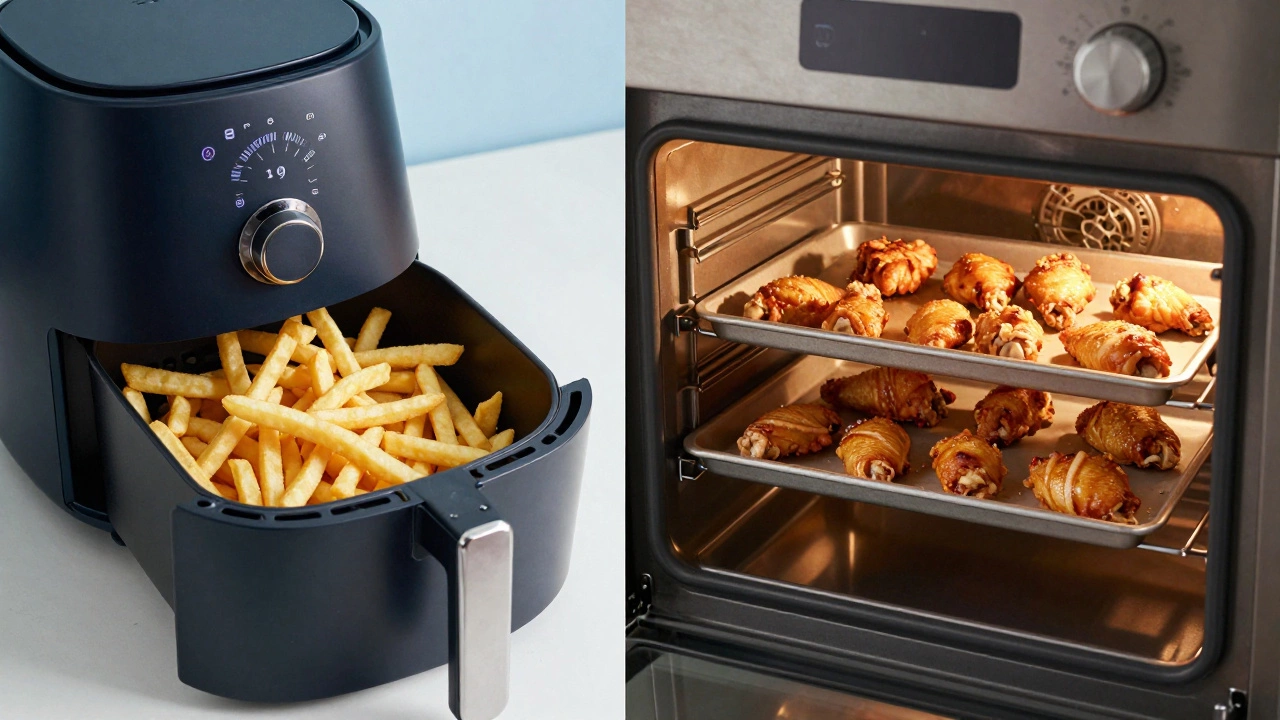
If you're feeding a family of four, you'll likely find yourself cooking in three or four separate batches. By the time the last batch of broccoli is done, the first batch of salmon is cold. You end up spending more time managing the machine than you would have if you just used a traditional Conventional Oven, which can handle everything on two large baking sheets at once. The mental energy required to time different batches so everything hits the table warm is a hidden cost of owning one.
| Feature | Air Fryer | Conventional Oven |
|---|---|---|
| Preheat Time | Very Fast (2-5 mins) | Slow (10-20 mins) |
| Total Capacity | Low (Batch cooking needed) | High (Full meals at once) |
| Energy Use | High per square inch | Medium/High total |
| Cleaning | Basket scrubbing (often tedious) | Occasional deep clean |
The Coating Crisis: Teflon and Beyond
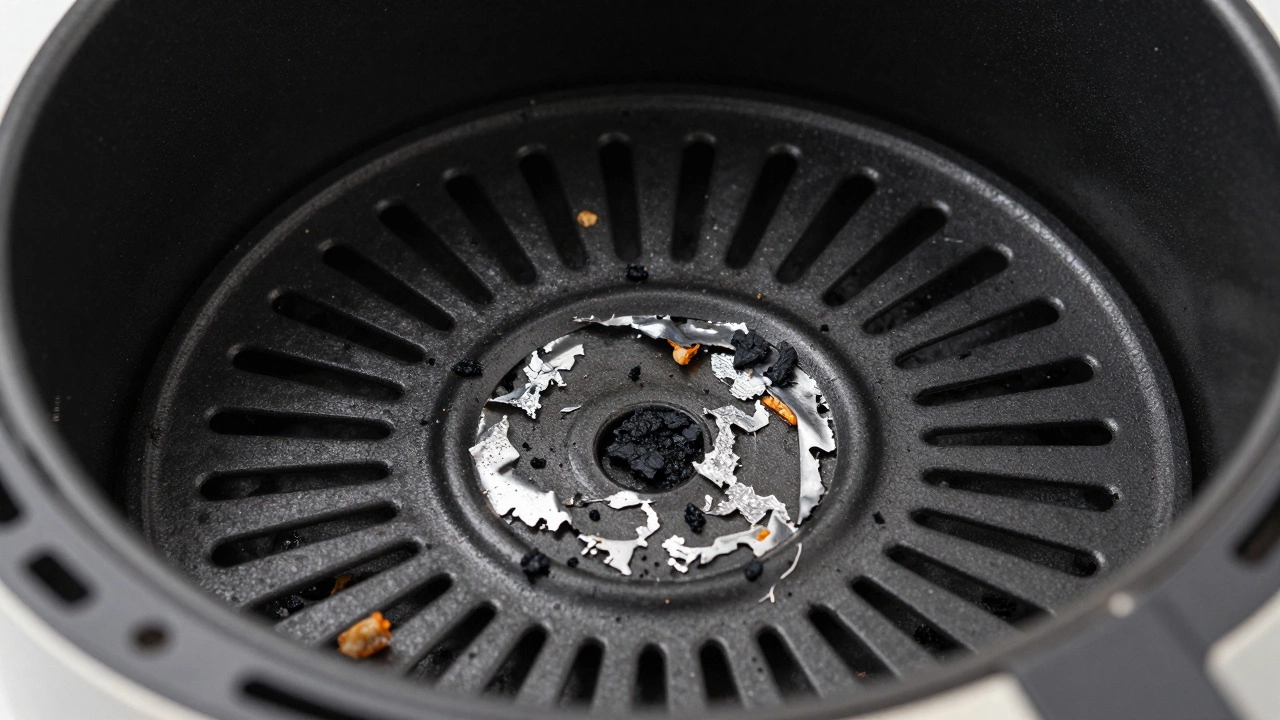
Here is where it gets a bit worrying. Most air fryer baskets use a non-stick coating to prevent food from gluing itself to the metal. Often, this is a PTFE (Polytetrafluoroethylene) or similar fluoropolymer coating. Over time, the intense heat and constant scrubbing cause this coating to degrade. You'll start seeing tiny black flakes in your food.
Once the coating starts peeling, the basket becomes a nightmare to clean. Food sticks to the exposed metal, and you're forced to use abrasive scrubbers, which only makes the peeling worse. This creates a cycle where you either eat tiny bits of plastic or you have to buy a replacement basket, which is often surprisingly expensive. While some brands offer ceramic coatings, these can still chip, and the "natural" alternatives often aren't as non-stick as the chemical versions.
The Learning Curve and the "Soggy Bottom" Problem
Not every food is compatible with high-velocity hot air. If you try to make a traditional beer-battered fish or a pancake-style fritter in an air fryer, you'll end up with a mess. The wet batter simply drips through the holes of the basket or stays raw on the bottom because there is no solid pan to sear the food.
You'll quickly discover that you need a whole new set of accessories to make the machine usable. You'll buy parchment paper liners (which can be a fire hazard if they fly into the heating element), silicone mats, and small cake pans. Suddenly, your "simple" appliance requires a supporting cast of plastic and paper gadgets. If you don't get the temperature and timing exactly right, you're left with food that is either burnt to a crisp or weirdly rubbery. The window between "perfectly cooked" and "ruined" is much smaller than in a standard oven.
Noise, Heat, and Electrical Strain
An air fryer isn't a quiet machine. It's essentially a high-powered hair dryer inside a plastic box. The fan noise is constant and can be quite loud, which isn't great if you're trying to have a conversation in the kitchen or if you're cooking while someone is sleeping in the next room.
Then there is the heat. Because the machine exhausts hot air directly into your kitchen, it can actually raise the ambient temperature of the room. In the summer, this is a genuine nuisance. Furthermore, because they pull a significant amount of wattage-often between 1,500 and 1,800 watts-they can easily trip a circuit breaker if you're running another high-power device, like a Microwave or a toaster, on the same electrical circuit. This means you're not just managing food batches, but managing your home's electrical load.

The Health Halo Effect
We often hear that air fryers are "healthy" because they use less oil. While that's technically true, it can lead to a psychological trap called the "health halo." People start eating significantly more fried foods-even the frozen, processed kind-because they believe the air fryer makes them "healthy."
Eating a plate of processed frozen potato nuggets isn't fundamentally different for your arteries just because you didn't submerge them in oil. The danger here is that the machine encourages a diet centered around processed, "fryable" foods rather than fresh whole foods. If you're using the machine to eat more processed snacks, the perceived health benefit is completely negated.
Do air fryers cause more smoke than ovens?
Yes, often. Because the heating element is so close to the food and the air moves so quickly, fats can aerosolize and burn more rapidly. If you're cooking high-fat foods like bacon, you might find your kitchen filling with a fine mist of grease and smoke, which can trigger sensitive smoke alarms.
Can I use an air fryer every day?
You can, but be mindful of the non-stick coating. Daily use and daily scrubbing will wear down the PTFE or ceramic layer much faster. If you use it daily, consider using silicone liners to extend the life of your basket.
Are air fryers actually cheaper to run than ovens?
For small portions, yes, because they don't need to heat up a giant cavity of air. However, if you're cooking multiple batches over two hours because the basket is too small, you might actually end up using more electricity than a single 30-minute blast in a large oven.
Why does my food taste "dry" in the air fryer?
The high-velocity air strips moisture away from the food very quickly. This is great for crispiness but bad for lean meats like chicken breast, which can turn into cardboard if overcooked by even two minutes. Using a meat thermometer is the only way to prevent this.
Do I really need an air fryer if I have a convection oven?
Probably not. A Convection Oven does the exact same thing-circulates hot air-just on a larger scale. The only real advantage of the air fryer is the speed of preheating and the slightly more intense airflow due to the smaller space.
Next Steps: Making an Informed Choice
If you're still considering a purchase, ask yourself a few honest questions. Do you actually have a spare 12x12 inch square of counter space? Are you cooking for one person, or a crowd? If you're cooking for a family, you might want to look into "Air Fryer Toaster Ovens" which offer more flat surface area and larger capacities, reducing the batch-cooking headache.
For those who already own one and are struggling with the peeling coating, it's time to stop scrubbing with steel wool. Switch to a soft sponge and a paste of baking soda and water. If the coating is already gone, it's safer to replace the basket than to keep eating flakes of polymer. Lastly, if you find the machine too loud or hot, try placing it on a sturdy rolling cart that can be moved closer to a window or into a larger area during use.