
When you buy an air fryer, a countertop appliance that uses rapid hot air circulation to cook food with little to no oil. It’s meant to make crispy meals faster and healthier than deep frying. But not everything you toss in there works out. Some foods damage the appliance, create dangerous messes, or just turn into inedible blobs. The truth? An air fryer isn’t magic—it’s a tool with limits. Using it wrong can cost you time, money, and even safety.
One major issue is wet batter, a liquid coating used for fried foods like chicken or onion rings. It drips through the basket, burns on the heating element, and leaves sticky residue that’s hard to clean. You’ll end up smelling burnt plastic and scrubbing for hours. Same goes for loose breadcrumbs, dry coatings that scatter easily during cooking. They fly into the fan, clog vents, and can even trigger smoke alarms. These aren’t minor annoyances—they’re appliance killers.
Then there’s cheese, a high-fat dairy product that melts into a sticky, hard-to-remove glue. Whether it’s shredded mozzarella or a block of cheddar, cheese melts faster than you think and sticks to the basket like superglue. Even after soaking, it leaves a film that ruins future batches. And don’t even think about putting whole eggs, raw eggs in their shells. The pressure builds inside, and you’ll get a messy explosion. Not just a mess—this is a safety hazard. There are safer ways to cook eggs, like using silicone molds or boiling them separately.
Liquids are another trap. Soup, a liquid-based dish meant for simmering, won’t heat evenly in an air fryer. It splashes, spills, and can short-circuit the electronics. Same with sauces, stews, or even marinades—unless they’re thick enough to stay put. You’re better off using a pot or slow cooker for these. And don’t forget about leafy greens, delicate vegetables like spinach or kale. They dry out instantly, turn to dust, and often fly into the heating coil. That’s not cooking—that’s combustion.
Even something as simple as large, dense foods, like whole roasts or thick cuts of meat—can cause uneven cooking. Air fryers rely on airflow, and if the food blocks it, you get raw centers and burnt outsides. You’ll waste energy and risk foodborne illness. Stick to smaller portions or pre-cook big items in the oven first.
The bottom line? An air fryer shines with frozen fries, chicken wings, veggies, and reheated leftovers. But it’s not a replacement for your oven, stovetop, or microwave. Knowing what not to cook is just as important as knowing what to cook. The posts below break down real mistakes people make, from trying to air fry popcorn to using aluminum foil the wrong way. You’ll find honest reviews, practical fixes, and the hidden risks most guides ignore. Skip the trial-and-error. Learn what works—and what blows up—before you waste another meal.
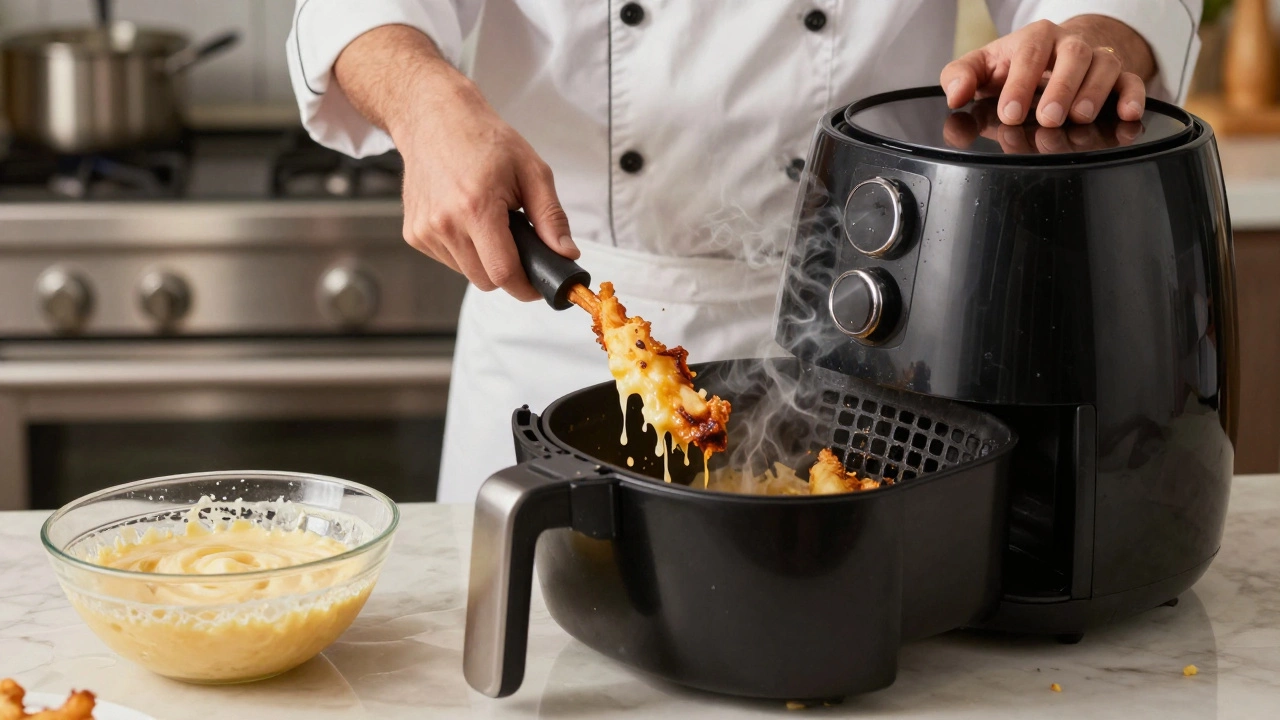
Air fryers are great for crispy snacks and quick meals, but they can't handle wet batters, soups, large roasts, or cheese-heavy dishes. Learn what not to cook in an air fryer to avoid messes and ruined food.