
When you boil water, you think it’s simple—flip the switch, wait, and done. But there’s a lot of noise around how it works, especially with electric kettles, a common household appliance designed to heat water quickly using an internal heating element. Also known as kettle, it’s one of the most used devices in the kitchen, yet people still believe myths that could be risky or just plain wrong. For example, some say microwaves heat water unevenly and can cause explosions. Others think boiling water in a kettle is always faster than using a stove. These aren’t just harmless rumors—they shape how you use your appliances every day.
Let’s clear up a few of the biggest water boiling myths, widely held but false beliefs about how water heats up in different appliances. Also known as boiling water misconceptions, they often come from old advice, viral videos, or misunderstood science. One myth says you shouldn’t boil water in a microwave because it can superheat and erupt. That’s rare, and only happens under very specific conditions—like using a perfectly smooth cup with no scratches or imperfections. Most people use mugs with tiny bumps or tea leaves that trigger bubbling naturally. Another myth claims electric kettles are dangerous because they can overheat or explode. In reality, modern kettles have automatic shut-offs and thermal fuses. The real danger? Boiling an empty kettle, or using it to heat milk or soup—things that leave residue and cause damage over time.
Then there’s the idea that boiling water in a kettle is always faster than a microwave. It depends. A 1500-watt kettle boils a cup of water in under 2 minutes. A 1000-watt microwave might take longer, but if you’re only heating half a cup, the microwave wins. It’s not about the appliance—it’s about the amount of water and how much power you’re using. And no, stirring water in a microwave doesn’t make it boil faster—it just prevents superheating. The real time-saver? Don’t overfill your kettle. Boil only what you need.
What about scale buildup? People think hard water ruins kettles, and they’re right—but not because it breaks them. It just makes them less efficient. A thick layer of limescale forces the heating element to work harder, which uses more electricity and shortens the kettle’s life. Descaling every few months fixes that. And yes, you can use vinegar. It’s cheap, effective, and safer than chemical cleaners.
There’s also confusion between boiling and simmering. Some think if water is bubbling, it’s boiling. But temperature matters more than bubbles. Water boils at 100°C at sea level. Below that, even if it’s steaming, it’s not fully boiling. That’s why recipes say "bring to a boil, then reduce to a simmer." It’s not about looks—it’s about temperature control.
And here’s something most people miss: boiling water doesn’t purify it. It kills bacteria, sure—but it won’t remove lead, chemicals, or heavy metals. If your tap water is contaminated, boiling won’t fix that. You need a filter. That’s why people in areas with poor water quality still get sick after boiling. It’s not magic—it’s just heat.
What you’ll find below isn’t just more myths. It’s real-world breakdowns of what actually happens when you boil water, based on how people use their kettles, microwaves, and other appliances every day. You’ll learn what not to do with your kettle, why your microwave might be better than you think, and how to avoid common mistakes that waste time, money, or worse—cause accidents. These aren’t theoretical tips. They’re lessons from real users who learned the hard way.
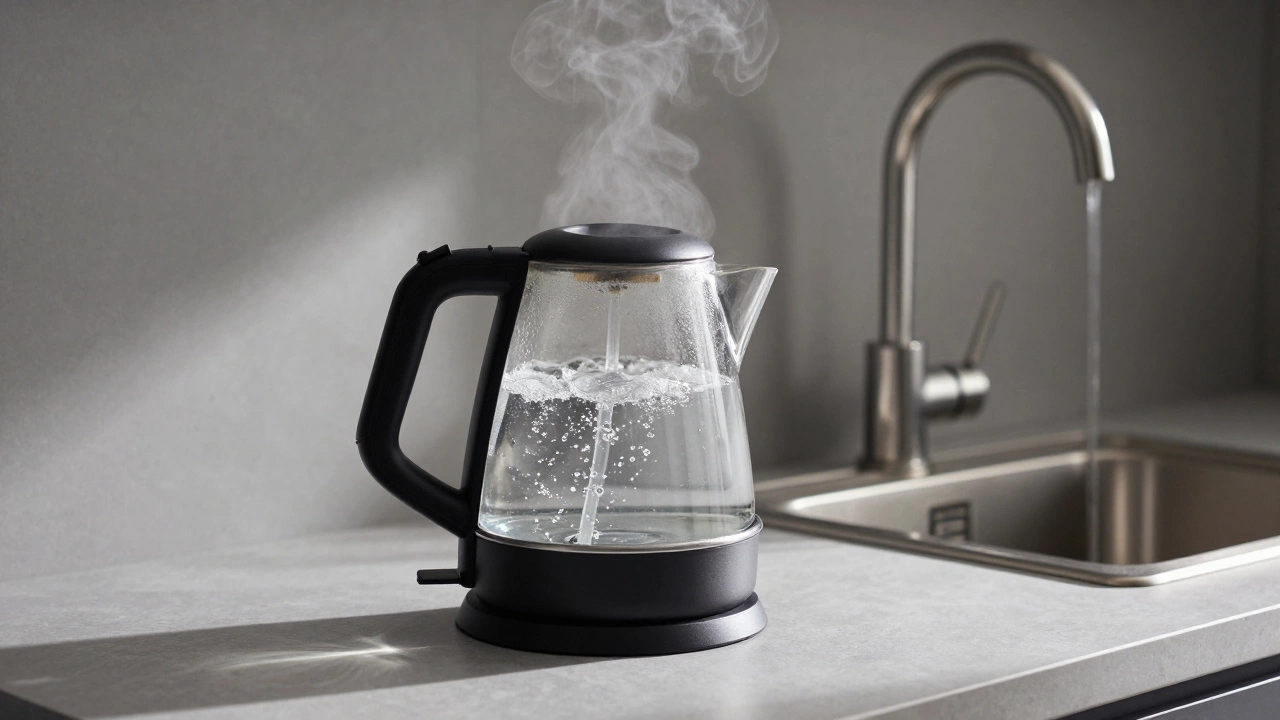
Boiling hot tap water doesn't save time or energy-it wastes water, damages your kettle, and risks contamination. Learn why cold water is always the better choice for electric kettles.