
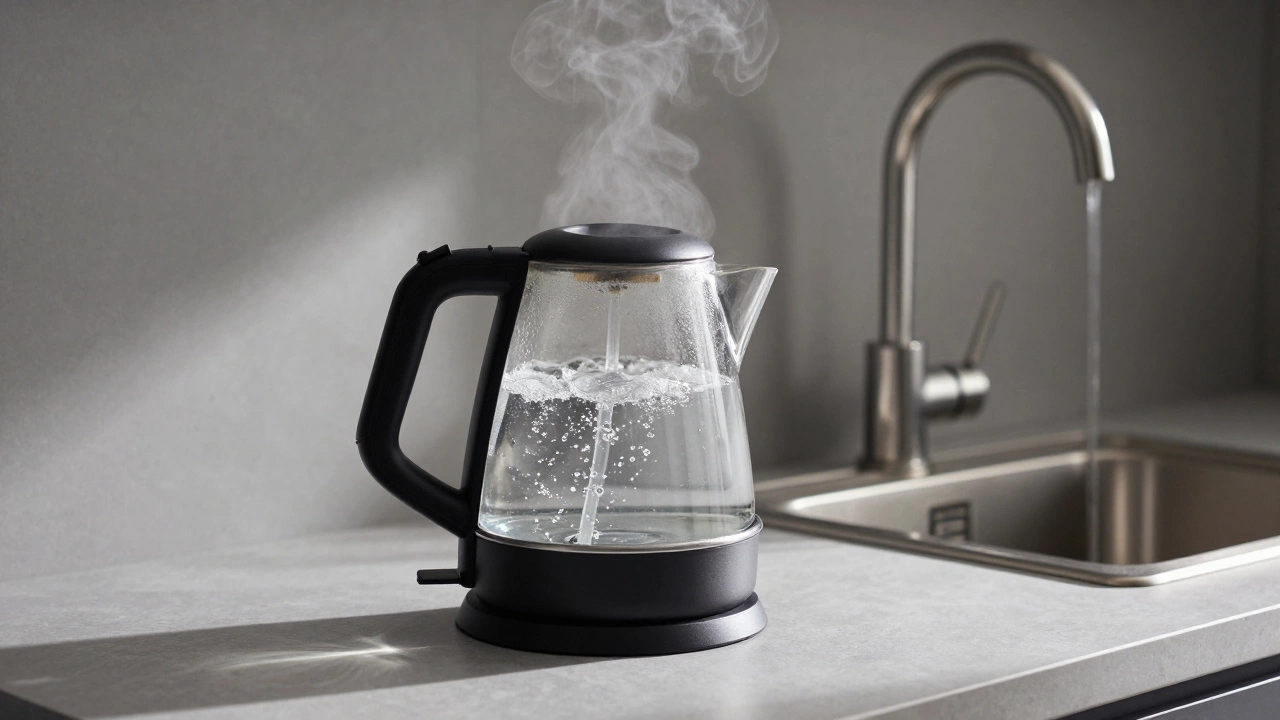
When you need boiling water fast, whether for tea, pasta, or instant coffee, the fastest way to boil water, a practical household task that depends on appliance efficiency, energy use, and timing. Also known as rapid water heating, it’s not just about turning on the stove—it’s about choosing the right tool for the job. Most people assume the stovetop is fastest, but that’s often wrong. An electric kettle, a dedicated appliance designed to heat water quickly using direct immersion heating elements can boil a full liter in under 3 minutes, often beating the stove by a full minute. And if you’re in a hurry and only need a cup? The microwave, a common kitchen appliance that uses electromagnetic waves to agitate water molecules and generate heat rapidly can do it in 90 seconds—but only if you use the right container and avoid superheating risks.
Why does this matter? Because time isn’t the only thing you’re saving. Electric kettles use less energy than a gas or electric stovetop since they focus heat directly into the water, not the burner or pan. A stovetop kettle, even a good one, loses heat to the air and the metal base. That’s why a quality electric kettle isn’t just convenient—it’s smarter. But not all kettles are equal. Some have poor insulation, slow heating elements, or don’t shut off automatically. And if you’re boiling just a half-cup, using a full-sized kettle wastes power. That’s where the microwave shines for small amounts. Still, you need to watch out: water heated in a microwave can superheat—heat beyond boiling without bubbling—and erupt violently when disturbed. Always put a non-metallic object like a wooden stir stick in the cup to prevent that.
There’s also the question of water volume. Boiling two cups? Go electric kettle. Boiling one cup? Microwave wins. Boiling a full pot for pasta? Stovetop’s your only real option—microwaves can’t handle that much, and electric kettles usually max out at 1.7 liters. And if you’re trying to save on bills, timing matters too. Running your kettle or microwave during off-peak hours can cut your energy costs, just like running the dishwasher at night. It’s not just about speed—it’s about smart use.
What you’ll find below are real-world tests, hidden pitfalls, and proven shortcuts from people who’ve tried every method and lived to tell the tale. From why some kettles fail after a year to how to safely use your microwave without turning your kitchen into a science experiment, these posts cut through the noise. No fluff. No hype. Just what actually gets water boiling fastest—without breaking your appliance, your safety, or your budget.
Boiling hot tap water doesn't save time or energy-it wastes water, damages your kettle, and risks contamination. Learn why cold water is always the better choice for electric kettles.